
7 Best Greek Philosophy Books
The best Greek philosophy books, ranked by how many expert sources recommend each one, with notes for choosing introductions, dialogues, ethics, and metaphysics.
Our take
Greek philosophy asks what exists, how knowledge is possible, what justice requires, and what makes a human life go well. Its surviving works include dialogues, systematic inquiries, and fragments preserved by later writers. These books help curious newcomers and students approach some of those questions, with a modern introduction alongside texts that require closer attention to argument and historical context.
Plato often lets ideas emerge through conversation. The Last Days of Socrates offers a focused entry into Socratic questioning, while The Republic expands into justice, education, and political life. Aristotle's Nicomachean Ethics examines character and flourishing; The Politics considers civic life, and The Metaphysics takes up more abstract questions about reality. Julia Annas's Ancient Philosophy: A Very Short Introduction gives newcomers bearings before tackling the primary texts. Start there for context, or begin with The Last Days of Socrates if you prefer to encounter the arguments directly.
7 books · 6 sources · Last updated
As an Amazon Associate, we earn from qualifying purchases (at no extra cost to you).
How to choose from this list
Skip to the full rankingIf you're new to ancient thought: Ancient Philosophy → The Last Days of Socrates
If you want to explore living well: Nicomachean Ethics
If you want to examine justice and government: The Republic → The Politics
If you prefer a shorter dialogue: The Symposium
If you're ready for abstract questions about reality: The Metaphysics
The 7 books, ranked
Ranked by how many expert sources name each book. Ties go to the book more people recommend.

Nicomachean Ethics
For readers interested in how character, judgment, and friendship contribute to living well. Aristotle builds a sustained ethical inquiry rather than a set of rules, though the compressed arguments and unfamiliar assumptions reward slow reading with explanatory notes.
What it's about
Aristotle investigates what makes a flourishing human life, connecting happiness with the cultivation and practice of virtue. His ethical inquiry examines character, practical wisdom, pleasure, friendship, and the relationship between individual conduct and life in a political community.
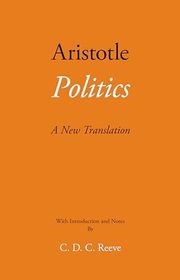
Politics
For readers who want to follow Aristotle from individual flourishing into civic life. Its comparison of constitutions offers a different approach from Plato's ideal city, though its exclusions and defenses of hierarchy demand critical attention and historical context.
What it's about
Aristotle examines households, citizenship, constitutions, and the purposes of political communities. By comparing forms of government and asking what makes them stable or just, he connects political organization with his account of human flourishing.

The Republic
For readers who want ethics, politics, and knowledge explored together. The dialogue format lets competing positions develop through argument, though its length, idealized institutions, and unsettling proposals make it less approachable than the shorter Socratic dialogues.
What it's about
Through conversations between Socrates and his companions, Plato examines justice and the relationship between an ideal community and its citizens. The inquiry expands into questions about goodness, knowledge, education, and the kind of rulers a well-ordered society requires.
Also recommended by
6 people Mark Zuckerberg recommended this book
Mark Zuckerberg
On the "favorite books" section of Mark Zuckerberg's Facebook profile.
Mark Zuckerberg's recommendation of this book  Sam Altman recommended this book
Sam Altman
One of Sam Altman's answers to "What are some of the best books you recommend for a young startup founder?"
Sam Altman's recommendation of this book  Maria Popova recommended this book
Maria Popova
"I’m actually gobsmacked that this isn’t required in order to be sworn into office, like the Constitution is required for us American immigrants when it comes time to gain American citizenship." - Maria Popova
Maria Popova's recommendation of this book  Vlad Tenev recommended this book
Vlad Tenev
"I like the classics such as The Republic by Plato and The Art of War by Sun Tzu." - Vlad Tenev
Vlad Tenev's recommendation of this book  Nolan Bushnell recommended this book
Nolan Bushnell
"[One of my ten favorite books] I might think of if I were asked the question at an interview this minute." - Nolan Bushnell
Nolan Bushnell's recommendation of this book  Mark Manson recommended this book
Mark Manson
Mark Manson recommended this book on his website.
Mark Manson's recommendation of this book
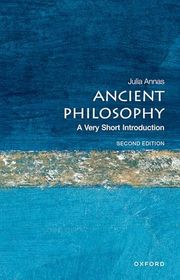
Ancient Philosophy: A Very Short Introduction
For newcomers who want a guide to the questions before committing to a long primary text. Annas organizes ancient thought around lively philosophical problems, though the brief format includes Roman material and leaves individual thinkers less fully developed.
What it's about
Julia Annas introduces ancient philosophy through questions about knowledge, happiness, reason, and the best way to live. Drawing on Greek and Roman thinkers, she emphasizes methods of inquiry and disagreement rather than offering only a chronological sequence of philosophers.

The Metaphysics
For readers ready to investigate being, substance, and explanation in detail. Aristotle develops concepts that underpin much later philosophy, though the technical vocabulary and layered arguments make this a difficult starting point without prior reading or a commentary.
What it's about
Aristotle investigates fundamental questions about being, reality, and explanation. His discussion develops concepts of substance, matter and form, essence, and potentiality and actuality while challenging both Plato's account of reality and purely material explanations of change.

The Symposium
For readers who want a shorter Platonic dialogue centered on love and beauty. Its contrasting speeches make philosophical disagreement vivid, though the layered narration and ancient social conventions need care rather than a purely romantic reading.
What it's about
At an Athenian drinking party, Socrates and other guests offer different accounts of love and desire. Their discussion explores beauty, human relationships, and spiritual aspiration, placing contrasting perspectives alongside one another in a philosophical examination of eros.

The Last Days of Socrates
For newcomers who want a compact encounter with Socratic questioning. The linked dialogues connect philosophical argument with decisions about how to live, though their unresolved questions and ancient religious assumptions can require more patience than a modern introduction.
What it's about
Four dialogues explore the circumstances surrounding Socrates's trial and final days. Through debates about piety, his defense before the court, and conversations in prison, Plato considers responsibility, justice, and the relationship between philosophical belief and the conduct of life.
Sources
- 1
The Best Aristotle Books - Five Books Expert Recommendations
fivebooks.com
- 2
History And Culture - Best Books on Greek Philosophy
historyandculture.org
- 3
Essential readings in Greek Philosophy? : r/askphilosophy
reddit.com
- 4
Where should I start with Greek philosophy? : r/askphilosophy
reddit.com
- 5
Ancient Philosophy Resources - Classics & Archaeology - Research at Kent
research.kent.ac.uk
- 6
Philosophy: Ancient Greece Bibliography
misterdann.com


Edited by
Software engineer whose passion for tracking book recommendations from podcasts inspired the creation of MRB.
Lead investor at 3one4 Capital whose startup expertise and love for books helped shape MRB and its growth.
Comments
Spotted a missing book, a wrong order or a mistake? Tell us and we'll fix this page.
We're a reading guide, not the author or publisher, so we can't send books or pass on messages.