
18 Best Political History Books
The best political history books, ranked by how many expert sources recommend each one, with notes for readers exploring power, institutions, rights, and leaders.
Our take
Political history explores how power is gained, organized, resisted, and used. Institutions matter, but so do regional identities, social movements, personal rivalries, and decisions made during crises. The books here range from comparisons across centuries to accounts of a single leader, conflict, or trial. Several examine the United States, while others focus on India, Cuba, Germany, Northern Ireland, and the political order that emerged in Asia after World War II.
For a broad institutional perspective, The Origins of Political Order and Why Nations Fail offer arguments to compare rather than neutral explanations of every society. The Power Broker shows power operating through one person and a specific city. Native Nations changes the starting point for North American history, while One Person, No Vote focuses on struggles over electoral participation. India After Gandhi provides a long national narrative, and Say Nothing approaches political violence through individual lives. Start with a country or question you care about, then pair a broad account with a more focused study.
18 books · 9 sources · Last updated
As an Amazon Associate, we earn from qualifying purchases (at no extra cost to you).
How to choose from this list
Skip to the full rankingIf you want to compare political institutions: The Origins of Political Order → Why Nations Fail
If you want to understand US power and participation: The Power Broker → One Person, No Vote
If you want Lincoln’s leadership and changing views on slavery: Team of Rivals → The Fiery Trial
If you want a broader North American starting point: Native Nations → American Nations
If you want national histories beyond the United States: India After Gandhi → Cuba: An American History
If you want to examine democratic collapse and erosion: The Coming of the Third Reich → How Democracies Die
The 18 books, ranked
Ranked by how many expert sources name each book. Ties go to the book more people recommend.

For readers who want to see how unelected power can reshape a city. Its detailed examination of institutions, money, and personal influence reveals political mechanisms, but the immense length and concentration on New York make it a demanding, specific case study.
What it's about
Robert Moses transforms New York through bridges, parks, highways, and urban redevelopment while accumulating extraordinary political influence. Caro’s biography investigates how an unelected official acquired power, maintained it, and reshaped the lives of the city’s residents.
Also recommended by
4 people Ryan Holiday recommended this book
Ryan Holiday
"One of the most magnificent books I’ve ever read." - Ryan Holiday
Ryan Holiday's recommendation of this book  Sam Hinkie recommended this book
Sam Hinkie
"My favorite writer." - Sam Hinkie
Sam Hinkie's recommendation of this book  Shane Parrish recommended this book
Shane Parrish
"It’s amazing. But it’s not a light read." - Shane Parrish
Shane Parrish's recommendation of this book  Trung Phan recommended this book
Trung Phan
"About the Urban Planning industry." - Trung Phan
Trung Phan's recommendation of this book

For readers who want political leadership explored through relationships and competing ambitions. The cabinet-centered narrative shows coalition management in detail, but its length and attention to personalities provide less breadth than a general history of the Civil War.
What it's about
Goodwin tells the story of Abraham Lincoln and the powerful men who once ran against him, then joined his cabinet. It is both a Civil War history and a sharp look at how Lincoln turned rivalry into effective leadership.
Also recommended by
7 people Alexandria Ocasio-Cortez recommended this book
Alexandria Ocasio-Cortez
Alexandria Ocasio-Cortez recommended this book on Twitter.
Alexandria Ocasio-Cortez's recommendation of this book  J.K. Rowling recommended this book
J.K. Rowling
"I lived in it the way that you do with truly great books; putting it down with glazed eyes and feeling disconcerted to find yourself in the 21st century." - J.K. Rowling
J.K. Rowling's recommendation of this book  Bill Gates recommended this book
Bill Gates
"I loved [this book]." - Bill Gates
Bill Gates's recommendation of this book  Scott Belsky recommended this book
Scott Belsky
Scott Belsky mentioned this book on "The Tim Ferriss Show" podcast.
Scott Belsky's recommendation of this book  Stewart Butterfield recommended this book
Stewart Butterfield
"Among the best historical books I've ever read (take that, Herodotus)." - Stewart Butterfield
Stewart Butterfield's recommendation of this book  Jamie Dimon recommended this book
Jamie Dimon
On Jamie Dimon's list of favorite books.
Jamie Dimon's recommendation of this book +1
More recommendations
- Sunny Hostin
"A terrific book!" - Sunny Hostin
- Sunny Hostin

For readers who want to compare how states, law, and accountability developed. Its long historical range gives institutions a wider context than a national narrative, but the ambitious framework compresses complex societies and ends before modern industrial politics.
What it's about
Francis Fukuyama investigates the origins of states, the rule of law, and accountable government. Moving from early human societies to the French Revolution, he compares political developments in China, India, the Middle East, and Europe.
Also recommended by
2 people David Heinemeier Hansson recommended this book
David Heinemeier Hansson
"[This book and "Political Order and Political Decay" is] a fantastic two-part book." - DHH
David Heinemeier Hansson's recommendation of this book  Mark Manson recommended this book
Mark Manson
Mark Manson recommended this book on his website.
Mark Manson's recommendation of this book

For readers interested in the relationship between political power and economic development. Its comparative cases give a clear institutional explanation of prosperity and poverty, but the broad thesis invites debate and cannot capture every historical cause within individual countries.
What it's about
Daron Acemoglu and James Robinson examine why countries follow different paths toward prosperity or poverty. Historical comparisons support their argument that political and economic institutions, rather than geography or culture alone, shape national development and opportunity.
Also recommended by
2 people Mark Zuckerberg recommended this book
Mark Zuckerberg
"Explores the different kinds of social institutions and incentives that nations have applied to encourage prosperity, economic development and elimination of poverty." - Mark Zuckerberg
Mark Zuckerberg's recommendation of this book - Bill Gates recommended this book
Bill Gates
"A major disappointment. I found the authors’ analysis vague and simplistic." - Bill Gates
Bill Gates's recommendation of this book

For readers who want abolition and citizenship explored through a long political life. The detailed biography connects public argument with personal pressures, but its substantial length and focus on Douglass demand more commitment than a survey of the abolitionist movement.
What it's about
David Blight traces Frederick Douglass's journey from enslavement to abolitionist, orator, writer, and civil rights advocate. Using newly available papers and newspaper material, he examines Douglass's public activism alongside his marriages and complex relationships within his extended family.
Also recommended by
1 person Barack Obama recommended this book
Barack Obama
Barack Obama's favorite books of 2018 list.
Barack Obama's recommendation of this book

How Democracies Die
For readers who want historical comparisons of democratic erosion through elected leaders and weakened norms. The clear framework helps organize warning signs, but it is an argument about recurring patterns rather than a comprehensive history or a reliable forecasting tool.
What it's about
Steven Levitsky and Daniel Ziblatt examine how elected leaders can weaken democratic institutions without a military coup. Drawing on European and Latin American cases, they explore eroding political norms and assess the dangers facing democracy in the United States.
Also recommended by
1 person- Barack Obama recommended this book
Barack Obama
Barack Obama's favorite books of 2018 list.
Barack Obama's recommendation of this book

For readers who want political conflict understood through individual lives and contested memory. Its investigative narrative makes the human costs of the Troubles tangible, but the focus on particular people cannot substitute for a complete history of Northern Ireland.
What it's about
The abduction of Belfast mother Jean McConville in 1972 anchors Keefe's investigation of Northern Ireland's Troubles. Following victims, IRA members, and political leaders, he explores violence, secrecy, memory, and the unresolved consequences of the peace process.
Also recommended by
1 person- Barack Obama recommended this book
Barack Obama
Barack Obama's favorite books of 2019 list.
Barack Obama's recommendation of this book

For readers interested in why political and cultural elites turn against liberal democracy. Its personal encounters make ideological shifts concrete, but the essay’s selective, autobiographical approach offers a narrower perspective than a systematic comparative history of authoritarian movements.
What it's about
Anne Applebaum investigates why political and intellectual elites turn toward authoritarianism. Drawing on developments in Europe and the United States, she examines nationalism, conspiracy theories, polarization, and the personal rewards that encourage support for illiberal leaders.
Also recommended by
1 person Roger Bennett recommended this book
Roger Bennett
"The book which helped me best understand the tectonic plates shifting in the world around us." - Roger Bennett
Roger Bennett's recommendation of this book
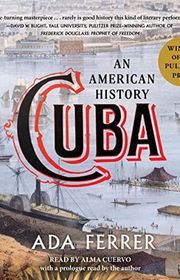
Cuba: An American History
For readers who want Cuban history connected with its long relationship to the United States. The extended perspective moves beyond the Cold War alone, but the breadth compresses some periods and the cross-border emphasis leaves less room for other relationships.
What it's about
Ferrer traces five centuries of Cuban history through colonialism, slavery, independence, revolution, and relations with the United States. Political change and ordinary lives inform her account of how the island and its northern neighbor have shaped one another.

For readers who want a sustained introduction to India’s political life after independence. The updated third edition connects leaders, institutions, and social conflicts across decades, but its scale and detail require more patience than a short overview of Indian democracy.
What it's about
Ramachandra Guha follows India after independence, examining how a country divided by caste, language, class, and religion built and sustained democratic institutions. Political biographies and historical episodes illuminate the conflicts, achievements, and pressures shaping the republic's development.
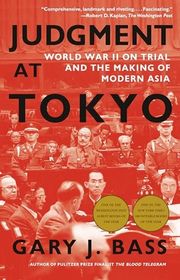
Judgment at Tokyo
For readers who want postwar Asian politics examined through the trial of Japan’s leaders. Its international cast reveals competing ideas of justice and empire, but the legal detail and substantial length make it a focused study rather than a regional survey.
What it's about
Bass reconstructs the Tokyo war crimes tribunal after World War II, following judges and political actors from several countries. The trial becomes a lens on wartime responsibility, colonial power, and disagreements that helped shape the emerging political order in Asia.
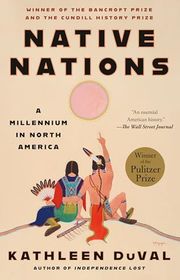
Native Nations
For readers who want North American political history centered on Indigenous societies and sovereignty. Its long perspective challenges narratives that begin with Europeans, but the continental scale means individual nations and periods receive selective rather than exhaustive attention.
What it's about
DuVal examines a millennium of North American history through the development and persistence of Indigenous nations. Accounts of cities, trade, diplomacy, adaptation, and resistance place Native societies at the center, extending the story from before colonization to continuing struggles for sovereignty.
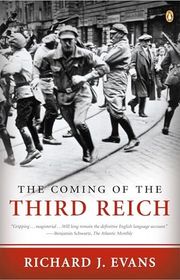
The Coming of the Third Reich
For readers who want a detailed explanation of the conditions behind Nazi rule. Its social and political breadth resists reducing events to Hitler alone, but it is the opening volume of a larger history and does not cover the whole regime.
What it's about
Evans traces the background to Nazi power in Germany, connecting earlier political traditions with war, instability, and the collapse of the Weimar Republic. The account examines institutions, social groups, and political movements that shaped the destruction of democratic government.

For readers who want to understand how Lincoln’s position on slavery changed. Its tight focus connects principle with political circumstances more directly than a full presidential biography, but it covers one central question rather than Lincoln’s entire life or administration.
What it's about
Eric Foner traces Abraham Lincoln’s changing views on slavery from his early life through the presidency. The book places those developments within the political pressures and antislavery movements that shaped the Civil War and the course of emancipation.
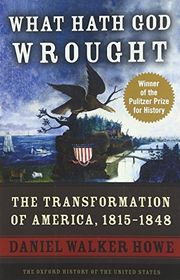
What Hath God Wrought
For readers who want a substantial account of early nineteenth-century American political development. Its attention to communication, religion, and reform broadens the story beyond presidents, but the detailed period narrative is a large commitment and stops before the Civil War.
What it's about
Howe surveys the United States from 1815 to 1848, connecting territorial expansion with changes in communication, transport, religion, and reform. The emergence of mass politics and disputes over slavery unfold within an account of a rapidly transforming and increasingly divided nation.

For readers who want criminal justice connected to the history of racial power in the United States. Its focused argument makes legal exclusion politically legible, but it advances a particular interpretation rather than surveying every cause of mass incarceration.
What it's about
Michelle Alexander argues that mass incarceration and the War on Drugs perpetuate racial caste in America. Her analysis examines how a formally colorblind criminal justice system targets Black communities and creates lasting barriers after conviction.
Also recommended by
4 people J. Cole recommended this book
J. Cole
J. Cole mentioned reading this book on The Fayetteville Observer.
J. Cole's recommendation of this book - Mark Zuckerberg recommended this book
Mark Zuckerberg
"I've been interested in learning about criminal justice reform for a while, and this book was highly recommended by several people I trust." - Mark Zuckerberg
Mark Zuckerberg's recommendation of this book - Bill Gates recommended this book
Bill Gates
"Offers an eye-opening look into how the criminal justice system unfairly targets communities of color, and especially Black communities." - Bill Gates
Bill Gates's recommendation of this book  Sunny Hostin recommended this book
Sunny Hostin
Sunny Hostin recommended this book on Twitter.
Sunny Hostin's recommendation of this book

For readers seeking a regional explanation of North American political divisions. Its broad cultural map connects settlement history with later conflict, but the eleven-region framework can simplify differences within places and should be read as an interpretive model.
What it's about
Colin Woodard argues that North America's political divisions reflect eleven enduring regional cultures. Tracing their origins and rivalries, he connects settlement patterns with later conflicts over government, identity, and the values claimed as distinctly American.
Also recommended by
1 person Jack Dorsey recommended this book
Jack Dorsey
"Incredible perspective on North and Central America." - Jack Dorsey
Jack Dorsey's recommendation of this book

For readers who want voting restrictions placed in the history of struggles over political participation. The US-focused account connects legal changes with access to the ballot, but its emphasis on recent suppression makes it narrower than a general electoral history.
What it's about
Carol Anderson examines the history of voter suppression in America, focusing on restrictions following the 2013 Shelby County ruling. She traces barriers to African American voting participation and argues that these measures threaten the functioning of democracy.
Sources
- 1
The Best History Books of All Time
penguinrandomhouse.com
- 2
Political History Books
goodreads.com
- 3
What are some good books to get a firm grasp on politics and political history?
reddit.com
- 4
Best Political History Books: 7 Essential Reads on Power & Democracy
prose-n-poetry.com
- 5
14 Pulitzer Prize and Bancroft Prize-Winning Books on American Political History
todayonpolitics.com
- 6
Pulitzer Prize-Winning History Books
fivebooks.com
- 7
Top 10 nonfiction books about politics
malwarwickonbooks.com
- 8
The 50 best history books of all time
panmacmillan.com
- 9
US political history.
reddit.com





Edited by
Software engineer whose passion for tracking book recommendations from podcasts inspired the creation of MRB.
Lead investor at 3one4 Capital whose startup expertise and love for books helped shape MRB and its growth.
Comments
Spotted a missing book, a wrong order or a mistake? Tell us and we'll fix this page.
We're a reading guide, not the author or publisher, so we can't send books or pass on messages.