
9 Best Politics Books
The best politics books, ranked by how many expert sources recommend each one, with notes to help readers choose among political history, ideas, and institutions.
Our take
Politics concerns who holds power, how decisions are made, and whose interests institutions protect. Books on the subject can work at very different scales: a portrait of a court, a history of voting barriers, a theory of leadership, or a novel about total control. This selection is particularly useful for readers interested in American government and the wider questions its conflicts raise.
American Nations interprets political divisions through regional history, while The Nine examines an earlier Supreme Court through its personalities and relationships. One Person, No Vote focuses on voting access, and The Fifth Risk follows the less visible work of public administration. 1984 takes a fictional route into language, surveillance, and authoritarian power. The more comparative books ask how leaders keep support and how democratic institutions weaken. Start with the scale that interests you most, then read another kind of account to test the limits of that perspective.
9 books · 8 sources · Last updated
As an Amazon Associate, we earn from qualifying purchases (at no extra cost to you).
How to choose from this list
Skip to the full rankingIf you want to understand public administration: The Fifth Risk
If you want historical context for US divisions: American Nations → One Person, No Vote
If you want to understand moral disagreement: The Righteous Mind
If you want to study political incentives: The Dictator’s Handbook → How Democracies Die
If you prefer fiction: 1984
The 9 books, ranked
Ranked by how many expert sources name each book. Ties go to the book more people recommend.
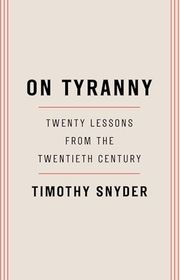
On Tyranny: Twenty Lessons from the Twentieth Century
For readers who want a short, direct introduction to resisting authoritarian habits. Its historical lessons are more immediately accessible than the comparative studies, though the compressed, prescriptive format leaves less space for qualifications and competing interpretations.
What it's about
Timothy Snyder draws twenty civic lessons from twentieth-century experiences of authoritarianism. The brief chapters connect historical examples with individual conduct, discussing institutions, professional responsibility, truth, public language, and the choices citizens make in political life.

1984
For readers who want to explore political power through fiction. Its focus on language, surveillance, and manipulated reality makes authoritarian control feel immediate, though a dystopian novel offers a warning rather than an explanation of actual institutions.
What it's about
In a future dictatorship where Big Brother watches everyone, Winston Smith rewrites history for the Party but quietly begins to doubt the system. His search for truth and love becomes a struggle against torture, surveillance, and the erasure of reality.
Also recommended by
14 people Tristan Harris recommended this book
Tristan Harris
"[The author]'s dark vision." - Tristan Harris
Tristan Harris's recommendation of this book  Jordan Peterson recommended this book
Jordan Peterson
Recommended on Jordan Peterson's website.
Jordan Peterson's recommendation of this book  J. Cole recommended this book
J. Cole
J. Cole mentioned reading this book on The Fayetteville Observer.
J. Cole's recommendation of this book  Emma Watson recommended this book
Emma Watson
On the "books read" section of Emma Watson's GoodReads profile.
Emma Watson's recommendation of this book  Noam Chomsky recommended this book
Noam Chomsky
On the "Top 100 Books Referenced by Noam Chomsky" list.
Noam Chomsky's recommendation of this book  Richard Branson recommended this book
Richard Branson
Richard Branson recommended this book on his "70 must-read books" blog post.
Richard Branson's recommendation of this book +8
More recommendations
- Matt Mullenweg
Matt Mullenweg mentioned this book on "The Tim Ferriss Show" podcast.
- Christopher Hitchens
"We were all expected to read Animal Farm and [this book], which had been placed on the syllabus as part of the curriculum of the Cold War." - Christopher Hitchens
- Sahil Lavingia
Sahil Lavingia recommended this book on Notion.
- Jenn Im
"Highly recommend." - Jenn Im
- Winston Churchill
One of Winston Churchill's favorite books.
- Diane Rehm
"Examines the consequences of totalitarianism, mass surveillance and government repression." - Diane Rehm
- Anna Akana
Anna Akana recommended this book on Twitter.
- Brad Delong
Brad Delong recommended this book in his website.
- Matt Mullenweg

For readers puzzled by why political opponents seem to reason from different moral worlds. Its psychological framework adds a perspective missing from institutional histories, though broad moral categories cannot explain every individual or political conflict.
What it's about
Jonathan Haidt investigates the intuitive foundations of moral judgment and the sources of political and religious disagreement. Drawing on moral psychology, he explores how differing values can bind communities together while creating persistent divisions between them.
Also recommended by
4 people A.J. Jacobs recommended this book
A.J. Jacobs
"All about trying to figure out the gap between the red and blue states – Republican and Democrat – and it’s really interesting." - A.J. Jacobs
A.J. Jacobs's recommendation of this book  Ann Miura-Ko recommended this book
Ann Miura-Ko
"I love this book because it clarified for me a lot of things that I’ve been feeling for so long around." - Ann Miura-Ko
Ann Miura-Ko's recommendation of this book  Derren Brown recommended this book
Derren Brown
"Tremendous & was part of forming Sacrifice (on Netflix)." - Derren Brown
Derren Brown's recommendation of this book  Russell Moore recommended this book
Russell Moore
"The most important book in years." - Russell Moore
Russell Moore's recommendation of this book

How Democracies Die
For readers who want to understand democratic decline beyond dramatic coups. Its comparative examples explain gradual erosion of institutions and political norms, though the argument culminates in an American debate shaped by the period of publication.
What it's about
Steven Levitsky and Daniel Ziblatt examine how elected leaders can weaken democratic institutions without a military coup. Drawing on European and Latin American cases, they explore eroding political norms and assess the dangers facing democracy in the United States.
Also recommended by
1 person Barack Obama recommended this book
Barack Obama
Barack Obama's favorite books of 2018 list.
Barack Obama's recommendation of this book

For readers who want a clear theory of why leaders reward some people and neglect others. Its focus on governing coalitions connects democracies and dictatorships, though the model can understate ideology, institutions, and other influences.
What it's about
Bruce Bueno de Mesquita and Alastair Smith explain political behavior through leaders’ efforts to remain in power. Their argument examines essential supporters, rewards, and institutional incentives to compare the operation of democracies, dictatorships, and other organizations.
Also recommended by
1 person Mark Manson recommended this book
Mark Manson
Mark Manson recommended this book on his website.
Mark Manson's recommendation of this book

For readers trying to understand American divisions beyond party labels. Its regional-culture framework offers a longer historical perspective than election commentary, though the eleven-part map is an interpretation that can simplify variation within regions.
What it's about
Colin Woodard argues that North America's political divisions reflect eleven enduring regional cultures. Tracing their origins and rivalries, he connects settlement patterns with later conflicts over government, identity, and the values claimed as distinctly American.
Also recommended by
1 person Jack Dorsey recommended this book
Jack Dorsey
"Incredible perspective on North and Central America." - Jack Dorsey
Jack Dorsey's recommendation of this book
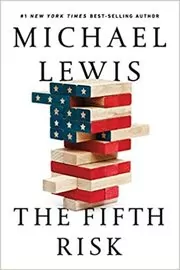
For readers curious about what government agencies do beyond the headlines. Its reporting makes administrative expertise and overlooked public risks concrete, though the focus on selected US departments and one presidential transition limits its scope.
What it's about
Explores what happens when new political leaders ignore the expertise inside key U.S. agencies, profiling the quiet civil servants at Energy, Agriculture, and Commerce who manage nuclear safety, food programs, and weather data that most citizens never see.

For readers interested in the Supreme Court as a human institution. Its portraits illuminate judicial politics, though it covers an earlier court and cannot explain the present membership on its own.
What it's about
Jeffrey Toobin examines the personalities, relationships, and ideological conflicts within the United States Supreme Court. His account brings readers inside the justices' world, exploring how individual convictions and institutional politics shape decisions with consequences for the nation.
Also recommended by
1 person Gary Vaynerchuk recommended this book
Gary Vaynerchuk
"My favorite book I've ever read is [this book]. It was about the supreme court." - Gary Vaynerchuk
Gary Vaynerchuk's recommendation of this book

For readers who want to understand the mechanisms and history of American voter suppression. Its focus gives more depth on voting barriers than a broad politics survey, though it is an argued account with a specific racial lens.
What it's about
Carol Anderson examines the history of voter suppression in America, focusing on restrictions following the 2013 Shelby County ruling. She traces barriers to African American voting participation and argues that these measures threaten the functioning of democracy.
Sources
- 1
The Best Political Books To Read This Year
penguinrandomhouse.com
- 2
14 of the Best Political Books to Better Understand Politics
hookedtobooks.com
- 3
Politics Books
goodreads.com
- 4
Books about Politics
reddit.com
- 5
19 Best Political Books of All Time
upjourney.com
- 6
Reading recommendations about the processes autocrats use to take over state bureaucracies?
reddit.com
- 7
Top 10 nonfiction books about politics
malwarwickonbooks.com
- 8
11 Books That Will Make You Smarter About Politics
businessinsider.com






Edited by
Software engineer whose passion for tracking book recommendations from podcasts inspired the creation of MRB.
Lead investor at 3one4 Capital whose startup expertise and love for books helped shape MRB and its growth.
Comments
Spotted a missing book, a wrong order or a mistake? Tell us and we'll fix this page.
We're a reading guide, not the author or publisher, so we can't send books or pass on messages.