
7 Best Physiology Books
The best physiology books, ranked by how many expert sources recommend each one, with notes for beginners, medical students, and readers seeking deeper detail.
Our take
Physiology explains how cells, organs, and regulatory systems keep the body functioning. Learning it means connecting mechanisms across scales, from membrane transport to circulation, breathing, and hormonal control. These books mainly serve students, but they differ in how much background they assume and how much detail they provide. A text for learning a system is not always the most convenient book for revising it.
Physiology by Linda Costanzo offers a relatively compact foundation for medical study. Guyton and Hall Textbook of Medical Physiology gives explanations more room, while Medical Physiology by Boron and Boulpaep goes further into underlying mechanisms. BRS Physiology is designed for review, and Physiology Cases and Problems emphasizes applying what you know. For a more visual introduction, consider Human Physiology. Start with an explanatory text that suits your course and background, then add questions or a deeper reference where you need them.
7 books · 9 sources · Last updated
As an Amazon Associate, we earn from qualifying purchases (at no extra cost to you).
How to choose from this list
Skip to the full rankingIf you want a medical-school foundation: Physiology → BRS Physiology
If you prefer extended explanations: Guyton and Hall Textbook of Medical Physiology
If you want deeper mechanisms: Physiology → Medical Physiology
If you want to practice application: Physiology Cases and Problems
If you learn through diagrams: Human Physiology
If you want a dense review: Ganong’s Review of Medical Physiology
The 7 books, ranked
Ranked by how many expert sources name each book. Ties go to the book more people recommend.

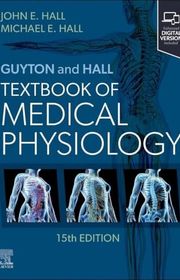
Guyton and Hall Textbook of Medical Physiology
For students who learn best through extended explanations of how whole systems work. Its broad coverage supplies context beyond a revision outline, though the length makes selective reading more realistic than a quick exam review.
What it's about
This medical physiology textbook explains how cells, organs, and regulatory systems maintain the body's internal balance. Short chapters, clinical examples, and illustrated mechanisms connect normal function with disease, emphasizing the foundations needed for medical study.
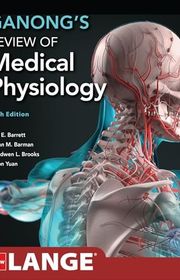
Ganong's Review of Medical Physiology
For students who want a compact synthesis with more detail than a revision outline. Its integration of mechanisms and medical examples suits consolidation, though the dense presentation can feel abrupt before the basic concepts are secure.
What it's about
Ganong's Review of Medical Physiology surveys cellular processes and the major organ systems in a compact medical text. Illustrations, clinical examples, and review material connect physiological principles with the situations students encounter in medical education.

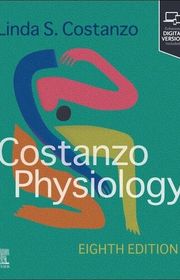
Physiology
For medical students who want a manageable first explanation of the major systems. Its balance of mechanisms and clinical examples supports coursework, though specialized questions may require the deeper coverage found in Boron and Boulpaep.
What it's about
Linda Costanzo explains human physiology through cellular processes and the major organ systems. This sixth-edition textbook covers nervous, cardiovascular, respiratory, renal, digestive, endocrine, and reproductive functions, with clinical cases connecting physiological principles to disease processes.

BRS Physiology
For medical students revising material they have already studied. The outline format and practice questions make it easier to check recall than a full textbook, though compressed explanations leave less room for learning unfamiliar mechanisms.
What it's about
Linda Costanzo reviews essential physiology for medical coursework and board-exam preparation. Concise explanations are paired with clinical vignette-style multiple-choice questions, covering subjects including cellular, respiratory, renal, gastrointestinal, and endocrine physiology in the Board Review Series.

Medical Physiology
For advanced students who want to understand the cellular mechanisms beneath organ function. Its detailed treatment is useful when simpler explanations leave gaps, though the density makes it a demanding choice for a first pass.
What it's about
Boron and Boulpaep organize human physiology from molecular processes and cellular signaling through major organ systems. Detailed illustrations connect membrane transport, neural activity, circulation, respiration, and endocrine regulation with clinical problems and underlying biological mechanisms.

For undergraduate learners who want diagrams and connections between systems to guide understanding. Its visual, integrated approach provides an alternative to dense medical references, though medical students may need additional resources aligned with their examinations.
What it's about
Dee Silverthorn's eighth edition integrates cellular and molecular physiology with themes that connect body systems. Active learning exercises, research problems, graphing activities, and concept mapping encourage students to reason through physiological questions and understand relationships among processes.
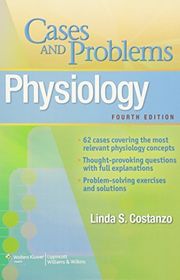
Physiology Cases and Problems
For students who understand the concepts but want to test their reasoning. Its cases and worked explanations show how principles apply to clinical situations, though it complements an explanatory textbook rather than covering the subject independently.
What it's about
Linda Costanzo presents patient cases and related questions covering the major systems of physiology. Detailed answers explain the reasoning behind each problem, helping students connect physiological principles with clinical findings and test their understanding.
Sources
- 1
Health Sciences Textbooks: Physiology
libraryguides.missouri.edu
- 2
Anatomy, Histology, Physiology, and Pathology: Physiology
guides.library.med.fsu.edu
- 3
Best books and resources for Medical School Physiology and the Physiology NBME 2024
medschooladvice.com
- 4
20 Best Anatomy And Physiology Books For Medical Students
themdjourney.com
- 5
Physiology Books
goodreads.com
- 6
Best Physiology Book?
reddit.com
- 7
Which is the best book for physiology ?
reddit.com
- 8
20 Best Physiology Textbooks for Medical Students & USMLE Prep
otio.ai
- 9
Human physiology
fivebooks.com


Edited by
Software engineer whose passion for tracking book recommendations from podcasts inspired the creation of MRB.
Lead investor at 3one4 Capital whose startup expertise and love for books helped shape MRB and its growth.
Comments
Spotted a missing book, a wrong order or a mistake? Tell us and we'll fix this page.
We're a reading guide, not the author or publisher, so we can't send books or pass on messages.