
15 Best Human Physiology Books
The best human physiology books, ranked by how many expert sources recommend each one, with notes for beginners, medical students, and learners revising.
Our take
Human physiology explains how the body works: how cells communicate, organs carry out their tasks, and systems keep internal conditions stable. Anatomy supplies the structural background, but learning where something sits is only a beginning. The most useful book for you depends on your course level, your biology foundations, and whether you need a full explanation or a compact review.
For an undergraduate course, Silverthorn's Human Physiology emphasizes connections and active reasoning. Human Anatomy & Physiology combines structure and function for students learning both together. Costanzo Physiology provides a focused route into medical-level mechanisms, while Medical Physiology offers more depth. BRS Physiology works best after you've learned the material. Anatomical references such as Gray's Anatomy for Students can support that study when structural relationships are unclear. Start with one main text suited to your course, and check the required edition before choosing review books or visual companions.
15 books · 9 sources · Last updated
As an Amazon Associate, we earn from qualifying purchases (at no extra cost to you).
How to choose from this list
Skip to the full rankingIf you're taking a combined introductory course: Human Anatomy & Physiology
If you're preparing for nursing or allied health: Ross and Wilson Anatomy and Physiology in Health and Illness
If you want a focused medical-school text: Costanzo Physiology → Guyton and Hall Textbook of Medical Physiology
If you need deeper cellular mechanisms: Medical Physiology
If you're reviewing material you've already learned: BRS Physiology
If you need structural background alongside physiology: Gray's Anatomy for Students → Anatomy
The 15 books, ranked
Ranked by how many expert sources name each book. Ties go to the book more people recommend.
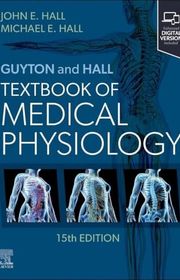
Guyton and Hall Textbook of Medical Physiology
For medical students who want broad explanations built around homeostasis. The clear progression connects systems and clinical relevance, though the substantial length makes it harder to use for rapid revision than an outline-based review.
What it's about
John E. Hall and Michael E. Hall explain human physiological function from cells to organ systems. Short chapters, diagrams, and clinical connections explore the regulation of the body's internal environment and the mechanisms underlying normal function.
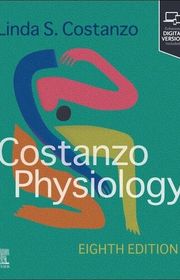
Costanzo Physiology
For students who want a focused medical-physiology text with step-by-step explanations. Costanzo makes mechanisms and equations easier to work through, though its concise scope leaves less specialist detail than a larger reference such as Medical Physiology.
What it's about
Linda S. Costanzo explains core human physiology through cellular principles and organ systems. Diagrams, tables, worked reasoning, and questions guide students through mechanisms and equations while connecting normal function with examples relevant to medical study.
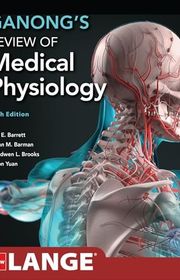
Ganong's Review of Medical Physiology
For students who already have some foundations and want a compact, detailed reference. Ganong links physiology with clinical examples efficiently, though its information density makes it less gentle for beginners than a slower explanatory textbook.
What it's about
Ganong's Review of Medical Physiology surveys cellular processes and the major organ systems in a compact medical text. Illustrations, clinical examples, and review material connect physiological principles with the situations students encounter in medical education.
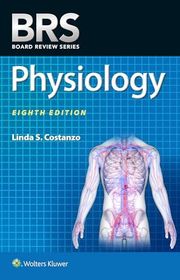
BRS Physiology
For medical students revising material they've already learned. Costanzo's outline format and practice questions make weak areas easier to identify, though the compressed explanations work better as a companion than as a first textbook.
What it's about
Linda S. Costanzo reviews core medical physiology in an outline format supported by tables, diagrams, and practice questions. Organ-system chapters and a comprehensive examination help students consolidate concepts and test their understanding during course or board-exam preparation.

Human Anatomy & Physiology
For students taking a combined anatomy and physiology course. Marieb and Hoehn place structures beside their functions with extensive illustrations, though the breadth means it offers less physiological depth than a dedicated medical-school text.
What it's about
Elaine Marieb and Katja Hoehn connect human body structures with their functions in an introductory textbook. Illustrated explanations and clinical applications accompany learning activities designed to help students understand anatomical relationships and physiological processes beyond memorizing terminology.

For undergraduates who want to connect mechanisms across body systems. Silverthorn's active exercises and concept mapping encourage reasoning beyond recall, though the substantial detail and problem-solving approach require more work than a brief overview.
What it's about
Dee Silverthorn's eighth edition integrates cellular and molecular physiology with themes that connect body systems. Active learning exercises, research problems, graphing activities, and concept mapping encourage students to reason through physiological questions and understand relationships among processes.

Human Physiology
For biology and allied-health students who need a structured introduction to function. Fox builds physiological ideas from chemical and biological foundations, though the textbook format is more demanding than a general-interest explanation of the body.
What it's about
Stuart Fox's fifteenth edition introduces physiological principles through chemical and biological foundations, then connects them with anatomical structures and functions. Health applications and integrated explanations emphasize conceptual understanding for students in biology and the allied health professions.
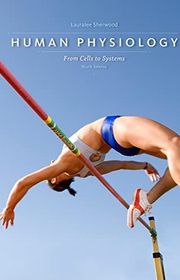
Human Physiology: From Cells to Systems
For undergraduates who want homeostasis to provide a consistent thread through body systems. Sherwood uses analogies and everyday connections to support understanding, though the substantial text still assumes a willingness to study biology carefully.
What it's about
Lauralee Sherwood explains human physiology around the theme of homeostasis, linking cellular processes to organ systems. Illustrations, analogies, and everyday examples show how different parts of the body cooperate to maintain a stable internal environment.

Medical Physiology
For advanced students who want molecular and cellular mechanisms developed in depth. Boron and Boulpaep provide a substantial reference across systems, though its length and technical detail are excessive for a first overview or quick revision.
What it's about
Boron and Boulpaep organize human physiology from molecular processes and cellular signaling through major organ systems. Detailed illustrations connect membrane transport, neural activity, circulation, respiration, and endocrine regulation with clinical problems and underlying biological mechanisms.

For students who need to connect textbook diagrams with real anatomical structures. Rohen's dissection photographs provide a useful laboratory companion, though this is a structural reference and won't explain physiological mechanisms on its own.
What it's about
Johannes W. Rohen, Chihiro Yokochi, and Elke Lütjen-Drecoll's eighth edition presents human anatomy through photographs of cadaver dissections. Regional chapters combine these images with schematics, diagnostic imaging, and clinical cases to explain structures and their spatial relationships.
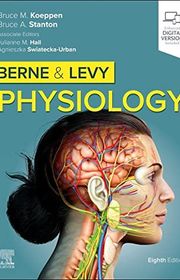
Berne & Levy Physiology
For students who want physiological mechanisms connected with biophysics and experimental observations. Its scientific emphasis gives explanations depth, though the detailed treatment asks for stronger foundations than an introductory anatomy-and-physiology course text.
What it's about
Berne & Levy Physiology explains the mechanisms that control and regulate the body's functions through an organ-system approach. Experimental observations, biophysical principles, diagrams, and clinical examples connect scientific foundations with the study of normal human physiology.

For medical students who want anatomy connected to clinical situations. Ellis and Mahadevan emphasize practical structural relationships, though the regional organization won't provide the system-by-system functional explanation that a physiology course usually requires.
What it's about
Harold Ellis and Vishy Mahadevan connect anatomical knowledge with clinical work for medical students and junior doctors. This fourteenth edition uses medical images, diagrams, and illustrated surface anatomy to explain body regions, with expanded coverage of the nervous system.

For medical students who want a readable structural foundation beside physiology. Drake and colleagues connect regional anatomy with imaging and clinical cases, though the book's emphasis remains where things are rather than how systems are regulated.
What it's about
Richard Drake, A. Wayne Vogl, and Adam Mitchell organize essential human anatomy by body region in this fourth edition. Illustrations, surface anatomy, diagnostic images, and clinical cases connect structural knowledge with its practical applications in medical study.

For nursing and allied-health students who want normal function connected to illness. Waugh and Grant keep the explanations approachable, though students needing detailed molecular mechanisms or medical-school depth will want a more extensive text.
What it's about
Anne Waugh and Allison Grant introduce human body structure and function, then explain how illness alters normal processes. This twelfth edition uses straightforward text and color illustrations for students preparing for nursing and other health related professions.

The Anatomy Coloring Book
For students who remember structures better through active visual work. Coloring can support vocabulary and spatial recall alongside lectures, though the activity format offers little of the causal explanation needed to understand physiological processes.
What it's about
Wynn Kapit and Lawrence Elson's fourth edition teaches anatomical structures through coloring activities linked to terminology. By coordinating names with illustrated body parts, the book encourages visual associations and active study rather than relying solely on reading descriptions.
Sources
- 1
20 Best Anatomy And Physiology Books For Medical Students - TheMDJourney
themdjourney.com
- 2
Physiology - Health Sciences Textbooks - Library Guides at University of Missouri Libraries
libraryguides.missouri.edu
- 3
Physiology - Anatomy, Histology, Physiology, and Pathology - Library Guides at Florida State University Maguire Medical Library
guides.library.med.fsu.edu
- 4
Human Physiology Books
goodreads.com
- 5
Best Physiology Book? : r/Physiology
reddit.com
- 6
What is the best physiology book for someone who has no background of medical : r/medicalschool
reddit.com
- 7
Best Physiology Books and Resources for Medical School and the Physiology NBME Shelf Exam 2023 — Med School Advice
medschooladvice.com
- 8
14 Best Anatomy and Physiology Books | Anatomy Textbooks | BioExplorer
bioexplorer.net
- 9
Human Physiology Textbooks: Which Is The Best? | Top Hat
tophat.com



Edited by
Software engineer whose passion for tracking book recommendations from podcasts inspired the creation of MRB.
Lead investor at 3one4 Capital whose startup expertise and love for books helped shape MRB and its growth.
Comments
Spotted a missing book, a wrong order or a mistake? Tell us and we'll fix this page.
We're a reading guide, not the author or publisher, so we can't send books or pass on messages.