
15 Best Retirement Planning Books
The best retirement planning books, ranked by how many expert sources recommend each one, with notes on who each suits and where to start planning.
Our take
Retirement planning involves two related questions: how to support yourself after regular employment ends, and what you want those years to look like. Books on the subject vary between financial checklists, detailed income strategies, and reflections on purpose, identity, and spending.
The 5 Years Before You Retire concentrates on approaching the transition, while How to Make Your Money Last considers the practical challenge of turning resources into income. Retirement Planning Guidebook gives readers who want depth a more technical framework. The Psychology of Money and Your Money or Your Life help examine habits and expectations; they serve a different purpose from benefits or withdrawal manuals. The New Retirementality adds questions about meaningful work and life beyond a conventional retirement date. Most financial examples here concern the United States, and edition dates matter for rules and thresholds.
Start with How to Retire for a broad view, then choose a financial guide matching your stage and appetite for detail.
15 books · 9 sources · Last updated
As an Amazon Associate, we earn from qualifying purchases (at no extra cost to you).
How to choose from this list
Skip to the full rankingIf you want a broad introduction: How to Retire → How to Make Your Money Last
If you're five years from retirement: The 5 Years Before You Retire
If you want detailed income planning: Retirement Planning Guidebook → Don't Go Broke in Retirement
If you're building financial independence: Your Money or Your Life → Retire Before Mom and Dad
If you're thinking about life beyond work: The New Retirementality
The 15 books, ranked
Ranked by how many expert sources name each book. Ties go to the book more people recommend.

For US readers worried about turning savings into dependable income, Quinn connects the major retirement decisions in accessible language. Its breadth makes a useful starting framework, though benefit rules and tax details need checking against current guidance.
What it's about
Jane Bryant Quinn examines how retirees can turn savings into income while managing the risk of running out of money. Her guide discusses Social Security, pensions, investments, housing, insurance, and spending decisions within a broader retirement plan.

For US workers approaching their retirement date, Birken organizes preparation around a practical final-five-years window. The focused timetable helps readers identify overlooked decisions, though people already retired will find some sections less relevant.
What it's about
Emily Guy Birken focuses on decisions facing people in the five years before retirement. She discusses savings, employer retirement plans, Medicare, housing, and family finances, with planning steps for assessing readiness and adjusting arrangements before leaving work.
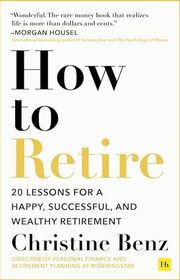
How to Retire: 20 Lessons for a Happy, Successful, and Wealthy Retirement
For readers who want financial and personal preparation considered together, Benz makes expert perspectives accessible through focused lessons. Its range helps reveal overlooked questions, though readers seeking detailed calculations will need a more technical companion.
What it's about
Christine Benz draws on interviews with twenty retirement specialists to explore money and life after work. Lessons address portfolios, income, taxes, relationships, purpose, and other decisions, bringing financial preparation together with the personal experience of retirement.
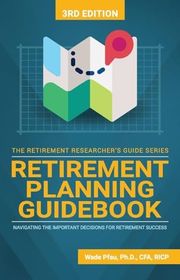
Retirement Planning Guidebook: Navigating the Important Decisions for Retirement Success
For engaged US planners who want to understand competing income strategies, Pfau offers a detailed framework spanning major retirement decisions. Its breadth supports serious study, though technical explanations and calculations demand more effort than a short checklist.
What it's about
Wade Pfau examines decisions about retirement income, investments, Social Security, Medicare, taxes, housing, and long-term care. He presents different approaches and planning tools to help readers consider how their preferences and resources fit a retirement strategy.

For readers whose money decisions are shaped by anxiety, comparison, or shifting expectations, Housel offers memorable behavioral perspective. The stories help clarify what enough means, though they don't provide a retirement-income plan or benefits guidance.
What it's about
Morgan Housel uses nineteen short stories to explore how people think about money. He examines how personal experience, emotion, pride, and incentives shape financial choices, arguing that behavior matters alongside knowledge in investing and managing wealth.
Also recommended by
6 people Daniel Pink recommended this book
Daniel Pink
"Few people write about finance with the graceful clarity of [this author]." - Daniel Pink
Daniel Pink's recommendation of this book  Howard Marks recommended this book
Howard Marks
"[The author]’s observations often hit the daily double: they say things that haven’t been said before, and they make sense." - Howard Marks
Howard Marks's recommendation of this book  Anthony Pompliano recommended this book
Anthony Pompliano
"Want to read a great book? Go grab [this one]." - Anthony Pompliano
Anthony Pompliano's recommendation of this book  Michael Mauboussin recommended this book
Michael Mauboussin
"A wonderful and wise book." - Michael Mauboussin
Michael Mauboussin's recommendation of this book  Blake Randall recommended this book
Blake Randall
"" - Blake Randall
Blake Randall's recommendation of this book  Brad Feld recommended this book
Brad Feld
"Wonderful book." - Brad Feld
Brad Feld's recommendation of this book

Your Money or Your Life
9 Steps to Transforming Your Relationship with Money and Achieving Financial Independence
For readers questioning how work and spending fit their desired life, Robin and Dominguez connect financial independence with personal values. Its exercises encourage a sustained review of habits, though retirement-specific benefits and taxes receive less attention.
What it's about
Vicki Robin and Joe Dominguez offer a program for rethinking the relationship between earning, spending, and personal values. Exercises help readers examine financial habits, reduce expenses, build savings, and consider what constitutes enough for a satisfying life.
Also recommended by
3 people Mr. Money Mustache recommended this book
Mr. Money Mustache
"If you just get whatever the latest edition of that book is, it really teaches you a philosophy that’s pretty similar to mine." - MMM
Mr. Money Mustache's recommendation of this book  Ali Abdaal recommended this book
Ali Abdaal
"completely changed my relationship with money." - Ali Abdaal
Ali Abdaal's recommendation of this book  Roberto Blake recommended this book
Roberto Blake
"[One of my] 5 favorite personal finance books." - Roberto Blake
Roberto Blake's recommendation of this book

For future retirees who need to address household debt before detailed planning, Ramsey provides a clear sequence and firm motivational voice. Its strength is financial discipline, though the rigid approach doesn't explore retirement-income choices in depth.
What it's about
Dave Ramsey presents a structured approach to changing money habits, paying down debt and building savings. The guide discusses common financial myths and uses practical resources to support planning for emergencies, retirement and other household financial goals.
Also recommended by
1 person Shay Carl recommended this book
Shay Carl
Shay Carl recommended this book in the "Tools of Titans" book.
Shay Carl's recommendation of this book

How Much Money Do I Need to Retire?
Uncommon Financial Planning Wisdom for a Stress-Free Retirement
For readers unsettled by a single retirement savings target, Tresidder explains why planning assumptions deserve scrutiny. Its questioning approach helps readers evaluate calculators, though it supplies a framework for judgment rather than a personalized answer.
What it's about
Todd Tresidder questions common assumptions behind retirement calculators, showing how estimates can change with spending, investment returns, and other inputs. He presents three approaches to retirement planning and encourages readers to examine the reasoning behind their savings targets.

For US readers who want a manageable structure for retirement income, Vernon combines dependable income, withdrawals, and spending decisions. The concise approach reduces complexity, though it offers less detail than a comprehensive technical guidebook.
What it's about
Steve Vernon presents a three-step approach to retirement income: establish dependable income, plan withdrawals from savings, and align spending with available resources. The guide discusses Social Security timing and uses research, checklists, and examples to explain retirement choices.

Income on Demand
Master Your Retirement Portfolio, Ignore the Market, and Leave the IRS Weeping
For retirees interested in connecting an investment portfolio with regular spending, Bird keeps income needs central. Its practical emphasis suits readers who already invest, though the confident title shouldn't be read as a guarantee against market or tax risk.
What it's about
Jonathan Bird explains an approach to managing a retirement portfolio for ongoing income. He discusses index funds, investment withdrawals, taxes, and market downturns, encouraging retirees to coordinate portfolio decisions with the money they need for everyday living.

For readers still building toward financial independence, Berger explains the arithmetic in an approachable way. Its focus on everyday choices helps younger planners get oriented, though it covers less of the detail involved in drawing retirement income.
What it's about
Rob Berger explains the arithmetic of financial independence through saving, spending, debt reduction, and investing. He combines practical money reviews with retirement-account discussions and exercises designed to help readers understand how everyday choices affect their financial goals.

For US readers who want a checklist of interconnected retirement decisions, Scheil brings benefits, insurance, accounts, and estate concerns together. Its breadth helps prepare questions for an adviser, though individual topics may need deeper study.
What it's about
Hans Scheil explains the major financial choices retirees face, including Social Security, Medicare, long-term care, retirement accounts, investments, taxes, and estate planning. Real-life examples illustrate how these decisions connect and when professional guidance can help.

For readers who want retirement accounts, insurance, and estate decisions considered together, Carlson offers a broad US planning framework. Its coordinated perspective is useful, though the technical range and edition-specific rules require careful reading.
What it's about
Robert Carlson presents retirement planning as a coordinated set of decisions about savings, spending, investments, and risk. He discusses annuities, retirement accounts, health care, long-term care, taxes, and estate planning for retirees and people approaching retirement.

The Smartest Retirement Book You'll Ever Read
Achieve Your Retirement Dreams--in Any Economy
For readers who prefer brief explanations over a large planning manual, Solin makes common retirement money questions approachable. Its short format supports selective reading, though a personal withdrawal and tax plan needs more detail.
What it's about
Daniel R. Solin explains financial concepts for people approaching retirement or already retired. Short discussions cover investments, money management, withdrawals, and common mistakes, with an emphasis on planning for lasting savings and recognizing financial scams.

The New Retirementality
Planning Your Life and Living Your Dreams...at Any Age You Want
For readers unsure what retirement should mean beyond leaving a job, Anthony makes purpose and meaningful work part of planning. Its broader life perspective complements financial manuals, though it provides less technical guidance on income and taxes.
What it's about
Mitch Anthony argues that retirement planning should address purpose as well as money. Through examples and discussion, he explores meaningful work, personal interests, and financial resources, encouraging readers to design a later life around their own goals.
Sources
- 1
Best Retirement Planning Books to Buy in 2026
smartasset.com
- 2
Retirement Planning Books - 10 Best Books [Updated 2026]
wallstreetmojo.com
- 3
The 21 Best Retirement Books to Read Now - Just Start Investing
juststartinvesting.com
- 4
Retirement Planning Books
goodreads.com
- 5
Best Retirement Planning Books: What I’d Actually Recommend
michaelryanmoney.com
- 6
Best Books on Retirement 2026: 27 Picks for Planning and Purpose
boldin.com
- 7
The Best Retirement Planning Books You Can Buy for 2024 | Benzinga
benzinga.com
- 8
Good retirement book
reddit.com
- 9
The 20 Best New Retirement Books in 2020 - Boldin
boldin.com



Edited by
Software engineer whose passion for tracking book recommendations from podcasts inspired the creation of MRB.
Lead investor at 3one4 Capital whose startup expertise and love for books helped shape MRB and its growth.
Comments
Spotted a missing book, a wrong order or a mistake? Tell us and we'll fix this page.
We're a reading guide, not the author or publisher, so we can't send books or pass on messages.