
14 Best Budgeting Books
The best budgeting books, ranked by how many expert sources recommend each one, with notes to help you compare practical systems, debt plans, and money habits.
Our take
A budgeting book can help organize spending, but the books here approach that task in different ways. Some offer worksheets and recurring routines. Others connect a budget with paying down debt, setting up accounts, or thinking about the kind of life money should support. Many use American banking and financial examples, so the practical details may need adapting to another country.
The most direct choices include You Need a Budget, The Everything Budgeting Book, and The One Week Budget. I Will Teach You To Be Rich puts more emphasis on automation within a broader financial system. For readers starting with little spare money, How to Manage Your Money When You Don't Have Any addresses that constraint directly. Your Money or Your Life and The Psychology of Money focus more on values and behavior. Start with You Need a Budget for an ongoing allocation method, or Broke Millennial for a wider introduction to everyday money decisions.
14 books · 10 sources · Last updated
As an Amazon Associate, we earn from qualifying purchases (at no extra cost to you).
How to choose from this list
Skip to the full rankingIf you want a recurring budgeting method: You Need a Budget
If you want worksheets and a short setup process: The One Week Budget → The Everything Budgeting Book
If money barely covers essentials: How to Manage Your Money When You Don't Have Any
If you're new to managing your own finances: Broke Millennial → Get Good with Money
If you prefer automated money routines: I Will Teach You To Be Rich
If you want to rethink spending and priorities: Your Money or Your Life → The Psychology of Money
The 14 books, ranked
Ranked by how many expert sources name each book. Ties go to the book more people recommend.

For readers who understand budgeting arithmetic but struggle with expectations and behavior. The short essays explain why money decisions feel personal, though they offer perspective rather than templates, spending categories, or a step-by-step budgeting system.
What it's about
Morgan Housel explores financial behavior through nineteen short stories about money and the people who use it. He examines the influence of personal history, ego, and incentives on choices that are often presented as purely mathematical decisions.
Also recommended by
1 person- Ankur Warikoo recommended this book
Ankur Warikoo
"Possibly the only money book one needs to read!" - Ankur Warikoo
Ankur Warikoo's recommendation of this book
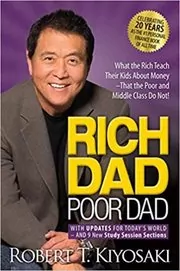
Rich Dad Poor Dad
What the Rich Teach Their Kids About Money That the Poor and Middle Class Do Not!
For readers drawn to stories about ownership and financial independence. The simple contrasts can prompt reflection on money habits, though this is a motivational perspective rather than a detailed or comprehensive household budgeting method.
What it's about
Rich Dad, Poor Dad contrasts the money lessons Kiyosaki says he learned from his poor biological father and his rich mentor. Through simple stories he explains assets versus liabilities, cash flow, and why working only for a paycheck rarely leads to lasting wealth.
Also recommended by
3 people Will Smith recommended this book
Will Smith
Will Smith mentioned sharing this book with his son.
Will Smith's recommendation of this book  Anthony Pompliano recommended this book
Anthony Pompliano
"My favorite book of all time." - Anthony Pompliano
Anthony Pompliano's recommendation of this book  Patrick Bet-David recommended this book
Patrick Bet-David
Patrick Bet-David recommended this book on his website.
Patrick Bet-David's recommendation of this book

For readers who respond to a firm sequence for tackling debt and building savings. Its clear structure can reduce indecision, though the rigid rules and motivational tone allow less flexibility than approaches centered on personal priorities.
What it's about
Dave Ramsey presents a structured approach to changing money habits, paying down debt and building savings. The guide discusses common financial myths and uses practical resources to support planning for emergencies, retirement and other household financial goals.
Also recommended by
1 person Shay Carl recommended this book
Shay Carl
Shay Carl recommended this book in the "Tools of Titans" book.
Shay Carl's recommendation of this book

For beginners who want budgeting connected with a wider financial foundation. Its staged approach brings debt, credit, insurance, and planning into the same picture, though readers seeking only a simple monthly budget may find the scope broad.
What it's about
Tiffany Aliche presents ten steps toward what she calls financial wholeness, drawing on her recovery from financial setbacks. Checklists, worksheets, and expert contributions connect budgeting, debt reduction, saving, and wealth building with a broader picture of financial security.

Your Money or Your Life
9 Steps to Transforming Your Relationship with Money and Achieving Financial Independence
For readers who want spending to reflect what they value about life and work. Its time-and-money exercises encourage deeper reflection than a bill tracker, though the process requires substantial recording and personal examination.
What it's about
Vicki Robin and Joe Dominguez offer a program for rethinking the relationship between earning, spending, and personal values. Exercises help readers examine financial habits, reduce expenses, build savings, and consider what constitutes enough for a satisfying life.
Also recommended by
3 people Mr. Money Mustache recommended this book
Mr. Money Mustache
"If you just get whatever the latest edition of that book is, it really teaches you a philosophy that’s pretty similar to mine." - MMM
Mr. Money Mustache's recommendation of this book  Ali Abdaal recommended this book
Ali Abdaal
"completely changed my relationship with money." - Ali Abdaal
Ali Abdaal's recommendation of this book  Roberto Blake recommended this book
Roberto Blake
"[One of my] 5 favorite personal finance books." - Roberto Blake
Roberto Blake's recommendation of this book

I Will Teach You To Be Rich
For beginners who want a broader money system with less daily tracking. Its emphasis on automation connects spending with saving and investing, though the banking and account examples are mainly American and need current verification.
What it's about
Ramit Sethi presents a six-week approach to personal finance centered on banking, saving, spending, and investing. His program emphasizes practical systems and getting started, connecting everyday money decisions with longer-term financial security and personal ambitions.
Also recommended by
2 people Andrew Wilkinson recommended this book
Andrew Wilkinson
"One key thing stuck with me: Saving is about percentages, not dollars." - Andrew Wilkinson
Andrew Wilkinson's recommendation of this book - Mr. Money Mustache recommended this book
Mr. Money Mustache
"Is [this book] still worth reading? Yes – especially if you are a financial beginner." - MMM
Mr. Money Mustache's recommendation of this book

You Need a Budget
For readers who want a hands-on method for allocating money already available. Its rules accommodate changing priorities more explicitly than rigid budget categories, though the approach still requires regular attention and honest decisions about tradeoffs.
What it's about
Jesse Mecham explains a budgeting method built around four rules for making deliberate decisions with available money. He connects spending priorities, preparation for larger expenses, flexibility, and time between earning and spending with the effort to escape living paycheck to paycheck.

For younger adults learning to handle money and talk about it with others. The everyday social situations make it more approachable than a technical reference, though budgeting shares space with credit, debt, and other introductory topics.
What it's about
Erin Lowry introduces personal finance for young adults navigating limited incomes and unfamiliar responsibilities. She covers budgeting, credit cards, debt, and student loans alongside awkward money conversations with friends and partners, connecting financial choices to everyday situations.

For readers who want budgeting placed within a larger financial-independence plan. The attention to earnings broadens the discussion beyond cutting expenses, though the ambitious approach asks more time and energy than a basic household budget.
What it's about
Sabatier draws on his journey toward financial independence to offer an alternative to a conventional working life and retirement timetable. The guide examines earning, saving, investing, and managing money, connecting financial choices with the goal of gaining more control over time.

For readers in their twenties and thirties who want a reference for unfamiliar financial decisions. Its broad explanations help connect budgeting with credit, taxes, and saving, though American institutions and rules limit its usefulness elsewhere.
What it's about
Beth Kobliner introduces personal finance for adults in their twenties and thirties. Explanations of debt, credit, taxes, saving, and investing connect everyday money decisions with longer-term goals, addressing the financial questions that often arise when starting an independent life.

How to Manage Your Money When You Don't Have Any
For readers whose immediate concern is making limited income cover essentials. The focus on financial strain is more relevant than wealth-building stories, though a book cannot resolve a persistent gap between necessary expenses and available earnings.
What it's about
Erik Wecks focuses on households struggling to cover their monthly expenses. Drawing on his own financial difficulties, he discusses budgeting, spending priorities, debt, and saving, offering a practical approach to working with limited income and pursuing greater financial stability.

For beginners who want money management connected with cooking, home life, and work. The lifestyle context makes budgeting feel less isolated, though the breadth leaves less space for a detailed recurring budget routine.
What it's about
Chelsea Fagan presents personal finance as part of everyday life, from budgeting and investing to cooking and maintaining a home. Expert contributions and practical examples explore spending decisions, career choices, and money conversations, helping beginners connect finances with their priorities.

For readers who want to organize bills and money routines through a short setup process. Its concentrated format makes starting less intimidating than a large reference, though maintaining the system still takes adjustments after the first week.
What it's about
Tiffany Aliche sets out a seven-day process for creating a personal money management system. Templates and practical guidance help readers organize their finances and simplify routine bill handling, with an emphasis on managing everyday money without constant attention to individual payments.

The Everything Budgeting Book
Practical Advice for Saving and Managing Your Money - from Daily Budgets to Long-term Goals
For readers who want a conventional household-budget reference with worksheets and examples. Its direct focus on daily expenses and longer-term goals is more procedural than the mindset books, though the presentation can feel workmanlike.
What it's about
Tere Stouffer explains how to build a household budget that connects daily spending with future goals. Worksheets and practical examples address everyday expenses, saving, and preparation for unexpected events, helping readers examine where their money goes and organize their finances.
Sources
- 1
Best Personal Finance Books Of 2026
cnbc.com
- 2
25 Best Personal Finance Books to Read in 2026
thepennyhoarder.com
- 3
10 Best Budgeting Books To Read Now If You're Worried About Money
forbes.com
- 4
100 Best Budgeting Books of All Time (Updated for 2026)
shortform.com
- 5
30+ Best Budgeting Books You NEED to Read
carolinevencil.com
- 6
Budgeting Books
goodreads.com
- 7
Favorite Budgeting/Debt Help Books
reddit.com
- 8
Books on money habits
reddit.com
- 9
13 Best Books On Budgeting That Will Transform Your Finances
herpaperroute.com
- 10
14 Best Budgeting Books to Improve Your Finances
juststartinvesting.com



Edited by
Software engineer whose passion for tracking book recommendations from podcasts inspired the creation of MRB.
Lead investor at 3one4 Capital whose startup expertise and love for books helped shape MRB and its growth.
Comments
Did we miss something? Have feedback?
Help us improve this page by sharing your thoughts