
18 Best Passive Income Books
The best passive income books, ranked by how many expert sources recommend each one, with notes on the readers, goals, and income models each suits.
Our take
Passive income books cover several different activities: investing savings, owning rental property, earning royalties, and building businesses that rely on systems or other people. These paths require different amounts of money, effort, and ongoing attention. A useful book helps you understand those demands. An impressive earnings figure in a title does not tell you what results a reader can expect.
For a broad survey, Passive Income, Aggressive Retirement compares many models. The Simple Path to Wealth concentrates on investment assets, while Set for Life focuses on building the financial base to acquire them. The Book on Rental Property Investing explains a landlord's responsibilities, and Passive Investing Made Simple examines apartment syndications from an investor's perspective. The online-business books are closer to entrepreneurship: The 4-Hour Workweek emphasizes systems and delegation, while The $100 Startup explores starting small. Begin with the approach that matches the time and capital you can realistically commit.
18 books · 9 sources · Last updated
As an Amazon Associate, we earn from qualifying purchases (at no extra cost to you).
How to choose from this list
Skip to the full rankingIf you want to compare income models: Passive Income, Aggressive Retirement
If you want a focus on investment assets: The Simple Path to Wealth → Quit Like a Millionaire
If you need to build your starting capital: Set for Life
If you want to understand rental ownership: The Book on Rental Property Investing
If you're considering apartment syndications: Passive Investing Made Simple
If you want to explore a small business: The $100 Startup → The 4-Hour Workweek
The 18 books, ranked
Ranked by how many expert sources name each book. Ties go to the book more people recommend.

For readers who want to redesign work around time and location rather than simply earn more. Delegation and systems receive more attention than investment selection, though many online-business examples are dated and the title is aspirational.
What it's about
Tim Ferriss presents an approach to reorganizing work around greater freedom of time and location. The guide explores reducing unnecessary tasks, outsourcing, automating income, and planning shorter periods away from work rather than postponing enjoyment until retirement.
Also recommended by
26 people Eric Weinstein recommended this book
Eric Weinstein
Eric Weinstein tweet about books that mattered enough to him.
Eric Weinstein's recommendation of this book  Tristan Harris recommended this book
Tristan Harris
Tristan Harris mentioned this book on "The Tim Ferriss Show" podcast.
Tristan Harris's recommendation of this book  Charles Poliquin recommended this book
Charles Poliquin
Charles Poliquin recommended this book in the "Tools of Titans" book.
Charles Poliquin's recommendation of this book  Walter Isaacson recommended this book
Walter Isaacson
"[The author has] a great curiosity and [...] a great love for things." - Walter Isaacson
Walter Isaacson's recommendation of this book  Daniel Pink recommended this book
Daniel Pink
Daniel Pink mentioned this book on "The Tim Ferriss Show" podcast.
Daniel Pink's recommendation of this book  Blake Mycoskie recommended this book
Blake Mycoskie
"I read [this book] right when I started Toms. There’s so many things that I took from [it] that allowed Toms to have this incredible growth." - Blake Mycoskie
Blake Mycoskie's recommendation of this book +20
More recommendations
- David Heinemeier Hansson
"My key takeaway from [this book] was the concept of lifestyle design." - DHH
- Marc Andreessen
"[The author] basically takes all of the time management and personal productivity theories of the last 20 to 30 years and pushes them to 11, to paraphrase 'Spinal Tap.'" - Marc Andreessen
- Jason Silva
"I was very affected by [this book]. I was like this guy has it figured out." - Jason Silva
- Mike Shinoda
"I do talk about [this book] quite a bit." - Mike Shinoda
- Mark Bell
"Taught me better ways to manage my time and the value of not making myself too busy." - Mark Bell
- Maurice Ashley
"Made me ditch the average life in search of one with complete flexibility and freedom to live life on my terms." - Maurice Ashley
- Tim Draper
"With this kind of time management and focus on the important things in life, people should be able to get 15 times as much done in a normal work week." - Tim Draper
- Derek Sivers
"Brilliant reversal of all of the 'how to manage all your crap' books." - Derek Sivers
- Rolf Potts
"Challenges the reader to seriously consider an essential–yet rarely asked–question: What do you really want from life?" - Rolf Potts
- A.J. Jacobs
A.J. Jacobs mentioned this book on "The Tim Ferriss Show" podcast.
- Caterina Fake
Caterina Fake mentioned this book on "The Tim Ferriss Show" podcast.
- Ev Williams
On the "books read" section of Ev Williams' GoodReads profile.
- Gary Keller
"This is a significant book." - Gary Keller
- Laura R Walker
"For those who struggle with productivity and taking control of their lives, [I give this book], of course!" - Laura R Walker
- Marc Goodman
One of Marc Goodman's most-gifted or recommended books.
- Mike Maples, Jr.
"If you want to live life on your own terms, this is your blueprint." - Mike Maples, Jr.
- Lewis Howes
"I've only probably read 4 books cover to cover. [This is one of them.]" - Lewis Howes
- Jodie Cook
"Life and work are reimagined and built back from scratch, in a way optimised for freedom and enjoyment." - Jodie Cook
- Brian Dean
"This book created thousands of entrepreneurs over the last 15 years… including me." - Brian Dean
- Michael Hyatt
Michael Hyatt recommended this book on his website.
- David Heinemeier Hansson

Passive Income, Aggressive Retirement
The Secret to Freedom, Flexibility, and Financial Independence (& how to get started!)
For readers who want an overview before committing to property, royalties, or another model. Comparing many approaches makes the initial work visible, though the retirement framing and personal examples cannot establish what an individual reader will earn.
What it's about
Rachel Richards surveys twenty-eight passive income models as possible routes toward financial independence and earlier retirement. Her guide combines her own experience with contributions from specialists, helping readers consider income sources intended to require less ongoing work.

The Book on Rental Property Investing
How to Create Wealth with Intelligent Buy and Hold Real Estate Investing
For aspiring landlords who want the operational side of rental investing explained. Property analysis, financing, and management get more attention than motivational surveys, though owning rentals brings ongoing work and the examples center on the United States.
What it's about
Brandon Turner outlines how to build a rental-property business using buy-and-hold investing. He explains planning, finding and evaluating properties, financing purchases, and managing rentals, drawing on his experience to discuss both opportunities and common obstacles.
Set for Life: An All-Out Approach to Early Financial Freedom
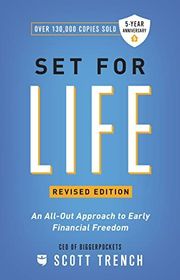
For working readers who need to build capital before income-producing assets become realistic. Its emphasis on spending, earnings, and housing addresses that earlier stage, though the aggressive savings approach and US property assumptions require substantial adaptation.
What it's about
Scott Trench presents an approach to early financial freedom through managing expenses, increasing earned income, and acquiring assets. The book gives particular attention to housing and real estate while explaining how working adults might build an investment base.

The $100 Startup
Reinvent the Way You Make a Living, Do What You Love, and Create a New Future
For readers with more skills than startup capital who want to build a small business. Concrete examples connect offers with paying customers, though running a microbusiness usually means ongoing work rather than genuinely passive income.
What it's about
Chris Guillebeau profiles people who built small businesses with modest startup funds. Their experiences illustrate how existing skills, a useful offer, and identifiable customers can become the basis of an independent livelihood.

The Simple Path to Wealth
Your Road Map to Financial Independence and a Rich, Free Life
For readers interested in building investment assets rather than operating an online business. Its index-fund focus provides a simpler framework than a catalog of income ideas, though the US-centered examples and long time horizon limit its fit.
What it's about
Collins presents an approach to financial independence centered on saving, avoiding debt, and investing through low-cost index funds. Originally developed from advice to his daughter, the book discusses market volatility, accumulating wealth, and supporting a more independent life.
Also recommended by
1 person Mr. Money Mustache recommended this book
Mr. Money Mustache
"Teaches everything you really need to be a successful lifetime investor, yet it’s ridiculously simple." - MMM
Mr. Money Mustache's recommendation of this book

For readers exploring an internet business built around their interests or expertise. Its lifestyle emphasis connects business choices with working preferences, though older platform examples need updating and an online operation still requires maintenance.
What it's about
Scott Fox presents online entrepreneurship as a way to design a preferred working life. Examples and instructions explore business models, automated marketing, outsourcing, and selling expertise, helping readers consider how their interests could support an internet-based business.

How to Make $100,000 per Year in Passive Income and Travel the World
The Passive Income Guide to Wealth and Financial Freedom
For beginners comparing several possible income streams before choosing one to investigate. The travel-oriented framing makes lifestyle goals central, though the earnings figure in the title is a target rather than evidence of a likely outcome.
What it's about
Chase Andrews surveys fourteen approaches to building income streams outside conventional employment. The guide frames these business and investment possibilities around the goal of financial independence, encouraging readers to consider ways of gaining greater flexibility over work and travel.

For readers who already have useful knowledge and want to understand ways to sell it online. Linking content with products and memberships provides a business model, though the older traffic and advertising tactics need substantial updating.
What it's about
Joel Comm explains how online content can support a business through information products, affiliate programs, memberships, and coaching. Case studies accompany guidance on branding, attracting visitors, and advertising, helping readers connect their expertise with potential customers and revenue sources.

For readers collecting ideas for online assets and automated business systems. The range of blueprints offers more starting points than a single-strategy book, though breadth limits depth and the projected earnings should not be treated as typical.
What it's about
Gundi Gabrielle presents 23 approaches to building income-producing assets, largely through online businesses and marketing. She discusses the initial work, systems, and automation involved, giving readers an overview of different models to investigate and develop.

Passive Investing Made Simple
How to Create Wealth and Passive Income Through Apartment Syndications
For readers considering participation in apartment syndications rather than managing rentals themselves. Its focus on operators and deal evaluation distinguishes it from landlord manuals, though limited control and dependence on other managers remain central tradeoffs.
What it's about
Anthony Vicino and Dan Krueger introduce passive investment in multifamily apartment syndications. They explain how these arrangements are structured, how to evaluate operators, markets, and deals, and the steps involved in participating as an investor.
Quit Like a Millionaire: No Gimmicks, Luck, or Trust Fund Required
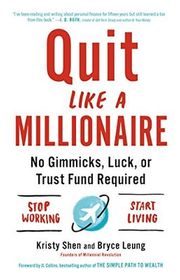
For readers drawn to early retirement through saving and investments rather than entrepreneurship. The authors' personal story makes the tradeoffs concrete, though their experience and retirement calculations are not a guarantee that the same path will work for you.
What it's about
Kristy Shen and Bryce Leung combine their early-retirement story with discussions of saving, investment portfolios, and spending in retirement. They examine financial independence as a way to gain control over time, including travel and alternatives to conventional retirement.

The Lifestyle Investor
The 10 Commandments of Cash Flow Investing for Passive Income and Financial Freedom
For readers interested in a cash-flow framework tied to lifestyle goals. Its investment principles provide a way to organize questions about deals, though the author's opportunities and resources may differ substantially from those available to a beginner.
What it's about
Justin Donald presents ten principles for investing with cash flow and lifestyle goals in mind. He explains his approach to structuring investments and considering risk, arguing for income streams that can reduce dependence on earnings from a job or business.

For beginners who need to connect possible income models with their skills and goals. Its broad planning approach offers context before choosing a strategy, though readers seeking detailed execution or investment analysis will need a more specialized book.
What it's about
Nightingale-Conant and Entrepreneur Media introduce passive income by examining personal skills, resources, and financial goals. Their guide contrasts income models, addresses debt and expectations, and encourages readers to build a wealth plan around the lifestyle they want.

The Unemployed Millionaire
Escape the Rat Race, Fire Your Boss and Live Life on YOUR Terms!
For readers who want entrepreneurial motivation alongside ideas for marketing products. Its business-building perspective emphasizes reaching a wider audience, though the personal success narrative offers less practical investment analysis than the property-focused books here.
What it's about
Matt Morris connects his entrepreneurial experiences with a guide to developing and marketing a business. He discusses turning ideas into products for a wider audience, combining motivational principles with strategies intended to build an income beyond conventional employment.

The Ultimate Tutorial for Generating Passive Online Income
Best Ways to Create Online Business and to Start Earning Money Online and From Home
For readers seeking a short orientation to earning through online businesses. The compact format offers an accessible starting point, though its broad suggestions need much more research and the title overstates how complete a brief guide can be.
What it's about
Anthony Johnson introduces ideas for earning income through online businesses operated from home. This short guide presents internet entrepreneurship as a possible route toward greater control of working time, with suggestions for readers exploring alternatives to conventional employment.

For doctors and other professionals whose earnings depend heavily on working hours. It connects high income with broader questions about time and wealth, though its professional and US context will not fit every reader's circumstances.
What it's about
Tom Burns explores financial independence for doctors and other professionals whose income depends on their working time. He discusses financial education, investment income, borrowing, taxes, and protecting wealth, framing money management around gaining more control over one's life.

Financial Freedom with Real Estate Investing
The Blueprint To Quitting Your Job With Real Estate - Even Without Experience Or Cash
For readers considering the active work of organizing an apartment investment deal. It follows the operator's tasks more closely than a passive syndication overview, though raising capital and overseeing property create responsibilities that the freedom-focused title can understate.
What it's about
Michael Blank introduces apartment building investing through the steps involved in a first multifamily property deal. He explains finding opportunities, analyzing properties, raising money, and making offers, presenting a business approach aimed at developing income beyond salaried work.
Sources
- 1
9 Best Passive Income Investing Books
infinityinvesting.com
- 2
14 Best Books on Passive Income: Advance Your Earnings Knowledge
millionairemob.com
- 3
Best Books on Passive Income to Grow Your Wealth
pocketful.in
- 4
Top 10 Best Books on Passive Income [2026]
wallstreetmojo.com
- 5
70 Best Passive Income Books of All Time
shortform.com
- 6
Best Books on Passive Income and Lifestyle Investing (18 books)
goodreads.com
- 7
What are the best books on the topic of passive income?
reddit.com
- 8
Best Books On Passive Income (2026) 💰
blog.chapter.pub
- 9
Best Books on Passive Income & Assets
capitalreaders.com




Edited by
Software engineer whose passion for tracking book recommendations from podcasts inspired the creation of MRB.
Lead investor at 3one4 Capital whose startup expertise and love for books helped shape MRB and its growth.
Comments
Spotted a missing book, a wrong order or a mistake? Tell us and we'll fix this page.
We're a reading guide, not the author or publisher, so we can't send books or pass on messages.