
22 Best Negotiation Books
The best negotiation books, ranked by how many expert sources recommend each one, with notes to help you choose for work, difficult conversations, and deals.
Our take
Negotiation involves more than asking for a better price. You may need to understand another person’s interests, manage strong emotions, prepare alternatives, or change who takes part in a discussion. These books approach those tasks from different angles, so the most useful choice depends on what tends to go wrong in your own conversations.
Getting to Yes: Negotiating Agreement Without Giving In offers a foundation in solving problems around interests rather than positions. Never Split the Difference: Negotiating as if Your Life Depended on It puts more emphasis on listening and conversational tactics, while Negotiation Genius: How to Overcome Obstacles and Achieve Brilliant Results at the Bargaining Table and Beyond adds research and analysis. For strained relationships, try Difficult Conversations or Crucial Conversations: Tools for Talking When Stakes Are High. Workplace and legal negotiations have their own focused guides. Start with one general framework, then choose a second book that addresses your main obstacle, whether that is resistance, preparation, emotion, or unequal power.
22 books · 10 sources · Last updated
As an Amazon Associate, we earn from qualifying purchases (at no extra cost to you).
How to choose from this list
Skip to the full rankingIf you're learning the fundamentals: Getting to Yes → Bargaining for Advantage
If conversations become tense: Difficult Conversations → Beyond Reason
If the other side resists: Getting Past No → Never Split the Difference
If you're planning a complex deal: Negotiation Genius → 3-D Negotiation
If you're negotiating opportunities at work: Women Don't Ask → Ask For It → Negotiating at Work
The 22 books, ranked
Ranked by how many expert sources name each book. Ties go to the book more people recommend.

For beginners who want a clear framework for reaching agreements without surrendering their interests. Its focus on shared problems makes preparation straightforward, though resistant or manipulative counterparts may require additional tactics.
What it's about
Roger Fisher and William Ury present an approach to negotiation based on interests and mutually beneficial agreements. They explain separating people from problems, developing options together, and using independent standards to resolve disagreements.
Also recommended by
7 people Charlie Munger recommended this book
Charlie Munger
Charlie Munger recommended this book in the "Poor Charlie's Almanack" book.
Charlie Munger's recommendation of this book  Tim Ferriss recommended this book
Tim Ferriss
"A really important concept to grasp." - Tim Ferriss
Tim Ferriss's recommendation of this book  Drew Houston recommended this book
Drew Houston
"About principled negotiation, and I still think about and apply a lot of those concepts today." - Drew Houston
Drew Houston's recommendation of this book  Dustin Moskovitz recommended this book
Dustin Moskovitz
Dustin Moskovitz recommended this book on Twitter.
Dustin Moskovitz's recommendation of this book  Tim Draper recommended this book
Tim Draper
"[One of the books] that are recommended or required at Draper University." - Tim Draper
Tim Draper's recommendation of this book  Nick Ganju recommended this book
Nick Ganju
"I love [this book]." - Nick Ganju
Nick Ganju's recommendation of this book +1
More recommendations
- Ann Miura-Ko
"Really good." - Ann Miura-Ko
- Ann Miura-Ko

For readers who want concrete language for listening, questioning, and handling tense exchanges. Its crisis stories make techniques memorable, though treating ordinary conversations like hostage negotiations can strain relationships if applied mechanically.
What it's about
Former FBI hostage negotiator Chris Voss draws on high-stakes encounters to explain his approach to negotiation. He presents principles centered on emotion, intuition and communication, applying lessons from crisis situations to business discussions and everyday disagreements.
Also recommended by
2 people- Dustin Moskovitz recommended this book
Dustin Moskovitz
Dustin Moskovitz recommended this book on Twitter.
Dustin Moskovitz's recommendation of this book  Blake Randall recommended this book
Blake Randall
"" - Blake Randall
Blake Randall's recommendation of this book

Negotiation Genius
How to Overcome Obstacles and Achieve Brilliant Results at the Bargaining Table and Beyond
For readers who want to understand why negotiation strategies work, including hidden information and bargaining mistakes. Its research-based cases add depth beyond a quick tactics guide, though the business examples require sustained attention.
What it's about
Deepak Malhotra and Max Bazerman explain negotiation through behavioral research and practical business examples. They examine preparation, hidden information, unequal bargaining power and difficult tactics, while emphasizing ethical relationships and recognizing when an agreement is worth pursuing.

For readers who want to recognize the psychological forces behind agreement and compliance. Its research broadens your understanding of persuasion, though it provides less guidance on structuring a complete negotiation from preparation to follow-through.
What it's about
Cialdini explores why people agree to requests and how recurring principles influence their decisions. Research and examples explain persuasion in everyday settings, alongside ways to recognize these mechanisms and resist attempts to exploit them.
Also recommended by
18 people Tobi Lütke recommended this book
Tobi Lütke
"The most mind-bending book you can imagine, because it essentially taught you always humans are flawed and influential." - Tobi Lütke
Tobi Lütke's recommendation of this book  Scott Adams recommended this book
Scott Adams
"100 percent of effective people seem to have read [this book]. In fact, it’s one of those things that when I meet somebody and they’re operating at a pretty high level, if you mention [this book], they’ve all read it." - Scott Adams
Scott Adams's recommendation of this book  Naval Ravikant recommended this book
Naval Ravikant
"Fundamental and had a lot to teach." - Naval Ravikant
Naval Ravikant's recommendation of this book - Charlie Munger recommended this book
Charlie Munger
Charlie Munger recommended this book in the "Poor Charlie's Almanack" book.
Charlie Munger's recommendation of this book  Adam Robinson recommended this book
Adam Robinson
Adam Robinson mentioned this book on "The Tim Ferriss Show" podcast.
Adam Robinson's recommendation of this book  Ramit Sethi recommended this book
Ramit Sethi
Ramit Sethi mentioned this book on "The Tim Ferriss Show" podcast.
Ramit Sethi's recommendation of this book +12
More recommendations
- Alexis Ohanian
"[Helps you] navigate the world with heightened awareness for how we're always being influenced/manipulated." - Alexis Ohanian
- Guy Kawasaki
"The guiding light for how I conduct business—and in many ways how I live my life." - Guy Kawasaki
- Max Levchin
One of Max Levchin's answers to "what's your favourite business book you'd advise to young entrepreneurs?"
- Noah Kagan
"People can be influenced in their behaviors by many different tactics." - Noah Kagan
- Samy Kamkar
"I love it because it was a very systematic and analytical approach to the most common ways that human being have been known to be influenced and persuaded to do something." - Samy Kamkar
- Andrew Wilkinson
"[One of] my most recommended business books." - Andrew Wilkinson
- Neil Strauss
"Understanding these [principles] make all the difference in making the leap from interest to attraction." - Neil Strauss
- Patrick O'Shaughnessy
Patrick O'Shaughnessy recommended this book on a blog post.
- Mark Manson
Mark Manson recommended this book on his website.
- Alex Hormozi
Alex Hormozi recommended this book on Instagram.
- James Clear
"[One of] the 10 best nonfiction books of all-time." - James Clear
- Michael Hyatt
Michael Hyatt recommended this book on his website.
- Alexis Ohanian

For readers whose main obstacle is an emotional conversation with someone they need to keep working with. Its focus on safety and dialogue helps preserve relationships, though it is less concerned with pricing or bargaining leverage.
What it's about
Kerry Patterson and his coauthors offer tools for discussions where stakes are high, opinions differ, and emotions intensify. Examples explain how to create safety, listen through conflict, express disagreement, and turn difficult conversations into agreed action.
Also recommended by
3 people Max Levchin recommended this book
Max Levchin
"A now-venerable guide to having tough conversations in a way that engages the debaters." - Max Levchin
Max Levchin's recommendation of this book  Stewart Butterfield recommended this book
Stewart Butterfield
"Most useful [book] I've ever read on either leadership or management [technique]." - Stewart Butterfield
Stewart Butterfield's recommendation of this book  Patrick Bet-David recommended this book
Patrick Bet-David
Patrick Bet-David recommended this book on his website.
Patrick Bet-David's recommendation of this book

For readers who want to prepare around their own bargaining style, goals, and leverage. Its balanced approach suits deliberate negotiators, though it offers fewer ready-made phrases than a book focused on conversational tactics.
What it's about
G. Richard Shell explains how to prepare for negotiations by understanding personal bargaining style, goals, relationships, and leverage. Research and real examples illustrate strategies for reaching agreements while managing the ethical and interpersonal challenges of bargaining.
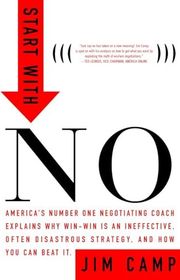
Start with No
For readers who concede too quickly because they feel they need a deal. Its emphasis on emotional independence and questions offers a useful counterpoint to compromise, though its forceful stance needs care in continuing relationships.
What it's about
Jim Camp argues that negotiators should avoid emotional dependence on agreement and allow the other side to say no. He explains how a clear mission, careful questions, and attention to behavior can guide difficult bargaining.

For readers who understand cooperative negotiation but face hostility or refusal. Its structured approach to reactions and resistance makes a useful follow-up to Getting to Yes, though it still requires patience and practice.
What it's about
William Ury offers strategies for negotiating with people who resist agreement or respond with hostility. Practical examples explore managing reactions, understanding the other side's interests, reframing discussions, and using influence to turn confrontation into a more constructive search for solutions.
Also recommended by
1 person- Tim Ferriss recommended this book
Tim Ferriss
"I think [this book and 'Getting to Yes'] go together really, really nicely." - Tim Ferriss
Tim Ferriss's recommendation of this book
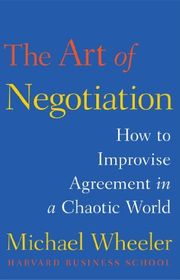
The Art of Negotiation
For readers who prepare carefully but struggle when a discussion takes an unexpected turn. Its emphasis on improvisation adds flexibility to fixed frameworks, though it offers fewer simple rules to apply without judgment.
What it's about
Michael Wheeler explores negotiation as a changing process that requires learning and adaptation. Drawing on research and real cases, he explains how negotiators can prepare while remaining alert to unexpected information, shifting relationships, and emerging possibilities.

Negotiating the Impossible
How to Break Deadlocks and Resolve Ugly Conflicts (without Money or Muscle)
For readers facing an impasse when extra money or formal authority is unavailable. Its emphasis on framing, process, and empathy expands the options, though applying lessons from large historical disputes takes judgment.
What it's about
Deepak Malhotra examines negotiations that appear deadlocked, drawing lessons from diplomacy, sports disputes, and business deals. He explores how framing, process, and empathy can help resolve conflict when money or coercive power is unavailable.
Also recommended by
3 people Bill Gurley recommended this book
Bill Gurley
"If you want to be a world class big deal negotiator, make sure you pick up [this book]." - Bill Gurley
Bill Gurley's recommendation of this book  Vinod Khosla recommended this book
Vinod Khosla
"I recommend to every entrepreneur, investor, & CEO - and anyone else who deals with difficult negotiations." - Vinod Khosla
Vinod Khosla's recommendation of this book  Patrick O'Shaughnessy recommended this book
Patrick O'Shaughnessy
"Lays out three key aspects of negotiation: framing, process, and empathy." - Patrick O'Shaughnessy
Patrick O'Shaughnessy's recommendation of this book
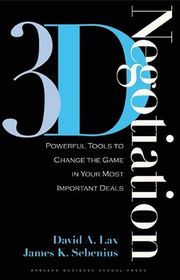
3-D Negotiation
For experienced negotiators who want to shape a deal before discussion begins. Its attention to participants, alternatives, and sequencing goes beyond conversational technique, though it is more demanding than an introductory bargaining guide.
What it's about
David Lax and James Sebenius explain negotiation through tactics, deal design, and setup. They show how changing the parties, issues, sequence, and alternatives before bargaining begins can create opportunities that better table manners alone cannot provide.

For lawyers and clients who want to create value while protecting their interests in deals and disputes. Its attention to representation and relationships adds useful depth, though the legal focus narrows its everyday appeal.
What it's about
Robert Mnookin and his coauthors examine how lawyers and clients can negotiate deals and resolve disputes by creating value. They explore the tensions between cooperation and competition, practical problem solving, and relationships among clients, representatives, and opposing parties.

For readers who avoid conversations because identity, blame, or strong feelings get in the way. Its focus on understanding different accounts complements bargaining books, though it spends less time on competitive deals and concessions.
What it's about
Douglas Stone, Bruce Patton, and Sheila Heen offer a method for approaching emotionally charged conversations. Examples explain how to prepare, reduce defensiveness, understand differing perspectives, and keep difficult discussions constructive.

For readers who want negotiation ideas they can use in everyday exchanges as well as business. Its attention to perceptions and small gains feels practical, though the many anecdotes can make the underlying structure less concise.
What it's about
Stuart Diamond presents a negotiation approach centered on understanding other people’s perceptions, emotions, and needs. Examples from work and everyday life show how small exchanges, clear communication, and collaborative problem solving can improve outcomes.

For readers exploring how gender expectations affect who negotiates and what happens when they do. Its research gives context to hesitation and unequal outcomes, though readers wanting an action plan may prefer a practical follow-up.
What it's about
Linda Babcock and Sara Laschever explore why women often hesitate to negotiate and how that affects pay, opportunities, and resources. Research and examples trace the influence of upbringing, expectations, and institutions, alongside suggestions for asking more effectively.
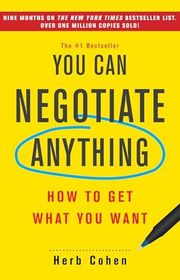
You Can Negotiate Anything
For newcomers who need encouragement to negotiate in ordinary situations. Its stories make time, information, and power easy to recognize, though some examples and assumptions reflect an earlier business culture.
What it's about
Herb Cohen presents negotiation as an everyday skill shaped by information, time, and perceived power. Stories from business and personal life illustrate how preparation, patience, and a broader view of available options can change an agreement.
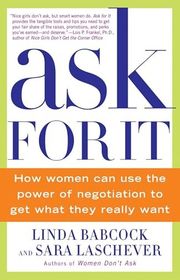
Ask For It
For women who want to move from recognizing negotiation barriers to preparing specific requests. Its practical orientation complements Women Don’t Ask, though outcomes still depend on workplace culture and the risks of backlash.
What it's about
Linda Babcock and Sara Laschever guide readers through recognizing opportunities, preparing requests, and negotiating for what matters to them. The book connects practical strategies with the social expectations and obstacles women may encounter when they ask.
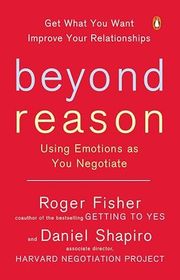
Beyond Reason
For readers who understand negotiation principles but struggle with emotions and threatened status. Its focus on core human concerns offers a practical bridge to relationships, though it does not replace detailed preparation on the substance.
What it's about
Roger Fisher and Daniel Shapiro examine how emotions affect negotiation. They organize their approach around appreciation, affiliation, autonomy, status, and role, explaining how attention to these concerns can support more constructive professional and personal discussions.

For readers who notice their own defensiveness or anxiety derailing discussions. Its inward focus complements books about influencing others, though it offers less help with the commercial details of a complex deal.
What it's about
William Ury argues that effective negotiation begins with understanding one's own needs and reactions. Drawing on professional and personal experiences, he presents a method for resolving inner obstacles, developing perspective, and approaching difficult relationships with greater openness.

For employees seeking flexibility, recognition, or new responsibilities through everyday workplace discussions. Its attention to power and small opportunities adds context beyond salary bargaining, though organizational support can limit what individual tactics achieve.
What it's about
Deborah Kolb and Jessica Porter show how everyday workplace negotiations can open opportunities for advancement, flexibility, recognition, and support. They examine organizational power and relationships, explaining how a series of small agreements can lead to larger changes.

The Book of Real-World Negotiations
Successful Strategies From Business, Government, and Daily Life
For readers who learn best by examining how actual agreements developed. Its varied cases make preparation and creative problem-solving concrete, though extracting a repeatable method takes more work than following a step-by-step manual.
What it's about
Joshua Weiss analyzes actual negotiations from business, government, and daily life to show how agreements take shape. The cases examine preparation, underlying interests, alternatives, power, cultural differences, and creative ways to overcome apparent impasses.

For readers who want an approachable guide to influencing people without intimidation. Its emphasis on tact and respect suits everyday conversations, though it provides less analytical depth than research-focused negotiation books.
What it's about
Bob Burg presents persuasion as a skill grounded in respect, tact, and understanding other people's concerns. His guide offers approaches to difficult conversations, disagreements, and negotiations, emphasizing influence through trust rather than pressure or intimidation.
Sources
- 1
A Negotiation Reading List from the Program on Negotiation - PON - Program on Negotiation at Harvard Law School
pon.harvard.edu
- 2
Top 11 Negotiation Books | The Negotiation Academy
necademy.com
- 3
8 Business Negotiation Books to Add to Your Reading List
aha.io
- 4
Best Negotiation Books 2026 - Top 10 Must-Reads | Academy of Negotiation
academyofnegotiation.com
- 5
Negotiation Books
goodreads.com
- 6
Best Negotiation Books (2026): 15 Ranked by Data
entrepedia.co
- 7
What negotiation books do you recommend?
reddit.com
- 8
Recommendations for Book(s) on Negotiation
reddit.com
- 9
7 essential reads on negotiation | London Business School
london.edu
- 10
Best Books on Negotiation: 12 Essential Reads (2026)
chapterly.ai


Edited by
Software engineer whose passion for tracking book recommendations from podcasts inspired the creation of MRB.
Lead investor at 3one4 Capital whose startup expertise and love for books helped shape MRB and its growth.
Comments
Spotted a missing book, a wrong order or a mistake? Tell us and we'll fix this page.
We're a reading guide, not the author or publisher, so we can't send books or pass on messages.