
12 Best Conflict Resolution Books
The best conflict resolution books, ranked by how many expert sources recommend each one, with notes on workplace disputes, relationships and mediation.
Our take
Conflict resolution involves more than finding the right words. Some disputes grow from misunderstood intentions, others from incompatible interests or a pattern of treating the other person as an enemy. These books help with difficult conversations at work, tension in close relationships and the challenge of helping other people reach an agreement. Their approaches range from communication exercises to reporting on conflicts that have taken over entire communities.
Crucial Conversations offers a practical structure for speaking when emotions run high. Difficult Conversations looks more closely at the feelings and identity concerns beneath the argument, while Nonviolent Communication gives readers a vocabulary for expressing needs without blame. For a concrete negotiation, Getting to Yes introduces a framework for developing an agreement. The Mediator's Handbook is aimed at guiding a process between disputing parties, and High Conflict explains why some battles become self-sustaining. Start with Crucial Conversations for an immediate conversation or Difficult Conversations to understand a recurring pattern.
12 books · 7 sources · Last updated
As an Amazon Associate, we earn from qualifying purchases (at no extra cost to you).
How to choose from this list
Skip to the full rankingIf you need to prepare for a difficult conversation: Crucial Conversations → Difficult Conversations
If you want to communicate without blame: Nonviolent Communication → Humble Inquiry
If you're negotiating an agreement: Getting to Yes → Negotiating the Impossible
If you're helping other people resolve a dispute: The Mediator's Handbook
If conflict keeps repeating in close relationships: Getting to Zero → The Anatomy of Peace
If you want to understand entrenched disputes: High Conflict
The 12 books, ranked
Ranked by how many expert sources name each book. Ties go to the book more people recommend.

For readers who need a repeatable structure for conversations under pressure. Its emphasis on creating safety and agreeing on action makes it especially useful at work, though applying the steps naturally takes practice.
What it's about
Kerry Patterson and his coauthors offer tools for discussions where stakes are high, opinions differ, and emotions intensify. Examples explain how to create safety, listen through conflict, express disagreement, and turn difficult conversations into agreed action.
Also recommended by
3 people Max Levchin recommended this book
Max Levchin
"A now-venerable guide to having tough conversations in a way that engages the debaters." - Max Levchin
Max Levchin's recommendation of this book  Stewart Butterfield recommended this book
Stewart Butterfield
"Most useful [book] I've ever read on either leadership or management [technique]." - Stewart Butterfield
Stewart Butterfield's recommendation of this book  Patrick Bet-David recommended this book
Patrick Bet-David
Patrick Bet-David recommended this book on his website.
Patrick Bet-David's recommendation of this book

For readers negotiating a concrete agreement rather than simply expressing difficult feelings. Its focus on interests, options and independent standards provides a durable starting framework, though severely hostile counterparts may demand additional approaches to deadlock.
What it's about
Roger Fisher and William Ury present an approach to negotiation based on interests and mutually beneficial agreements. They explain separating people from problems, developing options together, and using independent standards to resolve disagreements.
Also recommended by
7 people Charlie Munger recommended this book
Charlie Munger
Charlie Munger recommended this book in the "Poor Charlie's Almanack" book.
Charlie Munger's recommendation of this book  Tim Ferriss recommended this book
Tim Ferriss
"A really important concept to grasp." - Tim Ferriss
Tim Ferriss's recommendation of this book  Drew Houston recommended this book
Drew Houston
"About principled negotiation, and I still think about and apply a lot of those concepts today." - Drew Houston
Drew Houston's recommendation of this book  Dustin Moskovitz recommended this book
Dustin Moskovitz
Dustin Moskovitz recommended this book on Twitter.
Dustin Moskovitz's recommendation of this book  Tim Draper recommended this book
Tim Draper
"[One of the books] that are recommended or required at Draper University." - Tim Draper
Tim Draper's recommendation of this book  Nick Ganju recommended this book
Nick Ganju
"I love [this book]." - Nick Ganju
Nick Ganju's recommendation of this book +1
More recommendations
- Ann Miura-Ko
"Really good." - Ann Miura-Ko
- Ann Miura-Ko

Nonviolent Communication
A Language of Life: Life-Changing Tools for Healthy Relationships
For readers who want to replace blame with clearer expressions of feelings, needs and requests. The framework gives empathy a practical structure, though its language can sound rehearsed until you adapt it to everyday speech.
What it's about
Marshall Rosenberg introduces his Nonviolent Communication approach through stories, examples, and role plays. He presents communication practices intended to replace criticism and blame with honest expression and compassionate listening in relationships and conflicts.
Also recommended by
4 people Esther Perel recommended this book
Esther Perel
"I think that this book is a classic for anyone who is thinking relationships." - Esther Perel
Esther Perel's recommendation of this book  Neil Strauss recommended this book
Neil Strauss
"The central idea is that, unbeknownst to us, there’s a lot of violence in the way we communicate with others—and with ourselves." - Neil Strauss
Neil Strauss's recommendation of this book  Satya Nadella recommended this book
Satya Nadella
"When CEO Satya Nadella took over Microsoft, he started defusing its toxic culture by handing each of his execs [this book]." - Business Insider
Satya Nadella's recommendation of this book - Dustin Moskovitz recommended this book
Dustin Moskovitz
"Seek first to understand." - Dustin Moskovitz
Dustin Moskovitz's recommendation of this book

For readers who want to understand why an apparently simple disagreement feels so threatening. Its attention to feelings, identity and competing interpretations offers depth, though it takes more reflection than a quick script for confrontation.
What it's about
Douglas Stone, Bruce Patton, and Sheila Heen offer a method for approaching emotionally charged conversations. Examples explain how to prepare, reduce defensiveness, understand differing perspectives, and keep difficult discussions constructive.

For readers trying to understand why disagreement becomes an absorbing battle between opposing sides. Ripley's reporting illuminates the social dynamics behind escalation, though it offers a broader perspective rather than a tightly sequenced conversation workbook.
What it's about
Amanda Ripley investigates conflicts that become consuming struggles between opposing sides. Reporting on people caught in entrenched disputes explores how these conflicts take hold and how participants find ways out, drawing connections across political, community, and personal disagreements.

For readers willing to examine how their own attitudes keep disputes alive. The story makes self-justification easier to recognize, though the fable format and broad moral lessons offer less procedural detail than a mediation handbook.
What it's about
An Arab man and a Jewish man guide others through an examination of conflict at Camp Moriah. The Arbinger Institute uses their story to explore how attitudes toward other people can sustain disputes and obstruct reconciliation.

Negotiating the Impossible
How to Break Deadlocks and Resolve Ugly Conflicts (without Money or Muscle)
For readers facing a deadlock where money or formal authority offers little help. Malhotra uses varied negotiations to explain framing, process and empathy, though translating the lessons from dramatic cases into everyday disputes requires judgment.
What it's about
Deepak Malhotra examines negotiations that appear deadlocked, drawing lessons from diplomacy, sports disputes, and business deals. He explores how framing, process, and empathy can help resolve conflict when money or coercive power is unavailable.
Also recommended by
3 people Bill Gurley recommended this book
Bill Gurley
"If you want to be a world class big deal negotiator, make sure you pick up [this book]." - Bill Gurley
Bill Gurley's recommendation of this book  Vinod Khosla recommended this book
Vinod Khosla
"I recommend to every entrepreneur, investor, & CEO - and anyone else who deals with difficult negotiations." - Vinod Khosla
Vinod Khosla's recommendation of this book  Patrick O'Shaughnessy recommended this book
Patrick O'Shaughnessy
"Lays out three key aspects of negotiation: framing, process, and empathy." - Patrick O'Shaughnessy
Patrick O'Shaughnessy's recommendation of this book

Conflict Resolution Playbook
Practical Communication Skills for Preventing, Managing, and Resolving Conflict
For readers who want an accessible collection of communication exercises across work and personal life. Its practical breadth helps you try different responses, though the coverage is less sustained than a book devoted to one relationship or setting.
What it's about
Jeremy Pollack presents communication tools for preventing, managing, and resolving disagreements in personal and professional relationships. Practical guidance addresses why conflicts develop and how to respond constructively, including difficult situations involving bullying, gaslighting, and strained interpersonal exchanges.

For readers whose strongest reactions emerge in their closest relationships. Gaddis connects emotional patterns with practical repair, though the personal stories and relationship focus may be less useful for formal workplace mediation or contractual negotiation.
What it's about
Jayson Gaddis offers a framework for working through conflict in important relationships. Personal stories and practical communication tools explore reactions to disagreement, helping readers understand their conflict patterns and approach difficult conversations with partners, relatives, friends, and colleagues.
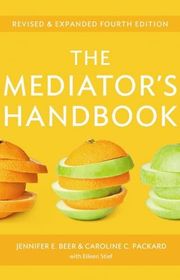
The Mediator's Handbook
For readers who need to guide a dispute between other people. The staged mediation process and practical tools provide more facilitation detail than the conversation books, though the professional focus requires patience and practice.
What it's about
Jennifer Beer and Caroline Packard present a practical framework for mediating disputes. The revised fourth edition explains the stages of mediation and offers tools for listening, managing difficult interactions and helping participants develop workable agreements.

For managers and employees dealing with repeated humiliation or bullying rather than an isolated disagreement. Sutton connects individual conduct with organizational standards, though the deliberately blunt framing offers less help with an ordinary misunderstanding between equals.
What it's about
Robert Sutton examines the damage caused by bullying and demeaning behavior at work. Research and organizational examples support practical approaches to limiting abusive conduct, protecting colleagues, and recognizing when one's own behavior contributes to an uncivil workplace.
Also recommended by
2 people Safi Bahcall recommended this book
Safi Bahcall
Safi Bahcall mentioned this book on "The Tim Ferriss Show" podcast.
Safi Bahcall's recommendation of this book  Marty Cagan recommended this book
Marty Cagan
Marty Cagan recommended this book on Twitter.
Marty Cagan's recommendation of this book

For leaders who tend to offer answers before understanding the problem. Its emphasis on sincere curiosity makes listening a concrete workplace practice, though asking better questions alone cannot resolve every dispute over power, resources or accountability.
What it's about
Edgar Schein explores how asking sincere questions can build relationships and improve communication. Workplace examples examine curiosity, status, and assumptions, encouraging readers to understand others before offering answers and to create conditions in which people can speak openly.
Sources
- 1
13 Best Conflict Resolution Books to Read for Work
teambuilding.com
- 2
15 Conflict Resolution Books Everybody Should Read
globalpeacecareers.com
- 3
The 5 Best Books on Conflict Resolution for Perfect Social Harmony
bloomsoup.com
- 4
Recommended Readings
ombuds.ucsd.edu
- 5
Conflict Resolution Books
goodreads.com
- 6
A book that helps me have difficult conversations
reddit.com
- 7
A Negotiation Reading List from the Program on Negotiation
pon.harvard.edu


Edited by
Software engineer whose passion for tracking book recommendations from podcasts inspired the creation of MRB.
Lead investor at 3one4 Capital whose startup expertise and love for books helped shape MRB and its growth.
Comments
Spotted a missing book, a wrong order or a mistake? Tell us and we'll fix this page.
We're a reading guide, not the author or publisher, so we can't send books or pass on messages.