
17 Best Natural Language Processing Books
The best natural language processing books, ranked by how many expert sources recommend each, with notes for beginners, programmers, and students of theory.
Our take
Natural language processing brings together programming, statistics, and the study of language. It includes tasks such as finding information in documents, classifying text, interpreting speech, and generating language. The books here approach those problems at different levels: some teach through code, some develop mathematical models, and others explain linguistic distinctions that are easy to miss when working only with English examples.
Choose a book that matches both your programming experience and the questions you want to answer. Natural Language Processing with Python uses practical exercises, while Text Mining with R connects text to familiar data-analysis tools. Foundations of Statistical Natural Language Processing and Introduction to Natural Language Processing ask for more mathematical preparation. Natural Language Processing with Transformers focuses on a particular family of neural models and its implementation ecosystem. The handbooks are better for selective reference than a first course. Start with a practical introduction, then add linguistic or mathematical foundations where your projects reveal gaps; check older code against current library documentation.
17 books · 10 sources · Last updated
As an Amazon Associate, we earn from qualifying purchases (at no extra cost to you).
How to choose from this list
Skip to the full rankingIf you want to learn through Python examples: Natural Language Processing with Python → Natural Language Processing in Action
If you already analyze data in R: Text Mining with R
If you want mathematical foundations: Introduction to Natural Language Processing → Foundations of Statistical Natural Language Processing
If you want stronger linguistic foundations: Linguistic Fundamentals for Natural Language Processing
If you want practical transformer models: Neural Network Methods in Natural Language Processing → Natural Language Processing with Transformers
If you want speech recognition theory: Speech and Language Processing → Statistical Methods for Speech Recognition
The 17 books, ranked
Ranked by how many expert sources name each book. Ties go to the book more people recommend.

Natural Language Processing with Python
Analyzing Text with the Natural Language Toolkit
For readers who want Python practice connected directly to questions about language. Its exercises build intuition through visible text-processing tasks, but the older toolkit examples and statistical emphasis need supplementing for current neural workflows.
What it's about
Steven Bird, Ewan Klein, and Edward Loper introduce computational text analysis through Python and the Natural Language Toolkit. Examples connect programming with linguistic questions and applications, giving readers a foundation for exploring language data and developing natural language processing techniques.

Speech and Language Processing
For students seeking a broad course spanning text, linguistic analysis, and speech. Its systematic treatment connects topics that narrower guides separate, but the listed print edition needs supplementing with newer material on neural models.
What it's about
Daniel Jurafsky and James H. Martin introduce natural language processing, computational linguistics, and speech recognition in this second edition. Statistical methods and linguistic models underpin coverage of tagging, parsing, meaning, dialogue, and systems that process spoken or written language.

Neural Network Methods in Natural Language Processing
For readers with machine learning foundations who want to understand neural architectures for language. Its attention to representations and structured prediction gives more theory than a framework tutorial, but it predates much of the transformer-centered literature.
What it's about
Yoav Goldberg introduces neural networks for natural language data, progressing from supervised learning and word representations to specialized architectures. The book examines convolutional, recurrent, attention-based, and tree-shaped networks, connecting their mechanics with language modeling and structured prediction.

Natural Language Processing in Action
Understanding, Analyzing, and Generating Text With Python
For Python developers who want a project-driven path through text representations and language applications. The examples connect separate techniques to working systems, but the listed edition’s libraries and neural coverage need checking against newer practice.
What it's about
Hobson Lane, Hannes Hapke, and Cole Howard teach text processing with Python, from tokenization and semantic analysis to neural networks. Projects and explanations explore word vectors, sequence models, information extraction, and conversational systems alongside practical implementation challenges.

Foundations of Statistical Natural Language Processing
For readers who want probability and linguistic structure explained through statistical models. It provides a firmer mathematical foundation than a recipe book, but the pre-neural emphasis and density make it demanding for newcomers.
What it's about
Christopher Manning and Hinrich Schütze introduce statistical natural language processing through mathematical and linguistic foundations. Theory and algorithms support applications including collocation detection, word-sense disambiguation, probabilistic parsing, and information retrieval, enabling readers to develop their own implementations.
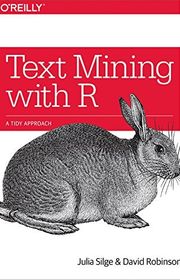
Text Mining with R
For R users who want text analysis to fit familiar data-wrangling and visualization habits. Its tidy-data approach makes exploratory work approachable, but it is a focused analysis guide rather than a comprehensive course in computational linguistics.
What it's about
Text is represented as tidy data that can be manipulated, summarized, and visualized with R tools. Examples connect the tidytext package with broader analysis workflows, showing how structured tables can support exploration of unstructured language data.

Natural Language Processing with PyTorch
Build Intelligent Language Applications Using Deep Learning
For programmers who want neural language models explained through PyTorch implementations. Its combination of representations and code makes a useful bridge from machine learning theory, but the older examples do not cover today’s full transformer ecosystem.
What it's about
Delip Rao and Brian McMahan introduce natural language processing and deep learning through PyTorch. Practical explanations develop text representations and neural algorithms, showing developers and data scientists how to build language applications suited to different problems.
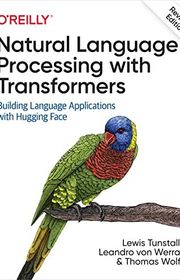
Natural Language Processing with Transformers
For Python developers who want transformer models connected to practical language tasks. Its framework-based examples offer a more direct implementation route than older statistical texts, but familiarity with deep learning helps and library details can change.
What it's about
A practical guide uses the Hugging Face ecosystem to build language applications with transformer models. Examples connect model training and adaptation with tasks such as classification and text generation, while considering the resources needed to develop and scale systems.
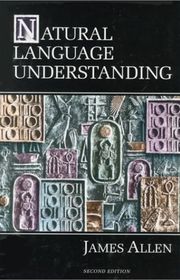
Natural Language Understanding
For readers interested in how syntax, meaning, and discourse fit together in language interpretation. Its conceptual breadth complements data-driven manuals, but the older symbolic perspective needs historical context and does not teach current model-building workflows.
What it's about
A broad treatment of language understanding examines syntactic analysis, semantic interpretation, and discourse. It explores how computer systems can represent and combine linguistic information, giving readers a structured view of the problems involved in interpreting language in context.

For researchers who need a broad reference across computational linguistics rather than one continuous course. The contributed chapters allow selective study of methods and applications, but the uneven prerequisites and older research context make it less suitable for beginners.
What it's about
Edited by Alexander Clark, Chris Fox, and Shalom Lappin, this handbook surveys computational linguistics and natural language processing. Contributions explain concepts, methods, and applications, providing researchers and developers with a broad reference across the field's approaches.
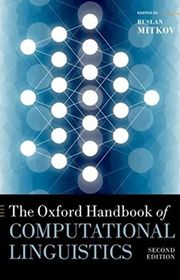
The Oxford Handbook of Computational Linguistics
For researchers who want an edited survey connecting linguistic foundations, methods, and applications. Its breadth makes it useful for locating unfamiliar areas, but chapters vary in difficulty and the collection is better consulted selectively than read as a tutorial.
What it's about
Edited chapters survey computational linguistics from linguistic fundamentals to methods, resources, and applications. The expanded edition includes areas such as translation technology, sentiment analysis, speech synthesis, and educational uses, offering a broad map of research questions and approaches.
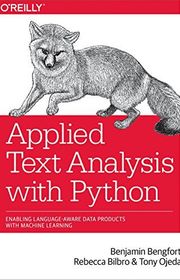
Applied Text Analysis with Python
For data scientists who want text processing organized around repeatable product workflows. Its attention to features and machine learning connects analysis with application design, but the older software stack and model choices need checking before implementation.
What it's about
A practical guide develops language-aware products with Python and applied machine learning. It examines repeatable text-analysis workflows, linguistic and contextual features, and the steps needed to turn changing streams of natural language into data that supports useful applications.
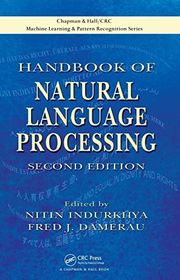
Handbook of Natural Language Processing
For experienced readers who want a broad edited reference with statistical methods and multilingual applications. Its range supports targeted consultation beyond a single textbook, but the research snapshot and varying chapter prerequisites limit its usefulness as a first course.
What it's about
This edited handbook surveys tools and techniques for implementing natural language processing systems. The second edition expands statistical approaches, applications, and multilingual coverage, bringing together chapters on the methods and resources used to process language across different settings.
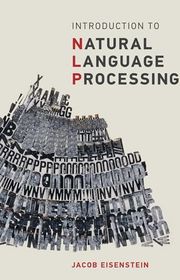
Introduction to Natural Language Processing
For students with mathematical preparation who want classical NLP and machine learning in one technical course. Its coherent progression supports understanding beyond recipes, but it expects more comfort with formal reasoning than the practical Python introductions.
What it's about
This textbook surveys computational methods for understanding, generating, and manipulating language. It develops machine learning foundations and connects them with language representations and algorithms, bringing classical approaches into discussion with data-driven techniques for analyzing text.

Linguistic Fundamentals for Natural Language Processing
100 Essentials from Morphology and Syntax
For programmers who need a clearer understanding of morphology and syntax before designing language systems. The cross-linguistic examples expose assumptions hidden by English-only data, but it is a conceptual companion rather than an implementation tutorial.
What it's about
Emily Bender introduces one hundred linguistic concepts relevant to natural language processing, concentrating on morphology and syntax. Cross-linguistic examples explain word structure, grammatical categories, arguments, and related distinctions, helping developers recognize assumptions about how languages work.

For readers who want the probabilistic foundations of speech recognition in depth. Its focused mathematical treatment differs from text-processing tutorials, but hidden Markov models and the historical system design are not a guide to current speech tooling.
What it's about
Frederick Jelinek explains the mathematical foundations of statistical speech recognition. The text develops hidden Markov models, decision trees, probability estimation, clustering, and related techniques, showing how models can learn from data and support recognition of spoken language.
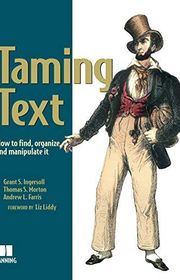
Taming Text
For developers interested in organizing and finding information within large collections of text. The application-driven examples connect search, tagging, and extraction, but the older toolchain requires translation rather than direct reuse in a current system.
What it's about
An example-driven guide explores organizing unstructured text through search, name recognition, clustering, tagging, extraction, and summarization. It connects practical applications with their underlying techniques, helping developers think about how different text-processing components work together in a system.
Sources
- 1
8 Great Natural Language Processing (NLP) Books
tableau.com
- 2
Essential books on Natural Language Processing
goodreads.com
- 3
awesome-nlp
github.com
- 4
The Best NLP Books
udacity.com
- 5
40 Best Resources to Learn Natural Language Processing in 2026
mltut.com
- 6
100 Best Natural Language Processing Books of All Time
shortform.com
- 7
A good modern textbook to get me up to speed on NLP in Python?
reddit.com
- 8
Best Natural Language Processing (NLP) Books to Read in 2025
guvi.in
- 9
5 Fantastic Natural Language Processing Books
kdnuggets.com
- 10
Books
vlanc-lab.github.io






Edited by
Software engineer whose passion for tracking book recommendations from podcasts inspired the creation of MRB.
Lead investor at 3one4 Capital whose startup expertise and love for books helped shape MRB and its growth.
Comments
Spotted a missing book, a wrong order or a mistake? Tell us and we'll fix this page.
We're a reading guide, not the author or publisher, so we can't send books or pass on messages.