
18 Best Machine Learning Books
The best machine learning books, ranked by how many expert sources recommend each one, with notes on introductions, Python practice and mathematical textbooks.
Our take
Machine learning books can teach you how to build a useful model, understand why a method works or study the theory behind learning from data. Those goals lead to different starting points. A practical Python guide assumes you can program, while a mathematical textbook may expect calculus, linear algebra and probability. Older books can still explain important ideas, but software examples and fast-moving areas such as language processing need checking against newer material.
Machine Learning for Absolute Beginners offers an initial orientation, and The Hundred-Page Machine Learning Book gives a compact overview for readers comfortable with notation. Introduction to Machine Learning with Python emphasizes application. An Introduction to Statistical Learning combines statistical explanations with R labs, while The Elements of Statistical Learning is a more demanding reference. If missing prerequisites slow you down, Mathematics for Machine Learning targets that gap. For deeper probabilistic study, try Pattern Recognition and Machine Learning or Murphy's Probabilistic Machine Learning. Start with the book that matches both your programming experience and your mathematical preparation.
18 books · 8 sources · Last updated
As an Amazon Associate, we earn from qualifying purchases (at no extra cost to you).
How to choose from this list
Skip to the full rankingIf you're completely new: Machine Learning for Absolute Beginners → The Hundred-Page Machine Learning Book
If you already know Python: Introduction to Machine Learning with Python
If you want applied statistical foundations: An Introduction to Statistical Learning → The Elements of Statistical Learning
If you need mathematical prerequisites: Mathematics for Machine Learning → Pattern Recognition and Machine Learning
If you want a probabilistic textbook: Probabilistic Machine Learning
If you're studying language and speech: Natural Language Processing with Python → Speech and Language Processing
The 18 books, ranked
Ranked by how many expert sources name each book. Ties go to the book more people recommend.

The Hundred-Page Machine Learning Book
For readers who want a compact map of machine learning before choosing a longer textbook. Burkov balances practical concepts with mathematical notation, though the compressed explanations reward some quantitative comfort and leave less room for gradual exercises.
What it's about
Andriy Burkov presents a compact introduction to machine learning that combines mathematical explanations with practical concepts. Coverage includes supervised and unsupervised methods, neural networks, clustering, feature engineering, and model tuning, connecting core algorithms with their use in applications.

For mathematically prepared readers who want a substantial statistical reference. Its treatment connects models with inference and prediction in greater depth than the introductory books, though the density makes it a difficult first encounter with the field.
What it's about
Trevor Hastie, Robert Tibshirani, and Jerome Friedman present a statistical framework for supervised and unsupervised learning. This second edition covers regression, classification, neural networks, boosting, random forests, and other methods, illustrated through applications and graphics.
Also recommended by
1 person Nassim Taleb recommended this book
Nassim Taleb
"Very comprehensive, sufficiently technical to get most of the plumbing behind machine learning." - Nassim Taleb
Nassim Taleb's recommendation of this book
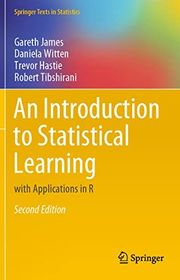
An Introduction to Statistical Learning: with Applications in R
For readers who want statistical intuition and applied exercises before a demanding reference. The R labs connect models with practice at a gentler mathematical level than The Elements of Statistical Learning, though this edition requires working in R.
What it's about
This textbook introduces statistical learning through regression, classification, resampling, model selection, and other methods. Explanations of the ideas behind each approach are paired with R labs that let readers apply the techniques and examine their behavior.

Pattern Recognition and Machine Learning
For readers comfortable with calculus and linear algebra who want a probabilistic understanding of learning. Bishop develops the mathematics carefully through exercises, though the older treatment is less suited to readers seeking current neural architectures or coding tutorials.
What it's about
Christopher Bishop introduces pattern recognition and machine learning through statistical methods and worked exercises. Written for readers with calculus and linear algebra knowledge, the textbook includes probability foundations while developing the mathematical concepts used to understand learning from data.
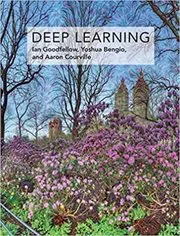
Deep Learning
For readers ready to study the mathematical foundations of neural networks. Its systematic treatment connects established methods with research questions, though it assumes substantial preparation and predates many recent developments in language models and generative modeling.
What it's about
Ian Goodfellow, Yoshua Bengio, and Aaron Courville introduce the mathematical foundations, established methods, and research directions of deep learning. The textbook covers neural networks and applications alongside the conceptual tools needed to understand this field.
Also recommended by
4 people Elon Musk recommended this book
Elon Musk
"Written by three experts in the field, [this book] is the only comprehensive book on the subject." - Elon Musk
Elon Musk's recommendation of this book  Satya Nadella recommended this book
Satya Nadella
"The book made such a significant impact on Satya Nadella that he hired co-author Yoshua Bengio." - ThingsCyber.com
Satya Nadella's recommendation of this book  Vinod Khosla recommended this book
Vinod Khosla
"For a slightly more technical read [on AI]." - Vinod Khosla
Vinod Khosla's recommendation of this book - Nassim Taleb recommended this book
Nassim Taleb
"Very clear exposition, does the math without getting lost in the details." - Nassim Taleb
Nassim Taleb's recommendation of this book

Hands-On Machine Learning with Scikit-Learn, Keras, and TensorFlow
Concepts, Tools, and Techniques to Build Intelligent Systems
For Python developers who learn by building models and running exercises. The practical progression connects classical algorithms with neural networks, though the linked older edition's Keras and TensorFlow examples require checking against the software versions you use.
What it's about
Aurelien Geron teaches machine learning through Python examples using Scikit-Learn, Keras, and TensorFlow. Practical exercises develop an intuitive understanding of algorithms and neural networks, connecting the concepts behind intelligent systems with the tools used to build them.
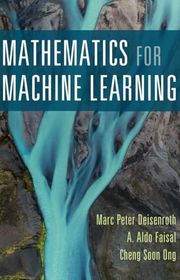
Mathematics for Machine Learning
For readers whose main obstacle is the mathematics behind learning algorithms. It brings linear algebra, calculus, probability and optimization into one connected treatment, though it still requires working through derivations rather than providing a shortcut around mathematical practice.
What it's about
Marc Peter Deisenroth, A. Aldo Faisal and Cheng Soon Ong explain mathematical tools used in machine learning. Worked examples and exercises connect linear algebra, geometry, calculus, optimization, probability and statistics with methods including regression, principal component analysis and support vector machines.
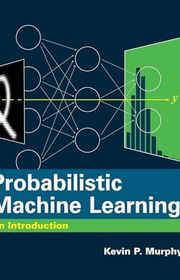
Probabilistic Machine Learning: An Introduction
For quantitatively prepared readers who want a broad modern textbook organized around probability. Murphy combines classical methods and deep learning with supporting Python examples, though the mathematical density makes the word introduction relative to advanced study rather than complete beginners.
What it's about
Kevin P. Murphy presents machine learning through probabilistic modeling and Bayesian decision theory. Mathematical background, supervised learning, neural networks, transfer learning and unsupervised methods are accompanied by exercises and online Python code that connects the theory with reproducible examples.

Applied Predictive Modeling
For readers who want to learn the whole predictive-modeling workflow rather than collect algorithms. The attention to preprocessing, tuning and evaluation is especially useful, though the R-based examples and older package ecosystem require adaptation for other environments.
What it's about
Max Kuhn and Kjell Johnson follow the predictive modeling process from preparing and splitting data to tuning and evaluating models. Regression and classification methods are explained through real data examples, R code, and chapter exercises.

For readers who want to place machine learning within the wider field of artificial intelligence. Its breadth connects learning with language, reasoning and robotics, though much of the textbook extends beyond building or evaluating predictive models.
What it's about
Stuart Russell and Peter Norvig introduce the theory and practice of artificial intelligence through a unified treatment of its subfields. The textbook covers learning, language processing, robotics, and related topics, connecting concepts with mathematical and algorithmic detail.

Machine Learning
For readers interested in the foundations and range of learning algorithms. Mitchell's textbook connects several traditions through examples and assignments, though its older coverage predates much of modern deep learning and should be paired with newer material.
What it's about
Tom Mitchell introduces algorithms that improve their performance through experience. The textbook covers decision trees, neural networks, Bayesian methods, learning theory, genetic algorithms, rule learning, and reinforcement learning, combining foundational concepts with examples and assignments.

For complete beginners who need plain language and visual explanations before deeper study. Its gradual introduction lowers the entry barrier, though the limited technical depth means it is a starting point rather than a comprehensive professional reference.
What it's about
Oliver Theobald introduces machine learning through plain language explanations and visual examples. Data preparation, regression, clustering, decision trees, neural networks, and model evaluation lead toward a beginner Python project predicting house values.

For experienced programmers who prefer problem-based case studies to a theory-first course. The R examples connect statistical methods with working applications, though older data sources and dependencies may need rebuilding before the projects run in a current environment.
What it's about
Drew Conway and John Myles White introduce machine learning through practical case studies in R. Chapters center on problems such as classification, prediction, optimization, and recommendation, helping experienced programmers connect statistical tools with working algorithms.

Python Machine Learning
Machine Learning and Deep Learning with Python, Scikit-Learn, and TensorFlow 2
For Python programmers who want explanations connected with implementations across classical and deep learning. The linked TensorFlow 2 edition offers a broad working path, though readers need to reconcile older dependencies with their current development environment.
What it's about
Sebastian Raschka and Vahid Mirjalili connect machine learning theory with Python implementations using scikit learn and TensorFlow 2. Examples cover model building, deep learning, sentiment analysis, generative adversarial networks, and reinforcement learning.

For readers who want practical data-mining methods tied to preparation and evaluation. The Weka connection makes experimentation accessible through a specific toolkit, though it is less directly aligned with the Python workflows used by several other books here.
What it's about
Ian Witten and his coauthors explain machine learning concepts and their application to data mining. Practical discussions cover preparing inputs, evaluating results, and improving performance, with the Weka toolkit connecting the methods to hands on work.

For Python users who want to apply models before studying long derivations. Its emphasis on practical choices and workflow makes the entry easier, though the older code needs version checks and the mathematical treatment is deliberately limited.
What it's about
Andreas Muller and Sarah Guido introduce practical machine learning for Python users. Examples emphasize applying algorithms to real problems rather than developing their mathematics in depth, showing readers how to assemble machine learning solutions and reason about the choices involved.

Speech and Language Processing
For readers who want a systematic foundation in computational language and speech. The linked second edition develops statistical and linguistic concepts in depth, though its older coverage should be supplemented for modern transformers and large language models.
What it's about
Daniel Jurafsky and James H. Martin introduce natural language processing, computational linguistics, and speech recognition in this second edition. Statistical methods and linguistic models underpin coverage of tagging, parsing, meaning, dialogue, and systems that process spoken or written language.

Natural Language Processing with Python
Analyzing Text with the Natural Language Toolkit
For readers who want to explore text analysis through programming and linguistic examples. Its NLTK-based approach makes foundational tasks concrete, though the older Python material and methods need context alongside modern neural language processing.
What it's about
Steven Bird, Ewan Klein, and Edward Loper introduce computational text analysis through Python and the Natural Language Toolkit. Examples connect programming with linguistic questions and applications, giving readers a foundation for exploring language data and developing natural language processing techniques.
Sources
- 1
15 Best Machine Learning Books to Read in 2026
datacamp.com
- 2
10 Best Machine Learning Textbooks that All Data Scientists Should Read
kdnuggets.com
- 3
Machine Learning Books: The 10 Best for 2026 (Free PDFs Included)
computingforgeeks.com
- 4
Machine Learning Books
goodreads.com
- 5
Unlock Machine Learning: 9 Books for Beginners in 2025
coursera.org
- 6
Books | 6.790 Machine Learning
gradml.mit.edu
- 7
In what sequence should I read these books ?
reddit.com
- 8
What's that one book that you regret not reading sooner in your machine learning journey ?
reddit.com






Edited by
Software engineer whose passion for tracking book recommendations from podcasts inspired the creation of MRB.
Lead investor at 3one4 Capital whose startup expertise and love for books helped shape MRB and its growth.
Comments
Spotted a missing book, a wrong order or a mistake? Tell us and we'll fix this page.
We're a reading guide, not the author or publisher, so we can't send books or pass on messages.