
22 Best Music History Books
The best music history books, ranked by how many expert sources recommend each one, with clear notes on who each book suits and where to start reading.
Our take
Music history follows more than the lives of famous performers. It also asks how sounds travel, how scenes form, and how technology, politics, and money shape what people hear. These books approach that history through broad surveys, close studies of particular genres, musicians’ memories, and criticism written while the music was taking shape.
Major Labels offers a route into popular music through its genres, while A History of Western Music provides a more demanding chronological foundation. The Rest Is Noise connects twentieth-century classical music with its wider world. For closer studies, try Sweet Soul Music, Can’t Stop Won’t Stop, or Our Band Could Be Your Life. Memoirs such as Chronicles and Born to Run give a participant’s perspective, while oral histories preserve multiple voices and their disagreements. Start with a period or sound you already enjoy, and listen to the recordings as you read.
22 books · 8 sources · Last updated
As an Amazon Associate, we earn from qualifying purchases (at no extra cost to you).
How to choose from this list
Skip to the full rankingIf you want a broad starting point: Major Labels → How Music Works
If you want a structured historical survey: A History of Western Music → The Rest Is Noise
If you want soul and hip-hop in context: Sweet Soul Music → Can't Stop Won't Stop
If you want punk and independent scenes: Please Kill Me → England's Dreaming → Our Band Could Be Your Life
If you want musicians' own accounts: Chronicles → Born to Run → Miles
If you want club and dance culture: Last Night a DJ Saved My Life
The 22 books, ranked
Ranked by how many expert sources name each book. Ties go to the book more people recommend.

For readers curious about how independent bands built a working scene before the internet. Its band-by-band approach makes the practical infrastructure visible, though some chapters will matter more if you already enjoy the music.
What it's about
Through portraits of American underground bands, Michael Azerrad documents the independent music scene of 1981 to 1991. The book connects musicians' experiences with the labels, touring circuits, publications, and communities that sustained an alternative to mainstream rock commerce.

For Dylan listeners who want to follow his influences and creative memories. Its selective episodes convey an artist’s perspective more than a conventional biography, so expect gaps rather than a complete career chronology.
What it's about
Bob Dylan revisits selected periods of his life and career, beginning with his arrival in New York's music scene. Memories of musicians, books, places, and recording sessions reveal influences on his work and his changing relationship with public expectations.

For jazz listeners who want a musician’s direct view of creative change and collaboration. Davis’s outspoken recollections bring personality to the history, though they remain one participant’s account of complicated people and relationships.
What it's about
Miles Davis recounts his life and musical career in collaboration with Quincy Troupe. He discusses fellow musicians, creative work, relationships, drug use, and the racism he encountered in the music industry and American society.

For readers who want American punk told through competing memories. Its interwoven voices convey the social world around the music, though the explicit material and fragmented structure make it a demanding casual introduction.
What it's about
Legs McNeil and Gillian McCain assemble an oral history of American punk from the voices of musicians and others around the scene. Their accounts move through the Warhol Factory, Max's Kansas City, and CBGB, capturing overlapping creative and personal lives.

For listeners seeking a cultural history of twentieth-century classical music. Ross connects composers and ideas to a changing political world, though the unfamiliar works make listening breaks especially helpful for newcomers.
What it's about
Alex Ross traces twentieth-century music alongside the political and cultural forces that shaped it. Moving through European and American musical worlds, he examines composers, experimentation, war, dictatorship, technology, and the connections between modern classical music and popular culture.

How Music Works
For curious listeners who want to understand the conditions that shape music. Byrne connects spaces, technology, and economics through a musician’s experience, though the thematic approach offers no continuous chronology of musical change.
What it's about
David Byrne explores how music is shaped by acoustic spaces, technology, economics and social circumstances. Drawing on his work with Talking Heads and other collaborators, he considers the processes through which music is created, performed, distributed and heard.
Also recommended by
1 person Penn Jillette recommended this book
Penn Jillette
"Wonderful book." - Penn Jillette
Penn Jillette's recommendation of this book

For readers who want Southern soul placed within its social world. Guralnick’s performer portraits connect artistry with the struggle for change, though the regional focus leaves other strands of popular music outside the frame.
What it's about
Peter Guralnick follows the creation of Southern soul through performers including Sam Cooke, Ray Charles, Aretha Franklin, and Otis Redding. Interviews and music history connect their blending of gospel and rhythm and blues with a changing American society.
Also recommended by
1 person Ta-Nehisi Coates recommended this book
Ta-Nehisi Coates
"History of soul music, told in profiles. I read this is as young man really trying to understand what journalism and history meant. Spent a lot of time meditating on Sam and Dave after this one." - Ta-Nehisi Coates
Ta-Nehisi Coates's recommendation of this book

A History of Western Music
For students who want a chronological foundation before exploring individual scenes or artists. Its textbook structure connects musical developments across centuries, though notation and detailed analysis require more study than the narrative histories here.
What it's about
This survey follows Western music from antiquity into the modern era, placing musical styles and works within their social settings. Examples and analysis connect composers, institutions, performance, and changing audiences across a long historical span.

For readers interested in the personal accounts behind a commercially successful metal band. The shifting voices reveal conflicts and excesses, though the graphic material and self-reported recollections require a critical reading.
What it's about
The members of Mötley Crüe recount their rise, fame, relationships, and destructive excesses in this collaborative autobiography with Neil Strauss. Shifting personal accounts bring together the band's musical career and its members' experiences of addiction and life backstage.

Decoded
For hip-hop listeners who want to read lyrics closely and connect them with personal experience. Jay-Z makes his own artistic choices the focus, though this selective account cannot substitute for a broader genre history.
What it's about
Jay-Z combines autobiographical stories with explanations of his lyrics and their meanings. The book connects experiences from his youth and musical career to hip-hop’s language, artistry, and cultural history, showing the personal contexts behind selected songs.
Also recommended by
3 people Mark Zuckerberg recommended this book
Mark Zuckerberg
On the "books read" section of Mark Zuckerberg's Facebook profile.
Mark Zuckerberg's recommendation of this book  LeBron James recommended this book
LeBron James
LeBron James was seen reading this book.
LeBron James's recommendation of this book  Sahil Lavingia recommended this book
Sahil Lavingia
Sahil Lavingia recommended this book on Notion.
Sahil Lavingia's recommendation of this book

Born to Run
For Springsteen listeners interested in the relationship between family life and a working musician’s ambitions. The reflective voice gives personal context to the songs, though its scale demands more time than a compact career overview.
What it's about
Bruce Springsteen recounts his childhood in New Jersey, early performances around Asbury Park, and the formation of the E Street Band. The memoir connects his musical ambitions and working life with family relationships and personal struggles.
Also recommended by
2 people Bob Iger recommended this book
Bob Iger
Bob Iger told Variety this book was on his Reading List.
Bob Iger's recommendation of this book  Howard Stern recommended this book
Howard Stern
"I loved [this book]." - Howard Stern
Howard Stern's recommendation of this book

Life
For Stones listeners interested in a guitarist’s musical influences and creative habits. Richards offers a personal view of a long career, though the digressions and remembered disputes make this a partial account.
What it's about
Keith Richards recounts his life as a guitarist and founding member of the Rolling Stones. Written with James Fox, the memoir follows musical influences, songwriting, fame and addiction alongside the relationships and family experiences surrounding his career.
Also recommended by
1 person Harry Styles recommended this book
Harry Styles
Harry Styles mentioned this book in an interview.
Harry Styles's recommendation of this book

For readers seeking hip-hop history connected to politics, place, and youth culture. Chang gives the social setting substantial weight, though that broader argument may frustrate readers expecting a straightforward sequence of records and performers.
What it's about
Jeff Chang traces hip-hop’s emergence in the Bronx and Kingston and its development into a global cultural movement. His history connects the music and its generation with deindustrialization, globalization, racial politics, and youth rebellion.

For readers who want British punk examined through both its music and its cultural surroundings. Savage supplies historical detail beyond band biography, though the Sex Pistols remain a strong organizing focus throughout.
What it's about
Jon Savage examines punk and the Sex Pistols through interviews, photographs, and historical detail. His account follows the band’s emergence within the British and American music scenes and considers punk’s legacy and the Pistols’ later reunion.

For readers who want to hear Seattle’s music scene described by its participants. The contrasting voices expose shared memories and disagreements, though keeping track of a large cast takes more effort than following one narrator.
What it's about
Mark Yarm presents Seattle’s grunge era through interviews with musicians and others who shaped the scene. Their recollections trace local bands and independent labels, the breakthrough of Nirvana and its peers, commercial pressures, and personal struggles.

For readers interested in what heavy metal meant to an ordinary teenage fan. Klosterman mixes personal recollection with cultural argument, though its opinionated humor offers a narrower perspective than a researched genre survey.
What it's about
Klosterman remembers growing up as a heavy metal fan in rural North Dakota and makes a case for the music’s messy importance. Hair metal, farm life, and teenage devotion all get equal attention.

For readers curious about the people and spaces behind dance music. Brewster and Broughton make the DJ central to musical change, though the range of scenes and names rewards patient reading with listening breaks.
What it's about
Bill Brewster and Frank Broughton trace the disc jockey’s role in shaping popular music and dance culture. Firsthand accounts connect DJ practices and club scenes with the emergence of genres including disco, hip-hop, house, and techno.

For metal listeners who want a broad collection of participants’ voices. The interviews bring contrasting experiences together across subgenres, though the rapid changes of speaker can make the larger chronology harder to follow.
What it's about
Jon Wiederhorn and Katherine Turman assemble an oral history of heavy metal through interviews with musicians and people around them. Accounts cover the music’s evolving subgenres, touring and recording, rivalries, friendships, and the culture surrounding metal fandom.
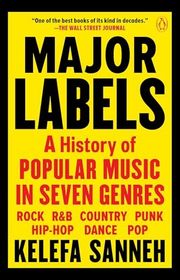
Major Labels
For listeners who want a broad introduction to popular music through its competing genres. Sanneh makes questions of taste part of the history, though the seven-genre framework gives jazz and blues less attention.
What it's about
Kelefa Sanneh examines popular music through seven genres: rock, R&B, country, punk, hip-hop, dance and pop. The book traces changing sounds and audiences while considering how genre identities influence the ways musicians create and listeners understand music.

No One Here Gets Out Alive
For Doors listeners interested in Morrison’s public image and artistic ambitions. The authors’ proximity gives the portrait immediacy, though its emphasis on a larger-than-life personality calls for reading alongside other accounts.
What it's about
Jerry Hopkins and Danny Sugerman portray Jim Morrison as a singer, poet, and figure resistant to authority. Drawing on their experience with Morrison and the Doors, they examine his personality, artistic ambitions, and turbulent life.

For readers interested in how rock criticism sounded from inside its own era. Bangs’s personal arguments reveal the passions behind musical judgments, though this essay collection offers no orderly historical overview.
What it's about
Edited by Greil Marcus, this collection brings together Lester Bangs's rock criticism, record reviews, and essays. Bangs's writing turns encounters with performers and music into personal, argumentative explorations of popular culture, including the emerging New York punk scene.

For Beatles listeners who want to study recordings individually and connect them with the sixties. MacDonald gives musical choices close attention, though the strongly argued interpretations work best when you listen alongside the text.
What it's about
Ian MacDonald examines the Beatles' recordings individually, connecting musical choices with the social and cultural atmosphere of the 1960s. His analysis follows the band's changing work while interpreting its place in the wider history of the decade.
Sources
- 1
Words and Music: Our 60 Favorite Music Books
pitchfork.com
- 2
100 Best Music History Books of All Time
shortform.com
- 3
Best books about music: Essential reads for music fans
loudersound.com
- 4
History Of Music Books
goodreads.com
- 5
Best music books of all time? I want to curate a better taste and everything.
reddit.com
- 6
Best books about modern music history?
reddit.com
- 7
Books That Every Music Lover Should Read
penguinrandomhouse.com
- 8
General Histories - Standard Texts in Music History
guides.lib.umich.edu






Edited by
Software engineer whose passion for tracking book recommendations from podcasts inspired the creation of MRB.
Lead investor at 3one4 Capital whose startup expertise and love for books helped shape MRB and its growth.
Comments
Spotted a missing book, a wrong order or a mistake? Tell us and we'll fix this page.
We're a reading guide, not the author or publisher, so we can't send books or pass on messages.