
19 Best Music Theory Books
The best music theory books, ranked by expert-source recommendations, with notes for beginners and musicians choosing workbooks, harmony courses and references.
Our take
Music theory helps connect what you hear and play with the structures behind it. Reading notation, recognizing chords, following musical form and writing convincing parts are related skills, but they develop through different kinds of practice. These books range from introductory explanations to substantial courses, with separate approaches for guitarists, producers and jazz musicians.
Music Theory For Dummies offers broad orientation, while Alfred's Essentials of Music Theory: A Complete Self-Study Course for All Musicians provides exercises and review. How to Read Music in 30 Days: Music Theory for Beginners concentrates on notation. For a longer course, The Musician's Guide to Theory and Analysis connects concepts with repertoire, and The Complete Musician integrates written and listening skills. Harmony and Voice Leading focuses more closely on how musical lines interact. The guitar and computer-musician guides place theory in a specific working environment.
Begin with Alfred’s course if you want regular exercises, or choose the guide closest to your instrument and use its ideas in music you already play.
19 books · 8 sources · Last updated
As an Amazon Associate, we earn from qualifying purchases (at no extra cost to you).
How to choose from this list
Skip to the full rankingIf you want orientation and structured practice: Music Theory For Dummies → Alfred's Essentials of Music Theory: A Complete Self-Study Course for All Musicians
If you want to learn notation first: How to Read Music in 30 Days: Music Theory for Beginners → Music Theory in Practice
If you want guitar-based theory: Music Theory for Guitarists: Everything You Ever Wanted to Know But Were Afraid to Ask → The Practical Guide to Modern Music Theory for Guitarists: The Complete Guide to Music Theory From a Guitarist's Point of View
If you make music with software: Music Theory for Computer Musicians
If you want a full theory course: The Musician's Guide to Theory and Analysis → The Complete Musician
If you want deeper tonal harmony study: Tonal Harmony → Harmony and Voice Leading
The 19 books, ranked
Ranked by how many expert sources name each book. Ties go to the book more people recommend.

For learners who want a structured self-study sequence with exercises and answers. Its combination of written work and ear training gives clearer practice tasks than a general overview, but steady progress requires completing the work rather than simply reading.
What it's about
This self-study course teaches music theory through seventy-five concise lessons and practice exercises. Reading, writing, and ear training develop alongside one another, while unit reviews and included answers help musicians assess their understanding as they work through the material.

Music Theory For Dummies
For beginners who want a broad explanation before choosing a formal course. Its conversational overview connects notation with musical structure, but reading explanations alone provides less practice and feedback than a workbook-based sequence.
What it's about
Michael Pilhofer and Holly Day explain music theory from notes, scales, and rhythm to chords, progressions, and musical form. Accessible discussions also address expression and instrumental tone, helping readers connect the structure of music with how it sounds in performance.
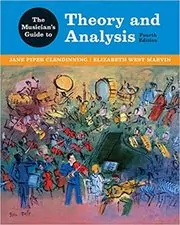
The Musician's Guide to Theory and Analysis
For students who want a full undergraduate course linking concepts with analysis. Its varied repertoire and progression offer more depth than a beginner primer, but the substantial textbook works best with a study plan and regular written and listening practice.
What it's about
Jane Piper Clendinning and Elizabeth West Marvin develop undergraduate music theory through accessible explanations and a varied repertoire. Topics progress from fundamentals through musical form and post-tonal theory, connecting conceptual study with the analytical skills needed by practicing musicians.

Music Theory for Computer Musicians
For producers who want theory connected with a keyboard and composing software. Its computer-based approach makes concepts more relevant than a notation-first classical course, but the software context is older and it offers less traditional score analysis.
What it's about
Michael Hewitt teaches music theory to producers, DJs, and musicians who work with computers. Using a MIDI keyboard and composing software as the learning environment, explanations and exercises connect the fundamentals of musical language with writing and producing original tracks.
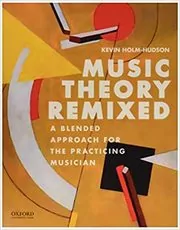
For students who want tonal theory connected with both classical and popular music. Its analysis, composition and improvisation tasks bridge styles more explicitly than traditional harmony texts, but the course-sized scope needs regular practice rather than casual browsing.
What it's about
Kevin Holm-Hudson teaches tonal theory through examples from the Western classical repertoire and popular musical styles. Guided work in analysis, composition, and improvisation connects traditional part-writing with practical musicianship, helping students apply theoretical ideas across different kinds of music.

The Jazz Theory Book
For musicians who already know fundamentals and want a substantial jazz reference. Its examples connect harmony with real repertoire more closely than beginner overviews, but the dense coverage and chord-scale emphasis need listening and practical playing alongside study.
What it's about
Mark Levine develops jazz theory from basic chord construction and progressions to scales, blues, rhythm changes, and reharmonization. Extensive musical examples support practical guidance on reading lead sheets, memorizing tunes, and applying harmonic ideas to performance.

For adult beginners whose immediate goal is reading notation. Its daily lessons make practice easier to organize than a large textbook, but the thirty-day structure is a schedule rather than a guarantee of fluency or comprehensive theory knowledge.
What it's about
Matthew Ellul introduces reading music through a sequence of thirty daily lessons for adult beginners. Exercises and online audio support gradual practice, building a foundation in notation for learners studying independently or alongside a music teacher.

For guitarists who want to connect theory with familiar fretboard patterns. Its instrument-specific diagrams make application more immediate than a general textbook, but the guitar focus provides less practice in other instruments’ notation and musical settings.
What it's about
Tom Kolb explains music theory through terms, diagrams, and examples tailored to the guitar. Lessons connect scales, chords, intervals, notation, and related concepts with practical playing, helping guitarists understand the musical relationships behind patterns they encounter on the fretboard.
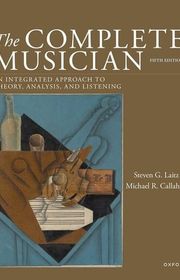
The Complete Musician
For students who want analysis, listening and theory developed together. Its integrated course connects skills that separate reference books can leave apart, but the substantial sequence assumes sustained study and benefits from instruction and companion practice materials.
What it's about
Steven Laitz and Michael Callahan connect music theory with analysis and listening in an integrated undergraduate course. The fifth edition develops musical understanding through repertoire, explanations and practical work, linking written concepts with the sounds and structures of music.
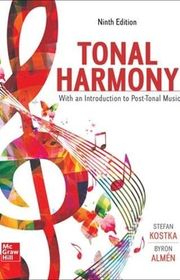
Tonal Harmony
For students who want a structured grounding in tonal harmony and part-writing. Its systematic treatment gives more depth than beginner surveys, but the classical emphasis and textbook exercises are most useful with feedback on written work.
What it's about
Stefan Kostka and Byron Almén develop tonal harmony through explanations, musical examples and exercises. The ninth edition moves from fundamentals toward more complex harmonic practices, connecting chord relationships and voice leading with analysis of the Western classical tradition.
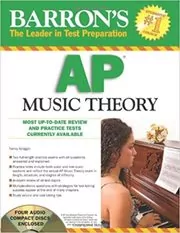
Barron's AP Music Theory
For students reviewing material for the AP Music Theory exam. Its written and aural practice gives a more specific target than a general theory book, but the linked edition is older and must be compared with current exam requirements.
What it's about
Nancy Scoggin reviews music theory for the Advanced Placement exam, including harmony, melodic writing, score analysis, and listening skills. Practice questions and two full-length tests combine written and aural work, with explanations supporting students as they assess their preparation.
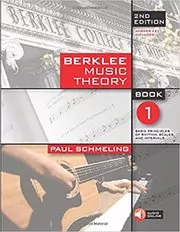
Berklee Music Theory Book 1
For beginners who want written theory connected with listening from the start. Its exercises and pop, jazz and blues examples provide an applied foundation, but this first book covers an opening stage rather than a complete harmony curriculum.
What it's about
Paul Schmeling introduces notes, scales, and rhythms through written exercises, listening examples, and ear training. Drawing on pop, jazz, and blues, the lessons connect theoretical concepts with what musicians hear, providing a foundation for further performance and composition study.
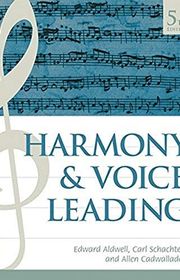
Harmony and Voice Leading
For students ready to examine how individual lines shape harmony. Its close attention to voice movement and musical examples offers more analytical depth than a beginner primer, but the classical focus and demanding exercises benefit from a teacher’s feedback.
What it's about
Edward Aldwell, Carl Schachter and Allen Cadwallader explain harmony through the movement and interaction of musical voices. The fifth edition connects tonal principles with analysis and written practice, developing understanding of how chord progressions operate within larger musical structures.
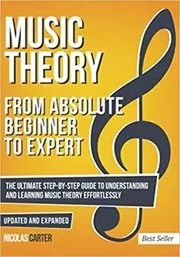
For learners who want a progressive overview of scales, intervals and chords. Its compact explanations can help organize concepts encountered in playing, but the broad beginner-to-expert promise should not replace sustained practice or a deeper course.
What it's about
Nicolas Carter introduces music theory through a progressive guide to notes, intervals, scales, modes, and chords. Explanations connect these concepts with practical musicianship, helping readers understand how musical structures can inform playing, composition, and improvisation.
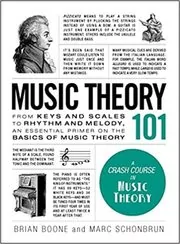
Music Theory 101
From Keys and Scales to Rhythm and Melody, an Essential Primer on the Basics of Music Theory
For curious listeners and new musicians who want an accessible first overview. Its visual examples and historical asides make terminology approachable, but the primer format offers less exercise depth and structured assessment than a self-study course.
What it's about
Brian Boone and Marc Schonbrun introduce sheet music, scales, chords, keys, and rhythm through accessible explanations and visual examples. Music history and trivia accompany the lessons, giving beginning musicians and curious listeners a practical overview of the language underlying different genres.
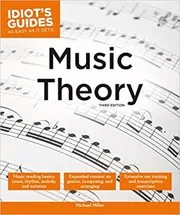
For readers who want an approachable guide extending from notation toward creating music. Its exercises and later arranging topics provide a wider practical path than a short primer, but the broad treatment gives less depth than an undergraduate textbook.
What it's about
Michael Miller introduces musical notation, pitch, rhythm, harmony, and form in a practical guide to reading and creating music. Later discussions address accompaniment, transposition, composition, and arranging, with exercises and reference material supporting readers as they develop their skills.
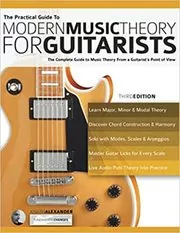
The Practical Guide to Modern Music Theory for Guitarists
The Complete Guide to Music Theory From a Guitarist's Point of View
For guitarists who want to apply scales and harmony in progressions and solos. Its backing tracks encourage practical use beyond memorizing patterns, but the instrument-specific approach gives less attention to broader score reading and classical part-writing.
What it's about
Joseph Alexander explains music theory from the guitarist's perspective, connecting scales, harmony, chords, and modes with the instrument. Musical examples and backing tracks emphasize applying concepts in progressions and solos rather than simply memorizing theoretical information.
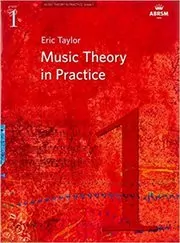
Music Theory in Practice
For beginners working through Grade 1 notation skills. Its examples and exercises give a focused workbook structure, but this linked volume is only the first grade and older materials need comparison with current ABRSM requirements.
What it's about
Eric Taylor's Grade 1 workbook introduces music notation through explanations, worked examples, and practice exercises. Definitions and sample questions support preparation for ABRSM theory study while providing beginners with a practical foundation in reading and understanding music.
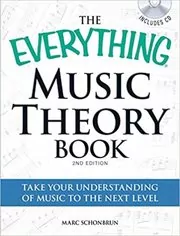
For musicians who know some basics and want theory related to songwriting choices. Its illustrated lessons and practice exercises support practical consolidation, but the general coverage offers less sustained analysis of repertoire than a formal course text.
What it's about
Marc Schonbrun explains how chords, scales, rhythm, and complex time signatures work, connecting theory with the choices made in songwriting. Illustrated lessons and focused practice exercises reinforce the concepts, helping intermediate musicians deepen their understanding through practical study.
Sources
- 1
The 10 Best Music Theory Books In 2026
hellomusictheory.com
- 2
Best Music Theory Books
musicindustryhowto.com
- 3
15 of the Best Music Theory Books
musicianwave.com
- 4
20 Best Music Theory Book Reviews
cmuse.org
- 5
Best music theory books for 2024
classical-music.com
- 6
Best Music Theory Books (2026) – A Music Educator's Picks
music-theory-practice.com
- 7
Music Theory Books
goodreads.com
- 8
Book recomendations.
reddit.com





Edited by
Software engineer whose passion for tracking book recommendations from podcasts inspired the creation of MRB.
Lead investor at 3one4 Capital whose startup expertise and love for books helped shape MRB and its growth.
Comments
Did we miss something? Have feedback?
Help us improve this page by sharing your thoughts