
25 Best Music Books
The best music books, ranked by how many expert sources recommend each one, with notes to help listeners, musicians and fans find their next read.
Our take
Music books can change what you notice in a recording, explain how a scene formed or show what a career feels like from the inside. This selection ranges from rock memoirs and oral histories to neuroscience, criticism and fiction. You don’t need to play an instrument to begin, but choosing a subject you already enjoy makes the details more rewarding.
How Music Works examines the practical conditions behind creation and performance. This Is Your Brain on Music explains aspects of listening, while Musicophilia follows unusual neurological experiences. Major Labels offers a route across popular genres, and The Rest Is Noise places modern classical music within history. Memoirs such as Life, Girl in a Band and Just Kids foreground individual experience; Our Band Could Be Your Life and Please Kill Me build portraits of musical communities. High Fidelity approaches fandom through fiction.
Start with a musician or scene you love, or choose a listening-focused book if you want to explore beyond familiar records.
25 books · 8 sources · Last updated
As an Amazon Associate, we earn from qualifying purchases (at no extra cost to you).
How to choose from this list
Skip to the full rankingIf you want to understand listening: This Is Your Brain on Music → Musicophilia
If you want a broad view of popular music: Major Labels → How Music Works
If you want twentieth-century classical music: The Rest Is Noise
If you want punk and independent scenes: Please Kill Me → Rip It Up and Start Again → Our Band Could Be Your Life
If you want an artist’s personal story: Just Kids → Girl in a Band
If you want the business behind pop hits: The Song Machine
The 25 books, ranked
Ranked by how many expert sources name each book. Ties go to the book more people recommend.

For readers who want punk history told through competing eyewitness voices. The oral-history format preserves personality and contradiction, but the explicit anecdotes and selective memories need reading as testimony rather than a settled record.
What it's about
Legs McNeil and Gillian McCain assemble an oral history of American punk from the voices of musicians and others around the scene. Their accounts move through the Warhol Factory, Max's Kansas City, and CBGB, capturing overlapping creative and personal lives.

How Music Works
For curious listeners and musicians who want to understand the conditions shaping a song. Byrne connects creative decisions with spaces, technology and money, but the wide-ranging reflections form a personal inquiry rather than a systematic music course.
What it's about
David Byrne explores how music is shaped by acoustic spaces, technology, economics and social circumstances. Drawing on his work with Talking Heads and other collaborators, he considers the processes through which music is created, performed, distributed and heard.
Also recommended by
1 person Penn Jillette recommended this book
Penn Jillette
"Wonderful book." - Penn Jillette
Penn Jillette's recommendation of this book

For listeners interested in how bands built careers outside the mainstream industry. Its linked profiles reveal the practical networks behind independent music, but the American focus and chosen groups leave other underground traditions outside its scope.
What it's about
Michael Azerrad profiles the American independent music underground between 1981 and 1991. His accounts of bands and their communities show how touring, small labels, fanzines, and independent networks helped musicians build careers outside the mainstream recording industry.

For listeners who want twentieth-century classical music placed within its historical world. Its connections between composers, politics and culture support exploratory listening, but the sweep and unfamiliar repertoire make it a substantial reading commitment.
What it's about
Alex Ross traces twentieth-century music alongside the political and cultural forces that shaped it. Moving through European and American musical worlds, he examines composers, experimentation, war, dictatorship, technology, and the connections between modern classical music and popular culture.

Just Kids
For readers who want an intimate account of artistic beginnings rather than a conventional rock career. Smith’s relationship with Robert Mapplethorpe gives the memoir its emotional center, but music shares space with poetry, photography and survival.
What it's about
A legendary memoir of New York City in the late sixties and seventies. Smith chronicles her intense friendship and romance with photographer Robert Mapplethorpe as they both navigate poverty, youth, and the path to becoming artists.
Also recommended by
3 people Emma Watson recommended this book
Emma Watson
"I have had [this book] on my bedside forever." - Emma Watson
Emma Watson's recommendation of this book  Seth Godin recommended this book
Seth Godin
"It is not going to change the way you do business but it might change the way you live." - Seth Godin
Seth Godin's recommendation of this book  Shauna Niequist recommended this book
Shauna Niequist
Shauna Niequist recommended this book on Twitter.
Shauna Niequist's recommendation of this book
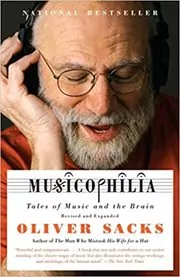
Musicophilia
For readers interested in the unusual ways music enters human lives. Sacks’s case histories make neurological differences personal and memorable, but the collection explores exceptional experiences rather than providing a comprehensive account of everyday listening.
What it's about
Sacks explores how music can disturb, heal, and define the brain, from musical hallucinations to Parkinson’s patients moved by rhythm. The result is a set of human stories about why music matters so deeply.
Also recommended by
2 people Aniela Gregorek recommended this book
Aniela Gregorek
"I gained a deeper understanding of how music affects our moods and our brains." - Aniela Gregorek
Aniela Gregorek's recommendation of this book  Justin Boreta recommended this book
Justin Boreta
One of Justin Boreta's most-gifted or recommended books.
Justin Boreta's recommendation of this book

Life
For Rolling Stones fans who want a guitarist’s view of the band’s long career. Its stories connect musical craft with relationships and excess, but the lively first-person account remains selective and shaped by Richards’s perspective.
What it's about
Keith Richards recounts his life as a guitarist and founding member of the Rolling Stones. Written with James Fox, the memoir follows musical influences, songwriting, fame and addiction alongside the relationships and family experiences surrounding his career.
Also recommended by
1 person Harry Styles recommended this book
Harry Styles
Harry Styles mentioned this book in an interview.
Harry Styles's recommendation of this book

For Dylan listeners interested in influences, places and the texture of artistic memory. Its selective episodes bring creative periods into focus, but the jumps across time leave major parts of his career outside the frame.
What it's about
Bob Dylan revisits selected periods of his life and career, beginning with his arrival in New York's music scene. Memories of musicians, books, places, and recording sessions reveal influences on his work and his changing relationship with public expectations.

For readers who want punk history connected with the rest of a woman’s life. Albertine carries questions of independence beyond the Slits into family and illness, but the intimate personal detail extends well beyond band history.
What it's about
Viv Albertine recounts her life as guitarist in the Slits and a participant in London's punk scene. Her memoir continues beyond the band into filmmaking, marriage, motherhood, illness, and her eventual return to music, examining independence in a male-dominated culture.

For readers interested in the relationship between artistic independence and private life. Gordon’s account gives an inside perspective on Sonic Youth and its surrounding art world, but the personal focus offers less balanced band history.
What it's about
Kim Gordon reflects on her life in art and music, including her years as a founding member of Sonic Youth. The memoir connects creative work with marriage, motherhood, and the struggle to maintain a sense of personal independence.
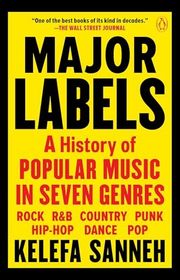
Major Labels
For listeners whose knowledge is deep in one genre but patchy elsewhere. Its genre-based structure offers a useful map of popular music, but the seven-part frame necessarily compresses the histories and boundaries it examines.
What it's about
Kelefa Sanneh examines popular music through seven genres: rock, R&B, country, punk, hip-hop, dance and pop. The book traces changing sounds and audiences while considering how genre identities influence the ways musicians create and listeners understand music.

For readers who want to experience rock criticism as personal, argumentative writing. Bangs’s restless prose makes listening feel urgent and consequential, but the digressions and period references can frustrate readers seeking concise reviews or orderly history.
What it's about
Edited by Greil Marcus, this collection brings together Lester Bangs's rock criticism, record reviews, and essays. Bangs's writing turns encounters with performers and music into personal, argumentative explorations of popular culture, including the emerging New York punk scene.

Decoded
For readers who want rap lyrics discussed as crafted writing alongside personal history. Jay-Z’s annotations make connections between language and lived experience explicit, but the selective autobiographical approach leaves the artist in control of the portrait.
What it's about
Jay-Z combines autobiographical stories with explanations of his lyrics and their meanings. The book connects experiences from his youth and musical career to hip-hop’s language, artistry, and cultural history, showing the personal contexts behind selected songs.
Also recommended by
3 people Mark Zuckerberg recommended this book
Mark Zuckerberg
On the "books read" section of Mark Zuckerberg's Facebook profile.
Mark Zuckerberg's recommendation of this book  LeBron James recommended this book
LeBron James
LeBron James was seen reading this book.
LeBron James's recommendation of this book  Sahil Lavingia recommended this book
Sahil Lavingia
Sahil Lavingia recommended this book on Notion.
Sahil Lavingia's recommendation of this book

High Fidelity
For readers who recognize the emotional habits of obsessive record collectors. Its comic first-person voice connects musical taste with relationships and self-deception, but it is a novel about a flawed fan rather than a factual music history.
What it's about
Record-store owner Rob reels after his girlfriend leaves and copes the only way he knows how: by turning his failed relationships into top-five lists. As he retraces old breakups, he slowly confronts his own fear of commitment and growing up.
Also recommended by
2 people Tim Ferriss recommended this book
Tim Ferriss
"After his girlfriend leaves him for another man, Rob embarks on a journey of self-discovery and evaluation by contacting ex-girlfriends to see what went wrong in each relationship." - Tim Ferriss
Tim Ferriss's recommendation of this book  Steve Jobs recommended this book
Steve Jobs
"Guys can get an illness in which they believe there can always be a better girl around the next corner. [In this book, the author] calls it 'death by small increments.'" - Steve Jobs
Steve Jobs's recommendation of this book

For readers who experience songs as markers of love and memory. Its mixtape structure makes the listener’s life central to music writing, but the memoir’s grief is more prominent than detached criticism or musical history.
What it's about
Rob Sheffield recalls his relationship with his wife and the grief that followed her sudden death through fifteen mix tapes. Music becomes the organizing thread of a memoir about shared joy, loss, memory, and the songs that connect people.
Also recommended by
2 people- Harry Styles recommended this book
Harry Styles
Harry Styles posted a photo of him in bed reading this book.
Harry Styles's recommendation of this book  Jack Edwards recommended this book
Jack Edwards
"About how music is the soundtrack to our existences." - Jack Edwards
Jack Edwards's recommendation of this book

For listeners who want an accessible scientific framework for rhythm, memory and musical emotion. Its broad explanations connect musical experience with brain research, but readers seeking technical neuroscience or current research detail will need further reading.
What it's about
Daniel Levitin examines what happens in the brain when people listen to, perform and compose music. He connects neuroscience with musical examples to investigate rhythm, emotion, memory and the place of music in human evolution.
Also recommended by
2 people Vinod Khosla recommended this book
Vinod Khosla
"Fascinating though older book." - Vinod Khosla
Vinod Khosla's recommendation of this book - Justin Boreta recommended this book
Justin Boreta
"Goes into the evolutionary thinking behind why music does what it does." - Justin Boreta
Justin Boreta's recommendation of this book

For pop listeners curious about the teams and production systems behind familiar hits. Its reporting makes commercial songcraft visible beyond the featured singer, but the industry snapshot centers on a particular era of hit-making.
What it's about
John Seabrook investigates the producers, songwriters, and specialized teams behind contemporary pop hits. Reporting from studios across several countries, he explores digital production, songwriting formulas, streaming, and the commercial pressures shaping familiar songs.
Also recommended by
1 person Max Levchin recommended this book
Max Levchin
Max Levchin recommended this book on LinkedIn.
Max Levchin's recommendation of this book

For jazz listeners willing to meet a musician through an unruly literary self-portrait. Its intensity and outsider perspective differ from orderly career biographies, but the expressionistic storytelling makes it unreliable as a straightforward factual chronology.
What it's about
Jazz bassist and composer Charles Mingus recounts his childhood in Watts, outsider adolescence, musical apprenticeship, and experiences in New York. His memoir moves between encounters with other musicians, turbulent personal episodes, and reflections on the inner life behind his music.
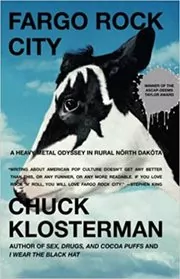
For readers who want to understand what heavy metal meant to an ordinary teenage fan. Its mixture of memoir and argument takes unfashionable taste seriously, but the digressions and provocative judgments are central to its appeal.
What it's about
Klosterman remembers growing up as a heavy metal fan in rural North Dakota and makes a case for the music’s messy importance. Hair metal, farm life, and teenage devotion all get equal attention.

For Led Zeppelin fans seeking the turbulent mythology surrounding the band’s rise. Its dramatic emphasis on backstage excess makes for forceful storytelling, but disputed anecdotes mean it needs reading critically alongside more carefully sourced accounts.
What it's about
Stephen Davis traces Led Zeppelin's rise and the excesses surrounding its success, combining musical biography with accounts of life offstage. His narrative explores the band's fame, substance use, Jimmy Page's occult interests, and the loss of drummer John Bonham.

For readers curious about the rock scene from a groupie’s own perspective. Its diary-based intimacy challenges accounts centered only on performers, but the explicit relationships and personal recollections offer a selective view of the period.
What it's about
Pamela Des Barres recounts her experiences as a groupie in the rock scene of the 1960s and 1970s. Drawing on her diaries, she describes relationships, backstage encounters, and life around the Sunset Strip through a personal account of musical obsession.
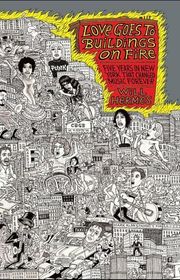
Love Goes to Buildings on Fire
For readers who want to see several musical revolutions unfolding in the same city. Its interwoven New York scenes reveal connections across genres, but the shifting cast and chronology require attention rather than casual browsing.
What it's about
Will Hermes follows New York’s music scenes from 1973 through 1977, moving among punk, hip-hop, disco, salsa, jazz and minimalism. The narrative links musicians and neighborhoods to show how overlapping communities developed new sounds amid the city’s wider turmoil.

For Beatles listeners who want individual recordings examined in musical and cultural detail. Its track-by-track structure rewards listening alongside the text, but the confident interpretations remain one critic’s judgments rather than neutral explanations.
What it's about
Ian MacDonald examines the Beatles' recordings individually, connecting musical choices with the social and cultural atmosphere of the 1960s. His analysis follows the band's changing work while interpreting its place in the wider history of the decade.
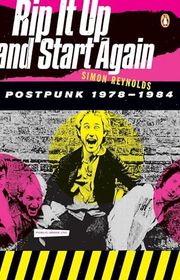
Rip It Up and Start Again
For listeners who want to follow punk’s experimental aftermath into new sounds and scenes. Its emphasis on ideas and innovation connects seemingly different bands, but the crowded history assumes curiosity about many unfamiliar names.
What it's about
Simon Reynolds traces post-punk from 1978 to 1984, exploring musicians who expanded punk’s possibilities through experimental sounds, politics and performance. The narrative connects bands, scenes and emerging styles, following changes that also shaped early-1980s synth-pop and popular music.

For Mötley Crüe fans who want the members’ clashing accounts of fame and self-destruction. Its shifting voices expose the band’s internal mythology, but the relentless explicit excess can crowd out discussion of musical work.
What it's about
The members of Mötley Crüe recount their rise, fame, relationships, and destructive excesses in this collaborative autobiography with Neil Strauss. Shifting personal accounts bring together the band's musical career and its members' experiences of addiction and life backstage.
Sources
- 1
100 Greatest Music Books of All Time
billboard.com
- 2
Best books about music: Essential reads for all music fans
loudersound.com
- 3
Best Music Books
goodreads.com
- 4
do y’all read music books? Recommend your favourites!
reddit.com
- 5
Help me Pick Some Books for the Music book Club that I’m Trying to Start
reddit.com
- 6
What to Read to Really Understand Music
theatlantic.com
- 7
Books That Every Music Lover Should Read
penguinrandomhouse.com
- 8
The best books on Classical Music
fivebooks.com




Edited by
Software engineer whose passion for tracking book recommendations from podcasts inspired the creation of MRB.
Lead investor at 3one4 Capital whose startup expertise and love for books helped shape MRB and its growth.
Comments
Spotted a missing book, a wrong order or a mistake? Tell us and we'll fix this page.
We're a reading guide, not the author or publisher, so we can't send books or pass on messages.