
11 Best Music Production Books
The best music production books, ranked by how many expert sources recommend each one, with guidance for home studios, mixing and electronic production.
Our take
Music production brings together musical choices, technical skills and the ability to carry an idea through to a finished recording. Books can help with each part, but they differ in scope. A guide to writing electronic tracks will not answer every question about microphone placement, and a mixing reference assumes that you already have something to mix.
Modern Recording Techniques offers a broad technical foundation. Mixing Secrets for the Small Studio concentrates on decisions you can make in a home setup, while The Mixing Engineer’s Handbook adds perspectives from experienced mixers. Electronic producers can look to Dance Music Manual for technical breadth and Making Music for creative workflow. Music Theory for Computer Musicians addresses the musical structure behind the sounds.
Start with the stage where your projects stall. Work through a book alongside an actual recording or track, so its examples become decisions you can hear rather than settings you simply memorize.
11 books · 10 sources · Last updated
As an Amazon Associate, we earn from qualifying purchases (at no extra cost to you).
How to choose from this list
Skip to the full rankingIf you want recording foundations: Modern Recording Techniques
If you mix in a home studio: Mixing Secrets for the Small Studio → The Mixing Engineer's Handbook
If you prefer visual explanations: The Art of Mixing → Mixing Audio
If you produce electronic tracks: Dance Music Manual → The Secrets of Dance Music Production
If your ideas stay unfinished: Making Music
If you're ready to study mastering: Mastering Audio
The 11 books, ranked
Ranked by how many expert sources name each book. Ties go to the book more people recommend.
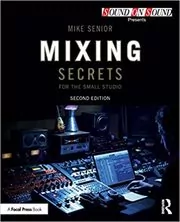
Mixing Secrets for the Small Studio
For home-studio musicians who want a repeatable mixing process with limited equipment. Its emphasis on listening, preparation and practical decisions fits small setups, though the detail rewards patient work with your own audio examples.
What it's about
Mike Senior guides small-studio musicians through the mixing process, connecting listening and preparation with balancing tracks and applying processing. Practical explanations of equalization, compression, reverb, and other tools show how production decisions contribute to a polished recording.
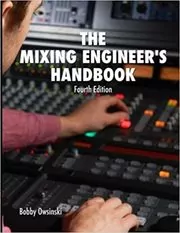
The Mixing Engineer's Handbook
For producers who want a broad mixing reference alongside perspectives from working engineers. The interviews show why approaches differ between sessions, though the handbook format is less linear than a single guided mixing course.
What it's about
Bobby Owsinski breaks music mixing into practical stages, from achieving balance and applying equalization to editing tracks and adding effects. Interviews with experienced mixers complement the technical explanations, offering different approaches to shaping recorded performances into a finished mix.
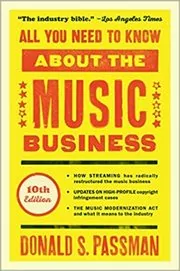
All You Need to Know About the Music Business
For producers who need to understand how recordings and creative work fit into the music business. It explains commercial relationships beyond studio technique, though its legal and industry emphasis makes it a companion rather than a production manual.
What it's about
Donald Passman explains the business relationships, agreements, and revenue streams that shape careers in music. This tenth edition examines the industry's shift toward streaming, giving artists, songwriters, managers, and other participants a framework for understanding its changing commercial landscape.
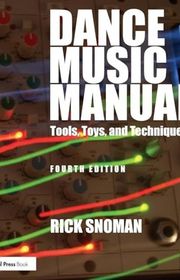
Dance Music Manual
For electronic producers who want a substantial technical reference across the production process. It connects sound design and musical construction with dance genres, though its breadth makes it more demanding than a short collection of workflow advice.
What it's about
Rick Snoman explains the tools and techniques used to create electronic dance music. The manual covers synthesis, rhythm, arrangement, processing and mixing, connecting technical concepts with the musical characteristics and production demands of different dance styles.

For electronic producers who can use their tools but struggle to start or finish tracks. Its problem-and-solution format targets creative blocks more directly than technical manuals, though it will not teach recording or mixing fundamentals.
What it's about
Dennis DeSantis offers seventy-four strategies for overcoming obstacles in electronic music production. Organized around beginning, progressing, and finishing, the book addresses common creative roadblocks with concrete approaches that can be applied regardless of the software or hardware being used.
Mastering Audio: The Art and the Science
For experienced mixers who want to understand the final stage of audio preparation. It treats listening and technical judgment together, though the specialist depth makes it a poor starting point for learning basic recording or mixing.
What it's about
Bob Katz explains the technical and listening decisions involved in audio mastering. Topics include monitoring, loudness, dynamics, equalization and delivery, connecting the preparation of finished recordings with the conditions under which listeners will hear them.
Modern Recording Techniques
For readers who want a broad technical foundation before specializing. Its coverage connects recording tools, audio concepts and studio practice, though the textbook scope is denser than a focused guide to solving one mixing problem.
What it's about
David Miles Huber and Robert Runstein introduce the art and technology of recording music. This edition examines digital audio workstations, networked audio, MIDI, and signal processing, combining production concepts with an overview of tools used in contemporary recording environments.
Mixing Audio: Concepts, Practices, and Tools
For producers who want to understand why mixing tools work rather than copy settings. Its detailed treatment supports careful listening and comparison, though it requires more technical study than a concise introduction to balancing tracks.
What it's about
Roey Izhaki examines mixing as both a technical and creative process. Explanations of balance, equalization, dynamics, spatial effects and other tools connect with practical examples, showing how individual decisions shape the relationships between sounds in a recording.
Music Theory for Computer Musicians
For computer-based producers who can make sounds but want a clearer grasp of musical structure. Its software-oriented approach connects theory with composing tracks, though it requires keyboard practice and does not replace audio-engineering instruction.
What it's about
Michael Hewitt teaches music theory to producers, DJs, and musicians who work with computers. Using a MIDI keyboard and composing software as the learning environment, explanations and exercises connect the fundamentals of musical language with writing and producing original tracks.
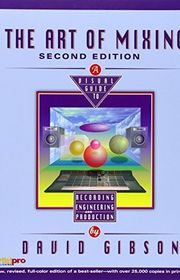
For producers who understand relationships better through pictures than technical descriptions. Its spatial diagrams make the placement of sounds easier to discuss, though the visual model is an interpretation and still needs to be tested by listening.
What it's about
David Gibson uses visual representations to explain relationships among sounds in a mix. Diagrams connect volume, frequency, stereo placement and effects with a sense of space, helping readers think about how recording and processing choices interact.

The Secrets of Dance Music Production
For electronic producers who learn through illustrated examples and practical techniques. Its focus on dance tracks keeps the material close to common production tasks, though readers recording acoustic ensembles will need guidance aimed at that setting.
What it's about
David Felton and contributors explore electronic dance music production through illustrated explanations and practical examples. The book covers drums, bass, synthesis, sampling, arrangement and mixing, showing how production techniques contribute to the sound and structure of finished tracks.
Sources
- 1
The Best Books on Music Production: From Mixing to Mastering
ammusic.co.uk
- 2
The Ultimate List of Music Production Resources
edmprod.com
- 3
5 Great Music Production Books
toolroomacademy.com
- 4
The 10 Best Books for Music Producers
musicianwave.com
- 5
What are some “must read” books for music production?
reddit.com
- 6
What are some essential reads for music production?
reddit.com
- 7
The Top 10 Must-Read Music Production Books to Make Your Next Record Sound Amazing
audio-issues.com
- 8
7 Essential Books Every Music Producer Must Read
blackghostaudio.com
- 9
Music Production Books
goodreads.com
- 10
Music Production Resources: Books, YouTube Channels and Tools
indiemusicianresources.com






Edited by
Software engineer whose passion for tracking book recommendations from podcasts inspired the creation of MRB.
Lead investor at 3one4 Capital whose startup expertise and love for books helped shape MRB and its growth.
Comments
Spotted a missing book, a wrong order or a mistake? Tell us and we'll fix this page.
We're a reading guide, not the author or publisher, so we can't send books or pass on messages.