
10 Best Japan History Books
The best Japan history books, ranked by how many expert sources recommend each one, with notes on who each suits and where to begin reading.
Our take
Japan’s history includes much more than samurai warfare or rapid modernization. These books approach it through political institutions, social change, imperial expansion, occupation, and the cultural practices that survived or changed along the way. The broad surveys help newcomers place events in sequence. More focused studies are useful once a particular period or question catches your attention.
A Brief History of Japan offers a compact starting point, while A Modern History of Japan gives modern politics and society more room. Embracing Defeat concentrates on the occupation after World War II, and Hirohito and the Making of Modern Japan examines imperial responsibility through biography. Pure Invention turns toward recent popular culture. The personal essays of Lost Japan and the primary text The Book of Five Rings offer narrower perspectives that benefit from historical context. Start with a general history, then choose the period or viewpoint you want to understand more closely.
10 books · 6 sources · Last updated
As an Amazon Associate, we earn from qualifying purchases (at no extra cost to you).
How to choose from this list
Skip to the full rankingIf you're new to Japanese history: A Brief History of Japan → A Concise History of Japan
If you want modern political and social history: A Modern History of Japan → Embracing Defeat
If you want to examine empire and wartime responsibility: Hirohito and the Making of Modern Japan → The Rape of Nanking
If you want cultural change and personal perspectives: Pure Invention → Lost Japan
If you want a historical voice on martial strategy: The Book of Five Rings
The 10 books, ranked
Ranked by how many expert sources name each book. Ties go to the book more people recommend.
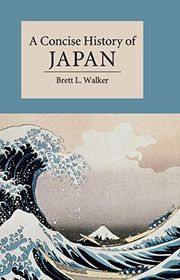
A Concise History of Japan
For readers seeking a general history with an analytical thread. Walker connects broad chronology with environment, minorities, and state development, though its compact scope cannot match the detail of a specialist period study.
What it's about
Brett L. Walker surveys Japan’s history while tracing relationships between political authority, social change, minorities, and the environment. The account connects developments within Japan to wider historical questions about modernization, science, economic growth, and power.

For readers drawn to the recent history behind Japanese popular culture. Its focus on inventions and entertainment makes global cultural influence tangible, though it offers less political chronology than the general histories here.
What it's about
Matt Alt investigates the Japanese inventions and entertainment that reshaped global popular culture. Stories behind karaoke, the Walkman, games, manga, and other creations connect their makers with changes in how people imagine, communicate, and navigate everyday life.

The Book of Five Rings
For readers who want a historical voice from Japan’s martial tradition. Musashi offers a primary perspective on strategy rather than a later historian’s interpretation, but understanding its setting requires additional historical context.
What it's about
Miyamoto Musashi sets out principles of strategy drawn from his experience as a swordsman. He examines skill, timing, concentration, and the choice of weapons, combining practical observations about confrontation with reflection on discipline and the pursuit of mastery.
Also recommended by
6 people Joe Rogan recommended this book
Joe Rogan
"Increased my focus in all disciplines I pursue. It’s some undeniably inspiring shit, and I can’t recommend it enough." - Joe Rogan
Joe Rogan's recommendation of this book  Jocko Willink recommended this book
Jocko Willink
Jocko Willink covered this book in "Jocko Podcast" Ep. 80
Jocko Willink's recommendation of this book  Ryan Holiday recommended this book
Ryan Holiday
Ryan Holiday recommended this book on his blog.
Ryan Holiday's recommendation of this book  Naval Ravikant recommended this book
Naval Ravikant
Naval Ravikant tweeted about this book.
Naval Ravikant's recommendation of this book  PewDiePie recommended this book
PewDiePie
"This is like the coolest book ever!" - PewDiePie
PewDiePie's recommendation of this book  Lex Fridman recommended this book
Lex Fridman
Lex Fridman mentioned this book on Instagram.
Lex Fridman's recommendation of this book

For readers examining Japanese imperial violence and its remembrance. Chang keeps victims central in a concentrated account of Nanking, though the disturbing subject and narrow case study make this a demanding companion to broader histories.
What it's about
Iris Chang investigates the atrocities committed by Japanese troops in Nanking in 1937. Survivor interviews and documentary research present the experiences of victims, perpetrators, and foreigners who tried to protect civilians, alongside questions of remembrance and denial.
Also recommended by
2 people- Jocko Willink recommended this book
Jocko Willink
Jocko Willink covered this book in "Jocko Podcast" Ep. 60
Jocko Willink's recommendation of this book  Jordan Peterson recommended this book
Jordan Peterson
Recommended on Jordan Peterson's website.
Jordan Peterson's recommendation of this book

For newcomers who want a compact narrative before choosing a period to study. Its broad chronological sweep supplies orientation with less commitment than the academic histories, though individual eras necessarily receive limited attention.
What it's about
Jonathan Clements surveys Japanese history from its early myths and rulers to modernization and industrial growth. The narrative connects samurai conflicts, periods of isolation, and encounters with the wider world to the development of Japanese society and culture.

For readers ready to examine modern Japan beyond rulers and battles. Gordon integrates political change with work, households, and social relations more systematically than the memoirs here, though the academic detail rewards slower reading.
What it's about
Andrew Gordon traces Japan from Tokugawa rule through modernization, empire, war, occupation, and postwar change. Alongside politics and economics, he examines workers, households, gender relations, and popular culture, placing Japanese developments within a wider international history.
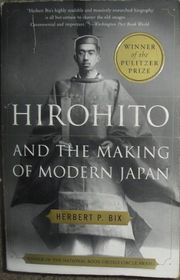
Hirohito and the Making of Modern Japan
For readers examining imperial responsibility through one ruler’s life. Bix supplies a sustained argument about Hirohito’s political role that broad surveys cannot develop as fully, though the biography should be read as an interpretation.
What it's about
Herbert P. Bix examines Emperor Hirohito’s life and political role across Japan’s imperial expansion, World War II, and postwar reconstruction. The biography questions accounts of a passive monarch and explores how responsibility and public memory were reshaped.

For readers interested in how recent crises connect with longer patterns of change. Pilling offers a journalist’s interviews and observations rather than a textbook survey, so earlier periods serve mainly as context.
What it's about
Beginning with Japan's 2011 disasters, journalist David Pilling examines a nation's responses to crisis and reconstruction. Interviews and historical reporting explore economic stagnation, social change, and the resilience that complicates familiar accounts of decline.

For readers who want sustained depth on the occupation after World War II. Dower connects institutions with everyday experience more closely than a general survey can, though the concentrated postwar timeframe leaves earlier history elsewhere.
What it's about
John Dower examines Japan's transformation during the American occupation following World War II. Drawing on Japanese sources, he connects political decisions about the emperor and the new constitution with ordinary people's experiences of defeat, hardship, and changing social expectations.

For readers interested in traditional arts and the cultural costs of change. Kerr’s personal perspective adds a lived dimension to the broader histories, though his preferences and nostalgia shape the account throughout.
What it's about
Alex Kerr reflects on decades of life in Japan through personal encounters with its landscape, arts, and traditions. His account combines an appreciation of cultural practices such as Kabuki with concern about the loss of older ways of living.
Sources
- 1
100 Best Japan History Books of All Time
shortform.com
- 2
Japanese History Books
goodreads.com
- 3
Question: What books would you recommend to someone just starting to get into Japanese history
reddit.com
- 4
From Ainu to Samurai: 8 Japanese History Books to Read
tokyoweekender.com
- 5
15 Best Books About Japan To Read | History, Culture, Novels
sugoii-japan.com
- 6
Recommended Reading On Japan
walkjapan.com







Edited by
Software engineer whose passion for tracking book recommendations from podcasts inspired the creation of MRB.
Lead investor at 3one4 Capital whose startup expertise and love for books helped shape MRB and its growth.
Comments
Spotted a missing book, a wrong order or a mistake? Tell us and we'll fix this page.
We're a reading guide, not the author or publisher, so we can't send books or pass on messages.