
18 Best Existentialism Books
The best existentialism books, ranked by how many expert sources recommend each one, with notes for beginners, fiction readers, and those ready for deeper philosophy.
Our take
Existentialism asks what it means to live as a person who must choose, act, and face limits without a ready-made script. Its writers disagree about religion, ethics, and how free we really are. The books associated with it range from technical philosophy to novels that make uncertainty and alienation felt.
For an introduction to the people and their ideas, At the Existentialist Café provides historical context. Existentialism Is a Humanism offers a short statement of Sartre’s position, while The Ethics of Ambiguity develops the relationship between freedom and responsibility toward others. Fear and Trembling approaches commitment through religious faith, and The Myth of Sisyphus explores Camus’s distinct account of the absurd.
Fiction readers can begin with The Stranger, Nausea, or Notes from Underground. The longer technical works, especially Being and Nothingness and Being and Time, reward preparation. Start with an introduction or a novel, then follow the thinker whose questions hold your attention.
18 books · 9 sources · Last updated
As an Amazon Associate, we earn from qualifying purchases (at no extra cost to you).
How to choose from this list
Skip to the full rankingIf you are new to the movement: At the Existentialist Café → Existentialism Is a Humanism
If you prefer fiction: The Stranger → Nausea → Notes from Underground
If you want freedom and ethics: Existentialism Is a Humanism → The Ethics of Ambiguity
If you want faith and commitment: Fear and Trembling → Either/Or
If you want to explore the absurd: The Myth of Sisyphus → The Plague
If you are ready for technical philosophy: Being and Nothingness → Being and Time
The 18 books, ranked
Ranked by how many expert sources name each book. Ties go to the book more people recommend.

Being and Nothingness
For readers ready for a sustained technical account of consciousness, freedom, and self deception. Its conceptual detail goes far beyond Sartre’s introductory lecture, though the terminology and long arguments benefit from prior philosophical study.
What it's about
Jean-Paul Sartre develops an existentialist account of human consciousness, freedom, and choice. He argues that people create meaning and values through their engagement with the world, examining the human condition and the responsibilities that accompany existence.
Existentialism Is a Humanism
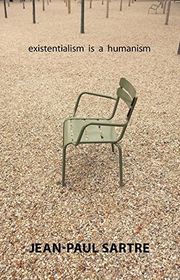
For beginners who want a short primary text on freedom and responsibility. Its lecture format states Sartre’s position more directly than his major treatise, though its compressed defense leaves important complications for later reading.
What it's about
Sartre defends existentialism against accusations of despair and irresponsibility. In a lecture later published as a book, he explains existence preceding essence, the burden of choice, and the connection between individual decisions and a wider human responsibility.

Nausea
For readers who want to encounter Sartre’s ideas through a troubled first person experience. Its attention to ordinary objects makes abstract contingency unsettlingly concrete, though the introspection and sparse plot can feel oppressive.
What it's about
Antoine Roquentin records his sensations and thoughts in a diary as his own existence becomes increasingly disturbing to him. Sartre's novel explores the overwhelming unease of confronting the world and oneself without familiar assurances of meaning.

The Ethics of Ambiguity
For readers who want to connect personal freedom with responsibility toward others. Its attention to oppression gives existentialist ethics a social dimension, though the compact argument still assumes some familiarity with the movement’s central questions.
What it's about
Simone de Beauvoir examines how ethical responsibility can arise from the uncertainty and freedom of human existence. She considers different ways people evade or exercise freedom and argues that one's own liberation is connected with resisting the oppression of others.
The Myth of Sisyphus
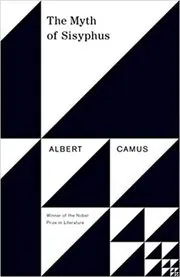
For readers ready to examine Camus’s account of living with the absurd. Its direct central question gives the essay urgency, though the literary references and argument about suicide require close, careful reading.
What it's about
This landmark essay lays out Camus's philosophy of the absurd, asking whether life is worth living in a world without ultimate meaning. Using the figure of Sisyphus, it argues for lucid revolt and everyday joy instead of resignation or suicide.

The Stranger
For readers who prefer a short novel to a philosophical treatise. Its spare voice makes questions about judgment and the absurd immediate, though its emotional distance and colonial Algerian setting require more scrutiny than a simple lesson about meaning.
What it's about
Meursault, a detached clerk in Algiers, drifts through life until an impulsive killing on a sun-blinded beach makes him the focus of a murder trial. His refusal to fake emotion exposes the clash between individual honesty and the demands of society.
Also recommended by
6 people George Bush recommended this book
George Bush
"What I liked the most was the author's stress on the importance of morals and Christian beliefs." - George Bush
George Bush's recommendation of this book  Kyle Maynard recommended this book
Kyle Maynard
One of Kyle Maynard's 3 answers to "what is the book (or books) you’ve given most as a gift?"
Kyle Maynard's recommendation of this book  Nolan Bushnell recommended this book
Nolan Bushnell
"[One of my ten favorite books] I might think of if I were asked the question at an interview this minute." - Nolan Bushnell
Nolan Bushnell's recommendation of this book  Lex Fridman recommended this book
Lex Fridman
Lex Fridman mentioned this book on Instagram.
Lex Fridman's recommendation of this book  Brian Koppelman recommended this book
Brian Koppelman
"Everyone should read [this book]." - Brian Koppelman
Brian Koppelman's recommendation of this book  Ryan Shea recommended this book
Ryan Shea
Ryan Shea recommended this book on his website.
Ryan Shea's recommendation of this book

For readers interested in competing ways of living rather than a single philosophical formula. Its invented voices make pleasure and commitment vivid, though the length, irony, and shifting literary forms make it a demanding first text.
What it's about
Kierkegaard stages a conflict between aesthetic pleasure and ethical commitment through the writings of a young man and Judge Vilhelm. Essays, letters, and the Seducer's Diary examine choice, boredom, relationships, and the search for a meaningful existence.
Also recommended by
2 people PewDiePie recommended this book
PewDiePie
"It's genius. I absolutely loved it." - PewDiePie
PewDiePie's recommendation of this book  David Heinemeier Hansson recommended this book
David Heinemeier Hansson
"[The author]'s funny, he's straight forward (even when sarcastic), he's INTERESTING." - DHH
David Heinemeier Hansson's recommendation of this book

At the Existentialist Café
For newcomers who want ideas connected to lives, friendships, and political choices. Its narrative structure makes difficult thinkers easier to approach, though it provides a historical entry point rather than a systematic account of every argument.
What it's about
Sarah Bakewell traces existentialism through the lives and encounters of thinkers including Sartre, Beauvoir, and Camus. Blending biography with explanations of their ideas, she explores freedom, lived experience, political engagement, and the movement’s influence on twentieth-century culture.
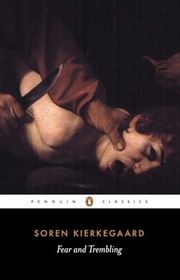
Fear and Trembling
For readers interested in the religious roots of existential thought. Its repeated examination of Abraham makes faith’s conflict with ordinary ethical reasoning vivid, though the pseudonymous argument is intentionally unsettling rather than a straightforward endorsement.
What it's about
Writing under a pseudonym, Kierkegaard returns to the biblical story of Abraham and Isaac. He explores faith, sacrifice, anxiety, and the relationship between an individual’s commitment and the ethical demands shared by a community.

The Trial
For readers who want existential unease expressed through fiction about authority and guilt. Its unresolved logic makes power feel inescapable, though readers looking for a clear philosophical argument or a neatly solved mystery may be frustrated.
What it's about
Bank officer Josef K. is arrested without learning what crime he has supposedly committed. His efforts to defend himself lead through obscure courts and bewildering encounters, as Kafka examines the individual's vulnerability within an incomprehensible system of authority.
Also recommended by
2 people Kara Swisher recommended this book
Kara Swisher
"Another book I read again and again." - Kara Swisher
Kara Swisher's recommendation of this book - David Heinemeier Hansson recommended this book
David Heinemeier Hansson
"Perhaps my favorite novel of all time." - DHH
David Heinemeier Hansson's recommendation of this book
Notes from Underground
For readers who want a short, abrasive challenge to rational accounts of human behavior. The self contradicting voice makes freedom and resentment difficult to separate, though the narrator’s cruelty can make the experience deliberately uncomfortable.
What it's about
An isolated former civil servant in St. Petersburg records his bitter reflections on reason, freedom and society. Recalling humiliating encounters with acquaintances and a young prostitute, he exposes the contradictions between his craving for connection and destructive pride.
Also recommended by
1 person Jordan Peterson recommended this book
Jordan Peterson
Recommended on Jordan Peterson's website.
Jordan Peterson's recommendation of this book
The Plague
For readers who want philosophical questions embodied in shared action and responsibility. Its ensemble perspective offers a broader social lens than The Stranger, though the measured pace and repeated routines resist the expectations of a disaster thriller.
What it's about
In the Algerian port of Oran, a sudden eruption of dying rats grows into a devastating epidemic that seals the city off from the world. Doctor Rieux and a handful of volunteers fight the disease, discovering what solidarity and courage mean under siege.
Also recommended by
1 person Christopher Hitchens recommended this book
Christopher Hitchens
"[The author's] imperishable novel." - Christopher Hitchens
Christopher Hitchens's recommendation of this book

Being and Time
For readers with philosophical experience who want to investigate existence, time, and everyday understanding in depth. Its influence helps explain much later work, though specialized vocabulary and an unfinished structure make guided reading especially useful.
What it's about
Martin Heidegger investigates the meaning of being through an analysis of human existence in the world. The work examines temporality, authenticity, and the conditions through which people encounter things and understand their own existence.
Irrational Man: A Study in Existential Philosophy
For readers who want an overview connecting philosophy with literature and cultural history. Its broad context makes the movement feel less isolated, though its mid twentieth century perspective is selective and should be complemented by newer scholarship.
What it's about
William Barrett introduces existential philosophy through its historical background and major thinkers, including Kierkegaard, Nietzsche, Heidegger, and Sartre. He connects their questions about existence with changes in art, literature, religion, and the experience of modern life.

Man's Search for Meaning
For readers who want an accessible account of purpose grounded in lived suffering. The memoir gives its later therapeutic discussion personal weight, though logotherapy is a distinct approach and should not stand in for the whole existentialist tradition.
What it's about
Viktor Frankl combines his account of imprisonment in Nazi concentration camps with an introduction to logotherapy. He explores the search for meaning, arguing that purpose and one's response to suffering can remain significant even under extreme circumstances.
Also recommended by
36 people- Jordan Peterson recommended this book
Jordan Peterson
Recommended on Jordan Peterson's website.
Jordan Peterson's recommendation of this book  Jocko Willink recommended this book
Jocko Willink
Jocko Willink covered this book in "Jocko Podcast" Ep. 78
Jocko Willink's recommendation of this book  Esther Perel recommended this book
Esther Perel
"The book I’ve probably gifted the most is [this book], since I’m 16." - Esther Perel
Esther Perel's recommendation of this book  Emma Watson recommended this book
Emma Watson
"Loved it. Really loved it." - Emma Watson
Emma Watson's recommendation of this book  Naval Ravikant recommended this book
Naval Ravikant
"Wow it's dark." - Naval Ravikant
Naval Ravikant's recommendation of this book  David Blaine recommended this book
David Blaine
"One of my favorite books." - David Blaine
David Blaine's recommendation of this book +30
More recommendations
- Terry Crews
"Incredible." - Terry Crews
- Jimmy Fallon
"Talks about the meaning of life, and I believe you come out a better person from reading it." - Jimmy Fallon
- Tony Robbins
"Taught me that if you change the meaning, you change everything." - Tony Robbins
- Simon Sinek
"Single most important book you can read." - Simon Sinek
- Michael Gervais
"Outlines methods to discover deep meaning and purpose in life." - Michael Gervais
- Daniel Pink
"A hugely important book for me." - Daniel Pink
- Ev Williams
On the "books read" section of Ev Williams' GoodReads profile.
- Bryan Johnson
"His basic point is no matter the conditions we surround ourselves in, we can author our life." - Bryan Johnson
- Dustin Moskovitz
Dustin Moskovitz recommended this book on Twitter.
- Sam Altman
This book was on Sam Altman's bookshelf.
- Chelsea Handler
"One of those beautiful accounts of a terrible time in our history. His calm and sagaciousness, while witnessing one horror after another played out during his time in three separate concentration camps, is awe inspiring." - Chelsea Handler
- Ryan Holiday
"Looks at how we find purpose by dedicating ourselves to a cause, learning to love and finding a meaning to our suffering." - Ryan Holiday
- Maria Popova
"A meditation on what the gruesome experience of Auschwitz taught [the author] about the primary purpose of life: the quest for meaning, which sustained those who survived." - Maria Popova
- Aniela Gregorek
"A book I have gifted to many people because it changed the way I think about human suffering and grace in life." - Aniela Gregorek
- Fedor Holz
"[From it] I interpreted that we cannot avoid suffering, but we can choose how to cope with it, and that having meaning in our life is essential." - Fedor Holz
- Turia Pitt
"[If people are] doing a bit of soul searching, hands down [I give them this book]." - Turia Pitt
- Chip Conley
"If I were to take the meaning of [this book], and turn it into an equation, it would be despair equals suffering minus meaning." - Chip Conley
- Dave Elitch
Dave Elitch mentioned this book on "The Tim Ferriss Show" podcast.
- PewDiePie
"A great tool to help people. [...] In case something really bad happens, I feel like, from reading this book, I'm better equipped to handle it." - PewDiePie
- Shane Parrish
"As hard as you think your life is, it pales in comparison to Auschwitz." - Shane Parrish
- Phil Jackson
"An important book for me." - Phil Jackson
- Tom Bilyeu
Tom Bilyeu recommended this book on his website.
- Lex Fridman
"I reread [this book] quite often." - Lex Fridman
- Mark Manson
Mark Manson recommended this book on his website.
- Alastair Humphreys
"Slim but packed with wisdom that I often come back to. I really recommend you read it." - Alastair Humphreys
- Steve Kerr
"Incredibly inspiring." - Steve Kerr
- Robin Black
"One of the great books ever written exists because of one of the worst times in human history. From suffering comes beauty." - Robin Black
- Jim Kwik
"Illustrates that it’s not our circumstances but the decisions we make that diminish or develop us." - Jim Kwik
- Michael Hyatt
Michael Hyatt recommended this book on his website.
- Patrick Bet-David
Patrick Bet-David recommended this book on his website.
- Terry Crews

For readers who want to sample contrasting voices before choosing a thinker to study closely. The selected texts and introductory framing provide breadth, though extracts cannot reproduce the full arguments and the editor’s interpretation shapes the selection.
What it's about
Walter Kaufmann gathers writings by thinkers and authors associated with existentialism, including Dostoevsky, Kierkegaard, Nietzsche, Heidegger, Sartre, and Camus. His introductory essay frames the collection and its contrasting approaches to human existence.

Invisible Man
For readers interested in identity shaped by racism and other people’s expectations. Its range of voices and social encounters gives existential questions historical force, though the symbolism and changing registers ask for sustained attention.
What it's about
A nameless Black narrator recounts his search for identity, from a southern community and expulsion from college to New York. His involvement with Harlem's Brotherhood exposes conflicting demands and expectations as he struggles to be recognised as an individual.
Also recommended by
4 people Jacqueline Novogratz recommended this book
Jacqueline Novogratz
"I read it as a 22-year-old, and it made me think deeply about how society doesn’t “see” so many of its members." - Jacqueline Novogratz
Jacqueline Novogratz's recommendation of this book 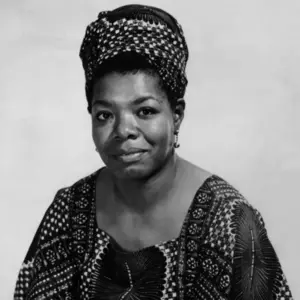 Maya Angelou recommended this book
Maya Angelou
"When I first read [this book], it was as if somebody turned a bright light on in a dark corridor." - Maya Angelou
Maya Angelou's recommendation of this book  Ryan Holiday recommended this book
Ryan Holiday
"One of my favorite books." - Ryan Holiday
Ryan Holiday's recommendation of this book - Dan Barreiro recommended this book
Dan Barreiro
"Riveting time capsule material." - Dan Barreiro
Dan Barreiro's recommendation of this book

Thus Spoke Zarathustra
For readers who enjoy philosophical poetry and can tolerate unresolved interpretation. Its images and speeches explore the creation of values more imaginatively than an introductory survey, though the prophetic style makes it a difficult first Nietzsche book.
What it's about
A prophet returns from mountain solitude to speak about humanity's future and the creation of new values. Nietzsche uses Zarathustra's teachings to explore the death of God, self-transformation, and his concept of the superman.
Sources
- 1
6 essential books on existentialist philosophy
bigthink.com
- 2
Existentialism Reading List: The Best 9 Books to Read
philosophybreak.com
- 3
The Best Books on Existentialism
fivebooks.com
- 4
Existentialism
daily-philosophy.com
- 5
Existentialism Readings List
goodreads.com
- 6
Philosophy 78: Hands-On Existentialism
web.stanford.edu
- 7
What do I start with ? (Existentialism) Newbie 2.0
reddit.com
- 8
Reading for the Conflicted: 11 Existential Classics
flavorwire.com
- 9
Good books on existentialism?
reddit.com











Edited by
Software engineer whose passion for tracking book recommendations from podcasts inspired the creation of MRB.
Lead investor at 3one4 Capital whose startup expertise and love for books helped shape MRB and its growth.
Comments
Spotted a missing book, a wrong order or a mistake? Tell us and we'll fix this page.
We're a reading guide, not the author or publisher, so we can't send books or pass on messages.