
12 Best Metaphysics Books
The best metaphysics books, ranked by how many expert sources recommend each one, with notes for beginners, students, and readers exploring classic arguments.
Our take
Metaphysics asks what exists and how the most basic features of reality fit together. Questions about objects, identity, time, causation, possibility, and the mind can begin with familiar examples and quickly become difficult. These books offer different routes into those problems: brief introductions, systematic textbooks, historical arguments, and works that defend a particular philosophical framework.
Stephen Mumford's Metaphysics and Riddles of Existence are approachable places to begin. A Survey of Metaphysics develops a fuller course through contemporary debates. For primary texts, Descartes's Meditations on First Philosophy pairs usefully with Hume's An Enquiry Concerning Human Understanding, before tackling Kant's Prolegomena to Any Future Metaphysics. Aristotle's The Metaphysics introduces an older vocabulary of substance and being, while Being and Time and The One and the Many explore distinct philosophical traditions.
Start with a modern introduction, then choose a historical text or a more detailed study based on the question that holds your attention.
12 books · 11 sources · Last updated
As an Amazon Associate, we earn from qualifying purchases (at no extra cost to you).
How to choose from this list
Skip to the full rankingIf you're starting from zero: Metaphysics → Riddles of Existence
If you want a structured contemporary course: A Survey of Metaphysics → Metaphysics
If you want early modern arguments: Meditations on First Philosophy → An Enquiry Concerning Human Understanding → Prolegomena to Any Future Metaphysics
If you want to study identity in depth: Sameness and Substance Renewed
If you're interested in Thomistic philosophy: The One and the Many
If you're ready for phenomenology: Being and Time
The 12 books, ranked
Ranked by how many expert sources name each book. Ties go to the book more people recommend.

The Metaphysics
For readers who want to engage directly with foundational arguments about being and substance. Its historical importance illuminates later debates, though the compressed, sometimes discontinuous text is easier with commentary and some knowledge of Aristotle's vocabulary.
What it's about
Aristotle investigates fundamental questions about being, reality, and explanation. His discussion develops concepts of substance, matter and form, essence, and potentiality and actuality while challenging both Plato's account of reality and purely material explanations of change.

A Survey of Metaphysics
For readers ready for a systematic introduction to contemporary debates. Its range of topics provides a more coherent course than jumping between historical classics, though it expects sustained attention to abstract distinctions and competing arguments.
What it's about
E.J. Lowe surveys contemporary metaphysics through questions about reality's fundamental structure. Sections examine identity and change, necessity, causation, agency, space and time, and universals, introducing competing views through systematic discussion rather than a historical narrative alone.

Meditations on First Philosophy
For readers who want a compact primary text to argue with. Its first-person progression makes questions about mind and reality unusually immediate, though its arguments about God and certainty require careful reconstruction rather than passive agreement.
What it's about
Through six meditations, Descartes subjects familiar beliefs to radical doubt in search of a secure foundation for knowledge. He considers the thinking self, the existence of God, and the distinction between mind and body while examining certainty and perception.

For beginners who want to see why apparently ordinary questions become philosophical problems. Its concise, example-led approach is easier to enter than a full textbook, though brevity limits how fully it can develop each debate.
What it's about
Stephen Mumford introduces metaphysics through everyday questions before developing the philosophical theories behind them. Ten essays explore objects, properties, change, causation, time, and personal identity, making abstract problems approachable without assuming familiarity with technical philosophical language.
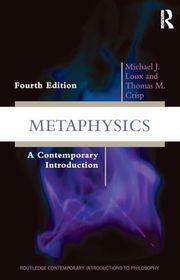
Metaphysics: A Contemporary Introduction
For students who want an organized textbook on contemporary analytic debates rather than a brief overview. The connected treatment supports sustained study, though the terminology and detailed arguments make it more demanding than an informal first introduction.
What it's about
Michael Loux and Thomas Crisp survey contemporary metaphysical debates about universals, particulars, possibility, causation, time, and persistence. The textbook develops arguments and objections systematically while connecting present-day positions with their sources in the history of philosophy.

For readers approaching Kant after some familiarity with Hume and early modern philosophy. Its shorter presentation helps orient you before a longer critical work, though the compressed terminology remains difficult and benefits from a reading companion.
What it's about
Immanuel Kant asks whether metaphysics can become a science, examining how knowledge is possible in mathematics and natural science. This concise presentation of his critical philosophy is supplemented here by selections from the Critique of Pure Reason.

An Enquiry Concerning Human Understanding
For readers interested in how experience supports beliefs about causation and the world. Its skeptical challenge makes a useful counterpoint to Descartes, though the older prose and overlap with epistemology may require background explanation.
What it's about
David Hume examines the limits of human knowledge and the relationship between experience, reasoning, and belief. His discussions of causation and evidence challenge the certainty of everyday assumptions and ask what can justify claims about the world.

Being and Time
For readers ready to examine existence through phenomenology rather than a catalog of analytic problems. Its attention to everyday life and temporality opens a different tradition, though unfamiliar terminology and intricate arguments demand slow, supported reading.
What it's about
Martin Heidegger investigates the meaning of being through an analysis of human existence in the world. The work examines temporality, authenticity, and the conditions through which people encounter things and understand their own existence.
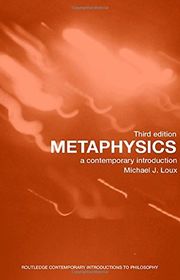
Metaphysics: A Contemporary Introduction
For readers who have some philosophy and want a structured analytic textbook. Its close presentation of universals, particulars, and related debates develops more detail than a short overview, though technical distinctions can make the early chapters demanding.
What it's about
Michael Loux surveys central debates in analytic metaphysics, including universals, particulars, necessity, causation, time, and persistence. Competing theories are presented through arguments and objections, offering a structured framework for studying the fundamental categories of reality.
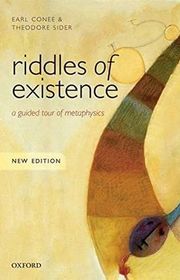
Riddles of Existence: A Guided Tour of Metaphysics
For beginners who want accessible arguments rather than a glossary of positions. Its puzzle-centered chapters develop questions more fully than a very short introduction, though readers seeking historical context will need a companion text.
What it's about
Earl Conee and Theodore Sider introduce metaphysics through questions about identity, time, free will, possibility, and existence. Each chapter develops competing arguments around a puzzle, encouraging readers to examine their assumptions and form reasoned views.

Sameness and Substance Renewed
For readers with some logic and metaphysics who want a sustained argument about identity and substance. Its depth goes beyond an introductory survey, though the technical discussion and close conceptual distinctions make it a demanding first book.
What it's about
David Wiggins revisits questions of identity, substance, and persistence through change using modern logic. Expanding his earlier work, he defends particular forms of essentialism and realism before considering how the identity of persons relates to human lives and memory.
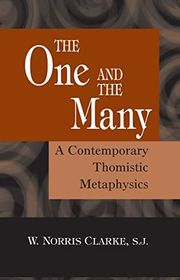
The One and the Many: A Contemporary Thomistic Metaphysics
For readers interested in a Thomistic account of being and the human person. Its connected philosophical framework offers a clear alternative to a neutral survey, though the theological orientation and defended position may not match every reader's aims.
What it's about
W. Norris Clarke develops a contemporary account of Thomistic metaphysics, exploring being, unity, substance, causation, and the human person. He connects classical concepts with questions about experience and relationship, presenting a unified philosophical view rather than a survey.
Sources
- 1
The Nine Best Introductory Books on Metaphysics
thedailyidea.org
- 2
Metaphysics: The Best 10 Books to Read
philosophybreak.com
- 3
Metaphysics
fivebooksforcatholics.com
- 4
Metaphysics Books
goodreads.com
- 5
Books about Metaphysics
reddit.com
- 6
Metaphysics Reading Guide: The Best Books, in Order
philosophyprofessor.com
- 7
Metaphysics
reddit.com
- 8
The Best Books on Metaphysics
fivebooks.com
- 9
Books (and papers?) - Metaphysics
reddit.com
- 10
JH8 Metaphysics
gla.ac.uk
- 11
Metaphysics beginner and intermediate
reddit.com








Edited by
Software engineer whose passion for tracking book recommendations from podcasts inspired the creation of MRB.
Lead investor at 3one4 Capital whose startup expertise and love for books helped shape MRB and its growth.
Comments
Spotted a missing book, a wrong order or a mistake? Tell us and we'll fix this page.
We're a reading guide, not the author or publisher, so we can't send books or pass on messages.