
14 Best Stoicism Books
The best Stoicism books, ranked by how many expert sources recommend each one, with guidance on ancient texts, modern introductions, and everyday practice.
Our take
Stoicism asks how to live well when circumstances, other people, and outcomes remain partly beyond your control. Its central concern is ethical judgment and conduct, not simply appearing calm or suppressing emotion. These books approach that task through ancient reflections, lectures, essays, modern explanations, and practical exercises.
Lessons in Stoicism provides a compact beginning, while How to Be a Stoic connects the tradition with contemporary choices. For original voices, Letters from a Stoic is conversational, Discourses and Selected Writings develops arguments through teaching, and Meditations records private reminders rather than a course of instruction. The Practicing Stoic groups ideas by topic. Readers who want a more historical overview can choose Stoicism: A Very Short Introduction, while The Daily Stoic supports brief, regular reflection.
Start with an introduction if the concepts are unfamiliar, then spend time with one ancient author rather than treating isolated quotations as the whole philosophy.
14 books · 9 sources · Last updated
As an Amazon Associate, we earn from qualifying purchases (at no extra cost to you).
How to choose from this list
Skip to the full rankingIf you're new to Stoicism: Lessons in Stoicism → How to Be a Stoic
If you want to read an ancient voice: Letters from a Stoic → Meditations
If you want sustained philosophical teaching: Discourses and Selected Writings → The Practicing Stoic
If you want historical context: Stoicism → Lives of the Stoics
If you want a regular reflection practice: The Daily Stoic
If you want to examine time and setbacks: On the Shortness of Life → The Stoic Challenge
The 14 books, ranked
Ranked by how many expert sources name each book. Ties go to the book more people recommend.

Meditations
For readers who want a Stoic practitioner’s private reminders rather than a polished introduction. Its brevity invites slow rereading and personal reflection, though the fragmentary structure and assumed background can make it harder to enter than a modern guide.
What it's about
Marcus Aurelius's personal reflections explore virtue, rational judgment, leadership, and responses to adversity. Written as exercises for his own conduct, these notes consider how to live responsibly, understand human behavior, and meet circumstances beyond one's control.
Also recommended by
19 people Naval Ravikant recommended this book
Naval Ravikant
"One of my favorite books of all time." - Naval Ravikant
Naval Ravikant's recommendation of this book  Tobi Lütke recommended this book
Tobi Lütke
"My most read book." - Tobi Lütke
Tobi Lütke's recommendation of this book  Jack Dorsey recommended this book
Jack Dorsey
"Finished reading." - Jack Dorsey
Jack Dorsey's recommendation of this book  Anna Kendrick recommended this book
Anna Kendrick
"I kind of thrive on stress, so I’m almost embarrassed by how comforting I find this book." - Anna Kendrick
Anna Kendrick's recommendation of this book  Sam Altman recommended this book
Sam Altman
"Great read." - Sam Altman
Sam Altman's recommendation of this book  Neil Strauss recommended this book
Neil Strauss
Neil Strauss recommended this book in the "Tools of Titans" book.
Neil Strauss's recommendation of this book +13
More recommendations
- Arianna Huffington
"I find [this book] so inspirational and instructive, it lives on my nightstand." - Arianna Huffington
- Stewart Brand
Stewart Brand recommended this book on his "Selected Books for the Manual for Civilization" blog post.
- Chip Conley
"I have given [this book] away to a number of people." - Chip Conley
- Ryan Holiday
"The private thoughts of the most powerful man in the world, admonishing himself on how to be better, more just, more immune to temptation, wiser." - Ryan Holiday
- Adam Robinson
"Someone would get more benefit from reading ten books multiple times. Like [this book]." - Adam Robinson
- Austen Allred
Austen Allred recommended this book on his website.
- Shane Parrish
"Really helped foster my interest in philosophy." - Shane Parrish
- Joe Rogan
"It's really wild when you think about how long that guy lived and how applicable some of his thoughts are today." - Joe Rogan
- Lex Fridman
Lex Fridman mentioned this book on Instagram.
- Mark Manson
Mark Manson recommended this book on his website.
- Ankur Warikoo
"Incredible book." - Ankur Warikoo
- James Clear
"[One of] the 10 best nonfiction books of all-time." - James Clear
- Patrick Bet-David
Patrick Bet-David recommended this book on his website.
- Arianna Huffington

Letters from a Stoic
For readers who prefer philosophy in a conversational voice connected to ordinary concerns. The letters explore friendship and mortality with more continuity than Meditations, though their rhetorical style and Roman assumptions sometimes require historical perspective.
What it's about
Seneca's letters present Stoic reflections on living well amid uncertainty and hardship. Addressed to Lucilius, they explore friendship, virtue, mortality, and the discipline of judgment, connecting philosophical principles with concerns arising in everyday life.
Also recommended by
4 people Tim Ferriss recommended this book
Tim Ferriss
"[The author] is an outstanding thinker and this is, I think, one of his most accesible books." - Tim Ferriss
Tim Ferriss's recommendation of this book - Naval Ravikant recommended this book
Naval Ravikant
"That’s what I read [by Seneca]." - Naval Ravikant
Naval Ravikant's recommendation of this book  Ryan Holiday recommended this book
Ryan Holiday
"After Marcus Aurelius, this is one of my favorite books." - Ryan Holiday
Ryan Holiday's recommendation of this book  Jerzy Gregorek recommended this book
Jerzy Gregorek
"From [this book], I learned self-mastery: to constantly improve myself so I would be ready for any possible disaster." - Jerzy Gregorek
Jerzy Gregorek's recommendation of this book
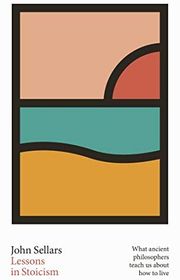
Lessons in Stoicism
For beginners who want a compact introduction grounded in the ancient writers. Its measured explanations offer more context than a collection of inspirational quotations, though the short format necessarily leaves major philosophical debates for later study.
What it's about
John Sellars introduces Stoic ideas through the writings of Seneca, Epictetus, and Marcus Aurelius. Brief chapters discuss judgment, emotion, control, and living with others, explaining how the ancient tradition approached the practical question of living well.

For beginners who want ancient Stoicism connected to modern ethical choices. Its dialogue with Epictetus provides an accessible framework beyond motivational slogans, though its contemporary interpretation should be distinguished from a complete historical account of the school.
What it's about
Massimo Pigliucci explores how Stoic philosophy can guide modern life. Ancient teachings and practical exercises address resilience, judgment, relationships, and the effort to focus on what lies within one's control.
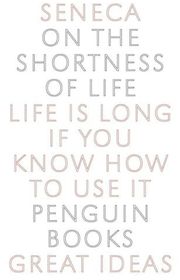
On the Shortness of Life
For readers who want a short ancient argument about attention, priorities, and wasted time. Its direct address offers a concentrated alternative to a long introduction, though the forceful rhetoric and elite Roman setting need context.
What it's about
Seneca examines why people feel short of time and argues that life is often dispersed through distraction, ambition, and obligation. His essay connects the use of attention with the philosophical task of deciding what deserves a person’s limited years.

For readers seeking a practical introduction focused on tranquility and everyday frustration. Its clear exercises make application approachable, though its modern emphasis on psychological comfort differs from ancient Stoicism’s stronger priority on virtue.
What it's about
William B. Irvine introduces Stoic philosophy as a practical approach to finding tranquility in everyday life. He explores responses to grief, insults, and dissatisfaction, emphasizing reflection and the distinction between what people can control and what they cannot.
Also recommended by
9 people- Tobi Lütke recommended this book
Tobi Lütke
"One of the best books I’ve ever read." - Tobi Lütke
Tobi Lütke's recommendation of this book  Jason Fried recommended this book
Jason Fried
"I love [this book]." - Jason Fried
Jason Fried's recommendation of this book  Marc Andreessen recommended this book
Marc Andreessen
"Best (?) walk through the ancient/current philosophy of Stoicism. You can't control other people but you can control yourself, so do that." - Marc Andreessen
Marc Andreessen's recommendation of this book  Mr. Money Mustache recommended this book
Mr. Money Mustache
"I immediately checked out of the library and read completely." - MMM
Mr. Money Mustache's recommendation of this book  David Heinemeier Hansson recommended this book
David Heinemeier Hansson
"An easy way to learn about [Stoicism] and recognize why this resonates." - DHH
David Heinemeier Hansson's recommendation of this book  Derek Sivers recommended this book
Derek Sivers
"I found when reading it that the quirky philosophy I've been living my life by since 17 matches up exactly with a 2000-year-old philosophy called Stoicism." - Derek Sivers
Derek Sivers's recommendation of this book +3
More recommendations
- Phil Libin
"A very interesting read." - Phil Libin
- Austen Allred
Austen Allred recommended this book on his website.
- Jodie Cook
"[Focuses] on continually improving every aspect of your life and work." - Jodie Cook
- Phil Libin

Discourses and Selected Writings
For readers ready to study Stoic arguments and exercises in a sustained way. The teaching voice gives the philosophy more explanation than isolated quotations, though the demanding tone and repeated challenges to familiar priorities require patient attention.
What it's about
Epictetus's lectures, handbook, and surviving fragments offer practical instruction in Stoic ethics. They examine freedom, fear, friendship, and self-improvement through the distinction between what people can control and the circumstances they must learn to accept.
Also recommended by
1 person PewDiePie recommended this book
PewDiePie
"A good introduction to stoic philosophy." - PewDiePie
PewDiePie's recommendation of this book

For readers who like philosophical ideas developed through a life story. The connection between Marcus Aurelius and psychological practice gives the material a setting, though the blend of biography and exercises is not a comprehensive treatment of either subject.
What it's about
Donald Robertson connects episodes from Marcus Aurelius's life with Stoic philosophy and modern psychological ideas. His account uses the emperor's challenges to explore practical approaches to anger, fear, adversity, and the cultivation of ethical judgment and emotional resilience.
Also recommended by
1 person Derren Brown recommended this book
Derren Brown
"This is a terrific book on Marcus Aurelius and flourishing in the Stoic mode." - Derren Brown
Derren Brown's recommendation of this book

The Daily Stoic
366 Meditations for Clarity, Effectiveness, and Serenity
For readers who want a brief daily prompt rather than a book to finish in sequence. Its calendar structure makes regular reflection manageable, though excerpting ancient writers can obscure the arguments and historical contexts surrounding the chosen passages.
What it's about
A collection of 366 meditations on wisdom, perseverance, and the art of living. Each day offers a translation from a Stoic philosopher—such as Seneca or Epictetus—followed by a short lesson on how to apply it to your life.
Also recommended by
1 person Arnold Schwarzenegger recommended this book
Arnold Schwarzenegger
"A perfect book to read every morning. The lessons are short and sweet, and get you into the right mindset for the day." - Arnold Schwarzenegger
Arnold Schwarzenegger's recommendation of this book

Lives of the Stoics
The Art of Living from Zeno to Marcus Aurelius
For readers who learn through people and historical episodes rather than abstract arguments. Its biographical sketches widen the cast beyond the best known Roman writers, though the moral storytelling compresses uncertain evidence and complicated lives.
What it's about
A series of biographical sketches of the great Stoic philosophers. From Zeno to Marcus Aurelius, it reveals the men and women behind the philosophy, showing how they lived, loved, and led.

For readers who want structured exercises alongside an introduction to Stoic ethics. Its connection with psychological approaches keeps practice visible, though the workbook style asks for active participation and should not be mistaken for individualized therapy.
What it's about
Donald Robertson introduces Stoic philosophy as a set of practical resources for everyday life. Explanations and exercises explore judgment, desire, adversity, and emotional habits, connecting ancient teachings with psychological approaches to developing resilience and a more considered sense of happiness.
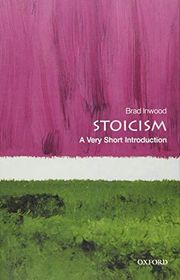
Stoicism: A Very Short Introduction
For readers who want Stoicism understood as a philosophical school with a history and interconnected ideas. Its scholarly overview extends beyond modern coping advice, though the compressed discussion is less immediately practical than an exercise based guide.
What it's about
Brad Inwood surveys Stoicism from its Greek origins through its Roman development and later influence. The introduction connects its ethical teaching with ideas about logic, nature, and human reasoning, showing how the school’s different concerns formed a philosophical system.

For readers who want Stoic ideas arranged by recurring questions rather than by author. Its combination of quotations and commentary supports comparison across thinkers, though the thematic structure can feel more like a reference than a developing argument.
What it's about
Ward Farnsworth organizes Stoic philosophy into twelve lessons, combining passages from classical thinkers with his commentary. The thematic approach connects their observations about human nature with questions of living, judgment, and adversity, giving readers a practical route into the tradition.
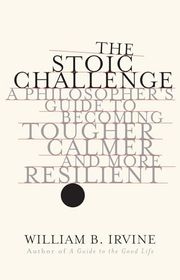
The Stoic Challenge
For readers who want a focused method for responding to ordinary setbacks. Its challenge framework makes one strand of Stoic practice easy to remember, though the narrow emphasis offers less philosophical breadth than a general introduction.
What it's about
William Irvine explores how people can reinterpret difficulties as challenges rather than simply unwanted interruptions. Drawing on Stoic ideas and modern psychological concepts, he discusses responses to frustration, adversity, and the habits that influence emotional reactions in daily life.
Sources
- 1
The Stoic Reading List: 3 Must-Read Books To Get You Started
dailystoic.com
- 2
Stoicism Reading List – The Best 7 Books to Read
philosophybreak.com
- 3
Stoicism Books
goodreads.com
- 4
Best Stoicism Books: Where to Start and What to Read Next
whatisstoicism.com
- 5
Recommended Reading
brisbanestoics.com
- 6
Recommended Books
appliedstoic.com
- 7
Best Stoicism Books for Beginners, and Where to Read Free
practicestoicism.com
- 8
Book Recommendations
reddit.com
- 9
Some Books on Stoicism You Should Actually Read
reddit.com






Edited by
Software engineer whose passion for tracking book recommendations from podcasts inspired the creation of MRB.
Lead investor at 3one4 Capital whose startup expertise and love for books helped shape MRB and its growth.
Comments
Spotted a missing book, a wrong order or a mistake? Tell us and we'll fix this page.
We're a reading guide, not the author or publisher, so we can't send books or pass on messages.