
14 Best Investment Banking Books
The best investment banking books, ranked by how many expert sources recommend each one, with notes on who each suits for technical study or industry insight.
Our take
Investment banking books can prepare you for very different things: understanding the industry, learning transaction analysis, or deciding whether the career fits. A technical manual and an insider memoir may both be useful, but they won't answer the same questions.
Investment Banking by Rosenbaum and Pearl focuses on valuation and deal analysis. Financial Modeling and Valuation gives spreadsheet practice a central role, while Investment Banking For Dummies introduces the vocabulary. Broader surveys explain what banks do and how their businesses connect with other financial institutions. Narrative books offer another perspective: Barbarians at the Gate follows a major buyout, and The Accidental Investment Banker reflects on a changing industry. Those histories reveal incentives and culture, but their eras differ from today's working environment. Older career guides also need checking against current recruitment information.
Start with Investment Banking For Dummies for orientation, then work through Rosenbaum and Pearl if your goal is technical preparation.
14 books · 7 sources · Last updated
As an Amazon Associate, we earn from qualifying purchases (at no extra cost to you).
How to choose from this list
Skip to the full rankingIf you're new to the industry: Investment Banking For Dummies → Investment Banking Explained
If you're practicing transaction analysis: Investment Banking → Financial Modeling and Valuation → Valuation
If you want to understand deal dynamics: Barbarians at the Gate → The Accidental Investment Banker
If you're exploring banking culture: Monkey Business → Liar's Poker
If you want institutional history: The Partnership → Investment Banking
The 14 books, ranked
Ranked by how many expert sources name each book. Ties go to the book more people recommend.

For aspiring analysts who want to practice the technical work behind transactions, Rosenbaum and Pearl offer a detailed foundation. The worked valuation methods connect study with modeling tasks, though the material assumes basic accounting and sustained numerical practice.
What it's about
Joshua Rosenbaum and Joshua Pearl explain the analytical methods used in investment banking. Worked examples and valuation frameworks cover comparable companies, precedent transactions, discounted cash flow, leveraged buyouts, and the financial analysis behind mergers and acquisitions.

For readers who want to see negotiation, incentives, and personalities interact in a major deal, Burrough and Helyar provide a detailed narrative. The reporting makes transaction dynamics memorable, though it teaches through history rather than valuation exercises.
What it's about
Bryan Burrough and John Helyar reconstruct the struggle to acquire RJR Nabisco in a massive leveraged buyout. Executives, bankers, and competing bidders maneuver through negotiations that expose the ambition, rivalry, and financial engineering behind the deal.
Also recommended by
4 people Chamath Palihapitiya recommended this book
Chamath Palihapitiya
"Excellent." - Chamath Palihapitiya
Chamath Palihapitiya's recommendation of this book  Jason Calacanis recommended this book
Jason Calacanis
"Next level." - Jason Calacanis
Jason Calacanis's recommendation of this book  Keith Rabois recommended this book
Keith Rabois
"Suggested reading this book this am on stage at Techweek." - Keith Rabois
Keith Rabois's recommendation of this book  Trung Phan recommended this book
Trung Phan
"About the Private Equity industry." - Trung Phan
Trung Phan's recommendation of this book

For readers interested in how senior bankers experienced the industry's changing culture, Knee offers a reflective insider account. Its historical perspective complements technical manuals, though it describes a particular period rather than current recruitment or daily analyst training.
What it's about
Jonathan Knee recalls investment banking during the turbulent 1990s, drawing on his work at Goldman Sachs and Morgan Stanley. His insider account examines dealmaking, institutional rivalries, changing banking culture, and the excesses that accompanied the financial boom.
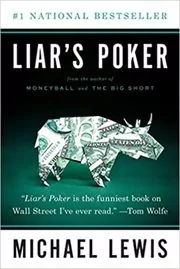
Liar's Poker
For readers interested in incentives and status on a trading floor, Lewis makes an earlier Wall Street culture vivid. Its narrative perspective complements banking manuals, though bond trading in the 1980s differs from contemporary advisory and modeling work.
What it's about
Part memoir, part exposé, this book describes Lewis’s years as a young bond salesman at Salomon Brothers, capturing the swagger, fear, and excess of 1980s Wall Street and the birth of the mortgage-backed securities boom.
Also recommended by
4 people Tim Ferriss recommended this book
Tim Ferriss
"A very exciting book." - Tim Ferriss
Tim Ferriss's recommendation of this book  Tim O’Reilly recommended this book
Tim O’Reilly
"A time machine into this place when our financial economy went crazily wrong." - Tim O’Reilly
Tim O’Reilly's recommendation of this book - Chamath Palihapitiya recommended this book
Chamath Palihapitiya
"Probably my favorite book." - Chamath Palihapitiya
Chamath Palihapitiya's recommendation of this book - Trung Phan recommended this book
Trung Phan
"About the Trading industry." - Trung Phan
Trung Phan's recommendation of this book

Financial Modeling and Valuation
A Practical Guide to Investment Banking and Private Equity
For learners who want to build a company model rather than only read about valuation methods, Pignataro offers a sustained case-based route. The continuity helps connect the steps, though its spreadsheet work requires active practice and financial statement basics.
What it's about
Paul Pignataro uses a Walmart case study to teach financial modeling and company valuation. Readers build projections from financial statements and work through valuation methods, following practical examples and downloadable models associated with investment banking analysis.

For readers who want to understand investment banks as businesses before studying models, Fleuriet explains the industry's organization and activities. Its broad perspective gives technical work context, though it offers less spreadsheet practice than an analyst training manual.
What it's about
Michel Fleuriet explains investment banking through the structures, strategies, and operations of the firms themselves. This second edition examines how banks conduct their business, giving readers an overview of the industry and its organizational workings.

Investment Banking For Dummies
For newcomers who need the industry's vocabulary explained before tackling technical texts, Krantz and Johnson offer an accessible introduction. The broad orientation reduces the initial learning barrier, though readers preparing for analyst work will need more modeling detail.
What it's about
Matthew Krantz and Robert Johnson introduce investment banking for students and professionals entering the field. This second edition explains the industry's activities and terminology in accessible language, offering a foundation for understanding its complex financial business.
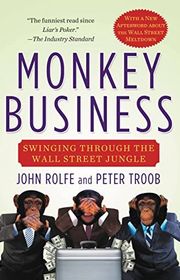
Monkey Business: Swinging Through the Wall Street Jungle
For readers wondering about the personal experience behind a banking job, Rolfe and Troob offer a comic account of junior life. Its irreverence provides a useful counterweight to career marketing, though the setting is historical and deliberately exaggerated.
What it's about
John Rolfe and Peter Troob recount their experiences as junior investment bankers at Donaldson, Lufkin & Jenrette. Their humorous account follows demanding assignments, office hierarchies, and long working hours, depicting the culture and routines behind financial transactions.

For readers seeking a broad survey of banking activities, Liaw connects products, firm operations, and professional issues. The scope makes it useful for orientation, though this edition's regulatory and market context needs updating with current material.
What it's about
K. Thomas Liaw surveys investment banking's businesses, financial products, and professional responsibilities. This second edition considers trading and arbitrage, regulatory changes, ethical questions, and the challenges and opportunities facing firms as financial markets become more global.
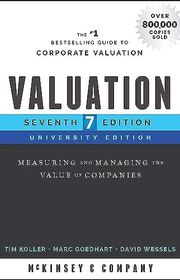
Valuation: Measuring and Managing the Value of Companies
For analysts who want company valuation connected with business performance, Koller and his coauthors provide a substantial framework. Its depth supports work beyond interview formulas, though accounting fluency and careful examination of assumptions are essential.
What it's about
Tim Koller, Marc Goedhart, and David Wessels explain how to assess company value through operating performance, cash flows, growth, and the cost of capital. Their framework connects financial analysis with strategy, investment decisions, and value creation.

For readers interested in why investment banks developed and how institutions shape their work, Morrison and Wilhelm provide deeper historical and economic context. Its analytical perspective suits advanced curiosity, though it isn't a practical recruiting or modeling guide.
What it's about
Alan Morrison and William Wilhelm examine why investment banks exist and how their functions developed. Their study connects the industry's economic role with its institutional history, political influences, and legal framework across changing capital markets.

Investment Banks, Hedge Funds, and Private Equity
For readers comparing investment banking with hedge funds and private equity, Stowell explains their roles within one framework. The cases help connect institutions and transactions, though the breadth makes it less focused on a single entry-level banking job.
What it's about
David Stowell examines how investment banks, hedge funds, and private equity firms operate, compete, and collaborate. This third edition uses case studies and updated analysis to explore their evolving roles within financial markets and corporate transactions.

For readers curious about Goldman Sachs as an institution, Ellis provides a long view of its people and culture. The historical depth complements transaction-focused books, though extensive access to leadership calls for a critical reading of institutional perspectives.
What it's about
Charles Ellis traces Goldman Sachs from a vulnerable family business to an international investment bank. Drawing on extensive access to its leaders, he examines the people, institutional culture, and crises that shaped the firm's development.

Vault Career Guide to Investment Banking
For readers exploring what investment banking work involves, Lott offers a compact career-oriented overview of the main activities. Its focus helps initial orientation, though this older edition needs supplementing with current information about recruitment and market practice.
What it's about
Tom Lott's career guide introduces investment banking and the financial markets it serves. It explains equity and fixed-income offerings, mergers and acquisitions, and private placements, providing background for readers exploring employment in the banking industry.
Sources
- 1
Investment Banking Books - 12 Best Books [Updated 2026]
wallstreetmojo.com
- 2
The Top 5 Investment Banking Books You Need to Read - Romero Mentoring
romeromentoring.com
- 3
What should I read if I am interested in investment banking? | Wall Street Oasis
wallstreetoasis.com
- 4
Investment Banking Books
goodreads.com
- 5
Best Investment Banking Textbooks (2026) | Top 5 IB Textbooks Reviewed
ibinterviewquestions.com
- 6
Which books have helped you the most in this field, and why would you recommend them?
reddit.com
- 7
10 Best M&A Books Recommended by Experts (2026)
dealroom.net








Edited by
Software engineer whose passion for tracking book recommendations from podcasts inspired the creation of MRB.
Lead investor at 3one4 Capital whose startup expertise and love for books helped shape MRB and its growth.
Comments
Spotted a missing book, a wrong order or a mistake? Tell us and we'll fix this page.
We're a reading guide, not the author or publisher, so we can't send books or pass on messages.