
14 Best Materials Science Books
The best materials science books, ranked by how many expert sources recommend each one, with notes for curious beginners, engineering students, and specialists.
Our take
Materials science connects the arrangement of atoms with the behavior of things we build and use. It helps explain why glass breaks, steel can be strengthened, polymers stretch, and a particular material suits one job better than another. These books serve different purposes, from satisfying everyday curiosity to supporting an engineering degree.
Stuff Matters and Liquid Rules explain familiar substances through stories, while The New Science of Strong Materials develops intuition about strength and failure. The Substance of Civilization takes a historical route through the field. Students can turn to Materials Science and Engineering or Foundations of Materials Science and Engineering for a broad curriculum. Ceramic Materials and Thermodynamics in Materials Science narrow the focus once the foundations are in place. Start with Stuff Matters for an accessible overview, or choose an introductory textbook that matches your course.
14 books · 9 sources · Last updated
As an Amazon Associate, we earn from qualifying purchases (at no extra cost to you).
How to choose from this list
Skip to the full rankingIf you're new to the subject: Stuff Matters → The New Science of Strong Materials
If you're taking an engineering course: Materials Science and Engineering → Thermodynamics in Materials Science
If you want laboratory practice: Fundamentals of Materials Science for Technologists
If you want to specialize in ceramics: Materials Science and Engineering → Ceramic Materials
If you prefer history and research stories: The Substance of Civilization → Made to Measure
The 14 books, ranked
Ranked by how many expert sources name each book. Ties go to the book more people recommend.

For undergraduates who want a structured first course across metals, ceramics, and polymers. Its illustrations connect structure with properties particularly well, though students studying alone may need lectures or additional explanations for difficult chapters.
What it's about
William Callister and David Rethwisch introduce materials science through metals, ceramics, polymers, and composites. Their ninth edition connects materials' structural features with their properties, helping engineering students understand the relationships that influence how different materials behave.

For readers drawn to why things bend, crack, or carry weight. Gordon builds physical intuition through structural materials and engineering history, though its older examples need supplementing for contemporary materials research.
What it's about
J. E. Gordon explains the physical and chemical properties that make materials such as metal, wood, glass, ceramics, and bone useful. He explores their strengths and weaknesses and how those properties guide choices in engineering.
Also recommended by
1 person Bill Gates recommended this book
Bill Gates
"A recapitulation of the history of materials told in an interesting and approachable way." - Bill Gates
Bill Gates's recommendation of this book

For curious readers who want the science behind familiar objects without a textbook. Miodownik connects microscopic structure to everyday experience through personal stories, though it offers little mathematical practice for an engineering course.
What it's about
Mark Miodownik investigates materials found in ordinary objects, including steel, glass, paper, and chocolate. Combining personal anecdotes, history, and materials science, he explains how their structures and properties shape technologies and the experiences of everyday life.
Also recommended by
3 people- Bill Gates recommended this book
Bill Gates
"Read this book and you’ll never look at a pencil or razor the same way." - Bill Gates
Bill Gates's recommendation of this book  Patrick Collison recommended this book
Patrick Collison
Patrick Collison labeled this book "substantially above average."
Patrick Collison's recommendation of this book  John Collison recommended this book
John Collison
"Answers why US chocolate tastes like ground-up newspaper to me." - John Collison
John Collison's recommendation of this book

Foundations of Materials Science and Engineering
For engineering students who want a broad foundation with worked examples. Smith connects atomic structure, properties, and material selection across several material families, though the textbook format rewards systematic study more than casual browsing.
What it's about
William Smith and Javad Hashemi introduce the scientific principles behind engineering materials and their practical selection. Topics include atomic bonding, crystal structures, mechanical properties, phase diagrams, alloys, polymers, ceramics, composites, corrosion, and electrical and magnetic behavior.

Introduction to Materials Science for Engineers
For engineering students who want material behavior tied to practical choices. Shackelford offers another route through the introductory curriculum with application examples, though much of its scope overlaps Callister rather than extending into a specialty.
What it's about
James Shackelford introduces the major categories of engineering materials and relates their properties to practical applications. The textbook surveys physical behavior and material choices, providing a foundation for understanding established materials and those used in advanced technologies.

For general readers interested in the researchers and experiments behind new materials. Amato gives the field a human and historical perspective, though its account captures an earlier research landscape rather than today's latest developments.
What it's about
Ivan Amato explores how scientists transform raw substances into the materials of modern technology. Historical accounts and interviews introduce plastics, composites, smart materials, and experiments at atomic scales, revealing the research behind objects and devices used in everyday life.

The Science and Engineering of Materials
For engineering students who learn through worked examples and applications. Its emphasis on processing helps connect a material's manufacture with its eventual behavior, though broad coverage means individual specialties receive less depth than dedicated texts.
What it's about
Donald Askeland explains how a material's structure and processing determine its properties and engineering uses. The textbook connects behavior at different scales with mechanical and physical performance, including changes caused by time, loading, and the environment.

Thermodynamics in Materials Science
For students moving from descriptive materials science to equilibrium calculations. DeHoff connects thermodynamic relationships with phase and corrosion diagrams, though the mathematical treatment requires more preparation than the broad introductory textbooks.
What it's about
Robert DeHoff explains how thermodynamic principles and data predict the equilibrium behavior of materials. The text develops tools for constructing and interpreting phase, predominance, and corrosion diagrams, connecting theoretical relationships with practical materials science problems.

For students ready to focus on ceramics after a general materials course. Carter and Norton connect processing, defects, and properties within one material family, though its technical detail is a substantial step beyond popular science.
What it's about
C. Barry Carter and M. Grant Norton connect the structures and processing of ceramics with their properties and uses. The textbook examines defects, fabrication, and applications, including medical, energy, and nanoscale technologies, alongside industrial and environmental considerations.

For readers who enjoyed Stuff Matters and want a closer look at liquids. The flight setting links molecular behavior to familiar substances, though its narrative approach offers less breadth than a general materials textbook.
What it's about
Mark Miodownik uses a transatlantic flight to explore liquids encountered in everyday life, from drinks and soap to fuels and display technology. His scientific account explains their behavior, usefulness, and dangers through molecular properties and stories of human experience.
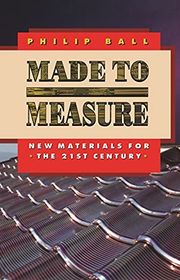
Made to Measure
For readers interested in how scientists design materials for particular functions. Ball connects research across chemistry, physics, and biology, though its forward-looking examples reflect an earlier period and shouldn't be treated as a current technology forecast.
What it's about
Philip Ball explores the design of materials for specific functions, from artificial tissues to information storage and energy technologies. His account links molecular structure with useful behavior and introduces research at the boundaries of several scientific disciplines.
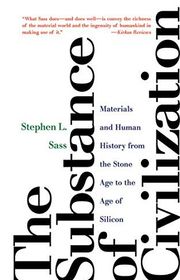
The Substance of Civilization
For readers who want materials science placed within human history. Sass links changes in substances and manufacturing to social development, though the broad historical sweep leaves less room for the quantitative detail engineering students need.
What it's about
Stephen Sass traces the relationship between materials and human societies, from stone and clay to metals, polymers, and silicon. He explains how the properties of substances and the ability to manipulate them have influenced technology and culture.

Fundamentals of Materials Science for Technologists
Properties, Testing, and Laboratory Exercises
For technology students learning how material properties are measured and reported. Horath's laboratory exercises make testing central to the subject, though readers need suitable equipment and supervision to put those sections into practice.
What it's about
Larry Horath explains material properties and testing through practical applications and supervised laboratory exercises. The book combines basic principles with procedures for collecting, reporting, and interpreting test data, helping technology students evaluate materials used in products and structures.

Material Science & Metallurgy
For engineering students whose main interest is metals and metallurgy. Khanna gives metal families and industrial uses more attention than the popular introductions, though readers seeking an equally detailed treatment of polymers should look elsewhere.
What it's about
O. P. Khanna surveys engineering materials and metallurgy, covering material properties, selection, and specialized uses. The text examines ferrous and nonferrous metals, ceramics, refractories, and alloys for demanding service conditions as part of a broad engineering reference.
Sources
- 1
15 Must-Read Material Science Books
scijournal.org
- 2
PE Exam Recommended Reference Books | TMS
tms.org
- 3
Recommended materials science textbooks?
reddit.com
- 4
Materials Science Books
goodreads.com
- 5
Recommended MSE textbooks
enze-chen.github.io
- 6
Resources - learnmatsci
learnmatsci.com
- 7
What books should I read if I want to get into material science and engineering?
reddit.com
- 8
Suggested Readings - Materials Engineering - Purdue University
engineering.purdue.edu
- 9
100 Best Materials Science Books of All Time
shortform.com






Edited by
Software engineer whose passion for tracking book recommendations from podcasts inspired the creation of MRB.
Lead investor at 3one4 Capital whose startup expertise and love for books helped shape MRB and its growth.
Comments
Spotted a missing book, a wrong order or a mistake? Tell us and we'll fix this page.
We're a reading guide, not the author or publisher, so we can't send books or pass on messages.