
7 Best Chemistry Books
The best chemistry books, ranked by how many expert sources recommend each one, with notes on who they suit for curious reading, visual learning, or revision.
Our take
Chemistry connects the structure of matter with what substances do, from the behavior of water to the properties of everyday materials. These books offer several ways into that subject. Some introduce ideas through photographs and recognizable objects, others use scientific history or personal experience, and a study guide can help students revisit classroom material. Choose according to whether you want curiosity, explanation, or practice.
The Disappearing Spoon brings the periodic table into human history, while The Elements makes its entries visible through samples and objects. Molecules takes the next step into combinations of elements, and Stuff Matters connects structure with familiar materials. H2O gives one substance a much longer examination. Primo Levi’s The Periodic Table is a literary encounter with chemistry, rather than a textbook. Start with The Elements for a visual introduction or The Disappearing Spoon for stories, and use a course-aligned text when you need systematic problem solving.
7 books · 5 sources · Last updated
As an Amazon Associate, we earn from qualifying purchases (at no extra cost to you).
How to choose from this list
Skip to the full rankingIf you want a visual introduction: The Elements → Molecules
If you want stories behind discoveries: The Disappearing Spoon
If you want chemistry in everyday materials: Stuff Matters → H2O
If you want high school revision: Everything You Need to Ace Chemistry in One Big Fat Notebook
If you want a chemist’s literary perspective: The Periodic Table
The 7 books, ranked
Ranked by how many expert sources name each book. Ties go to the book more people recommend.

The Disappearing Spoon
For curious readers who want the periodic table connected to human stories. Its discoveries, rivalries, and odd episodes make an inviting introduction, though the narrative approach will not replace systematic study or worked problems.
What it's about
Sam Kean explores the periodic table through the people and events behind its elements. Scientific rivalries, discoveries, practical jokes, and human obsessions connect chemistry with medicine, art, and history, including the melting metal behind the title.

For readers who want chemistry connected to materials they use every day. Its attention to the structure and history of familiar substances makes abstract ideas tangible, though it crosses into engineering rather than following a chemistry syllabus.
What it's about
Mark Miodownik investigates materials found in ordinary objects, including steel, glass, paper, and chocolate. Combining personal anecdotes, history, and materials science, he explains how their structures and properties shape technologies and the experiences of everyday life.
Also recommended by
3 people Bill Gates recommended this book
Bill Gates
"Read this book and you’ll never look at a pencil or razor the same way." - Bill Gates
Bill Gates's recommendation of this book  Patrick Collison recommended this book
Patrick Collison
Patrick Collison labeled this book "substantially above average."
Patrick Collison's recommendation of this book  John Collison recommended this book
John Collison
"Answers why US chocolate tastes like ground-up newspaper to me." - John Collison
John Collison's recommendation of this book

For visual learners who want chemical symbols connected to physical objects. Its photographs make the elements tangible and easy to browse, though it provides less explanation of reactions and calculation than a course-oriented introduction.
What it's about
Theodore Gray introduces the periodic table through photographs of elemental samples and objects made from them. Accompanying explanations connect each element's properties with its uses and history, turning abstract chemical symbols into tangible materials and stories.
Also recommended by
1 person Stewart Brand recommended this book
Stewart Brand
Stewart Brand recommended this book on his "Selected Books for the Manual for Civilization" blog post.
Stewart Brand's recommendation of this book

For readers ready to explore one familiar substance in depth. Its combination of scientific history and water’s unusual behavior rewards curiosity across disciplines, though the sustained focus makes it less useful as a general chemistry overview.
What it's about
Philip Ball explores water’s origins, unusual physical properties, chemistry, and importance to life. The account travels through scientific history, biology, ecology, and cultural beliefs, examining both established understanding and the puzzles surrounding an apparently familiar substance.
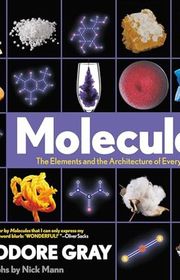
Molecules
For visual learners who want to move from individual elements to the substances they form together. Its photographed examples make molecular ideas approachable, though the browsing format offers less practice than a structured introductory course.
What it's about
Theodore Gray explains how elements combine to form molecules and how those combinations shape the materials around us. Photographs and illustrations connect molecular structures with familiar substances, building on the visual approach of his earlier book The Elements.

The Periodic Table
For readers who want a chemist’s relationship with matter explored through memory and storytelling. Its element-based chapters connect work and experience, though it is literary autobiography with fictional pieces rather than an introductory science guide.
What it's about
Each chapter takes the name of a chemical element and opens onto part of Levi's life, from his Piedmontese Jewish roots to war, work, and aftermath. Memoir, story collection, and science book all meet here.

Everything You Need to Ace Chemistry in One Big Fat Notebook
For high school students who want concise notes and quick review rather than a full textbook. Its visual organization and quizzes support revision, though more demanding courses will need fuller explanations and additional problem practice.
What it's about
Jennifer Swanson and Workman Publishing organize high school chemistry into illustrated study notes with definitions, memory aids, and review quizzes. Topics include atomic structure, bonding, reactions, gas laws, solubility, and acids, helping students revisit material across a year's course.
Sources






Edited by
Software engineer whose passion for tracking book recommendations from podcasts inspired the creation of MRB.
Lead investor at 3one4 Capital whose startup expertise and love for books helped shape MRB and its growth.
Comments
Spotted a missing book, a wrong order or a mistake? Tell us and we'll fix this page.
We're a reading guide, not the author or publisher, so we can't send books or pass on messages.