
20 Best Mechanical Engineering Books
The best mechanical engineering books, ranked by how many expert sources recommend each one, with notes for students, designers, and practicing engineers.
Our take
Mechanical engineering connects forces, motion, energy, materials, and manufacturing with the design of useful machines. These books serve different stages of that work: learning the foundations, analyzing components, documenting designs, choosing production methods, and checking technical data. A reference handbook is valuable once you know what to look for, while a textbook gives concepts and problems the space needed for learning.
An Introduction to Mechanical Engineering offers a first view of the discipline. Vector Mechanics for Engineers, Fundamentals of Thermodynamics, and Fundamentals of Fluid Mechanics support more focused study. Shigley's Mechanical Engineering Design connects analysis with component choices, while DeGarmo's Materials and Processes in Manufacturing examines how things get made. For practical lookup, consider Marks' Standard Handbook for Mechanical Engineers or Machinery's Handbook Toolbox. To Engineer is Human adds reflection on design judgment and failure. Start with Wickert and Lewis for orientation, then choose the textbook or reference that matches your next task.
20 books · 10 sources · Last updated
As an Amazon Associate, we earn from qualifying purchases (at no extra cost to you).
How to choose from this list
Skip to the full rankingIf you're beginning the subject: An Introduction to Mechanical Engineering
If you want to design machine components: Vector Mechanics for Engineers → Shigley's Mechanical Engineering Design
If you want to understand material choices: Materials Science and Engineering → Materials Selection in Mechanical Design
If you need a technical desk reference: Marks' Standard Handbook for Mechanical Engineers → Roark's Formulas for Stress and Strain
If you want practical projects: Mechanical Engineering for Makers
If you want to examine design judgment: To Engineer is Human
The 20 books, ranked
Ranked by how many expert sources name each book. Ties go to the book more people recommend.

Shigley's Mechanical Engineering Design
For students ready to connect mechanics with machine design. Its emphasis on failure analysis and component decisions gives calculations a practical purpose, though the technical detail assumes a foundation in mechanics and materials.
What it's about
Richard Budynas and Keith Nisbett introduce mechanical engineering design through analysis and industrial components. This eleventh edition connects materials, stresses, deflection, and failure prevention with design decisions, developing the foundations needed for studying and designing machines.

Machinery's Handbook Toolbox
For engineers and machinists who regularly need manufacturing data at hand. The compact Toolbox format puts tables and practical details near the work, though its small print and reference structure discourage continuous reading.
What it's about
The thirty-first Toolbox edition gathers formulas, tables, standards, and practical data for manufacturing and mechanical work. Coverage includes machining, materials, measurement, threads, and additive manufacturing, serving engineers and workshop users who need a compact technical reference.

For engineering students who want to connect material structure with practical properties. Its systematic comparisons across material families build a useful foundation, though the scientific detail requires more study than a material-selection handbook.
What it's about
William Callister and David Rethwisch introduce materials science through metals, ceramics, polymers, and composites. Their ninth edition connects materials' structural features with their properties, helping engineering students understand the relationships that influence how different materials behave.
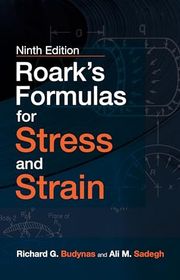
Roark's Formulas for Stress and Strain
For engineers who already understand stress analysis and need formulas for particular loading cases. Its organized reference coverage makes it useful beside a design textbook, though choosing the correct assumptions requires engineering judgment.
What it's about
This reference gathers formulas and tables for calculating stresses, strains, and deflections under different loads and boundary conditions. Engineers use the organized cases to analyze components and structures, with explanations supporting the selection and application of formulas.

Marks' Standard Handbook for Mechanical Engineers
For practicing engineers who need one broad desk reference. Its coverage spans many specialties and supplies practical data, though the dense reference format is better for looking things up than learning a subject from scratch.
What it's about
Edited by Ali Sadegh and William Worek, this twelfth edition collects mechanical engineering information from specialist contributors. The handbook brings together principles, practical data, and technical reference material across the discipline for engineers handling design and analysis tasks.

Mechanical Engineering Reference Manual for the PE Exam
For engineers who want a broad review supported by practice problems. Its indexed format also serves as a desk reference, though this eleventh edition needs comparison with current exam specifications before use for PE preparation.
What it's about
Michael Lindeburg's eleventh edition provides a study guide and reference for the mechanical engineering PE examination. Explanations and practice problems support review of engineering concepts, combining preparation material with an indexed handbook for consulting technical information.

Fundamentals of Thermodynamics
For engineering students building a systematic understanding of energy and entropy. Worked applications connect the laws to real devices, though the mathematical treatment and problem sets require more commitment than a conceptual overview.
What it's about
Claus Borgnakke and Richard Sonntag introduce engineering thermodynamics through properties, energy, entropy, and the analysis of systems. Examples and problems connect fundamental laws with applications including heat engines, refrigeration, turbines, and other devices that transfer or transform energy.

Fundamentals of Fluid Mechanics
For engineering students who want fluid behavior developed through conservation laws and worked applications. The structured problem-solving approach supports formal study, though the mathematics makes it less suitable as a first conceptual introduction.
What it's about
Philip Gerhart, Andrew Gerhart, and John Hochstein introduce fluid mechanics through fundamental principles and engineering applications. This ninth edition develops concepts through worked problems, covering fluid behavior, conservation laws, and the analysis of flowing systems.

For readers interested in the judgment behind engineering decisions. Petroski uses failures to sharpen questions about design assumptions, though the structural case studies offer perspective and reflection rather than mechanical design calculations.
What it's about
Petroski explores how engineers learn from failure and use that knowledge to improve design. Case studies including the Tacoma Narrows Bridge and the Hyatt Regency walkways connect celebrated successes and catastrophic breakdowns with the everyday challenges of making structures work.

DeGarmo's Materials and Processes in Manufacturing
For students who want to understand how material choices and production methods interact. Its process comparisons support practical manufacturing decisions, though the substantial technical coverage takes more effort than a workshop-oriented introduction.
What it's about
J.T. Black and Ronald Kohser introduce manufacturing materials, systems, and processes in this thirteenth edition. The text emphasizes practical understanding of material properties and production methods, comparing how processes work alongside their advantages and limitations.

Manufacturing Engineering & Technology
For students who want production processes connected with the wider manufacturing enterprise. Its range supports comparing methods and understanding industrial choices, though readers seeking instruction for one particular workshop task may find it extensive.
What it's about
Serope Kalpakjian and Steven Schmid introduce the science and practice of manufacturing in this seventh edition. Process descriptions, examples, and comparisons connect production methods with the wider manufacturing enterprise, providing a foundation for students and a professional reference.
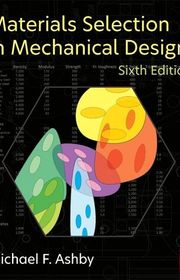
Materials Selection in Mechanical Design
For designers who know basic materials science and need to choose between options. Ashby's selection framework connects properties with design requirements, though using the comparisons effectively requires a reasonably clear definition of the engineering problem.
What it's about
Michael Ashby presents a systematic approach to choosing materials for mechanical designs. Property charts and selection methods connect performance requirements with material characteristics, helping engineers compare alternatives and understand the tradeoffs between function, shape, processing, and cost.

Mechanical Engineer's Pocket Book
For engineers and workshop users who want a portable reminder of familiar principles. Its tables cover everyday mechanical tasks, though the condensed explanations work better for refreshing knowledge than developing it from the beginning.
What it's about
Roger Timings gathers mechanical engineering data and principles for designing, making, and repairing devices. The pocket reference covers mathematics, statics, dynamics, materials, fastenings, and power transmission, with tables and practical information intended for workshop and design use.
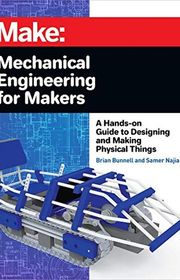
Mechanical Engineering for Makers: A Hands-on Guide to Designing and Making Physical Things
For makers who want mechanical principles connected directly with physical projects. The practical approach gives ideas an immediate purpose, though its accessible scope provides less mathematical depth than the engineering textbooks on this list.
What it's about
Brian Bunnell and Samer Najia introduce mechanical engineering through the design and construction of physical projects. Explanations of materials, forces, mechanisms, and fabrication connect basic principles with decisions makers face when turning an idea into working hardware.

For students who want statics and dynamics taught through a consistent vector approach. The combined treatment links forces with motion, though the substantial problem-solving workload suits structured study better than casual reference.
What it's about
This twelfth edition develops engineering mechanics through vector analysis and a structured approach to solving problems. Statics and dynamics cover the behavior of forces and motion, with explanations and exercises building students' understanding of mechanical systems.

A Dictionary of Mechanical Engineering
For students and engineers who need an unfamiliar technical term explained quickly. The illustrated entries cover a wide range of vocabulary, though a dictionary cannot provide the sustained derivations or worked practice of a textbook.
What it's about
Marcel Escudier and Tony Atkins define more than 8,000 mechanical engineering terms in this illustrated reference. Entries cover design, stress analysis, dynamics, thermodynamics, fluid mechanics, and materials, with diagrams and links supporting explanations of specialized concepts.

An Introduction to Mechanical Engineering
For students deciding what mechanical engineering involves or beginning a degree. It connects design, analysis, and practical examples early, though its introductory breadth leaves specialist depth to the dedicated subject textbooks here.
What it's about
Jonathan Wickert and Kemper Lewis introduce mechanical engineering for students beginning their degree. Their fourth edition balances design, technical problem-solving, engineering analysis, and examples of modern technology, showing how engineers develop hardware for practical use.

People Skills for Engineers
For engineers whose technical work is being held back by communication or teamwork problems. Munson focuses on recognizable workplace interactions, though the experience-based advice offers less systematic depth than a broader management text.
What it's about
Tony Munson addresses interpersonal challenges that engineers encounter with colleagues and managers. Drawing on his experience, he identifies common relational mistakes and offers practical approaches to communication, teamwork, and resolving problems that undermine effectiveness at work.

Technical Drawing with Engineering Graphics
For students who want to communicate designs through drawings and models. Its combination of three-dimensional thinking and two-dimensional documentation gives graphics a practical purpose, though developing fluency still requires substantial drawing practice.
What it's about
This fifteenth edition introduces technical drawing through three-dimensional modeling and two-dimensional documentation. Explanations and exercises cover engineering graphics, sketching, and drawing conventions, helping students communicate designs through both manual methods and work derived from CAD models.

Engineering Graphics Essentials with AutoCAD 2022 Instruction
For beginners learning engineering drawing while using AutoCAD 2022. Text, exercises, and videos connect graphics principles with software practice, though readers using another version may encounter differences in commands and interface details.
What it's about
Kirstie Plantenberg introduces reading and creating engineering drawings alongside AutoCAD 2022 instruction. Text, exercises, and video material develop graphics fundamentals and software skills, connecting drawing principles with practical work in documenting and communicating engineering designs.
Sources
- 1
Textbooks for Mechanical Engineers | MechaniCalc
mechanicalc.com
- 2
Top 10 Best Mechanical Engineering Books
brighthubengineering.com
- 3
Mechanical Engineering Reference Books | RoyMech Technical Library - RoyMech
roymech.co.uk
- 4
Must Read Mechanical Engineering Books [Engineer Approved]
vistaprojects.com
- 5
19 books for both junior and senior mechanical engineers
interestingengineering.com
- 6
100 Best Mechanical Engineering Books of All Time (Updated for 2026)
shortform.com
- 7
Mechanical Engineering Books
goodreads.com
- 8
Good ME textbooks/bibles to recommend ? : r/MechanicalEngineering
reddit.com
- 9
Handbook Recommendations : r/MechanicalEngineering
reddit.com
- 10
3 Books All Mechanical Engineers Must Read - ASME
asme.org






Edited by
Software engineer whose passion for tracking book recommendations from podcasts inspired the creation of MRB.
Lead investor at 3one4 Capital whose startup expertise and love for books helped shape MRB and its growth.
Comments
Spotted a missing book, a wrong order or a mistake? Tell us and we'll fix this page.
We're a reading guide, not the author or publisher, so we can't send books or pass on messages.