
33 Best Engineering Books
The best engineering books, ranked by how many expert sources recommend each one, with notes for curious readers, engineering students, and professionals.
Our take
Engineering books can explain how things work, how designs develop, or what happens when technical decisions meet people and organizations. Some build intuition through ordinary objects and visible infrastructure. Others examine accidents, major projects, or the everyday responsibilities of an engineer. The technical references serve a different purpose: they support study and detailed questions within a particular discipline.
For a readable introduction, Engineering in Plain Sight starts with the constructed environment, while Structures explains the forces acting on things. Stuff Matters turns toward materials. To Engineer is Human and Normal Accidents approach failure from different directions, and The Great Bridge follows one project over time. Software readers will find discussions of computing and team effectiveness, alongside books aimed at electronics or mechanical design students. Check the assumed background before choosing a textbook or handbook, and remember that older case studies offer context rather than current specifications. Start with a broad explanatory book, then follow the discipline or question that holds your attention.
33 books · 8 sources · Last updated
As an Amazon Associate, we earn from qualifying purchases (at no extra cost to you).
How to choose from this list
Skip to the full rankingIf you're curious about everyday infrastructure: Engineering in Plain Sight → Structures
If you want to understand materials: Stuff Matters → The New Science of Strong Materials → Materials Science and Engineering
If you want to understand design and failure: The Design of Everyday Things → To Engineer is Human → Normal Accidents
If you want the story of a major project: The Great Bridge → Skunk Works
If you want computer hardware foundations: Code → The Art of Electronics
If you're studying mechanical component design: Shigley's Mechanical Engineering Design
The 33 books, ranked
Ranked by how many expert sources name each book. Ties go to the book more people recommend.

The Design of Everyday Things
For readers who want to understand why technically functioning objects can still confuse their users. Its everyday examples build design judgment without advanced mathematics, but the focus is human interaction rather than calculating or specifying engineering components.
What it's about
Don Norman examines why everyday objects can be difficult to use, locating many failures in design rather than their users. He connects human psychology with product design to explain how objects can better support understandable interaction.
Also recommended by
4 people Scott Adams recommended this book
Scott Adams
One of the books on Scott Adams' "Persuasion Reading List."
Scott Adams's recommendation of this book  Jeff Atwood recommended this book
Jeff Atwood
"Will give you a new appreciation of the 'devil in the details.'" - Jeff Atwood
Jeff Atwood's recommendation of this book  Tobi Lütke recommended this book
Tobi Lütke
Tobi Lütke mentioned this book on the "Invest Like the Best" podcast.
Tobi Lütke's recommendation of this book  Marissa Mayer recommended this book
Marissa Mayer
"Makes you think about design in new ways." - Marissa Mayer
Marissa Mayer's recommendation of this book

For readers who want an intuitive account of forces, materials, and structural behavior. Its familiar examples make mechanics approachable without a full textbook, but the historical illustrations and limited mathematical treatment cannot provide detailed design methods.
What it's about
J. E. Gordon explains the forces that keep structures intact, from buildings and aircraft to bodies and eggshells. Examples introduce stress, compression, shear, torsion, and fracture, connecting engineering principles with familiar objects and natural forms.
Also recommended by
1 person Elon Musk recommended this book
Elon Musk
"Really, really good if you want a primer on structural design." - Elon Musk
Elon Musk's recommendation of this book

For readers who want an insider’s account of ambitious aerospace projects and organizational constraints. Its program stories connect engineering with management and procurement, but the memoir reflects a participant’s perspective rather than an independent technical history.
What it's about
Ben R. Rich recalls his years leading Lockheed's secretive Skunk Works aerospace operation. Engineering stories, personal anecdotes, and accounts from pilots and intelligence personnel illuminate the development of aircraft including the U-2 and the stealth fighter.
Also recommended by
1 person Sam Altman recommended this book
Sam Altman
This book was on Sam Altman's bookshelf.
Sam Altman's recommendation of this book

The Art of Electronics
For readers with electronics foundations who want a substantial practical circuit reference. Its measured examples connect theory with component behavior, but the size and prerequisites make it unsuitable as a first casual introduction to engineering.
What it's about
Paul Horowitz and Winfield Hill explain electronic circuit design through practical examples and engineering judgment. The reference covers analog and digital electronics, including transistors, amplifiers, filters, oscillators, and power conversion, connecting component behavior with the choices involved in building circuits.

The Existential Pleasures of Engineering
For engineers and prospective students interested in the meaning and satisfaction of technical work. Its philosophical defense gives making things an emotional dimension, but it is a reflective argument rather than a technical guide or balanced history of technology.
What it's about
Samuel Florman explores engineering as a creative and emotionally rewarding profession. Challenging portrayals of technical work as cold or passionless, he examines the satisfaction of making things and presents a philosophical defense of technological endeavor.

For software engineers who want to examine coordination, planning, and communication at project scale. Its historical cases frame problems beyond individual coding, but the tools and organizational setting require translation into contemporary development practice.
What it's about
Frederick Brooks examines the difficulties of managing software projects in a collection of essays. He considers team organization, system design, planning, and communication, offering reflections on the limits and complexities of large-scale programming work.
Also recommended by
5 people Jeff Bezos recommended this book
Jeff Bezos
Part of "Jeff's Reading List."
Jeff Bezos's recommendation of this book  Larry Ellison recommended this book
Larry Ellison
"Larry [Ellison] had given this book to every software executive whom he met within the company." - Marc Benioff
Larry Ellison's recommendation of this book  Marc Benioff recommended this book
Marc Benioff
"Had a huge impact on me." - Marc Benioff
Marc Benioff's recommendation of this book  Alan Kay recommended this book
Alan Kay
"An early look and experience with timeless truths (and gotchas) from systems building with teams" - Alan Kay
Alan Kay's recommendation of this book - Jeff Atwood recommended this book
Jeff Atwood
"Arguably the only classic book in our field. If you haven't read it, shame on you." - Jeff Atwood
Jeff Atwood's recommendation of this book

The Soul of A New Machine
For readers who want to see the social pressures behind building a computer. Its close observation makes teamwork, deadlines, and ambition concrete, but the historical hardware setting is context for the story rather than a current technical guide.
What it's about
Tracy Kidder follows a company's effort to develop and market a new computer. The narrative examines the people behind technological innovation, their intense working culture, and the pressures of competition in the computer industry.
Also recommended by
3 people Paul Graham recommended this book
Paul Graham
One of Paul Graham's answers to "do you know of any good books about startups?"
Paul Graham's recommendation of this book  Fred Wilson recommended this book
Fred Wilson
"I love [this book]. First it is a story. Second it captures the passion of engineers who are driven to ship a revolutionary product." - Fred Wilson
Fred Wilson's recommendation of this book  Bill Gurley recommended this book
Bill Gurley
"A really old book, but it's a famous book." - Bill Gurley
Bill Gurley's recommendation of this book
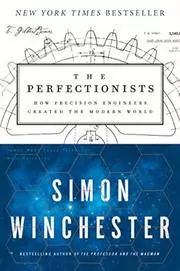
For readers interested in how increasingly precise manufacture changed what engineers could build. Its historical narrative links measurement with recognizable technologies, but the focus is on development and people rather than teaching machining or tolerancing.
What it's about
Tracing precision engineering from the Industrial Revolution onward, Winchester examines how increasingly exact measurements made modern machinery possible. Steam engines, mass-produced cars, jet aircraft, and scientific instruments illustrate the ingenuity, demands, and consequences of technical perfection.
Also recommended by
1 person Trung Phan recommended this book
Trung Phan
"About the Machining industry." - Trung Phan
Trung Phan's recommendation of this book
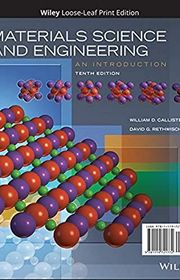
Materials Science and Engineering
For students who want a structured technical foundation in materials rather than selected popular examples. Its treatment connects structure, properties, and applications across material classes, but the textbook format requires sustained study and supporting science knowledge.
What it's about
Callister and Rethwisch introduce metals, ceramics, polymers, and composites through the relationship between internal structure and physical properties. The textbook develops concepts used to understand material behavior and selection, combining scientific foundations with examples relevant to engineering applications.

For readers who want failure treated as part of learning how to design. The case studies connect technical choices with consequences more directly than a celebratory invention history, but they explain principles rather than supply project-specific calculations.
What it's about
Petroski explores how engineers learn from failure and use that knowledge to improve design. Case studies including the Tacoma Narrows Bridge and the Hyatt Regency walkways connect celebrated successes and catastrophic breakdowns with the everyday challenges of making structures work.

Unwritten Laws of Engineering
For early-career engineers who want professional expectations made explicit. Its concise advice on communication and responsibility addresses gaps in technical training, but the conventional workplace hierarchy and prescriptive tone may not fit every organization.
What it's about
James Skakoon revises W. J. King's professional guidance for engineers, addressing expectations that technical training can leave unspoken. The book covers habits for beginners, responsibilities of engineering executives, and personal conduct that shapes effectiveness at work.

For technically prepared readers interested in how important scientific and engineering questions are chosen. Its lectures connect habits of thought with substantial examples, but the mathematical sections make it more demanding than a purely motivational career book.
What it's about
Richard Hamming explores ways of thinking and learning that support important scientific and engineering work. Drawing on discoveries, technical examples, and his own failures, he examines how researchers can develop ideas rather than merely admire others' achievements.
Also recommended by
3 people Patrick Collison recommended this book
Patrick Collison
"One of my favorite books." - Patrick Collison
Patrick Collison's recommendation of this book  Keith Rabois recommended this book
Keith Rabois
"Not for everyone but recommend for tech folks." - Keith Rabois
Keith Rabois's recommendation of this book  John Collison recommended this book
John Collison
John Collison mentioned this book on Twitter.
John Collison's recommendation of this book

For engineers who work near manufacturing and want process problems presented through a story. The factory setting makes bottlenecks and competing measures tangible, but the novel simplifies organizational conflict and focuses on a particular management framework.
What it's about
Plant manager Alex Rogo has ninety days to rescue his struggling factory while his marriage also unravels. Guidance from Jonah pushes him to question conventional measures of productivity in this business novel introducing the Theory of Constraints.
Also recommended by
3 people- Jeff Bezos recommended this book
Jeff Bezos
Part of "Jeff's Reading List."
Jeff Bezos's recommendation of this book  Kevin Systrom recommended this book
Kevin Systrom
"About basically manufacturing and supply chain management. It sounds really boring, but I promise you it’s really good." - Kevin Systrom
Kevin Systrom's recommendation of this book - Trung Phan recommended this book
Trung Phan
"About the Operations industry." - Trung Phan
Trung Phan's recommendation of this book

For readers interested in rocket development as experimental work carried out by people and institutions. The participant’s voice makes the history distinctive, but the chemistry and older technical context demand more concentration than a general spaceflight memoir.
What it's about
John Drury Clark recounts the hazardous development of liquid rocket propellants through firsthand experience in the field. Combining scientific history with memoir, he describes rival laboratories, experimental fuels, and the search for reliable propulsion into space.
Also recommended by
1 person- Elon Musk recommended this book
Elon Musk
One of Elon Musk's favorite books about space.
Elon Musk's recommendation of this book

For readers who want to understand computers from the underlying logic upward. The gradual construction of ideas makes hardware less mysterious, but it is a sustained conceptual journey rather than a quick guide to writing applications.
What it's about
Charles Petzold explains how computers work by building from familiar communication systems, including Morse code and Braille. Everyday examples lead into bits, bytes, and hardware, tracing how simple mechanisms combine to support complex information processing.

Engineering and the Mind's Eye
For readers interested in how engineers use drawing, visualization, and tacit knowledge. Its historical argument broadens the picture beyond calculation, but it offers less of a practical exercise sequence than a discussion of engineering education and thought.
What it's about
Eugene Ferguson argues that engineering depends on visual imagination, intuition, and nonverbal thought alongside calculation. His essay examines the dangers of an education that neglects these abilities and confuses mathematical models with the physical world.
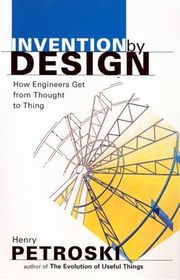
Invention by Design
For readers who want to understand how ideas become workable objects within real constraints. The movement from small artifacts to larger systems broadens the discussion, but the historical cases explain judgment rather than offer a repeatable invention formula.
What it's about
Petroski explores how engineers develop objects and systems by balancing function with economics, aesthetics, ethics, and other constraints. Examples from everyday artifacts and major networks show how people, organizations, and communities influence the path from idea to finished design.
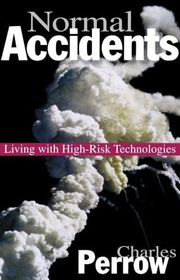
Normal Accidents
For readers who want accidents examined through organizations and interacting systems rather than individual mistakes alone. The framework encourages a broader account of risk, but the historical cases and strong thesis need critical interpretation rather than mechanical application.
What it's about
Perrow analyzes technological risk through the relationships among system complexity, organizational arrangements, and tightly connected operations. Case studies support his argument that interactions between failures can produce accidents that are difficult to anticipate through isolated component analysis.
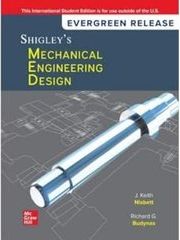
Shigley's Mechanical Engineering Design
For engineering students ready to study the design of mechanical components systematically. Its worked technical treatment connects fundamentals with component decisions, but the mathematical prerequisites and course-like structure make it unsuitable for casual reading.
What it's about
This textbook introduces mechanical engineering design through fundamental decisions and the behavior of industrial components. Explanations and examples connect analysis with selecting and designing machine elements, providing a structured resource for students who already have supporting engineering and mathematics foundations.
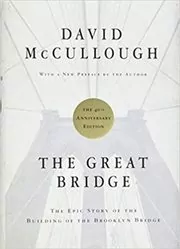
For readers who want an engineering project understood through people, politics, and sustained work. The Brooklyn Bridge gives the history a clear center, but the long narrative provides much more context than a concise explanation of bridge mechanics.
What it's about
This narrative of the Brooklyn Bridge tells how the Roebling family and a legion of engineers and workers overcame political fights, deadly accidents, and daunting technology to span the East River. It’s also a portrait of Gilded Age New York in rapid transformation.

For readers who want structural failures explained through historical cases. Its accessible accounts connect materials, construction, environment, and decisions, but the selected examples provide understanding rather than a current technical reference for assessing a particular structure.
What it's about
Matthys Levy and Mario Salvadori explain structural failures through historical cases involving buildings, bridges, domes, and other works. Accessible analysis examines how design, construction, materials, environmental forces, and human decisions contribute to collapse and what engineers can learn from these events.

For readers interested in the company-building pressures surrounding ambitious engineering projects. Vance provides an account of early Tesla and SpaceX developments, but the 2015 biography stops well before later events and teaches little technical design.
What it's about
Ashlee Vance traces Elon Musk's life from childhood in South Africa to his entrepreneurial work in the United States. The biography examines the ambitions and challenges behind his involvement with PayPal, Tesla, SpaceX, and SolarCity.
Also recommended by
6 people Anthony Pompliano recommended this book
Anthony Pompliano
"Found it even better than I anticipated." - Anthony Pompliano
Anthony Pompliano's recommendation of this book  Austen Allred recommended this book
Austen Allred
"Was written in 2015 and already feels like you could have another full book as an update." - Austen Allred
Austen Allred's recommendation of this book  Mr. Money Mustache recommended this book
Mr. Money Mustache
"I’m a big fan [of this book]." - MMM
Mr. Money Mustache's recommendation of this book  Tim Urban recommended this book
Tim Urban
"A great biography on Musk." - Tim Urban
Tim Urban's recommendation of this book  Casey Neistat recommended this book
Casey Neistat
"One of the people that I find most interesting. I'm fascinated by Elon Musk." - Casey Neistat
Casey Neistat's recommendation of this book - John Collison recommended this book
John Collison
"A good read." - John Collison
John Collison's recommendation of this book

For beginners who want materials science connected to ordinary objects rather than equations. Its selected examples make physical properties memorable, but the personal, popular-science approach is a starting point rather than a comprehensive engineering materials course.
What it's about
Mark Miodownik investigates materials found in ordinary objects, including steel, glass, paper, and chocolate. Combining personal anecdotes, history, and materials science, he explains how their structures and properties shape technologies and the experiences of everyday life.
Also recommended by
3 people Bill Gates recommended this book
Bill Gates
"Read this book and you’ll never look at a pencil or razor the same way." - Bill Gates
Bill Gates's recommendation of this book - Patrick Collison recommended this book
Patrick Collison
Patrick Collison labeled this book "substantially above average."
Patrick Collison's recommendation of this book - John Collison recommended this book
John Collison
"Answers why US chocolate tastes like ground-up newspaper to me." - John Collison
John Collison's recommendation of this book

An Astronaut's Guide to Life on Earth
What Going to Space Taught Me About Ingenuity, Determination, and Being Prepared for Anything
For readers interested in preparation, teamwork, and responsibility through an astronaut’s experience. The personal stories give professional habits a vivid setting, but the wider life advice is not a substitute for learning aerospace engineering itself.
What it's about
Drawing on decades as a test pilot and astronaut, Chris Hadfield shares how he chased an impossible dream and what spaceflight taught him about preparation, teamwork, risk and perspective, turning behind-the-scenes stories into practical lessons for everyday life.
Also recommended by
1 person Satya Nadella recommended this book
Satya Nadella
"Great read!" - Satya Nadella
Satya Nadella's recommendation of this book

For readers who want the physical reasons materials resist or suffer failure. Its intuitive explanations complement Structures by looking more closely at material properties, but the older examples provide foundations rather than a survey of current materials technology.
What it's about
J. E. Gordon explains the physical and chemical properties that make materials such as metal, wood, glass, ceramics, and bone useful. He explores their strengths and weaknesses and how those properties guide choices in engineering.
Also recommended by
1 person- Bill Gates recommended this book
Bill Gates
"A recapitulation of the history of materials told in an interesting and approachable way." - Bill Gates
Bill Gates's recommendation of this book
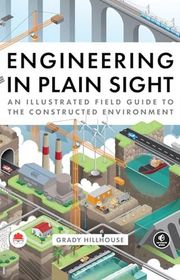
Engineering in Plain Sight
For curious beginners who want to understand infrastructure they pass every day. The field-guide format makes utilities and constructed systems easier to recognize, but its emphasis on US examples is less directly applicable to other places.
What it's about
Hillhouse introduces the constructed environment through illustrated explanations of infrastructure and engineered systems. Organized as a field guide, the book helps readers identify familiar but often overlooked features and understand the purposes they serve within the built world.
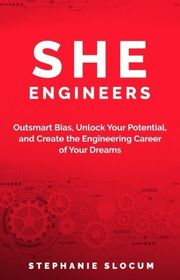
She Engineers
For women engineers and managers who want career questions addressed within an engineering workplace. Its professional context is more specific than general self-help, but individual strategies cannot by themselves remove the organizational barriers the book discusses.
What it's about
Slocum discusses the professional experiences and career decisions of women working in engineering. The guide addresses recognition, workplace relationships, bias, and choosing a direction, connecting personal development with challenges that may receive little attention in technical education.
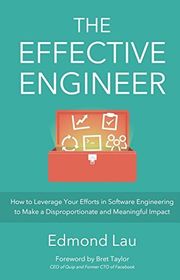
The Effective Engineer
For software engineers who want to choose work with greater practical impact. Its focus on prioritization and learning connects career development with team contribution, but the software-company setting is narrower than the book’s general engineering title might suggest.
What it's about
Lau draws on experience and interviews with engineering leaders to discuss effectiveness in software work. The book examines learning, priorities, decisions, and collaboration, asking how engineers can direct their effort toward work that matters within their teams and organizations.
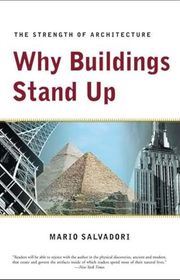
Why Buildings Stand Up
For readers who want structural ideas explained through the development of buildings. The architectural examples give forces and materials a visible setting, but the historical approach supplies intuition rather than the calculations of a professional design text.
What it's about
Salvadori explains how buildings carry loads through examples ranging from tents to tall buildings. Discussions of materials, structural forms, and changing construction methods show how architectural possibilities developed alongside advances in engineering knowledge and building technology.

For readers who want a philosophical exploration of quality linked to practical maintenance and a personal journey. The narrative questions divisions between technical and artistic thought, but it is neither a repair manual nor a straightforward introduction to engineering.
What it's about
During a summer motorcycle trip, a father reflects on his relationship with his son and his earlier intellectual struggles. The journey links practical maintenance with questions about reason, experience, and quality, blending personal narrative with philosophical exploration.
Also recommended by
9 people Jordan Peterson recommended this book
Jordan Peterson
Recommended on Jordan Peterson's website.
Jordan Peterson's recommendation of this book - Paul Graham recommended this book
Paul Graham
Paul Graham mentioned this book on Twitter.
Paul Graham's recommendation of this book  Drew Houston recommended this book
Drew Houston
"[There are] engineers who [dismiss] all these things that can’t be fit into an algorithm, or that don’t have some kind of mathematical rigor underpinning them, [this book] is about that question." - Drew Houston
Drew Houston's recommendation of this book  Josh Waitzkin recommended this book
Josh Waitzkin
"Inspired my cultivation of dynamic quality as a way of life." - Josh Waitzkin
Josh Waitzkin's recommendation of this book  Bryan Johnson recommended this book
Bryan Johnson
Bryan Johnson recommended this book on Twitter.
Bryan Johnson's recommendation of this book  Ev Williams recommended this book
Ev Williams
"One of the few novels I’ve ever read twice." - Ev Williams
Ev Williams's recommendation of this book +3
More recommendations
- Austen Allred
"Didn’t get it first time." - Austen Allred
- Fred Wilson
"A great one." - Fred Wilson
- Phil Jackson
Phil Jackson recommended this book on Twitter.
- Austen Allred

For readers looking for one person’s reflections on setbacks, habits, and developing complementary skills. The memoir offers an indirect career perspective, but its general self-help claims and personal examples provide little engineering-specific instruction or systematic evidence.
What it's about
Scott Adams recounts failed ventures, career setbacks, and lessons learned while becoming the creator of Dilbert. Blending memoir with personal advice, he advocates repeatable systems, developing complementary skills, and managing energy rather than depending on isolated goals.
Also recommended by
3 people Naval Ravikant recommended this book
Naval Ravikant
Naval Ravikant tweeted about this book.
Naval Ravikant's recommendation of this book  Patrick O'Shaughnessy recommended this book
Patrick O'Shaughnessy
"Colorful and enjoyable." - Patrick O'Shaughnessy
Patrick O'Shaughnessy's recommendation of this book  Danny Miranda recommended this book
Danny Miranda
"Would highly recommend for anyone interested in psychology, persuasion, or how to live an incredible life." - Danny Miranda
Danny Miranda's recommendation of this book

Engineer to Win
For readers interested in materials and mechanical reliability through racing-car experience. Its practical perspective connects component choices with consequences, but the motorsport focus and age of the technical examples limit its use as a general contemporary reference.
What it's about
Carroll Smith explains materials technology for racing cars, concentrating on selecting and using components that withstand competition. His guide links design, installation, and maintenance decisions with mechanical reliability, examining how preventable failures can compromise equipment and safety.

For readers who want selected manufacturing data in a portable format. The condensed tables are easier to carry than the full handbook, but the limited selection and edition-specific information make it a companion rather than a comprehensive reference.
What it's about
This Pocket Companion condenses essential reference material from the thirty-first edition of Machinery's Handbook. Selected tables, charts, and technical information provide a portable source of basic data for people working in manufacturing, metalworking, and related fields.
Sources
- 1
33 Best Books for Engineers in 2026
geniuslabgear.com
- 2
8 Books Every Engineering Student Should Read
oxfordscholastica.com
- 3
30+ Must-Read Engineering Books to Read: A Practical Guide by Goal and Discipline
itechguides.com
- 4
100 Best Engineering Books of All Time
shortform.com
- 5
Engineering Books
goodreads.com
- 6
Good engineering books with out the constant need to have a calculator with you?
reddit.com
- 7
What are some must have/read books for engineers (specifically mechanical but any are welcome)?
reddit.com
- 8
The Best Engineering Books
engineeringinreallife.com




Edited by
Software engineer whose passion for tracking book recommendations from podcasts inspired the creation of MRB.
Lead investor at 3one4 Capital whose startup expertise and love for books helped shape MRB and its growth.
Comments
Spotted a missing book, a wrong order or a mistake? Tell us and we'll fix this page.
We're a reading guide, not the author or publisher, so we can't send books or pass on messages.