
24 Best Civil Engineering Books
The best civil engineering books, ranked by how many expert sources recommend each one, with notes on introductions, textbooks, infrastructure, and history.
Our take
Civil engineering connects structures, materials, water, ground conditions, transport, and the systems that make settlements function. Books on the subject range from illustrated explanations for curious readers to mathematical textbooks and specialist references. Histories and biographies add another perspective by showing how projects depend on institutions, money, communities, and individual judgment as well as technical knowledge.
Structures and Why Buildings Stand Up offer accessible routes into structural behavior. Engineering in Plain Sight and The Works explain infrastructure encountered in everyday life. For formal study, Structural Analysis, Principles of Foundation Engineering, and Design of Reinforced Concrete address different parts of the curriculum. To Engineer Is Human examines design through failure, while The Great Bridge follows the people and difficulties behind a single major project.
Start with an illustrated introduction if you are exploring the field. For coursework or practice, choose the subject and mathematical level you need, then check the edition, units, and applicable design standards.
24 books · 8 sources · Last updated
As an Amazon Associate, we earn from qualifying purchases (at no extra cost to you).
How to choose from this list
Skip to the full rankingIf you want an intuitive introduction: Structures → Why Buildings Stand Up
If you want to understand everyday infrastructure: Engineering in Plain Sight → The Works
If you are studying structural behavior: Strength of Materials → Structural Analysis → Design of Structural Elements
If you are studying foundations: Principles of Foundation Engineering → Foundation Analysis and Design
If you want engineering judgment and failure: To Engineer Is Human → Why Buildings Fall Down
If you want the history and politics of projects: The Great Bridge → The Power Broker
The 24 books, ranked
Ranked by how many expert sources name each book. Ties go to the book more people recommend.

For curious beginners who want an intuitive account of forces and structural behavior. Its examples connect engineered and natural forms without becoming a course textbook, though students will need more mathematical treatment for analysis and design work.
What it's about
J. E. Gordon explains the forces that keep structures intact, from buildings and aircraft to bodies and eggshells. Examples introduce stress, compression, shear, torsion, and fracture, connecting engineering principles with familiar objects and natural forms.
Also recommended by
1 person Elon Musk recommended this book
Elon Musk
"Really, really good if you want a primer on structural design." - Elon Musk
Elon Musk's recommendation of this book
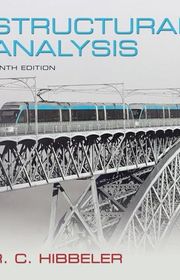
Structural Analysis
For students who want a systematic route from structural models to calculations. Its focus on trusses, beams, and frames supports core analysis courses, though the worked procedures assume mechanics knowledge and more mathematical commitment than a popular introduction.
What it's about
Hibbeler explains how to model and analyze trusses, beams, and frames through structural theory, worked methods, and exercises. The textbook connects idealized structural systems with the calculations used to understand their response to loads in engineering study.

For engineers interested in who gets to decide what infrastructure is built and who bears its costs. Its biography connects projects with political power and communities, though the scale and historical detail demand a substantial reading commitment.
What it's about
Robert Moses transforms New York through bridges, parks, highways, and urban redevelopment while accumulating extraordinary political influence. Caro’s biography investigates how an unelected official acquired power, maintained it, and reshaped the lives of the city’s residents.
Also recommended by
4 people Ryan Holiday recommended this book
Ryan Holiday
"One of the most magnificent books I’ve ever read." - Ryan Holiday
Ryan Holiday's recommendation of this book  Sam Hinkie recommended this book
Sam Hinkie
"My favorite writer." - Sam Hinkie
Sam Hinkie's recommendation of this book  Shane Parrish recommended this book
Shane Parrish
"It’s amazing. But it’s not a light read." - Shane Parrish
Shane Parrish's recommendation of this book  Trung Phan recommended this book
Trung Phan
"About the Urban Planning industry." - Trung Phan
Trung Phan's recommendation of this book

For readers who want the material science behind structural behavior without beginning with a formal textbook. Its explanations make strength and failure tangible, though the examples and historical perspective do not cover every modern material or practice.
What it's about
J. E. Gordon explains the physical and chemical properties that make materials such as metal, wood, glass, ceramics, and bone useful. He explores their strengths and weaknesses and how those properties guide choices in engineering.
Also recommended by
1 person Bill Gates recommended this book
Bill Gates
"A recapitulation of the history of materials told in an interesting and approachable way." - Bill Gates
Bill Gates's recommendation of this book

For readers who learn through examples of what went wrong. Its explanations connect structural behavior with decisions about design, construction, and maintenance, though the historical cases provide understanding rather than a current code-based design manual.
What it's about
Matthys Levy and Mario Salvadori explain structural failures through historical cases involving buildings, bridges, domes, and other works. Accessible analysis examines how design, construction, materials, environmental forces, and human decisions contribute to collapse and what engineers can learn from these events.
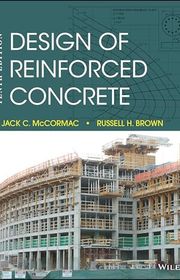
Design of Reinforced Concrete
For students who want reinforced-concrete design built on mechanics of solids. Its worked textbook approach connects material behavior with member design, though the linked edition’s ACI provisions must match the code edition required by a course or project.
What it's about
McCormac and Brown introduce reinforced-concrete design through basic mechanics, concrete behavior, and applications of ACI provisions. The textbook develops structural design concepts from an understanding of stress, strain, and the interaction between concrete and reinforcing steel.
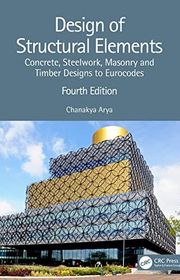
Design of Structural Elements
For students who want several structural materials covered within one Eurocode-oriented design text. Its self-contained chapters and worked examples support comparison across materials, though the edition’s code basis needs checking against the requirements of a particular course or project.
What it's about
Arya introduces the design of concrete, steel, timber, masonry, and composite elements using Eurocodes. The fourth edition combines design principles, material properties, diagrams, and worked examples, with guidance reflecting the provisions considered current when the edition was prepared.
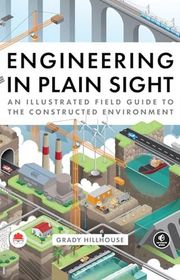
Engineering in Plain Sight
For curious readers who want to recognize and understand infrastructure they pass every day. Its illustrated field-guide approach encourages observation without extensive prerequisites, though it explains systems at an introductory level rather than teaching professional calculations.
What it's about
Hillhouse introduces the constructed environment through illustrated explanations of infrastructure and engineered systems. Organized as a field guide, the book helps readers identify familiar but often overlooked features and understand the purposes they serve within the built world.

Foundation Analysis and Design
For students and practitioners who want a substantial foundation-engineering reference. Its analytical scope supports deeper study of soil and structural interactions, though the dense treatment and older edition require background knowledge and checking against current project requirements.
What it's about
Joseph Bowles examines the analysis and design of foundations, connecting soil mechanics with practical engineering decisions. Topics include site exploration, bearing capacity, footing design, piles, settlement, and retaining structures, supported by computational approaches and examples.
Invention by Design
For readers interested in how engineering ideas take shape under practical and social constraints. Its movement between ordinary objects and larger systems broadens the design question, though much of the discussion extends beyond civil engineering specifically.
What it's about
Petroski explores how engineers develop objects and systems by balancing function with economics, aesthetics, ethics, and other constraints. Examples from everyday artifacts and major networks show how people, organizations, and communities influence the path from idea to finished design.
Mechanics of Fluids
For engineering students who want physical principles behind fluid behavior explained with applications. Its emphasis on assumptions and concepts supports understanding beyond formulas, though the broad mechanics focus is less specific to water infrastructure than a hydraulics text.
What it's about
Massey introduces the principles of fluid mechanics and applies them to problems across engineering. The text emphasizes physical concepts, the assumptions behind analysis, and the limits within which particular relationships can be used to describe fluid behavior.

Principles of Foundation Engineering
For undergraduates moving from soil mechanics into foundation design. Its worked examples and emphasis on applying theory give a structured course framework, though the technical level assumes prior mechanics and the linked edition uses SI units.
What it's about
Braja Das introduces foundation analysis and design, balancing theoretical methods with field applications. The textbook emphasizes evaluating soils and exercising engineering judgment, using worked examples and illustrations to help civil engineering students apply foundation principles.
For readers who want an engineering project understood through people, politics, and construction obstacles. Its detailed Brooklyn Bridge narrative makes infrastructure history concrete, though the length and biographical attention provide less direct instruction in structural mechanics.
What it's about
This narrative of the Brooklyn Bridge tells how the Roebling family and a legion of engineers and workers overcame political fights, deadly accidents, and daunting technology to span the East River. It’s also a portrait of Gilded Age New York in rapid transformation.

For visual learners curious about the systems operating behind everyday city life. Its diagrams connect transport, utilities, and services in one accessible reference, though the New York focus means details do not describe every city’s infrastructure.
What it's about
Kate Ascher explains the infrastructure that keeps a city functioning, using New York as her main example. Text and graphics reveal how transportation, electricity, water, sewage, garbage, and other systems operate behind everyday urban life.

For readers who want to understand failure as part of engineering judgment and design development. Its case-based arguments connect technical choices with human decisions, though it offers reflection and historical examples rather than a practical design course.
What it's about
Petroski explores how engineers learn from failure and use that knowledge to improve design. Case studies including the Tacoma Narrows Bridge and the Hyatt Regency walkways connect celebrated successes and catastrophic breakdowns with the everyday challenges of making structures work.
Why Buildings Stand Up
For beginners who want structures explained through recognizable buildings and construction methods. Its illustrations connect form with materials and forces, though the accessible overview provides less analytical depth than an undergraduate structural mechanics course.
What it's about
Salvadori explains how buildings carry loads through examples ranging from tents to tall buildings. Discussions of materials, structural forms, and changing construction methods show how architectural possibilities developed alongside advances in engineering knowledge and building technology.

For engineering readers who want to understand architectural organization and spatial relationships. Its drawings make form, circulation, and proportion easy to compare, though the emphasis is design language rather than structural calculation or construction management.
What it's about
Francis Ching explores the visual principles that organize architecture, using drawings and examples from different periods and cultures. Discussions of form, space, circulation, proportion, and scale show how basic elements combine to shape buildings and people's experience of them.

For engineering students who want mechanics of solids explained through examples and exercises. Its focus on stresses and loaded elements supports core coursework, though it is a problem-solving text rather than an introduction to the profession as a whole.
What it's about
R. S. Khurmi introduces the mechanics of solids through explanations, solved examples, and exercises. The textbook examines stresses, strains, forces, beams, joints, and shells, building students' understanding of how materials and structural elements respond when subjected to loads.

The Civil Engineering Handbook
For readers who want a broad reference across civil engineering disciplines. Its specialist chapters make it useful for orientation and lookup, though the older edition and compressed coverage mean standards and design requirements need separate checking.
What it's about
Edited by W. F. Chen and Richard Liew, this handbook brings together specialist reference material across civil engineering. Chapters address construction, environmental and geotechnical engineering, hydraulics, materials, structures, surveying, and transportation, with definitions and supporting resources for further study.

For readers interested in structural design as both technical achievement and expressive art. Its close attention to particular engineers and works develops visual judgment, though it offers historical interpretation rather than a sequence of calculation exercises.
What it's about
David Billington explores structural engineering as an art through bridges, towers, and other major works. Photographs and analysis connect technical decisions with aesthetic principles, examining how engineers such as Eiffel, Roebling, Maillart, and Nervi combined practical constraints with expressive design.

Advances in Water Resources Engineering
For readers already familiar with hydraulics who want specialist discussions of water-resource problems. Its collected chapters offer depth beyond an introductory survey, though the edited format and modeling emphasis make it a demanding first book on the subject.
What it's about
Edited by Chih Ted Yang and Lawrence Wang, this technical volume explores water-resource modeling and management. Specialist chapters cover sediment transport, watershed dynamics, connected surface and groundwater systems, channel stabilization, erosion, hydraulic modeling, and methods for assessing earthen dams.

For readers who enjoy engineering through the life of an inventor and a single ambitious project. Its Ferris Wheel focus connects structural innovation with entrepreneurship, though the narrow biography covers less of the field than a general history.
What it's about
Richard Weingardt traces the life of engineer George Ferris and the creation of the original Ferris Wheel for Chicago's 1893 exposition. The biography connects his invention with structural engineering, family history, entrepreneurship, and the financial struggles surrounding his achievement.

Civil Engineering Materials
For students who want construction materials explained through properties, production, and testing. Its attention to selection and behavior connects science with practical choices, though readers seeking a nontechnical introduction may find the textbook treatment too detailed.
What it's about
Shan Somayaji examines the properties and uses of common civil engineering materials, including concrete, masonry, wood, steel, and bituminous mixtures. Explanations of production, mechanical behavior, testing, and strength connect material characteristics with selection and their applications in construction.

Man of Iron
For readers who want infrastructure history through one engineer’s career. Telford’s roads, canals, and bridges connect technical ambition with changing landscapes, though the biographical emphasis offers less explanation of mechanics than a structural introduction.
What it's about
Julian Glover traces Thomas Telford's rise from poverty to a career reshaping Britain's infrastructure. Drawing on contemporary accounts, the biography follows his roads, canals, bridges, and other engineering projects, connecting the work with his ambition and the landscapes he transformed.
Sources
- 1
Top 5 Civil Engineering Books for Beginners
structuresinsider.com
- 2
Civil engineering reading list
ice.org.uk
- 3
Civil Engineering Books
goodreads.com
- 4
What are some good books about civil engineering?
reddit.com
- 5
Civil Engineering Reading List
koioseducation.com
- 6
Civil Engineering Textbooks & Handbooks: The Complete Code-Based Design Reference
civilmat.com
- 7
What books should a civil engineering student read?
reddit.com
- 8
Popular Books for Engineers
guides.libraries.psu.edu







Edited by
Software engineer whose passion for tracking book recommendations from podcasts inspired the creation of MRB.
Lead investor at 3one4 Capital whose startup expertise and love for books helped shape MRB and its growth.
Comments
Spotted a missing book, a wrong order or a mistake? Tell us and we'll fix this page.
We're a reading guide, not the author or publisher, so we can't send books or pass on messages.