
9 Best Legal Writing Books
The best legal writing books, ranked by how many expert sources recommend each, with notes for law students, advocates, and writers choosing a style guide.
Our take
Legal writing asks you to make complicated material clear while keeping the reasoning precise. A student paper, an office memorandum, and a persuasive brief place different demands on the writer. Some books concentrate on readable sentences; others address argument, organization, publication, or the style decisions that arise when preparing a finished document.
Plain English for Lawyers offers a concise starting point for cleaner prose. Legal Writing in Plain English: A Text with Exercises develops a wider set of habits through practice, while Just Writing: Grammar, Punctuation, and Style for the Legal Writer gives the mechanics closer attention. Advocates can turn to the examples in Point Made: How to Write Like the Nation's Top Advocates or the detailed guidance in The Winning Brief: 100 Tips for Persuasive Briefing in Trial and Appellate Courts. For scholarly work, choose Academic Legal Writing. Begin with the kind of document you need to produce, keeping the books' predominantly American examples in view.
9 books · 8 sources · Last updated
As an Amazon Associate, we earn from qualifying purchases (at no extra cost to you).
How to choose from this list
Skip to the full rankingIf you want clearer sentences: Plain English for Lawyers → Legal Writing in Plain English
If you need grammar and punctuation practice: Just Writing
If you're preparing a persuasive brief: Point Made → The Winning Brief
If you're writing a law-review article: Academic Legal Writing
If you need a style reference: The Redbook
If you want broader advocacy principles: Making Your Case → Elegant Legal Writing
The 9 books, ranked
Ranked by how many expert sources name each book. Ties go to the book more people recommend.

For legal writers who want a broad, structured guide to organizing and revising their work. The graded exercises support sustained practice across document types, though readers seeking only a quick answer may prefer a style reference.
What it's about
Bryan Garner explains how to make legal writing clearer through practical principles, real examples, and graded exercises. Analytical and persuasive writing sit alongside legal drafting, with guidance aimed at helping lawyers, students, and other legal professionals organize and revise their work.
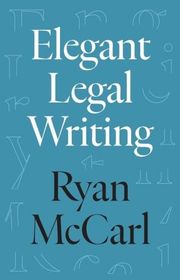
Elegant Legal Writing
For lawyers who want readable, persuasive prose connected with how busy readers process information. Its combination of examples and composition principles offers a newer perspective, though experienced readers of Garner may find some familiar advice.
What it's about
Ryan McCarl examines effective legal prose through examples, rhetoric, and ideas about how readers understand information. The book connects sentence mechanics, organization, typography, and writing tools with the practical task of producing clear and persuasive litigation documents.

Plain English for Lawyers
For students and lawyers who want a short, practical course in clearer sentences. Its focused exercises make revision habits easy to practice, though it gives less attention to developing complex arguments than the broader advocacy books.
What it's about
Richard Wydick and Amy Sloan explain how to make legal writing clearer through concise language and careful organization. Exercises address surplus words, active verbs, sentence structure, word choice, punctuation, and readable document design.

For advocates who learn by examining effective passages from real briefs. Its close attention to rhetorical choices gives concrete models to study, though the American litigation examples require adaptation for other jurisdictions and document types.
What it's about
Ross Guberman analyzes examples from leading advocates to explain techniques for persuasive legal writing. He addresses openings, headings, storytelling, wording, and conclusions, with second-edition writing challenges that help readers apply the methods to their own briefs.

For legal professionals who want a reference beside them while drafting and editing. Its detailed treatment of style questions supports consistent documents, though it is more useful for consultation than as a first course in legal reasoning.
What it's about
Bryan Garner provides a style reference tailored to legal documents. Grammar, punctuation, capitalization, citations, editing, and document design accompany examples drawn from legal contexts, with explanations of troublesome terminology and guidance for preparing briefs, letters, memoranda, and contracts.

For litigators who want a detailed revision framework for trial and appellate briefs. Its numbered tips connect structure with sentence choices and judicial readers, though the substantial American courtroom focus makes it less suitable for academic or transactional writing.
What it's about
Bryan Garner presents one hundred tips for writing persuasive trial and appellate briefs. Planning, organization, openings, paragraphs, and sentence choices receive practical treatment, with examples showing how attention to judicial readers can shape a clearer written argument.

Academic Legal Writing
Law Rev Articles, Student Notes, Seminar Papers, and Getting on Law Review
For law students planning an article, seminar paper, or student note. Its attention to topic choice and publication distinguishes it from brief-writing manuals, though the law-review focus is strongly tied to American legal academic practice.
What it's about
Eugene Volokh guides law students through researching, writing, editing, and publishing scholarly legal work. The fifth edition addresses articles, student notes, seminar papers, counterarguments, citation checking, and submitting work to law reviews.
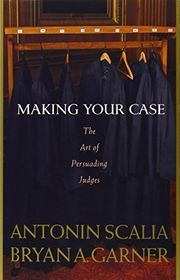
Making Your Case: The Art of Persuading Judges
For advocates who want written argument placed beside oral persuasion and judicial expectations. Its broader view complements the books devoted solely to prose, though the American courtroom perspective makes some advice less transferable to other legal systems.
What it's about
Antonin Scalia and Bryan Garner discuss legal argument, brief writing, and oral advocacy. Their guide considers how advocates can organize reasoning, select language, prepare presentations, and address judges effectively across the written and spoken parts of a case.

For students and practitioners who want to strengthen grammar, punctuation, and sentence-level editing. Legal examples make the mechanics relevant to daily work, though it is less focused on litigation strategy or building an entire persuasive brief.
What it's about
Anne Enquist, Laurel Currie Oates, and Jeremy Francis explain grammar, punctuation, and style for legal writers. Examples and practical advice guide planning, drafting, revision, editing, and proofreading, with an emphasis on clear and concise prose.
Sources
- 1
Books and Articles on Legal Writing
hls.harvard.edu
- 2
Legal Writing Study Aids
lib.uchicago.edu
- 3
Books on Legal Writing
libguides.law.ucla.edu
- 4
Legal Writing Treatises
guides.ll.georgetown.edu
- 5
Legal Writing Books
goodreads.com
- 6
Looking after Books or any material for improvement in legal writing, legal research? For Enhancement in writing style too (for both legal as well formal)?
reddit.com
- 7
Legal Writing - Resources for Attorneys
mncourts.libguides.com
- 8
Any suggested legal writing books?
reddit.com




Edited by
Software engineer whose passion for tracking book recommendations from podcasts inspired the creation of MRB.
Lead investor at 3one4 Capital whose startup expertise and love for books helped shape MRB and its growth.
Comments
Spotted a missing book, a wrong order or a mistake? Tell us and we'll fix this page.
We're a reading guide, not the author or publisher, so we can't send books or pass on messages.