
21 Best Law Books
The best law books, ranked by how many expert sources recommend each one, with notes on who each suits, from prospective students to practicing lawyers.
Our take
Books about law can explain a legal system, show how lawyers reason, or reveal what legal institutions mean for the people who encounter them. This selection also includes accounts of law school, professional guides, and courtroom fiction. Many titles focus on the United States, while others address English law or compare jurisdictions, so location and purpose matter when choosing.
For an introduction, try About Law or The Rule of Law. Prospective students can explore 24 Hours with 24 Lawyers for career variety, Law School Confidential for practical preparation, or One L for a personal account of the first year. The Legal Analyst and Making Your Case focus on reasoning and persuasion. Readers interested in lived consequences may prefer Just Mercy or A Civil Action, while Bleak House offers a historical fictional critique. Start with the question you want answered, then check whether the book’s jurisdiction, educational setting, and publication period fit that purpose.
21 books · 5 sources · Last updated
As an Amazon Associate, we earn from qualifying purchases (at no extra cost to you).
How to choose from this list
Skip to the full rankingIf you want an introduction to law and its purpose: About Law → The Rule of Law
If you're exploring a legal career: 24 Hours with 24 Lawyers → Law School Confidential
If you're starting US law school: 1L of a Ride → One L
If you want legal reasoning and advocacy: The Legal Analyst → Making Your Case
If you want real cases and their human consequences: Just Mercy → A Civil Action
If you prefer a fictional critique of the legal system: To Kill a Mockingbird → Bleak House
The 21 books, ranked
Ranked by how many expert sources name each book. Ties go to the book more people recommend.

For readers who want to consider justice and professional courage through fiction. The child’s viewpoint makes a courtroom conflict emotionally accessible, but its limited perspective and historical racial framing invite critical reading rather than treating it as a legal model.
What it's about
A young girl grows up in a Southern town shaped by racial prejudice while her lawyer father defends a Black man accused of a serious crime. His case brings questions of justice, courage and compassion into her childhood.
Also recommended by
5 people Jordan Peterson recommended this book
Jordan Peterson
Recommended on Jordan Peterson's website.
Jordan Peterson's recommendation of this book  Taylor Swift recommended this book
Taylor Swift
"[The storytelling] makes your mind wander." - Taylor Swift
Taylor Swift's recommendation of this book  Oprah Winfrey recommended this book
Oprah Winfrey
"I remember starting it and just devouring it, not being able to get enough of it, because I fell in love with Scout." - Oprah Winfrey
Oprah Winfrey's recommendation of this book  Kathie Lee Gifford recommended this book
Kathie Lee Gifford
"This story of tragic injustice resonated in my young mind and still does. It should be required reading for everyone." - Kathie Lee Gifford
Kathie Lee Gifford's recommendation of this book  James Clear recommended this book
James Clear
"[One of] the 10 best fiction books." - James Clear
James Clear's recommendation of this book

For law students and advocates who want concrete guidance on presenting arguments to judges. Its focused treatment connects reasoning with written and oral persuasion, but the US litigation context makes it less relevant to other legal roles.
What it's about
Antonin Scalia and Bryan Garner explain how lawyers can present persuasive arguments to judges. Legal reasoning leads into brief writing and oral advocacy, with guidance on developing an argument, selecting material, and communicating it clearly in writing and in court.
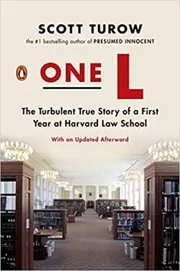
For prospective students who want an immersive account of the emotional pressures of US legal education. Turow’s first-year narrative captures uncertainty and competition vividly, but its 1970s Harvard experience differs from present-day schools and individual experiences.
What it's about
Turow's classic memoir follows his first year at Harvard Law School, from bewildering Socratic classes to cutthroat exams and friendships strained by competition, giving a candid, inside look at how modern lawyers are trained.
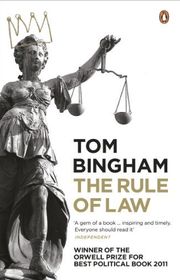
The Rule of Law
For general readers who want a clear account of what the rule of law requires. Bingham connects principles with practical institutional questions, but its British perspective and compact argument offer less comparative detail than a specialist legal text.
What it's about
Tom Bingham explains the meaning of the rule of law through principles governing legal clarity, equality, public power, rights, and fair procedures. Historical and contemporary examples connect the ideal with the responsibilities of states and legal institutions.
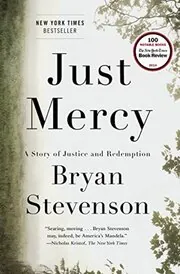
For readers who want to understand criminal justice through the experiences of defendants and their advocate. Stevenson connects individual cases with systemic questions, but the distressing US death-penalty context makes this an emotionally demanding rather than general legal introduction.
What it's about
As a young lawyer in Alabama, Bryan Stevenson takes on the case of Walter McMillian, a Black man wrongly sentenced to death. From that case, he builds a humane, unsettling portrait of bias, punishment, and the people crushed by the justice system.
Also recommended by
4 people Howard Schultz recommended this book
Howard Schultz
"Perhaps one of the most powerful and important stories of our time." - Howard Schultz
Howard Schultz's recommendation of this book  Cory Booker recommended this book
Cory Booker
"Takes you out of where you probably are and lets you look into a window of aspects of our society that are really important." - Cory Booker
Cory Booker's recommendation of this book  Richard Branson recommended this book
Richard Branson
Richard Branson recommended this book on his "70 must-read books" blog post.
Richard Branson's recommendation of this book  Kathryn Minshew recommended this book
Kathryn Minshew
"A wildly good book." - Kathryn Minshew
Kathryn Minshew's recommendation of this book

For readers who want the US Supreme Court explained through personalities and institutional relationships. Its reporting makes judicial politics accessible, but it describes an earlier court and cannot serve as a guide to the current justices or law.
What it's about
Jeffrey Toobin examines the personalities, relationships, and ideological conflicts within the United States Supreme Court. His account brings readers inside the justices' world, exploring how individual convictions and institutional politics shape decisions with consequences for the nation.
Also recommended by
1 person Gary Vaynerchuk recommended this book
Gary Vaynerchuk
"My favorite book I've ever read is [this book]. It was about the supreme court." - Gary Vaynerchuk
Gary Vaynerchuk's recommendation of this book

For readers deciding whether legal work suits them and which roles to explore. Its day-in-the-life profiles make career differences concrete, but the selection is a snapshot and cannot represent every practice, jurisdiction, or working arrangement.
What it's about
Jasper Kim profiles twenty-four lawyers through accounts of their working days. The collection spans varied legal careers, showing the responsibilities, routines, and decisions behind professional roles and helping readers explore possibilities beyond a single model of practice.

Anatomy of a Murder
For readers who prefer legal questions explored through a courtroom novel. Its attention to advocacy and conflicting accounts makes procedure part of the suspense, but the period US setting and dramatic choices differ from everyday contemporary practice.
What it's about
A murder case becomes the center of a sensational courtroom battle in Robert Traver's legal novel. Conflicting accounts, questions of responsibility, and the tactics of prosecution and defense create a drama in which establishing what happened is only part of the challenge.

For prospective US law students who want a guide through the whole experience, not just admissions. Its practical scope connects study with career decisions, but older application, financing, and employment details need checking against current circumstances.
What it's about
Robert Miller draws on recent graduates' experiences to guide prospective and current law students. This third edition covers applications, financing, coursework, study and exam strategies, law review, clerkships, employment, and the bar exam, connecting practical advice with the stages of law school.

Bleak House
For readers interested in how legal delay and bureaucracy shape lives across a whole society. Dickens gives institutional criticism human scale through many characters, but the long, intricate novel requires patience and reflects a historical English legal setting.
What it's about
A never-ending lawsuit draws Esther Summerson, Lady Dedlock, and a crowd of lawyers, clerks, and strivers into one tangled story. Dickens mixes satire, mystery, and social anger in a vast portrait of a system that ruins lives.
Also recommended by
1 person Neil Gaiman recommended this book
Neil Gaiman
"From the highest in the land to the lowest, the court of Chancery destroys lives. A wonderful read even if you don't like Spontaneous Human Combustion." - Neil Gaiman
Neil Gaiman's recommendation of this book

A Civil Action
For readers who want to see civil litigation unfold through a demanding real case. Harr makes evidence, money, and professional judgment part of the story, but the detailed US lawsuit offers a particular experience rather than a general procedural guide.
What it's about
Jonathan Harr follows a lawsuit brought by families in Woburn, Massachusetts, over alleged industrial contamination of their drinking water. His nonfiction account examines the investigation, corporate defendants, and lawyer Jan Schlichtmann's struggle to pursue a demanding case.

For readers who want a short conceptual introduction before tackling a specialized legal text. Honoré explains major branches and purposes of law in plain terms, but the older Western and English legal context limits its jurisdictional reach.
What it's about
Tony Honoré introduces the purposes and main branches of law in Western societies. Short explanations consider government, property, contracts, crime, and civil wrongs, alongside questions about legal interpretation and justice that shape everyday institutions and relationships.

For readers who want the US Constitution connected with its language and historical setting. Amar gives the document’s design sustained attention, but the substantial interpretive argument is more demanding than a brief introductory overview.
What it's about
Akhil Reed Amar examines the U.S. Constitution as a document shaped by its origins and subsequent changes. Placing its provisions in historical and political context, he explores the choices behind government structures, presidential qualifications, amendments, and the text's enduring influence.

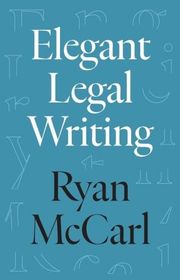
For students entering a UK-style undergraduate law degree who want guidance on learning and thinking about law. The letter format makes academic advice approachable, but its educational setting differs from US postgraduate legal training.
What it's about
Nicholas McBride addresses an aspiring law student through a sequence of letters about choosing and studying the subject. Practical guidance and examples connect the transition to university with critical analysis, legal learning, and the skills involved in working through a law degree.

Letters to a Young Lawyer
For readers who want one advocate’s reflections on professional choices, ethics, and public life. The personal voice makes the advice more immediate than a careers directory, but it represents a distinctive viewpoint rather than a balanced survey.
What it's about
Alan Dershowitz reflects on legal practice in letters addressed to a young lawyer. Personal experience supports advice about professional choices, advocacy, ethics, and the justice system, exploring how an attorney can pursue a successful career while contributing to public life.

For readers who want analytical tools that travel across legal subjects. Farnsworth connects recurring ideas about decisions and incentives more explicitly than a doctrine textbook, but the conceptual approach assumes a willingness to work through abstract examples.
What it's about
Ward Farnsworth gathers tools for reasoning about legal problems rather than concentrating on legal rules alone. Short discussions introduce analytical ideas that help readers examine disputes and decisions, offering students and practitioners a toolkit for thinking more systematically about law.

1L of a Ride
A Well-Traveled Professor's Roadmap to Success in the First Year of Law School
For students beginning US law school who want practical help with unfamiliar classroom and exam routines. Its first-year focus is more targeted than a full career guide, but successful study habits still need adapting to individual courses and assessments.
What it's about
Andrew McClurg guides prospective and beginning law students through the demands of their first year. This fourth edition discusses classroom expectations, reading cases, studying, examinations, and personal well-being, with practical advice for navigating unfamiliar academic routines.

For readers who need a visual introduction to the main categories of intellectual property. The short format helps distinguish unfamiliar terms, but it cannot resolve ownership, filing, or enforcement questions in a particular jurisdiction.
What it's about
Chris Weiss introduces the distinctions among patents, trademarks, copyrights, and trade secrets through visual explanations and examples. The short guide helps readers recognize different forms of intellectual property in their ideas and business activities before deciding what questions to pursue further.

Lawyer Interrupted
Successfully Transitioning from the Practice of Law--and Back Again
For practicing lawyers considering a break or a different career direction. Its attention to leaving and returning addresses a gap in student-focused guides, but professional obligations and employment conditions vary, so older practical details require local checking.
What it's about
Amy Impellizzeri examines the practical and ethical questions lawyers face when stepping away from legal practice. Stories and advice address temporary leave, family responsibilities, career changes, disciplinary interruptions, and retirement, with attention to planning a break and the possibility of returning.

For advanced students who want to compare corporate law through shared problems rather than memorize one jurisdiction’s rules. Its functional framework supports cross-border thinking, but the dense treatment and assumed background make it unsuitable as a general first law book.
What it's about
Reinier Kraakman and his coauthors compare corporate law across major jurisdictions using a common functional framework. Shared corporate attributes and recurring conflicts among managers, shareholders, and other constituencies provide a way to examine different legal responses to similar organizational problems.

Time Management for Attorneys
A Lawyer's Guide to Decreasing Stress, Eliminating Interruptions & Getting Home on Time
For attorneys whose immediate concern is controlling interruptions and protecting time for important work. Its focus on professional routines makes the advice more specific than a general productivity book, but the methods depend on a workplace that permits change.
What it's about
Mark Powers and Shawn McNalis address the time pressures of legal practice. Their guide offers strategies for prioritizing work, reducing interruptions, and coordinating communication, connecting daily management habits with the effort to lower stress and make room for life beyond the office.
Sources










Edited by
Software engineer whose passion for tracking book recommendations from podcasts inspired the creation of MRB.
Lead investor at 3one4 Capital whose startup expertise and love for books helped shape MRB and its growth.
Comments
Did we miss something? Have feedback?
Help us improve this page by sharing your thoughts