
9 Best Kotlin Books
The best Kotlin books, ranked by how many expert sources recommend each one, with notes on prerequisites, teaching styles and where developers should start.
Our take
Kotlin books can help you learn a first programming language, move from Java or improve the way you structure existing code. Those are different tasks. A visual introduction may be ideal when functions and classes are still unfamiliar, while an experienced developer may want explanations of null safety, interoperability, functional techniques or asynchronous work. The examples also vary in age, especially where they depend on Android tooling.
Head First Kotlin uses visual explanations and exercises, while Atomic Kotlin divides concepts into short lessons. Kotlin Programming offers a more conventional course through practical examples. If you already program, Kotlin in Action, Second Edition provides a fuller language treatment with extensive coroutine coverage. Kotlin Cookbook works better as a problem-solving companion, and The Joy of Kotlin concentrates on functional design. Start with the book that matches your programming experience, then run its examples alongside current language and library documentation.
9 books · 6 sources · Last updated
As an Amazon Associate, we earn from qualifying purchases (at no extra cost to you).
How to choose from this list
Skip to the full rankingIf you're new and prefer visual lessons: Head First Kotlin
If you want short lessons with exercises: Atomic Kotlin
If you want a structured practical course: Kotlin Programming
If you already know Java or another object-oriented language: Kotlin in Action, Second Edition
If you're solving specific coding problems: Kotlin Cookbook
If you want to study functional design: The Joy of Kotlin
The 9 books, ranked
Ranked by how many expert sources name each book. Ties go to the book more people recommend.

For readers who want a structured course built around practical exercises. Its progression from fundamentals into interoperability and asynchronous programming supports steady practice, though following the exercises takes more commitment than browsing a language overview.
What it's about
David Greenhalgh, Josh Skeen, and Andrew Bailey teach Kotlin through practical exercises that progress from language fundamentals to advanced features. The second edition covers types, functions, classes, generics, Java interoperability, and asynchronous programming with coroutines, flows, and channels.

Programming Kotlin
Create Elegant, Expressive, and Performant JVM and Android Applications
For experienced developers who want to compare imperative, object-oriented and functional approaches in Kotlin. The examples emphasize choosing expressive techniques, though familiarity with Java and the JVM makes the discussion easier to follow.
What it's about
Venkat Subramaniam explores Kotlin through imperative, object-oriented, and functional programming styles. Examples connect language features with Java interoperability, asynchronous work, and domain-specific languages, showing how different approaches can be combined when developing applications for the Java virtual machine and Android.

The Joy of Kotlin
For programmers who want to explore functional design through Kotlin rather than simply learn syntax. Its emphasis on immutability, data and effects encourages deeper reasoning, though the conceptual focus is demanding without basic programming experience.
What it's about
Pierre-Yves Saumont teaches functional programming in Kotlin through examples involving data structures, recursion, lazy evaluation, and error handling. The book examines how these techniques can make program behavior easier to reason about, extending the approach to concurrency and input and output.
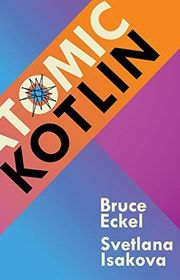
Atomic Kotlin
For readers who want Kotlin broken into short concepts followed by practice. Exercises, hints and solutions support active learning at different experience levels, though the book’s language-version baseline means newer features need a separate reference.
What it's about
Bruce Eckel and Svetlana Isakova teach Kotlin in small lessons that progress from programming basics to more advanced language features. Companion exercises with hints and solutions let readers test their understanding as they move through the material.

For programmers who already know the basics and want worked solutions to recurring Kotlin problems. The recipe format makes it useful beside a project, though it is less suited to learning the language in sequence.
What it's about
Ken Kousen organizes Kotlin instruction around recipes for recurring programming problems. Examples explore functions, lambdas, sequences, and concurrency, showing how language features can be applied in practical situations rather than presenting syntax as an isolated sequence of topics.

For beginners who learn through pictures, repetition and exercises rather than a compact reference. Its visual approach makes language concepts approachable, though the playful layout takes more space and may frustrate readers who prefer concise explanations.
What it's about
Dawn and David Griffiths introduce Kotlin through visual explanations and hands-on exercises. Language fundamentals lead into collections, generics, lambdas, and higher-order functions, giving readers practice with both object-oriented and functional approaches as they learn how to construct Kotlin programs.

Kotlin for Android Developers
Learn Kotlin the easy way while developing an Android App
For Java Android developers who learn best by building an app. The project gives language features an immediate purpose, though its older Android tooling and libraries require adaptation and do not provide a current UI-development course.
What it's about
Antonio Leiva introduces Kotlin by building an Android application, using knowledge of Java development as a starting point. The project-based approach brings language features into concrete programming decisions, allowing readers to learn their use within an app's implementation.
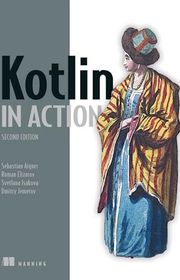
Kotlin in Action, Second Edition
For developers with object-oriented programming experience who want a thorough language course with substantial coroutine coverage. The updated edition connects fundamentals with asynchronous code, though it assumes programming knowledge and is not a complete Android-development curriculum.
What it's about
Members of the Kotlin team explain the language through examples covering types, functions, lambdas and interoperability. This second edition expands the treatment of coroutines, helping experienced programmers connect Kotlin’s core features with asynchronous application development.

Learn Kotlin Programming
A Comprehensive Guide to OOP, Functions, Concurrency, and Coroutines in Kotlin 1.3
For programmers maintaining Kotlin 1.3 code who want a broad account of that language version. Its coverage connects object-oriented and functional techniques with testing, though version-specific examples need checking before use in newer projects.
What it's about
Stephen Samuel and Stefan Bocutiu examine Kotlin 1.3 through object-oriented and functional programming, concurrency, and coroutines. Their guide also covers null safety, reflection, annotations, testing, and debugging, connecting language features with the practical work of developing and maintaining applications.
Sources
- 1
Kotlin books | Kotlin Documentation
kotlinlang.org
- 2
Best Kotlin Books [2026] — Beginner to Advanced | JobRoadmaps
jobroadmaps.com
- 3
10 Best Kotlin Books For Beginners and Experts (2024)
educba.com
- 4
Kotlin Books
goodreads.com
- 5
Best books for Kotlin
reddit.com
- 6
20 Best Kotlin Books for Beginner and Expert Developers
ubuntupit.com



Edited by
Software engineer whose passion for tracking book recommendations from podcasts inspired the creation of MRB.
Lead investor at 3one4 Capital whose startup expertise and love for books helped shape MRB and its growth.
Comments
Spotted a missing book, a wrong order or a mistake? Tell us and we'll fix this page.
We're a reading guide, not the author or publisher, so we can't send books or pass on messages.