
15 Best Banking Books
The best banking books, ranked by how many expert sources recommend each one, with notes to help readers choose between history, biography, and policy.
Our take
Banking books help explain institutions that connect savings, credit, investment, and government policy. Some follow individual bankers, others examine the political rules around lending, and many use a financial crisis to show what happens when risks accumulate. These books are strongest as histories and arguments. They offer different perspectives on banking rather than a single manual for working in a branch or managing personal finances.
For a character-driven introduction to the mortgage crisis, try The Big Short. Too Big to Fail focuses on the urgent decisions around collapsing institutions, while After the Music Stopped gives more attention to the response and its consequences. The House of Morgan provides a longer institutional history, and America's Bank explores the creation of the Federal Reserve. Readers interested in competing explanations and reforms can turn to Fragile by Design, The Bankers' New Clothes, or The End of Alchemy. Start with a narrative, then read a policy-focused book to compare its explanation.
15 books · 8 sources · Last updated
As an Amazon Associate, we earn from qualifying purchases (at no extra cost to you).
How to choose from this list
Skip to the full rankingIf you're new to the mortgage crisis: The Big Short → Too Big to Fail → After the Music Stopped
If you want a longer banking history: The House of Morgan → Lords of Finance
If you want to understand the Fed's origins: America's Bank
If you want to compare explanations and reforms: Fragile by Design → The Bankers' New Clothes → The End of Alchemy
If you're interested in bank leadership: Wriston → Last Man Standing
If you want an insider's trading-floor account: Liar's Poker
The 15 books, ranked
Ranked by how many expert sources name each book. Ties go to the book more people recommend.

For readers who want central banking explained through people and historical decisions. Its interwar focus gives monetary policy a vivid context, though the narrative centers on a small group of powerful men rather than a complete account of the Depression.
What it's about
Liaquat Ahamed examines the central bankers whose decisions helped shape the Great Depression. Following their attempts to restore financial stability after the First World War, he explores how monetary policies and international tensions contributed to economic disaster.
Also recommended by
1 person Raoul Pal recommended this book
Raoul Pal
"The best historical finance book I’ve ever read." - Raoul Pal
Raoul Pal's recommendation of this book

Too Big to Fail
For readers who prefer the 2008 crisis as a sequence of urgent decisions and negotiations. Its close view of executives and officials makes events immediate, though individual conversations receive more attention than structural economic explanations.
What it's about
Andrew Ross Sorkin reconstructs the 2008 financial crisis through the people at its center. His account follows Wall Street executives and Washington officials as they make urgent decisions with the global economy at stake.
Also recommended by
4 people Bill Gates recommended this book
Bill Gates
List of books Bill Gates read in 2011.
Bill Gates's recommendation of this book  Jon Stewart recommended this book
Jon Stewart
"The story of [the banks] that had to be bailed out." - Jon Stewart
Jon Stewart's recommendation of this book  Max Levchin recommended this book
Max Levchin
One of Max Levchin's answers to "what's your favourite business book you'd advise to young entrepreneurs?"
Max Levchin's recommendation of this book  John Collison recommended this book
John Collison
"I really liked [this book]." - John Collison
John Collison's recommendation of this book

For readers ready for a long history of banking institutions, personalities, and political influence. Following one financial dynasty creates continuity across generations, though the length and concentration on elite networks make it a substantial commitment.
What it's about
A panoramic history of the J. P. Morgan banking empire, tracing four generations of partners on both sides of the Atlantic. Chernow shows how the House of Morgan shaped corporate America, financed wars and recoveries, and adapted to regulation and market upheavals through the 1987 crash.
Also recommended by
2 people- Max Levchin recommended this book
Max Levchin
"Trying new routine: starting day by reading few pages from a history book. Currently, [this book]." - Max Levchin
Max Levchin's recommendation of this book  Trung Phan recommended this book
Trung Phan
"About the Banking industry." - Trung Phan
Trung Phan's recommendation of this book

For readers curious about why the United States created a central bank. The focus on negotiation and competing interests makes institutional design concrete, though it covers the Fed's origins rather than its subsequent operations or recent policy.
What it's about
Roger Lowenstein recounts the political and financial struggle to establish the Federal Reserve. He follows bankers, legislators, and Woodrow Wilson through competing visions for reform, connecting recurring banking crises with the negotiations behind America's central bank.
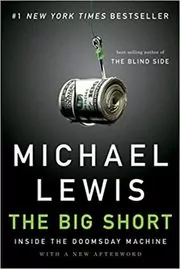
For newcomers who want a character-driven route into the mortgage crisis and financial incentives. Lewis makes complex instruments more approachable through outsiders' experiences, though the narrow viewpoint is less comprehensive than a full institutional history.
What it's about
This book follows a handful of outsiders who realized the subprime mortgage market was doomed, used credit default swaps to bet against it, and watched as the 2008 financial crisis exposed how fragile and reckless Wall Street had become.
Also recommended by
3 people David Heinemeier Hansson recommended this book
David Heinemeier Hansson
"A good one." - DHH
David Heinemeier Hansson's recommendation of this book  Malcolm Gladwell recommended this book
Malcolm Gladwell
Malcolm Gladwell recommended this book in the "Tools of Titans" book.
Malcolm Gladwell's recommendation of this book  Sheryl Sandberg recommended this book
Sheryl Sandberg
"[The author takes on] the 2008 Wall Street crash." - Sheryl Sandberg
Sheryl Sandberg's recommendation of this book

For readers who want banking stability explained through political institutions across countries. Its comparative framework moves beyond individual villains and crises, though the strong central argument and historical detail demand more attention than a narrative introduction.
What it's about
Charles Calomiris and Stephen Haber argue that banking stability and access to credit emerge from political bargains. Comparing the histories of Britain, the United States, Canada, Mexico, and Brazil, they examine how coalitions shape regulation, lending, and responsibility for financial losses.

For readers interested in bank leadership and Jamie Dimon's career. The close biographical focus makes management decisions easier to follow than a system-wide history, though access to its subject can narrow the distance between portrait and appraisal.
What it's about
Duff McDonald traces Jamie Dimon’s rise through finance and his leadership of JPMorgan Chase during the 2008 financial crisis. Interviews with Dimon, colleagues, friends, and family inform a portrait of his decisions, management style, and the institution he helped shape.

For readers who want a detailed case of banking failure before the mortgage crisis. The attention to operators, professional advisers, and regulators reveals several layers of responsibility, though its US savings-and-loan setting can require historical orientation.
What it's about
Martin Mayer investigates the collapse of the American savings and loan industry. The account examines the actions of thrift operators, accountants, lawyers, and regulators, tracing failures and dishonesty that produced enormous losses and left taxpayers confronting the cost.
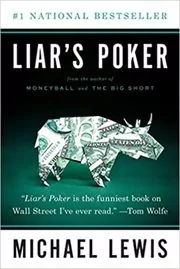
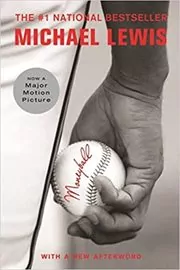
Liar's Poker
For readers interested in the culture and incentives inside an investment bank. The first-person account makes bond trading more immediate than an institutional history, though its satirical perspective and 1980s setting cannot stand in for today's banking industry.
What it's about
Part memoir, part exposé, this book describes Lewis’s years as a young bond salesman at Salomon Brothers, capturing the swagger, fear, and excess of 1980s Wall Street and the birth of the mortgage-backed securities boom.
Also recommended by
4 people Tim Ferriss recommended this book
Tim Ferriss
"A very exciting book." - Tim Ferriss
Tim Ferriss's recommendation of this book  Tim O’Reilly recommended this book
Tim O’Reilly
"A time machine into this place when our financial economy went crazily wrong." - Tim O’Reilly
Tim O’Reilly's recommendation of this book  Chamath Palihapitiya recommended this book
Chamath Palihapitiya
"Probably my favorite book." - Chamath Palihapitiya
Chamath Palihapitiya's recommendation of this book - Trung Phan recommended this book
Trung Phan
"About the Trading industry." - Trung Phan
Trung Phan's recommendation of this book

For readers who want the financial crisis connected with the policy response. The explanatory structure provides more economic context than a boardroom narrative, though evaluating the author's conclusions is easier with some familiarity with monetary policy.
What it's about
Alan S. Blinder reconstructs the financial crisis that began in 2007 and the government's response. He examines the breakdown of an increasingly complex financial system, emergency interventions, and the policy choices needed after the collapse.
Also recommended by
1 person Hillary Clinton recommended this book
Hillary Clinton
"[This]account of the financial crisis, is clear in its analysis and recommendations." - Hillary Clinton
Hillary Clinton's recommendation of this book

For readers looking for historical perspective on repeated American financial panics. Its range helps place any single crisis within a longer story, though the coverage ends well before modern securitization and the most recent banking failures.
What it's about
Robert Sobel examines major financial panics in American history, exploring their political, economic, and psychological causes. His accounts of investors, bankers, and public reactions show how different circumstances can produce crises and complicate attempts to find a universal explanation.
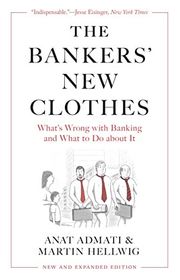
The Bankers' New Clothes: What's Wrong with Banking and What to Do about It
For readers who want a sustained argument about bank funding, risk, and regulation. It explains why capital requirements matter more directly than the biographies here, though its reform position is explicit and calls for careful consideration of competing views.
What it's about
Anat Admati and Martin Hellwig examine how banks are financed and how their risks affect the wider economy. They challenge arguments against stronger capital requirements and set out proposals for changing banking regulation and incentives.
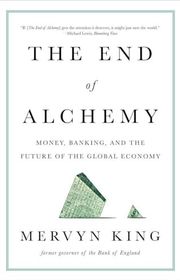
The End of Alchemy: Money, Banking, and the Future of the Global Economy
For readers who want a central banker's perspective on money, uncertainty, and financial fragility. The broad argument connects institutions with economic ideas, though it is a demanding policy discussion rather than a quick guide to how banks operate.
What it's about
Mervyn King examines the relationship between money, banking, and economic instability, drawing on his experience leading the Bank of England. He discusses uncertainty, the financial crisis, and proposals for a more resilient financial system.

For readers who want to question the design of banking rather than only study its failures. The proposed separation of money and credit gives the analysis a clear destination, though the reform agenda requires critical engagement rather than easy acceptance.
What it's about
Jonathan McMillan examines how the digital revolution changed banking and contributed to financial instability. The authors argue that incremental regulation is insufficient and outline an alternative financial system that separates money from credit and moves beyond conventional banking structures.

Wriston
Walter Wriston, Citibank, and the Rise and Fall of American Financial Supremacy
For readers interested in the expansion of international banking and Citibank's leadership. A career-centered account connects innovations with institutional risk, though the scale and detail make it less approachable than a shorter history of one crisis.
What it's about
Phillip Zweig traces Walter Wriston’s career and his transformation of Citibank into a global financial institution. The biography examines innovations in consumer banking, credit cards, and deregulation alongside controversial international lending and the risks that accompanied the bank’s expansion.
Sources
- 1
Banking Books - What Are They, List Of Top 13 Books [Updated 2026]
wallstreetmojo.com
- 2
Best Banking & Finance Books
bankersbyday.com
- 3
100 Best Banking Books of All Time
shortform.com
- 4
Top 10 Banking Books(Updated for 2023)
educba.com
- 5
397 Books on Banking
maxfieldonbanks.com
- 6
Banking Books
goodreads.com
- 7
10 of the Best Books About Banking
fool.com
- 8
10 Best Banking Books You Should Know (Selected in 2023)
wikiaccounting.com







Edited by
Software engineer whose passion for tracking book recommendations from podcasts inspired the creation of MRB.
Lead investor at 3one4 Capital whose startup expertise and love for books helped shape MRB and its growth.
Comments
Spotted a missing book, a wrong order or a mistake? Tell us and we'll fix this page.
We're a reading guide, not the author or publisher, so we can't send books or pass on messages.