
16 Best Internal Medicine Books
The best internal medicine books, ranked by how many expert sources recommend each one, with notes on who each text suits and where to start studying.
Our take
Internal medicine books serve several jobs: explaining disease, teaching clinical assessment, organizing revision, and providing concise references for specific questions. A medical student building foundations needs a different book from a resident revisiting an unfamiliar presentation. The choice is easier when you decide how much explanation you need and how you plan to use the text.
Davidson’s Principles and Practice of Medicine, Kumar and Clark’s Clinical Medicine, and Cecil Essentials of Medicine suit structured learning. Harrison’s Principles of Internal Medicine and Goldman-Cecil Medicine provide larger references for deeper reading. Bates’ Guide To Physical Examination and History Taking and Macleod’s Clinical Examination focus on assessment skills. For revision, consider Step-Up to Medicine or Case Files Internal Medicine; for concise reference, try Pocket Medicine or The Washington Manual of Medical Therapeutics. Start with your course or training level, then choose an edition and format that match that purpose.
16 books · 8 sources · Last updated
As an Amazon Associate, we earn from qualifying purchases (at no extra cost to you).
How to choose from this list
Skip to the full rankingIf you're building a medical-school foundation: Cecil Essentials of Medicine → Davidson's Principles and Practice of Medicine
If you want a comprehensive reference: Harrison's Principles of Internal Medicine → Goldman-Cecil Medicine
If you're learning history-taking and examination: Bates' Guide To Physical Examination and History Taking → Macleod's Clinical Examination → Hutchison's Clinical Methods
If you want active clerkship revision: Step-Up to Medicine → Case Files Internal Medicine
If you want a concise clinical reference: Pocket Medicine → The Washington Manual of Medical Therapeutics
If you're preparing for board examinations: The Johns Hopkins Internal Medicine Board Review
The 16 books, ranked
Ranked by how many expert sources name each book. Ties go to the book more people recommend.

Harrison's Principles of Internal Medicine
For medical students and physicians who want disease mechanisms connected with a broad clinical reference. Harrison’s gives explanations more room than the handbooks, though its size makes focused reading more practical than carrying it through rounds.
What it's about
This twenty-first edition of Harrison's develops internal medicine through clinical reasoning and applied pathophysiology. Its extensive coverage connects the presentation of disease with diagnosis and treatment, while explaining the scientific foundations and research developments relevant to medical practice.

For physicians and advanced trainees who want a substantial disease reference alongside clinical study. Goldman-Cecil combines mechanisms with clinical coverage, though the two-volume scale is less convenient for quick checks than a handbook.
What it's about
Edited by Lee Goldman and Andrew Schafer, this two-volume reference covers internal medicine and the care of adult patients. Chapters connect epidemiology and disease mechanisms with clinical presentation, diagnosis, and treatment across common and less familiar conditions.

CURRENT Medical Diagnosis and Treatment
For trainees who want concise disease-oriented summaries across adult medicine and primary care. Its reference structure helps targeted reading, though the annual editions make the publication date especially important when choosing a copy.
What it's about
This 2022 edition provides a reference to diagnosis and treatment across adult medicine and primary care specialties. Disease summaries, tables, and algorithms organize information for inpatient and outpatient settings, with coverage ranging from internal medicine to psychiatry, dermatology, and other clinical fields.

The Washington Manual of Medical Therapeutics
For trainees who want a portable, problem-oriented medicine reference. Its concise organization fits focused reading during clinical work, though the treatment summaries provide less background reasoning than a full textbook.
What it's about
This portable internal medicine reference presents concise approaches to diagnosing and managing commonly encountered conditions. Written by residents with faculty input, it uses tables, diagrams, algorithms, and treatment summaries to organize material for trainees and practitioners working in clinical settings.
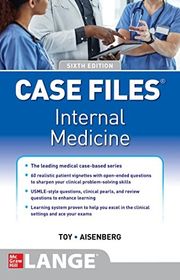
Case Files Internal Medicine
For students who learn best by reasoning through patient scenarios. The cases and accompanying questions turn reading into active review, though the selected presentations cannot provide the comprehensive coverage of a general medicine textbook.
What it's about
This case-based review presents internal medicine scenarios followed by discussion, clinical points, and comprehension questions. It helps students connect patient presentations with diagnostic reasoning and underlying concepts while preparing for clerkships and related examinations.
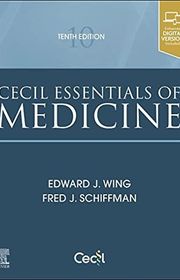
Cecil Essentials of Medicine
For medical students who want a teaching text between a pocket outline and a large reference. The focus on core medicine supports systematic learning, though it cannot match Goldman-Cecil’s breadth for detailed specialist questions.
What it's about
This internal medicine textbook connects the mechanisms of disease with clinical presentation, diagnosis, and management. Its organ-system coverage emphasizes core concepts for learners, bringing basic science and clinical material together in a more concise teaching format.

Davidson's Principles and Practice of Medicine
For medical students seeking an integrated account of disease mechanisms and clinical practice. Davidson’s offers a more manageable route than the largest references, though its British orientation can differ from locally taught terminology and practice.
What it's about
This twenty-third edition of Davidson's connects medical science with clinical practice in adult medicine. It explains disease mechanisms and clinical features across major specialties, then discusses recognition, investigation, diagnosis, and management for students, doctors, and other healthcare professionals.

Macleod's Clinical Examination
For students learning to connect a patient’s history with examination findings. Macleod’s provides a structured clinical-skills foundation, though its focus on assessment leaves less space for treatment than a general medicine textbook.
What it's about
This clinical skills textbook explains how to take a clear patient history, perform physical examinations, and recognize signs of disease. It connects the physical basis of findings with differential diagnosis and initial investigations, organized around body systems and specific patient situations.

Pocket Medicine
The Massachusetts General Hospital Handbook of Internal Medicine
For trainees who need a compact reference while studying ward problems. The bulleted format and tables make key material easy to locate, though the compressed entries assume background knowledge and offer limited explanation.
What it's about
Edited by Marc Sabatine, this handbook organizes internal medicine for quick reference during rounds and examination preparation. Bulleted lists, tables, algorithms, and references to influential papers provide focused coverage of common disorders across major medical subspecialties.

Step-Up to Medicine
For students organizing revision during medicine rotations and examination preparation. The outline format gathers core topics into a manageable review, though it offers less depth on mechanisms than a full medical textbook.
What it's about
Steven and Elizabeth Agabegi provide a concise review of medicine for clinical rotations, shelf examinations, and USMLE Step 2 preparation. Outlines, illustrations, algorithms, clinical pearls, and a practice examination help organize core knowledge and connect it with clinical reasoning.

Bates' Guide To Physical Examination and History Taking
For learners who want a systematic approach to interviewing and examining patients. The illustrated techniques support clinical-skills practice, though this is a companion to supervised examination rather than a comprehensive internal medicine treatment reference.
What it's about
Lynn Bickley and her colleagues explain patient interviews and physical examination through illustrated, step-by-step techniques. The guide connects examination findings with abnormalities and differential diagnoses, emphasizing communication, clinical reasoning, shared decision-making, and assessment across different stages of life.

Kumar and Clark's Clinical Medicine
For medical students who want specialty knowledge connected with broader questions of patient care. Its wide scope helps build a course foundation, though the British framing may need comparison with local teaching and protocols.
What it's about
Edited by Adam Feather and his colleagues, this tenth edition connects clinical medicine with the skills of diagnosis, history-taking, and examination. Specialty chapters sit alongside material on evidence-based practice, public health, frailty, multimorbidity, and other aspects of caring for patients.

For physicians preparing for internal medicine certification or recertification. Its summaries and review structure support an organized study plan, though the examination focus gives less room to first-principles explanations than a teaching textbook.
What it's about
This internal medicine review prepares physicians for certification and recertification through concise summaries of core topics. Tables, algorithms, highlighted information, and test-taking strategies help organize study across medical specialties, connecting examination preparation with knowledge relevant to general clinical practice.

The Only EKG Book You'll Ever Need
For learners who want a readable introduction to interpreting electrocardiograms. Thaler builds recognition through illustrations and clinical examples, though the cardiac focus makes it a supplement to the broader internal medicine books.
What it's about
Malcolm Thaler introduces electrocardiogram interpretation through illustrations, clinical scenarios, and sequential explanations. The book connects patterns on an EKG with cardiac and non-cardiac conditions, giving learners examples of how interpretation enters clinical practice.

Harrisons Manual of Medicine
For readers who want a concise companion to the larger Harrison’s reference. Tables and short entries suit focused review of inpatient problems, though the compressed treatment and older edition limit its usefulness as a sole resource.
What it's about
Derived from the twentieth edition of Harrison's Principles of Internal Medicine, this portable manual summarizes conditions encountered in general inpatient medicine. Concise text, tables, and clinical algorithms organize symptoms, emergencies, differential diagnoses, investigations, and therapeutic approaches for quick reference.

For students who want clinical assessment taught as a connected process. Hutchison’s links communication, examination, and investigations, though readers looking mainly for disease summaries will find a general medicine text more direct.
What it's about
Edited by Michael Glynn and William Drake, this guide teaches an integrated approach to clinical practice. It connects patient history and examination with investigations, emphasizing the doctor-patient relationship and the reasoning involved in choosing diagnostic and management approaches.
Sources
- 1
Top 12 Best Internal Medicine Books For Medical Students 2024
themdjourney.com
- 2
Internal Medicine Resource Guide: Clinical Medicine Books
libguides.tulane.edu
- 3
Residency and Board Review Best Books: Internal Medicine
residency-books.blogspot.com
- 4
Internal Medicine Books
goodreads.com
- 5
IM residency must have books
reddit.com
- 6
Can someone recommend a book for studying internal medicine that isn’t as massive as Harrison’s but also is not as tiny as a Pocket Guide?
reddit.com
- 7
Internal Medicine: Books & Case Files
guides.library.med.fsu.edu
- 8
Internal Medicine: eBooks
libraryguides.cchs.ua.edu




Edited by
Software engineer whose passion for tracking book recommendations from podcasts inspired the creation of MRB.
Lead investor at 3one4 Capital whose startup expertise and love for books helped shape MRB and its growth.
Comments
Spotted a missing book, a wrong order or a mistake? Tell us and we'll fix this page.
We're a reading guide, not the author or publisher, so we can't send books or pass on messages.