
13 Best Cardiology Books
Explore the best cardiology books, ranked by expert sources, with choices for medical students, ECG learners, nurses, and clinicians seeking deeper references.
Our take
Cardiology books serve very different purposes. A student learning how circulation works needs a different text from a clinician checking a specialist question, and an ECG introduction cannot cover the whole field. This selection includes foundations, clinical overviews, monitoring guides, course manuals, and larger references for more advanced study.
Cardiovascular Physiology Concepts explains normal function, while Pathophysiology of Heart Disease connects those foundations with disease. Readers beginning ECG interpretation can compare The ECG Made Easy with The Only EKG Book You’ll Ever Need. Mayo Clinic Cardiology offers a condensed review, whereas Braunwald’s Heart Disease and Fuster and Hurst’s The Heart provide much broader reference coverage. Choose an edition appropriate to your course or professional needs, especially for resuscitation material, and use clinical texts alongside current guidance and supervised training. Start with physiology and a teaching text if the subject is new; move to a larger reference when you have a specific question.
13 books · 8 sources · Last updated
As an Amazon Associate, we earn from qualifying purchases (at no extra cost to you).
How to choose from this list
Skip to the full rankingIf you are building medical-school foundations: Cardiovascular Physiology Concepts → Pathophysiology of Heart Disease
If you are beginning ECG interpretation: The ECG Made Easy → The Only EKG Book You'll Ever Need
If you want a clinical overview before deeper study: Clinical Cardiology Made Ridiculously Simple → Mayo Clinic Cardiology
If you need a comprehensive reference: Braunwald's Heart Disease → Fuster and Hurst's The Heart
If you are studying monitoring and cardiac-surgery care: Hemodynamic Monitoring Made Incredibly Visual → Manual of Perioperative Care in Adult Cardiac Surgery
The 13 books, ranked
Ranked by how many expert sources name each book. Ties go to the book more people recommend.
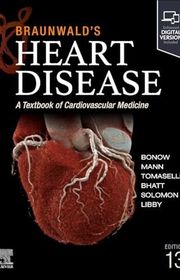
Braunwald's Heart Disease
For advanced trainees and clinicians who need a comprehensive cardiovascular reference, this text offers depth across the specialty. Its breadth supports targeted consultation, but the size makes it a poor substitute for an introductory course or concise review.
What it's about
This comprehensive cardiovascular-medicine reference brings together explanations of disease mechanisms, diagnosis, and management across the specialty. The thirteenth edition includes contributions from multiple specialists, providing a large resource for trainees and clinicians studying the foundations and practice of cardiology.

For medical students moving from physiology to disease, Lilly provides a structured bridge between mechanisms and clinical understanding. Its teaching focus makes a strong course companion, but advanced practice questions require more detailed references.
What it's about
Leonard Lilly and collaborating medical faculty introduce diseases of the heart and circulation by connecting basic cardiac physiology with clinical care. Illustrations and chapter summaries support students preparing to understand cardiovascular disease in patient encounters.
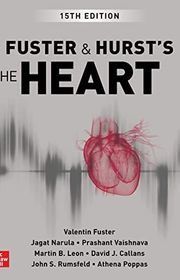
Fuster and Hurst's The Heart
For clinicians and advanced learners who want a broad reference organized around cardiovascular care, this text connects scientific foundations with clinical problems. Its detailed coverage supports specialist study, but newcomers may find a shorter teaching text easier to navigate.
What it's about
The fifteenth edition of this cardiovascular reference surveys the science and clinical practice of cardiology. Chapters address disease mechanisms, investigation, and patient care across a wide range of conditions, bringing together contributions from specialists in different areas of the field.

Clinical Cardiology Made Ridiculously Simple
For medical learners who want an approachable clinical overview, Chizner brings examination and diagnostic tools together in one place. The explanatory style helps orientation, but detailed management questions call for a larger, current reference.
What it's about
Michael Chizner surveys clinical cardiology through patient history, physical examination, ECG interpretation, imaging, and other diagnostic tests. The book connects these tools with common cardiac conditions and treatment approaches, using concise explanations to support medical students and clinicians reviewing the subject.

Rapid Interpretation of EKG's
For learners who prefer a gradual, illustrated approach to ECG interpretation, Dubin offers short explanations and repeated practice. The interactive format supports basic pattern recognition, but it is not a comprehensive cardiology reference and examples need clinical context.
What it's about
Dale Dubin introduces electrocardiogram interpretation through illustrated concepts and interactive exercises. Short explanations build progressively, while practice twelve-lead tracings and reference sheets help readers review the principles and test their understanding.

The Only EKG Book You'll Ever Need
For learners who want ECG principles connected to clinical examples, Thaler offers a readable progression with useful illustrations. Its approachable scope supports repeated review, but the confident title should not obscure the need for broader practice and context.
What it's about
Malcolm Thaler introduces electrocardiogram interpretation through illustrations, clinical scenarios, and sequential explanations. The book connects patterns on an EKG with cardiac and non-cardiac conditions, giving learners examples of how interpretation enters clinical practice.

Cardiovascular Physiology Concepts
For students who need to understand cardiovascular function before tackling disease, Klabunde offers a focused explanation with problems and clinical connections. Its compact scope supports independent study, but it provides less breadth than a clinical cardiology text.
What it's about
Richard Klabunde explains the principles underlying normal cardiovascular function through concise discussions, illustrations, and clinical cases. Problems connect physiological concepts with clinical situations, providing students a focused foundation for understanding the heart and circulation through independent study.

For trainees who want a broad cardiology review in a more condensed form, the Mayo text emphasizes organized clinical information. Its concise format supports revision, but complex subjects receive less depth than in the larger reference works.
What it's about
This textbook presents a broad overview of cardiology drawn from Mayo Clinic physicians and its cardiovascular review course. Tables and clinical observations support explanations of common and uncommon conditions, cardiac pharmacology, and the foundations of cardiovascular practice.
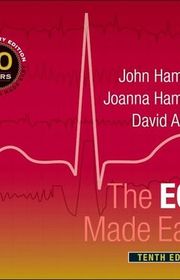
The ECG Made Easy
For beginners who want a compact introduction to ECG interpretation, this book keeps explanations focused and readable. The short format makes repeated study manageable, but it provides less practice and detail than a larger ECG reference.
What it's about
John Hampton, Joanna Hampton, and David Adlam introduce the principles of ECG interpretation through concise explanations and examples. The tenth edition connects the tracing with clinical situations, helping learners build an organized approach to understanding common patterns and their significance.

Advanced Cardiovascular Life Support (ACLS) Provider Manual
For learners enrolled in advanced resuscitation training, this manual organizes the material around a defined course. Its focused structure supports preparation, but readers must match the edition to their current course rather than rely on an older copy.
What it's about
The American Heart Association's course manual presents a systematic approach to cardiopulmonary emergencies for ACLS students and providers. It covers resuscitation cases and algorithms, airway management, related medications, post-arrest care, and the communication and teamwork involved in coordinated emergency responses.

Basic Life Support (BLS) Provider Manual
For learners preparing for basic life-support training, the manual keeps attention on the skills and teamwork expected in the course. Its narrow scope aids preparation, but the edition must match current course requirements and reading does not replace practical training.
What it's about
The American Heart Association's BLS course manual introduces basic resuscitation skills and the Chain of Survival. It covers CPR, automated external defibrillators, and responses involving adults, children, and infants, providing study material and reference information for learners preparing for provider training.

Hemodynamic Monitoring Made Incredibly Visual
For nurses and students who learn through diagrams, this guide makes monitoring equipment and physiological relationships easier to picture. The visual approach supports orientation, but it needs to accompany supervised practice and local clinical protocols.
What it's about
Rose Knapp introduces hemodynamic monitoring through photographs, diagrams, and other visual aids. The guide connects cardiopulmonary anatomy and physiology with monitoring concepts, equipment, and nursing responsibilities for students and nurses working in critical care.

Manual of Perioperative Care in Adult Cardiac Surgery
For clinicians studying adult cardiac-surgery care, Bojar provides a focused, outline-based reference across the perioperative period. Its practical organization aids consultation, but the specialist scope assumes clinical foundations and does not replace local protocols.
What it's about
Robert Bojar provides an outline-based reference to caring for adults undergoing cardiac surgery. The manual surveys cardiac surgical disease and perioperative management, linking the needs of surgical patients with the work of clinicians across their care team.
Sources
- 1
Cardiology / Vascular Disease: Core Books
libraryguides.missouri.edu
- 2
Cardiology: Books and E-Books
dal.ca.libguides.com
- 3
DNB Cardiology Curriculum: Recommended Text Books and Journals
nbe.edu.in
- 4
Recommendations by Board of Studies for Cardiology DM Programme
sctimst.ac.in
- 5
100 Best Cardiology Books of All Time
shortform.com
- 6
Cardiology Books
goodreads.com
- 7
Best Cardiology Books and Resources
studybuddymd.com
- 8
Can someone please recommend cardiology books to me.
reddit.com


Edited by
Software engineer whose passion for tracking book recommendations from podcasts inspired the creation of MRB.
Lead investor at 3one4 Capital whose startup expertise and love for books helped shape MRB and its growth.
Comments
Spotted a missing book, a wrong order or a mistake? Tell us and we'll fix this page.
We're a reading guide, not the author or publisher, so we can't send books or pass on messages.