
14 Best HTML Books
The best HTML books, ranked by how many expert sources recommend each one, with notes for visual beginners, young coders and readers building responsive sites.
Our take
HTML gives a web page its structure: headings, links, images, forms and meaningful sections. Most books here teach CSS alongside it, since styling and layout make those structures usable on a screen. Some also introduce JavaScript, which adds behavior. The right starting point depends on whether you want your first page, a broader course or a reference beside your editor.
HTML and CSS by Jon Duckett suits visual learners, while Head First HTML and CSS uses exercises and repetition. Learning Web Design takes a wider course approach, and Web Design Playground centers practice around projects. For children, Get Coding! gives the work a story and short missions. Once the basics feel familiar, Responsive Web Design with HTML5 and CSS concentrates on adaptable layouts.
Check the edition before buying: web standards and browser features keep changing, especially in the older books. Start with one beginner course and type its examples before adding a reference.
14 books · 10 sources · Last updated
As an Amazon Associate, we earn from qualifying purchases (at no extra cost to you).
How to choose from this list
Skip to the full rankingIf you're a visual beginner: HTML and CSS
If you want a full course: Learning Web Design
If you learn through projects: Web Design Playground
If you're choosing for a child: Get Coding!
If you know the basics: Responsive Web Design with HTML5 and CSS → HTML5 Pocket Reference
The 14 books, ranked
Ranked by how many expert sources name each book. Ties go to the book more people recommend.
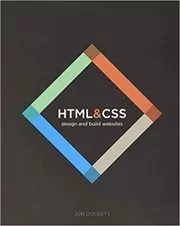
For visual beginners who want to understand a page before building one. Illustrated spreads make markup and styling approachable, though the older layout examples need supplementing when you move to current responsive techniques.
What it's about
Jon Duckett introduces HTML and CSS through illustrated explanations, photographs, and code examples. The book shows beginners how web pages are structured and styled, connecting markup and presentation with practical considerations for organizing content and designing a usable website.
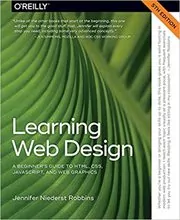
For beginners who want a substantial course with exercises rather than a quick overview. It connects markup with graphics, styling and responsive layouts, though its breadth asks for more study time than the shorter introductions.
What it's about
Jennifer Niederst Robbins introduces website creation through HTML, CSS, JavaScript, and web graphics. Exercises and quizzes build from page structure to responsive layouts, image optimization, and development tools, giving beginners practice in creating sites that adapt to different screen sizes.
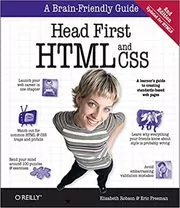
For beginners who learn by doing puzzles and working through visual examples. The conversational exercises give concepts more repetition than a reference guide, though the playful format takes space and some techniques show their age.
What it's about
Elisabeth Robson and Eric Freeman teach HTML and CSS through visual explanations and interactive exercises. The book develops the fundamentals of creating, styling, and maintaining web pages, helping beginners understand how markup and presentation work together across browsers and devices.

HTML and CSS QuickStart Guide
For first-time coders who want manageable explanations followed by practical work. It keeps the focus on HTML and CSS foundations, though readers seeking deeper JavaScript instruction will need another book after the basics.
What it's about
David DuRocher introduces HTML5 and CSS3 for first-time developers through manageable explanations and practical exercises. The guide builds a foundation in markup, styling, and responsive website development, encouraging readers to begin applying web design concepts as they learn.
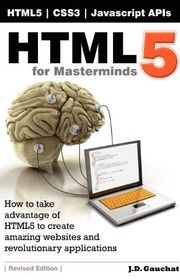
HTML5 for Masterminds
For readers who want to move from markup into browser applications. Its extended code examples connect HTML, CSS and JavaScript APIs, though the broad scope is demanding and older editions need substantial checks against current browser support.
What it's about
J. D. Gauchat develops website and browser-application skills through HTML, CSS and JavaScript examples. The course moves from document structure into styling and browser APIs, showing how separate technologies work together while progressively introducing more complex code.

For readers who already write HTML and want a compact reminder of elements and attributes. The lookup format is quicker than a full course, though its fixed publication date means newer specification changes need checking elsewhere.
What it's about
Jennifer Niederst Robbins provides a compact reference to HTML5 elements and attributes. Alphabetical entries include markup examples, content rules, and tag requirements, alongside character charts and an overview of APIs, reflecting the specifications available when this edition was prepared.

Murach's HTML5 and CSS3
For learners who want a course they can later use at their desk. Paired explanations and code examples make individual tasks easy to revisit, though the structured textbook approach feels less exploratory than the project books.
What it's about
Anne Boehm and Zak Ruvalcaba teach website development through HTML5 and CSS3 using a practical instructional format. This fourth edition covers the skills needed to build web pages and adds focused treatment of Flexbox and Grid for responsive layouts.

Responsive Web Design with HTML5 and CSS
Develop Future-Proof Responsive Websites Using the Latest HTML5 and CSS Techniques
For readers who know basic markup and want layouts that work across screen sizes. Its practical treatment of responsive CSS goes further than the introductory books, though the specific features covered depend on the edition.
What it's about
Ben Frain explains how to build responsive websites using HTML5 and CSS in this third edition. Practical examples explore adaptable layouts, CSS Grid, custom properties, variable fonts, forms, and visual effects for interfaces that work across different screen sizes.
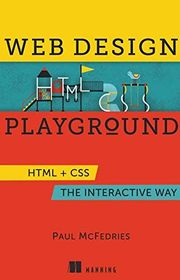
Web Design Playground
For beginners who learn best by making complete pages. Guided projects and an accompanying workspace put practice ahead of abstract explanation, though readers wanting a compact syntax reference may find the lesson sequence slower.
What it's about
Paul McFedries teaches HTML and CSS through projects such as product pages and photo galleries. A companion workspace supports experimentation while lessons introduce page structure, images, typography and responsive design without requiring readers to arrange their own hosting.

For children who need a reason to keep typing and experimenting. Short missions connect basic web skills to an adventure, though adults seeking a systematic reference will find the story and pace aimed at younger readers.
What it's about
Young Rewired State introduces children to HTML, CSS, and JavaScript through coding missions linked to an adventure involving jewel thieves. Bite-sized instructions guide readers toward building a website, an app, and a game while learning basic programming skills.

HTML, CSS and JavaScript All in One, Sams Teach Yourself
Covering HTML5, CSS3, and jQuery
For beginners who want structure, styling and scripting taught together. Short lessons show how the three languages cooperate, though learning them simultaneously adds complexity and the jQuery material reflects an older development approach.
What it's about
This integrated tutorial teaches beginners how HTML, CSS, and JavaScript work together to create websites. Short, practical lessons introduce structure, presentation, and behavior in context, building skills through step-by-step tasks using HTML5 and CSS3 alongside scripting.
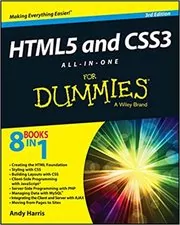
HTML5 and CSS3 All-in-One For Dummies
For readers who want one broad volume to dip into across a website project. Its separate minibooks extend into server-side topics, though that breadth brings older tools and less focus on HTML alone.
What it's about
Andy Harris presents web development through self-contained minibooks covering HTML5, CSS3, design, layout, and JavaScript. The guide also connects these foundations with PHP, MySQL, and Ajax, explaining how client-side and server-side techniques combine to produce dynamic websites.
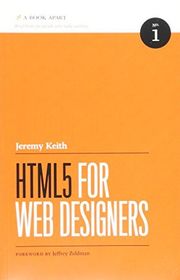
HTML5 for Web Designers
For designers who want a short explanation of why HTML5 changed everyday markup. It offers more context than a syntax handbook, though it is a historical introduction and cannot serve as a current reference by itself.
What it's about
Jeremy Keith explains the ideas behind HTML5 and their implications for web designers. This short introduction discusses changes to markup and browser capabilities, helping readers understand the transition rather than offering a comprehensive beginner course or an exhaustive technical reference.

For readers who prefer finding a specific task to following a long course. Visual steps help with forms, images and publishing, though the older edition needs current guidance when you reach newer layout practices.
What it's about
Elizabeth Castro and Bruce Hyslop introduce HTML and CSS through visual, task-based instructions. This eighth edition explains page structure, styles, images, links, forms, multimedia, and CSS3 effects, then covers testing, debugging, and publishing a website to the web.
Sources
- 1
15 HTML Books for Beginners and Advanced Coders
itechguides.com
- 2
HTML Books
educba.com
- 3
Html Css Books
goodreads.com
- 4
Looking for a good reference-style HTML boom
reddit.com
- 5
Any book Suggestions to learn html?
reddit.com
- 6
15 Best HTML Books for Beginners and Advanced Coders
sitepoint.com
- 7
100 Best HTML Books of All Time
shortform.com
- 8
Html and Css Books
goodreads.com
- 9
Best HTML, CSS, and JavaScript Books for Learning Web Development
bookclarity.org
- 10
Web Design References: Books
d.umn.edu


Edited by
Software engineer whose passion for tracking book recommendations from podcasts inspired the creation of MRB.
Lead investor at 3one4 Capital whose startup expertise and love for books helped shape MRB and its growth.
Comments
Spotted a missing book, a wrong order or a mistake? Tell us and we'll fix this page.
We're a reading guide, not the author or publisher, so we can't send books or pass on messages.