
7 Best Web Design Books
The best web design books, ranked by how many expert sources recommend each one, with notes for beginners learning code, visual design and website usability.
Our take
Web design brings together page structure, visual choices and the experience of using a site. A useful learning path depends on what you already know. Someone who can write HTML may need help with typography and spacing, while an experienced visual designer may need practice translating a layout into working pages.
Learning Web Design offers a broad introduction to the code behind websites. HTML and CSS explains the basics visually, and Web Design Playground puts practice at the center. For appearance, The Principles of Beautiful Web Design introduces layout, color and type. Don’t Make Me Think focuses on whether visitors can understand and navigate what you have made. Responsive Web Design and Mobile First explore designing for different screens and constraints, though their older technical examples need context.
Start with Learning Web Design if you need coding foundations, or Don’t Make Me Think if you already build sites and want clearer decisions. Use current editions for technical study.
7 books · 9 sources · Last updated
As an Amazon Associate, we earn from qualifying purchases (at no extra cost to you).
How to choose from this list
Skip to the full rankingIf you are learning to build websites: Learning Web Design → Web Design Playground
If you learn best through visual explanations: HTML and CSS
If you want stronger layouts and visual choices: The Principles of Beautiful Web Design
If you want clearer navigation and usability: Don't Make Me Think
If you want to understand design across screens: Mobile First → Responsive Web Design
The 7 books, ranked
Ranked by how many expert sources name each book. Ties go to the book more people recommend.
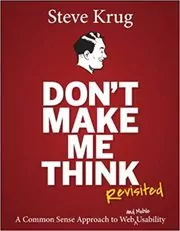
For anyone who builds or evaluates websites and wants clearer navigation and fewer moments of confusion. Its brief, illustrated explanations make usability approachable, but it does not teach coding or provide a complete research curriculum.
What it's about
Steve Krug explains how to design websites people can navigate and understand with little effort. Using practical examples, he examines information design, scanning, usability testing, and mobile experiences, emphasizing clarity in everyday interactions.
Also recommended by
5 people Ev Williams recommended this book
Ev Williams
On the "books read" section of Ev Williams' GoodReads profile.
Ev Williams's recommendation of this book  Brian Armstrong recommended this book
Brian Armstrong
"A framework to simulate how customers experience your product, especially the moments of confusion." - Brian Armstrong
Brian Armstrong's recommendation of this book  Jeff Atwood recommended this book
Jeff Atwood
"The single best book on usability I've ever read." - Jeff Atwood
Jeff Atwood's recommendation of this book  Nick Ganju recommended this book
Nick Ganju
"About usability and making software and user interfaces that are friendly to people." - Nick Ganju
Nick Ganju's recommendation of this book  Garry Tan recommended this book
Garry Tan
"The simplest book I recommend everyone to read when they want to do design." - Garry Tan
Garry Tan's recommendation of this book
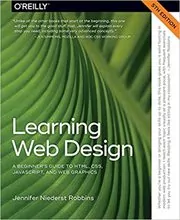
For beginners who want a substantial course connecting markup, styling, scripting and web graphics. Its breadth supports a rounded foundation, but it takes more sustained practice than a short guide to design principles.
What it's about
Jennifer Niederst Robbins introduces website creation through HTML, CSS, JavaScript, and web graphics. Exercises and quizzes build from page structure to responsive layouts, image optimization, and development tools, giving beginners practice in creating sites that adapt to different screen sizes.
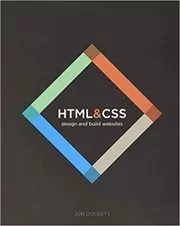
For visual learners who want an approachable explanation of how pages are structured and styled. Its illustrated format lowers the initial barrier, but the older examples need supplementing with current layout techniques and reference material.
What it's about
Jon Duckett introduces HTML and CSS through illustrated explanations, photographs, and code examples. The book shows beginners how web pages are structured and styled, connecting markup and presentation with practical considerations for organizing content and designing a usable website.

The Principles of Beautiful Web Design
For developers and beginning designers who can build pages but want more confidence in their appearance. It connects layout, color and typography with concrete choices, but it is an introduction rather than advanced design training.
What it's about
This illustrated introduction explains how to create visually appealing websites through layout, color, texture, typography, and imagery. It follows the design process from initial exploration to implementation and includes responsive design techniques, interface patterns, and a sample project.
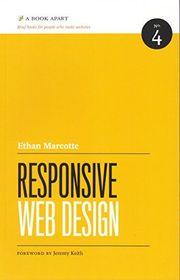
Responsive Web Design
For readers who know basic HTML and CSS and want to understand the thinking behind adaptable layouts. Its concise explanation establishes the foundation, but newer CSS tools and browser behavior require additional current references.
What it's about
Ethan Marcotte explains an approach to websites that adapt to different screen sizes. He connects flexible grids, flexible images and media queries, showing how a layout can respond to the viewing environment rather than target one fixed canvas.
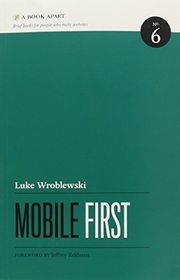
Mobile First
For designers deciding what deserves priority on a small screen. It makes a focused case for treating constraints as design inputs, but its device examples and market figures belong to an earlier mobile era.
What it's about
Luke Wroblewski argues for beginning website and application design with mobile needs. He examines how limited space and mobile capabilities affect organization, actions, inputs and layout, connecting design priorities with the conditions in which people use a product.
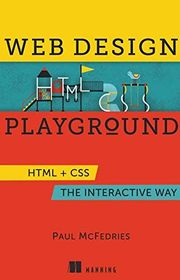
Web Design Playground
For beginners who learn by changing code and seeing the result. Its projects provide more guided practice than a principles-only book, but working through them requires time at a computer rather than passive reading.
What it's about
Paul McFedries teaches HTML and CSS through projects such as product pages and photo galleries. A companion workspace supports experimentation while lessons introduce page structure, images, typography and responsive design without requiring readers to arrange their own hosting.
Sources
- 1
Best Web Design Books That Still Matter in 2026
diviflash.com
- 2
15 Best Books on Web Design You Must Read
elementor.com
- 3
The 10 Best Web Design Books (+Recommendations)
blog.hubspot.com
- 4
The 13 Best Books to Read for Web and Graphic Designers
flux-academy.com
- 5
Web Design Books
goodreads.com
- 6
10 Best Web Design Books Ever Written
loop11.com
- 7
Web design book recommendations?
reddit.com
- 8
Any good resources/books to learn modern web design?
reddit.com
- 9
Good Books
webstandards.org


Edited by
Software engineer whose passion for tracking book recommendations from podcasts inspired the creation of MRB.
Lead investor at 3one4 Capital whose startup expertise and love for books helped shape MRB and its growth.
Comments
Spotted a missing book, a wrong order or a mistake? Tell us and we'll fix this page.
We're a reading guide, not the author or publisher, so we can't send books or pass on messages.