
33 Best Military Books
The best military books, ranked by how many expert sources recommend each one, with notes on who each suits, from strategy readers to combat memoir fans.
Our take
Military books can explain why wars begin, how armies operate, or what service feels like to the people involved. Those are different questions. A commander’s memoir helps you follow decisions, while reporting from a small unit reveals the uncertainty those decisions create on the ground. This selection leans toward American experience, with strategy and history offering a wider frame.
Choose a narrative history such as The Guns of August if you want events and leadership placed in context. Turn to With the Old Breed for a demanding personal account, or Black Hawk Down for a reporter’s reconstruction of a single battle. Books about procurement and foreign policy shift attention toward the institutions behind combat. Read participant accounts alongside independent histories when you want more than one perspective. For a first book, start with the period or kind of military experience you most want to understand.
33 books · 9 sources · Last updated
As an Amazon Associate, we earn from qualifying purchases (at no extra cost to you).
How to choose from this list
Skip to the full rankingIf you’re new to military history: The Guns of August → The Longest Day
If you want a soldier’s perspective: With the Old Breed → One Bullet Away
If you want modern war reporting: Black Hawk Down → Generation Kill
If you want to study strategy: The Art Of War → On War
If you want institutional criticism: The Pentagon Wars → America's War for the Greater Middle East
The 33 books, ranked
Ranked by how many expert sources name each book. Ties go to the book more people recommend.

We Were Soldiers Once . . . and Young
Ia Drang—The Battle That Changed the War in Vietnam
For readers who want command decisions tested against soldiers’ experiences in battle. Its combination of participant testimony and reconstruction offers several perspectives, though the detailed fighting can be hard to follow without maps.
What it's about
Harold Moore and Joseph Galloway recount the 1965 fighting at Ia Drang, drawing on their experiences and interviews with participants. Their history examines the battles at X-Ray and Albany through command decisions, individual actions, and the experiences of opposing forces.
Also recommended by
1 person Jocko Willink recommended this book
Jocko Willink
Jocko Willink covered this book in "Jocko Podcast" Ep. 105
Jocko Willink's recommendation of this book

For readers who want a closely reconstructed account of one modern battle. Its reporting connects individual experiences with tactical confusion, though the intense focus on the firefight gives limited space to Somalia’s larger history.
What it's about
Bowden reconstructs the 1993 American military raid in Mogadishu that became a prolonged urban battle after helicopters were shot down. Soldiers' experiences reveal the confusion and danger of a mission that rapidly outgrew its original objectives.

The Art Of War
For readers looking for a short introduction to strategic thinking. Its compressed observations reward repeated reading, though the distance between ancient warfare and modern situations makes a good translation with commentary especially useful.
What it's about
Sun Tzu's military treatise examines planning, leadership, deception, terrain, and adapting to an opponent. Its thirteen chapters consider how preparation and strategic judgment can secure an advantage while limiting the costs and dangers of warfare.
Also recommended by
12 people- Jocko Willink recommended this book
Jocko Willink
Jocko Willink covered this book in "Jocko Podcast" Ep. 23
Jocko Willink's recommendation of this book  Neil deGrasse Tyson recommended this book
Neil deGrasse Tyson
"To learn that the act of killing fellow humans can be raised to an art." - Neil deGrasse Tyson
Neil deGrasse Tyson's recommendation of this book  Marc Benioff recommended this book
Marc Benioff
"Served me well. [...] Advocates keeping one’s cool at all times." - Marc Benioff
Marc Benioff's recommendation of this book  Evan Spiegel recommended this book
Evan Spiegel
"After meeting Mark Zuckerberg, [Evan Spiegel] immediately bought every [Snapchat] employee a copy of 'The Art Of War'." - Business Insider
Evan Spiegel's recommendation of this book  Dave Camarillo recommended this book
Dave Camarillo
"Another [book] I have to mention." - Dave Camarillo
Dave Camarillo's recommendation of this book  Ryan Petersen recommended this book
Ryan Petersen
Ryan Petersen mentioned this book on Twitter.
Ryan Petersen's recommendation of this book +6
More recommendations
- Travis Kalanick
"It became [Travis Kalanick's bible]." - Mike Isaac
- Vlad Tenev
"I like the classics such as The Republic by Plato and The Art of War by Sun Tzu." - Vlad Tenev
- Fred Wilson
"Has to get onto my list." - Fred Wilson
- Lex Fridman
Lex Fridman mentioned this book on Instagram.
- Elon Musk
"I've read [this book] many times." - Elon Musk
- Patrick Bet-David
Patrick Bet-David recommended this book on his website.
- Travis Kalanick

For readers who want the emotional and physical realities of infantry combat. Its personal candor makes it a strong companion to campaign histories, though the violence and sustained strain make difficult reading.
What it's about
Marine Eugene Sledge recounts fighting at Peleliu and Okinawa during World War II. Drawing on notes kept during his service, he describes combat’s brutality, fear, exhaustion, and the bonds formed among men struggling to survive.
Also recommended by
3 people- Jocko Willink recommended this book
Jocko Willink
Jocko Willink covered this book in "Jocko Podcast" Ep. 10
Jocko Willink's recommendation of this book  Paul Graham recommended this book
Paul Graham
"Read this book." - Paul Graham
Paul Graham's recommendation of this book  Howard Stern recommended this book
Howard Stern
"I didn’t understand the full impact of what these guys did at Okinawa fighting the Japanese. That had a big impact on me." - Howard Stern
Howard Stern's recommendation of this book
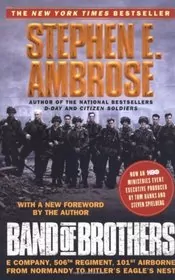
Band of Brothers
E Company, 506th Regiment, 101st Airborne from Normandy to Hitler's Eagle's Nest
For readers drawn to the bonds within a fighting unit. Its company-level perspective makes individual soldiers easy to follow, though the close identification with its subjects leaves less room for a wider view of the war.
What it's about
Here Ambrose tells the story of Easy Company of the 506th Parachute Infantry Regiment, from training in Georgia through D-Day, the Ardennes, and into Germany, following a single group of soldiers as they endure combat, loss, and unexpected moments of camaraderie.

The Guns of August
The Pulitzer Prize-Winning Classic About the Outbreak of World War I
For readers who want to understand how leaders stumble into a major war. It makes high-level decisions unusually readable, though its focus on the opening crisis leaves the longer conflict to other histories.
What it's about
Barbara W. Tuchman recounts the opening month of World War I and the decisions that brought European powers into conflict. Beginning with Edward VII's funeral, she traces preparations, personalities, and events that shaped the war's course.
Also recommended by
1 person Doris Kearns Goodwin recommended this book
Doris Kearns Goodwin
"So beautifully written. But more importantly, for me, she was writing about battles and military stuff and things that you don’t imagine that sometimes a woman might be so adept at." - Doris Kearns Goodwin
Doris Kearns Goodwin's recommendation of this book

Generation Kill
For readers who want an embedded reporter’s view of unit culture and command friction. Its attention to conversation and everyday behavior distinguishes it from strategic histories, though the abrasive language and narrow viewpoint will not suit everyone.
What it's about
Evan Wright reports from his time embedded with Marine reconnaissance troops during the 2003 invasion of Iraq. Close portraits of the young servicemen follow combat, camaraderie, command decisions, and the physical and moral pressures encountered during the invasion.

On War
For readers ready to study war as an instrument of political purpose. Its sustained theoretical argument offers more depth than a short strategy classic, though the unfinished work demands patience and historical context.
What it's about
Carl von Clausewitz examines war's nature, internal dynamics, and relationship to political policy. His treatise considers the theory and practice of military conflict, including strategy, uncertainty, and the demands placed on those conducting it.
Also recommended by
4 people Ryan Holiday recommended this book
Ryan Holiday
Ryan Holiday recommended this book on his blog.
Ryan Holiday's recommendation of this book - Dave Camarillo recommended this book
Dave Camarillo
Dave Camarillo left this book at Tim Ferriss' house.
Dave Camarillo's recommendation of this book  Nelson Mandela recommended this book
Nelson Mandela
"[The author's] central thesis, that war was a continuation of diplomacy by other means, dovetailed with my own instincts." - Nelson Mandela
Nelson Mandela's recommendation of this book  Elon Musk recommended this book
Elon Musk
"There should be a chapter saying 'if you have a decisive technology advantage, you can actually win with minimal casualties.'" - Elon Musk
Elon Musk's recommendation of this book

For readers interested in military leadership from a junior officer’s perspective. It offers more reflection on responsibility than many combat memoirs here, though its lessons come from one Marine’s particular career.
What it's about
Nathaniel Fick recounts his training as a Marine officer and his service in Afghanistan and Iraq. His memoir follows the demands of reconnaissance work and combat leadership, including the responsibility of protecting his men while questioning the missions assigned to them.
Also recommended by
1 person Peter Attia recommended this book
Peter Attia
One of Peter Attia's answers to "is there a book that you’ve read more than once?"
Peter Attia's recommendation of this book

The Personal Memoirs of Ulysses S. Grant
For readers interested in how a senior commander explains his decisions. Its direct account links campaigns with practical judgment, though it presents Grant’s perspective rather than an independent assessment of his record.
What it's about
Ulysses S. Grant recounts his early life and military service, focusing on the Mexican War and the American Civil War. His firsthand narrative explains campaigns, command decisions, and his perspective on the people and conflicts he encountered.
Also recommended by
2 people Jamie Dimon recommended this book
Jamie Dimon
On Jamie Dimon's list of favorite books.
Jamie Dimon's recommendation of this book 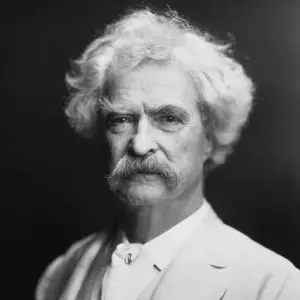 Mark Twain recommended this book
Mark Twain
Mark Twain recommended this book in a letter.
Mark Twain's recommendation of this book

For readers curious about special operations preparation and execution from inside a team. It provides a participant’s view unavailable in general histories, though its narrow perspective cannot settle every question about the operation.
What it's about
Owen recounts his career as a Navy SEAL and his participation in the mission that killed Osama bin Laden. Written with Kevin Maurer, the memoir describes training, teamwork, earlier deployments, and the preparation and execution of the operation.
Also recommended by
1 person- Paul Graham recommended this book
Paul Graham
"Simultaneously reading Rousseau's Confessions and [this book]. Triangulating..." - Paul Graham
Paul Graham's recommendation of this book

For readers interested in arguments about the psychological burden of combat. It offers a framework for thinking about killing and training, though its broad claims call for critical reading alongside other research.
What it's about
Dave Grossman examines the psychological consequences of killing in combat and the training used to prepare soldiers for it. Interviews and historical accounts support his arguments about resistance, conditioning, trauma, and the relationship between military practices and civilian violence.
Also recommended by
1 person Noah Kagan recommended this book
Noah Kagan
"I really enjoy military books. This is a fascinating book about if military people kill as much as you think." - Noah Kagan
Noah Kagan's recommendation of this book
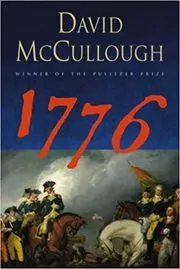
1776
For newcomers who want an accessible introduction to the American Revolution through military leadership. Its narrative makes a precarious year easy to follow, though it covers only a small part of the wider war.
What it's about
In 1776 McCullough focuses on the year America’s fate hung in the balance, following George Washington and his ragged army through early victories, crushing defeats around New York, and the surprise attacks at Trenton and Princeton. It offers a ground‑level view of the Revolution’s most precarious months.

For readers interested in how a combat role intersects with family life and personal identity. Its firsthand voice is direct, though it offers a strongly individual viewpoint rather than an independent history of Iraq.
What it's about
Chris Kyle recounts his Navy SEAL service and combat deployments to Iraq with Scott McEwen and Jim DeFelice. His memoir follows sniper assignments, fellow servicemen, and the strain of war, including his wife Taya's perspective on family life.
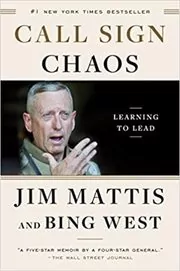
For readers interested in leadership as responsibility expands from small units to senior command. Its career perspective connects practical experience with reflection, though it presents one commander’s judgments rather than a neutral leadership textbook.
What it's about
Mattis traces his path from junior Marine officer to Secretary of Defense, using battles, command decisions, and hard mistakes to show how leadership changes at every level. It is part memoir, part practical lesson in preparation, judgment, and working with allies.

Dispatches
For readers who want war reporting shaped by voice, atmosphere, and memory. It conveys disorientation more directly than an orderly campaign history, though its fragmented style makes it a poor starting point for chronology.
What it's about
Michael Herr recounts his experiences reporting from Vietnam, focusing on combat and the soldiers living through it. Fragmented scenes, conversations, and reflections convey fear, dark humor, and the disorienting culture of war rather than a conventional campaign history.
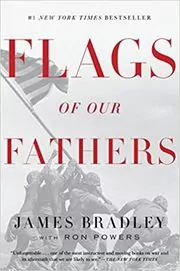
Flags of Our Fathers
For readers interested in the distance between public heroism and the lives behind an image. Its personal approach complements battle narratives, though the original account needs context from later corrections to the flag-raisers’ identities.
What it's about
Drawing on family letters and photographs, James Bradley and Ron Powers examine the men associated with Iwo Jima's famous flag-raising photograph. Their nonfiction account connects the battle with the personal lives behind an enduring public image.

For readers who want to understand battle through the people exposed to it. Its comparative historical approach bridges memoir and campaign narrative, though its three British battles leave many military traditions outside the discussion.
What it's about
John Keegan examines combat through the experiences of ordinary soldiers at Agincourt, Waterloo, and the Somme. Comparing these battles, he explores the physical conditions, weapons, pressures, and human responses that conventional accounts of military strategy can overlook.

Lone Survivor
For readers who want a survivor’s account of special operations and dependence on others under extreme pressure. Its personal perspective supplies immediacy, though a participant memoir should be paired with independent accounts of the mission.
What it's about
Written with Patrick Robinson, this memoir by Navy SEAL Marcus Luttrell recounts the brutal 2005 mission in Afghanistan known as Operation Red Wings, his survival as the lone team member left alive, and the villagers who risked everything to shelter him.
Also recommended by
2 people Larry Ellison recommended this book
Larry Ellison
"[Larry Ellison picked up] his Kindle so he could finish reading [this book]. Larry had noted a page: 'The real battle is won in the mind.'" - Julian Guthrie
Larry Ellison's recommendation of this book  Marc Andreessen recommended this book
Marc Andreessen
"The film was fine but the book is unreal; incredibly vivid story of superlative American heroes." - Marc Andreessen
Marc Andreessen's recommendation of this book

A Higher Call
An Incredible True Story of Combat and Chivalry in the War-Torn Skies of World War II
For readers seeking a military story centered on mercy and personal conscience. It provides a more intimate moral focus than campaign histories, though its emphasis on two airmen offers a narrow view of the air war.
What it's about
In December 1943, American bomber pilot Charlie Brown meets German ace Franz Stigler in a moment that should end in death but does not. Makos turns their unlikely connection into a moving story about mercy, duty, and memory.

A Narrative of a Revolutionary Soldier
Some Adventures, Dangers, and Sufferings of Joseph Plumb Martin
For readers who want ordinary military service rather than famous generals. Its humor and attention to hardship distinguish it from command memoirs, though recollections written long afterward need the context of other histories.
What it's about
Joseph Plumb Martin recalls his service in the Continental Army during the American Revolution. Battles and military hardship sit alongside accounts of hunger, exhaustion, and humor, offering the conflict from the perspective of an ordinary soldier living through it.

For readers seeking a critical overview of American military involvement across the Middle East. It connects interventions that separate battle accounts leave apart, though its strong argument benefits from comparison with competing interpretations.
What it's about
Andrew J. Bacevich examines decades of American military campaigns in the Greater Middle East, connecting Beirut, Somalia, Iraq, and other interventions. He argues that these operations form a continuing war shaped by mistaken assumptions about what military power can achieve.

For readers who want an enlisted soldier’s view of service across several Vietnam assignments. Its breadth within one career sets it apart from single-battle accounts, though it remains a personal recollection rather than a comprehensive history.
What it's about
John Leppelman recalls three tours in Vietnam, serving as a paratrooper, on Army riverboats, and with reconnaissance troops. His account follows combat, friendships, and frustrations with leadership and equipment, describing the war through several different frontline roles.
For readers interested in the fate of captured airmen and the pressures of the Pacific war. Its focus on people adds intimacy to broader histories, though disturbing material makes it an especially demanding read.
What it's about
Bradley investigates the fate of American airmen captured near Chichi Jima during World War II. Drawing on formerly secret records, this nonfiction account places their experiences alongside George H. W. Bush's rescue and the wider Pacific conflict.

If You Survive
For readers who want the responsibilities of a frontline infantry officer made concrete. Its sustained personal perspective complements broader European campaign histories, though it offers limited access to events beyond the author’s experience.
What it's about
George Wilson recalls infantry combat from Normandy through the closing months of World War II. His account follows fighting across France and Belgium, the Siegfried Line, and the Battle of the Bulge, emphasizing leadership, casualties, and the burden of survival.

For readers who want naval history connected to the politics of building a new country. It offers a useful alternative to the land warfare dominating this list, though nautical terminology can slow newcomers.
What it's about
Ian Toll traces the founding of the United States Navy through the decision to construct six frigates. Political disagreements, life at sea, the campaign against Tripoli, and the War of 1812 connect the ships with the young republic's ambitions.

The Forever War
For readers seeking war reporting that includes civilians as well as fighters. Its shifting scenes convey uncertainty and human consequences, though the fragmentary structure offers less chronological guidance than a conventional history.
What it's about
Dexter Filkins recounts reporting in Afghanistan and Iraq, placing combatants and civilians at the center of his account. Encounters, observed violence, and the uncertainty of daily life explore the human consequences of conflict and the difficulty of understanding war.

The Good Soldiers
For readers who want to stay with one unit long enough to see combat’s cumulative effects. Its close reporting connects soldiers with their families, though that intimacy leaves broader strategic debates mostly outside the frame.
What it's about
An immersive account of the 2007 surge in Baghdad, centered on the 2-16 Rangers and Lt. Col. Ralph Kauzlarich. Finkel stays close to the soldiers on the ground, showing how policy talk turns into fear, loss, and daily survival.
The Liberator
One World War II Soldier's 500-Day Odyssey from the Beaches of Sicily to the Gates of Dachau
For readers who want to follow the European war through one officer’s experience. Its continuous personal thread makes a long campaign approachable, though a single central figure cannot represent every soldier’s perspective.
What it's about
This book follows U.S. Army officer Felix Sparks and the 45th Infantry Division through four invasions, brutal fighting across Europe, and the liberation of Dachau. It is a close, unsparing portrait of leadership, exhaustion, and survival.

The Longest Day
For readers who want an accessible account of D-Day across several viewpoints. Its reconstruction brings a complex operation within reach, though later histories offer more recent scholarship and a fuller account of the campaign.
What it's about
Cornelius Ryan recreates the hours surrounding the Allied invasion of Normandy on D-Day. Accounts of preparation, uncertainty, combat, and civilian experience bring the operation into focus through the people caught in its unfolding events.

For readers interested in the consequences of decisions made far above a remote outpost. Its attention to soldiers and families keeps institutional failure human, though the accumulation of people and events demands concentration.
What it's about
Tapper reconstructs the rise and fall of Combat Outpost Keating and the 2009 Battle of Kamdesh in Afghanistan. By following the soldiers and families caught in it, he turns strategy failures into a deeply human war story.

For readers curious about weapons development, testing, and military bureaucracy. Its insider perspective supplies a different kind of institutional history from combat accounts, though it advances a participant’s case rather than a detached evaluation.
What it's about
James Burton examines military reformers' challenges to Pentagon practices from the late 1960s through the mid-1980s. Drawing on his insider experience, he criticizes weapons procurement and recounts efforts to make equipment testing reflect the dangers of actual combat.

For readers who want a military survival biography that extends into the aftermath of captivity. Its focus on endurance makes an accessible entry point, though it offers little operational or strategic analysis.
What it's about
Laura Hillenbrand follows Olympic runner Louis Zamperini from a rough California boyhood to a plane crash, 47 days adrift in the Pacific, and brutal POW camps. It is a tense, deeply human survival story about endurance, trauma, and forgiveness.
Sources
- 1
The Best Military Books: The Complete Master Guide (2026)
militarymachine.com
- 2
19 of the Best Military Non-Fiction Books Everyone Should Read
mybaseguide.com
- 3
Best military non-fiction books of all-time
wearethemighty.com
- 4
100 Best Military Books of All Time
shortform.com
- 5
Military Books
goodreads.com
- 6
Favorite Books about the Military
reddit.com
- 7
Military History Books
fivebooks.com
- 8
The best books on Battles
fivebooks.com
- 9
A book about the US military?
reddit.com







Edited by
Software engineer whose passion for tracking book recommendations from podcasts inspired the creation of MRB.
Lead investor at 3one4 Capital whose startup expertise and love for books helped shape MRB and its growth.
Comments
Spotted a missing book, a wrong order or a mistake? Tell us and we'll fix this page.
We're a reading guide, not the author or publisher, so we can't send books or pass on messages.