
21 Best American History Books
The best American history books, ranked by how many expert sources recommend each one, with guidance on broad surveys, major periods and focused studies.
Our take
American history can be approached through national politics, everyday lives, military campaigns or the people whose experiences were left out of older accounts. A broad survey provides a timeline, but a focused study often makes the choices and pressures of a particular period easier to understand. These books offer both kinds of reading.
These Truths covers the national story in one volume, while A People’s History of the United States organizes that story around power and resistance. 1491 looks across the Americas before Columbus. For more concentrated histories, 1776 follows a critical year of the Revolution, Battle Cry of Freedom connects the Civil War with the conflicts that produced it, and The Warmth of Other Suns follows the Great Migration through individual lives.
Start with a survey if you need the chronology, then choose a period or perspective to explore. Reading books with different questions gives a fuller picture than expecting one account to cover everything.
21 books · 9 sources · Last updated
As an Amazon Associate, we earn from qualifying purchases (at no extra cost to you).
How to choose from this list
Skip to the full rankingIf you want a one-volume starting point: These Truths
If you want to compare national interpretations: These Truths → A People's History of the United States
If you want Indigenous perspectives: 1491 → An Indigenous Peoples' History of the United States
If you want the Revolution: 1776 → Washington's Crossing
If you want the Civil War and its aftermath: Battle Cry of Freedom → Reconstruction
If you want social change through lived experience: The Warmth of Other Suns
The 21 books, ranked
Ranked by how many expert sources name each book. Ties go to the book more people recommend.

A People's History of the United States
For readers who want a history organized around conflict, labor and resistance rather than presidents alone. Its openly argumentative perspective challenges celebratory national narratives, though it works best alongside histories with different questions and interpretations.
What it's about
Howard Zinn recounts United States history from the perspectives of people often excluded from conventional national narratives. He emphasizes Indigenous peoples, enslaved people, workers, women, and dissenters, tracing conflicts over power, exploitation, resistance, and social change.
Also recommended by
4 people Alex Honnold recommended this book
Alex Honnold
"Totally changed the way I look at politics." - Alex Honnold
Alex Honnold's recommendation of this book  Lisa Ling recommended this book
Lisa Ling
"I credit this book with propelling me to dig deeper, and to not always believe the narrative." - Lisa Ling
Lisa Ling's recommendation of this book  Howard Stern recommended this book
Howard Stern
"Something I should have read in college." - Howard Stern
Howard Stern's recommendation of this book  John Leguizamo recommended this book
John Leguizamo
"Every Latinx should read!" - John Leguizamo
John Leguizamo's recommendation of this book

Empire of the Summer Moon
For readers who prefer frontier history told through a focused narrative and particular lives. Its attention to the Comanches makes expansion feel contested, though warfare and captivity occupy more space than a broad survey of Indigenous societies.
What it's about
S. C. Gwynne recounts conflict between the Comanches and expanding settlement on the American frontier. The history intertwines Quanah Parker's story with that of his mother, Cynthia Ann Parker, while examining the forces transforming Comanche life.
Also recommended by
4 people Joe Rogan recommended this book
Joe Rogan
"Fucking great book." - Joe Rogan
Joe Rogan's recommendation of this book  Lex Fridman recommended this book
Lex Fridman
"[I admire] the purity of that way of life." - Lex Fridman
Lex Fridman's recommendation of this book  Sam Hinkie recommended this book
Sam Hinkie
"I liked [this book] a lot." - Sam Hinkie
Sam Hinkie's recommendation of this book  Saagar Enjeti recommended this book
Saagar Enjeti
"The early history of the American West, its culture, and the collision of history between American Settlers and Native Americans." - Saagar Enjeti
Saagar Enjeti's recommendation of this book

For readers who want to understand the Americas before European colonization. Its accessible account of research challenges familiar assumptions about population and landscape, though the continental scope extends well beyond what later became the United States.
What it's about
Charles Mann surveys evidence about the Americas before Columbus, drawing on archaeology, anthropology, and history. He challenges familiar images of sparse populations and untouched wilderness, examining Indigenous societies and the extensive ways they shaped their environments.
Also recommended by
2 people Margaret Atwood recommended this book
Margaret Atwood
"About what the Americas were like before (and during) the wipeout caused by European microbes + viruses." - Margaret Atwood
Margaret Atwood's recommendation of this book - John Leguizamo recommended this book
John Leguizamo
"Every Latinx should read!" - John Leguizamo
John Leguizamo's recommendation of this book

Battle Cry of Freedom
For readers ready for a substantial one-volume history of the Civil War era. Its integration of politics, slavery and military events gives broader context than a campaign account, though the dense narrative requires time and concentration.
What it's about
James McPherson traces the political, social, and military developments that led to the American Civil War and shaped its course. His narrative connects slavery, sectional conflict, leadership, and battlefield campaigns to the struggles over the Union and emancipation.
Also recommended by
2 people Ta-Nehisi Coates recommended this book
Ta-Nehisi Coates
"The definitive history of the Civil War. One of the greatest works of history I've ever read and arguably the best one volume history in existence." - Ta-Nehisi Coates
Ta-Nehisi Coates's recommendation of this book - Saagar Enjeti recommended this book
Saagar Enjeti
"Reading it in the midst of social and political chaos in America gave me profound hope that America at its best can overcome even its worst challenges." - Saagar Enjeti
Saagar Enjeti's recommendation of this book

For readers who like history through closely examined episodes rather than a continuous survey. Its attention to relationships makes early republican politics concrete, though the focus on prominent leaders offers less coverage of ordinary people and social change.
What it's about
Joseph J. Ellis examines six episodes involving the leaders of the early American republic, including political bargains, disputes over slavery, and the Hamilton-Burr duel. Their relationships and disagreements illuminate the uncertain process of building a workable national government.
Also recommended by
1 person Jamie Dimon recommended this book
Jamie Dimon
On Jamie Dimon's list of favorite books.
Jamie Dimon's recommendation of this book
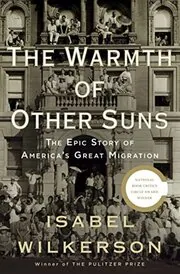
For readers who connect with large social changes through individual lives. Its sustained narratives make the Great Migration tangible across decades, though the length and close attention to three people leave less room for a conventional national overview.
What it's about
Isabel Wilkerson traces the Great Migration through three Black Americans who leave the segregated South for Chicago, Harlem, and California. Their experiences illuminate the dangers, hopes, and lasting consequences of a movement that transformed the country.

For readers who understand a period best through relationships and leadership. Its cabinet-centered approach gives Civil War politics a personal shape, though the length is substantial and battlefield or grassroots history receives less sustained attention.
What it's about
Goodwin tells the story of Abraham Lincoln and the powerful men who once ran against him, then joined his cabinet. It is both a Civil War history and a sharp look at how Lincoln turned rivalry into effective leadership.
Also recommended by
7 people Alexandria Ocasio-Cortez recommended this book
Alexandria Ocasio-Cortez
Alexandria Ocasio-Cortez recommended this book on Twitter.
Alexandria Ocasio-Cortez's recommendation of this book  J.K. Rowling recommended this book
J.K. Rowling
"I lived in it the way that you do with truly great books; putting it down with glazed eyes and feeling disconcerted to find yourself in the 21st century." - J.K. Rowling
J.K. Rowling's recommendation of this book  Bill Gates recommended this book
Bill Gates
"I loved [this book]." - Bill Gates
Bill Gates's recommendation of this book  Scott Belsky recommended this book
Scott Belsky
Scott Belsky mentioned this book on "The Tim Ferriss Show" podcast.
Scott Belsky's recommendation of this book  Stewart Butterfield recommended this book
Stewart Butterfield
"Among the best historical books I've ever read (take that, Herodotus)." - Stewart Butterfield
Stewart Butterfield's recommendation of this book - Jamie Dimon recommended this book
Jamie Dimon
On Jamie Dimon's list of favorite books.
Jamie Dimon's recommendation of this book +1
More recommendations
- Sunny Hostin
"A terrific book!" - Sunny Hostin
- Sunny Hostin
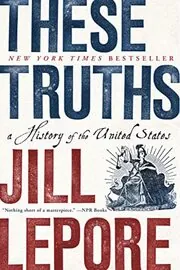
For readers who want a single-volume national narrative with a strong interest in political ideals and their contradictions. Its breadth provides a useful starting framework, though any one-volume history must compress regions, communities and periods unevenly.
What it's about
Lepore's sweeping one-volume history of the United States asks how well the nation has lived up to political equality, natural rights, and popular sovereignty. It combines big narrative with sharp attention to conflict, exclusion, and argument.
Also recommended by
2 people- Bill Gates recommended this book
Bill Gates
"The most honest account of the American story I’ve ever read, and one of the most beautifully written." - Bill Gates
Bill Gates's recommendation of this book - Roman Mars recommended this book
Roman Mars
"Brilliant." - Roman Mars
Roman Mars's recommendation of this book

For readers interested in wartime leadership and life on the American home front. Its joint attention to Franklin and Eleanor Roosevelt broadens the White House story, though military campaigns receive less space than domestic politics and relationships.
What it's about
This Pulitzer-winning history follows Franklin and Eleanor Roosevelt through the White House and the home front during World War II. Goodwin shows how their unusual marriage, political partnership, and inner circle helped shape modern America.
Also recommended by
1 person Lloyd Blankfein recommended this book
Lloyd Blankfein
"Early in the book a good discussion of Roosevelt’s leadership in mobilizing industry." - Lloyd Blankfein
Lloyd Blankfein's recommendation of this book
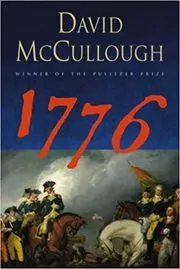
1776
For readers who want an accessible narrative of the Revolution’s military uncertainty. Its focus on one consequential year gives events continuity and urgency, though it is not a complete history of independence or the political ideas behind it.
What it's about
In 1776 McCullough focuses on the year America’s fate hung in the balance, following George Washington and his ragged army through early victories, crushing defeats around New York, and the surprise attacks at Trenton and Princeton. It offers a ground‑level view of the Revolution’s most precarious months.

For readers who want western expansion examined through displacement and broken agreements. Its narrative offers a forceful corrective to frontier celebration, though it centers a specific era of conflict rather than the full range of Indigenous history.
What it's about
Dee Brown recounts the displacement and violence experienced by Native American peoples during nineteenth-century expansion in the American West. Drawing on historical records and Indigenous accounts, he examines broken agreements, military campaigns, and struggles to preserve land and communities.
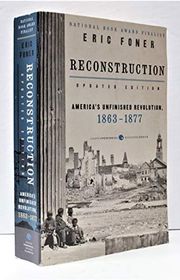
Reconstruction: America's Unfinished Revolution, 1863-1877
For readers ready to study what emancipation changed and what followed the Civil War. Its political and social detail develops a period often compressed in surveys, though the scholarly density makes it better after a basic national history.
What it's about
Eric Foner examines the United States after emancipation, tracing struggles over citizenship, labor, political participation and federal power. The book follows formerly enslaved people, southern communities and national leaders through the contested rebuilding of the postwar republic.

Washington's Crossing
For readers who want a deeper examination of the campaigns around Trenton and Princeton. Its attention to leadership, initiative and military detail develops events beyond a brisk overview, though it assumes patience for a narrowly focused campaign study.
What it's about
David Hackett Fischer follows George Washington's army through the crisis of late 1776 and the campaigns around Trenton and Princeton. His history examines leadership, military decisions, and individual initiative in a period when the American Revolution faced possible defeat.

The Bully Pulpit
Theodore Roosevelt, William Howard Taft, and the Golden Age of Journalism
For readers interested in how presidential leadership and investigative journalism intersected during the Progressive Era. Its linked biographies give reform a human context, though the long treatment of personalities is less efficient than a concise period survey.
What it's about
Goodwin traces Theodore Roosevelt, William Howard Taft, and the reform journalists of the Progressive Era. At the center is a close friendship that turns into a bitter political fight, reshaping the 1912 election and the future of reform.
Also recommended by
2 people- Bill Gates recommended this book
Bill Gates
"How Teddy Roosevelt and William Taft changed America." - Bill Gates
Bill Gates's recommendation of this book  Arnold Schwarzenegger recommended this book
Arnold Schwarzenegger
Arnold Schwarzenegger recommended this book in his newsletter.
Arnold Schwarzenegger's recommendation of this book
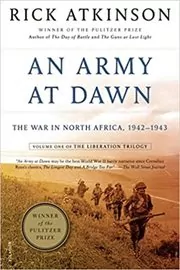
For readers who want to see an army learning through a difficult campaign. Its combination of commanders and soldiers connects strategy with experience, though it covers North Africa rather than the full American role in World War II.
What it's about
Atkinson traces the American and British campaigns in North Africa during 1942 and 1943, beginning with the landings in Morocco and Algeria. Battlefield setbacks, commanders' decisions, and soldiers' experiences show how an inexperienced Allied force developed under pressure.
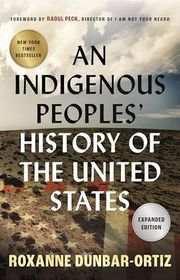
An Indigenous Peoples' History of the United States
For readers who want Indigenous experience placed at the center of a national interpretation. Its sustained argument about settlement and resistance broadens the western-conflict books, though the strongly framed analysis is best read alongside other Indigenous and regional histories.
What it's about
Roxanne Dunbar-Ortiz retells United States history through settler colonialism and Indigenous resistance. The book examines land seizure, military campaigns, policy and cultural narratives, connecting the creation and expansion of the nation with the experiences of Native peoples.
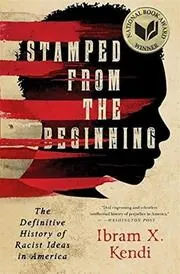
For readers who want to trace arguments about race across several centuries. Its recurring biographical framework helps organize a large intellectual history, though the length and strong interpretive thesis make it more demanding than an introductory overview.
What it's about
Kendi traces the history of racist ideas in America through the lives of five major figures, from Cotton Mather to Angela Davis. It is sweeping and deeply researched, but always focused on how ideas get used to justify policy and inequality.

This Republic of Suffering
For readers interested in how war changes ordinary practices, institutions and beliefs. Its focus on death and mourning adds a social perspective to military histories, though the emotionally difficult subject offers little relief through battlefield narrative.
What it's about
Drew Gilpin Faust explores how mass death during the Civil War transformed American families, institutions, and beliefs. Soldiers’ and civilians’ voices illuminate the practical work of burial and mourning alongside religious and moral efforts to understand unprecedented loss.

For readers who want an individual Marine’s experience of the Pacific War. Its direct account makes exhaustion and combat conditions tangible, though the violence is severe and one participant’s memories cannot provide the whole campaign’s strategic context.
What it's about
Marine Eugene Sledge recounts fighting at Peleliu and Okinawa during World War II. Drawing on notes kept during his service, he describes combat’s brutality, fear, exhaustion, and the bonds formed among men struggling to survive.
Also recommended by
3 people Jocko Willink recommended this book
Jocko Willink
Jocko Willink covered this book in "Jocko Podcast" Ep. 10
Jocko Willink's recommendation of this book  Paul Graham recommended this book
Paul Graham
"Read this book." - Paul Graham
Paul Graham's recommendation of this book - Howard Stern recommended this book
Howard Stern
"I didn’t understand the full impact of what these guys did at Okinawa fighting the Japanese. That had a big impact on me." - Howard Stern
Howard Stern's recommendation of this book

The Island at the Center of the World
For readers curious about the Dutch colonial world behind New York. Its use of individual lives makes early urban history approachable, though the regional focus and argument about Dutch influence cover only one part of colonial America.
What it's about
Russell Shorto reconstructs the Dutch colony of New Netherland using its surviving records. The story follows its diverse society and the conflict between Adriaen van der Donck and Peter Stuyvesant, exploring the colony’s influence on New York and American political culture.

The Last Gunfight
The Real Story of the Shootout at the O.K. Corral-And How It Changed the American West
For readers who want to compare a familiar western legend with its documented circumstances. Its focused reconstruction supplies context around the famous confrontation, though it is a local story rather than a comprehensive account of the American West.
What it's about
Jeff Guinn investigates the people and conflicts behind the 1881 shootout near the O.K. Corral. Diaries, letters, and archival evidence reveal the circumstances surrounding Wyatt Earp, Doc Holliday, and their opponents, challenging the legends that later defined the Old West.
Sources
- 1
The 20 Best Books About American History
historyhustle.com
- 2
Best American History Books
goodreads.com
- 3
100 Best American History Books of All Time
shortform.com
- 4
Best US History books?
reddit.com
- 5
Recommendations Good, Factual, Modern U.S. History Books?
reddit.com
- 6
19 Books That Help You Understand America’s History
celadonbooks.com
- 7
America’s 250th: The Best U.S. History Books, According to College Faculty
college.georgetown.edu
- 8
Essential American History Books
penguinrandomhouse.com
- 9
The best books on American History
fivebooks.com








Edited by
Software engineer whose passion for tracking book recommendations from podcasts inspired the creation of MRB.
Lead investor at 3one4 Capital whose startup expertise and love for books helped shape MRB and its growth.
Comments
Spotted a missing book, a wrong order or a mistake? Tell us and we'll fix this page.
We're a reading guide, not the author or publisher, so we can't send books or pass on messages.