
6 Best Food Addiction Books
The best food addiction books, ranked by how many expert sources recommend each one, with notes on their approaches and which readers each book suits.
Our take
Books about food addiction approach difficult eating patterns from very different directions. Some describe cravings through an addiction framework; others focus on emotional eating or recurrent binge eating. These experiences can overlap, but the terms do not all mean the same thing. Choosing a book starts with understanding the problem it addresses and the kind of help it offers.
Overcoming Binge Eating presents a structured self-help approach based on cognitive behavioral therapy. The DBT Solution for Emotional Eating emphasizes skills for responding to difficult feelings. Food Junkies explores an addiction perspective through clinical experience and personal accounts, while Bright Line Eating sets out a rule-based weight-loss program. Breaking the Stronghold of Food offers a Christian personal account rather than a clinical guide.
Start with Overcoming Binge Eating for a structured program or The DBT Solution for Emotional Eating for emotion-focused exercises. Persistent loss of control around food deserves professional support, and restrictive dieting books are not interchangeable with eating-disorder treatment.
6 books · 7 sources · Last updated
As an Amazon Associate, we earn from qualifying purchases (at no extra cost to you).
How to choose from this list
Skip to the full rankingIf you want a structured self-help program: Overcoming Binge Eating
If emotions drive your eating: The DBT Solution for Emotional Eating
If you want to examine the addiction framework: Food Junkies
If you prefer a Christian personal account: Breaking the Stronghold of Food
The 6 books, ranked
Ranked by how many expert sources name each book. Ties go to the book more people recommend.
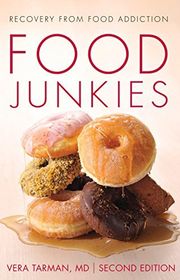
Food Junkies: Recovery from Food Addiction
For readers who want to examine eating difficulties through an addiction framework. Clinical experience and personal accounts make that perspective concrete, but its abstinence-oriented approach is not a universal explanation or treatment for eating problems.
What it's about
Vera Tarman combines personal experience, patient accounts and discussion of research to argue for understanding some eating problems as addiction. The book explores cravings, recovery communities and approaches to abstinence within that framework.

For readers who want to understand a weight-loss program built around firm food rules and an addiction framework. Its boundaries are explicit, but that rigidity is not automatically suitable for someone experiencing binge eating.
What it's about
Susan Peirce Thompson presents an eating program built around clear behavioral boundaries. Drawing on her personal experience and explanations of cravings and willpower, she outlines a food plan intended to support weight loss and maintenance.
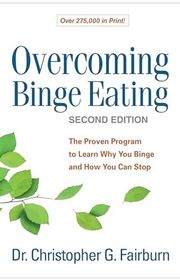
Overcoming Binge Eating
For readers seeking a structured self-help program based on cognitive behavioral therapy. Its stepwise approach offers more clinical focus than personal recovery accounts, but working through the exercises takes sustained effort and may need professional support.
What it's about
Christopher Fairburn explains binge eating and presents a self-help program based on cognitive behavioral therapy. The book combines information about eating problems with steps for understanding patterns, developing regular eating habits and addressing factors that maintain binge episodes.
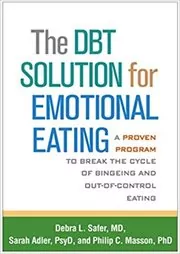
The DBT Solution for Emotional Eating
A Proven Program to Break the Cycle of Bingeing and Out-of-Control Eating
For readers whose eating is closely tied to distress or difficult emotions. Its practical exercises emphasize responding to feelings without acting on every urge, but the skills require repeated practice rather than a quick read.
What it's about
Debra Safer, Sarah Adler and Philip Masson adapt dialectical behavior therapy into a self-help program for emotional eating. Exercises address triggers, uncomfortable feelings, cravings, self-judgment and mindfulness, with tools for tracking gradual changes in behavior.

Breaking the Stronghold of Food
How We Conquered Food Addictions and Discovered a New Way of Living
For readers who want a Christian perspective grounded in personal experience. Its emphasis on faith and everyday change may feel accessible, but a couple’s weight-loss story is different from a clinically evaluated treatment program.
What it's about
Michael and Nancy Brown recount their efforts to change unhealthy eating habits and lose weight. Combining personal experience, humor and Christian faith, they describe their struggle with food and the lifestyle changes they adopted.

Never Binge Again
For readers curious about a method that separates personal identity from urges to overeat. Its self-talk strategy is direct, but the adversarial language may feel punitive and cannot replace eating-disorder care.
What it's about
Glenn Livingston describes his struggle with overeating and presents a method for separating oneself from urges to binge. His approach emphasizes recognizing self-defeating thoughts and setting firm personal rules within a chosen eating plan.
Sources
- 1
15 Best Books on Food Addiction [Perfect for Recovery]
upjourney.com
- 2
8 Best Food Addiction Books for Breaking the Cycle
ingoodnutrition.com
- 3
The best food addiction books of all time (chosen by food addiction authors)
bookdna.com
- 4
Food Addiction Books
goodreads.com
- 5
Most and Least Helpful Books?
reddit.com
- 6
18 Best Eating Disorder Books Of All-Time To Improve Your Eating Behaviors (2022 Update)
breakbingeeating.com
- 7
7 Best Books for Binge Eating Recovery, by a Specialist
nutritionpath.co.uk




Edited by
Software engineer whose passion for tracking book recommendations from podcasts inspired the creation of MRB.
Lead investor at 3one4 Capital whose startup expertise and love for books helped shape MRB and its growth.
Comments
Spotted a missing book, a wrong order or a mistake? Tell us and we'll fix this page.
We're a reading guide, not the author or publisher, so we can't send books or pass on messages.