
10 Best Food Science Books
The best food science books, ranked by how many expert sources recommend each one, with notes on practical cooking, chemistry, flavor and where to start.
Our take
Food science can explain why a sauce thickens, how heat changes texture and why flavor depends on more than taste alone. These books approach those questions at different levels. Some are practical cookbooks that turn explanations into dinner; others are references, experimental essays or textbooks aimed at readers with a scientific background. Choosing the right one depends on whether you want to cook more confidently or study the underlying systems in depth.
Salt, Fat, Acid, Heat offers an intuitive starting framework, while The Food Lab connects experiments with familiar home cooking. The Science of Good Cooking organizes its lessons around core concepts. On Food and Cooking is the broader reference to consult when an ingredient or technique raises a question. For more specialized interests, Liquid Intelligence concentrates on cocktails and Neurogastronomy explores perception. Fennema's Food Chemistry moves into formal scientific study, while Modernist Cuisine provides an extensive technical cooking resource. Start with a practical book, then follow the questions that arise in your own kitchen.
10 books · 8 sources · Last updated
As an Amazon Associate, we earn from qualifying purchases (at no extra cost to you).
How to choose from this list
Skip to the full rankingIf you want a practical starting point: Salt, Fat, Acid, Heat → The Food Lab
If you prefer lessons organized by concept: The Science of Good Cooking
If you want to understand kitchen puzzles: Kitchen Mysteries → On Food and Cooking
If you're interested in perception and experimentation: Molecular Gastronomy → Neurogastronomy
If you're studying food chemistry formally: Fennema's Food Chemistry
If you want specialized technical cooking: Liquid Intelligence → Modernist Cuisine
The 10 books, ranked
Ranked by how many expert sources name each book. Ties go to the book more people recommend.

For curious cooks who want to understand ingredients and transformations in depth. McGee combines science with culinary history across an unusually broad range, though the reference format and technical passages offer fewer ready-to-cook recipes than the practical cookbooks.
What it's about
Harold McGee explains the science behind ingredients and their transformation in the kitchen. Combining technical explanations with food history, he explores production, preparation methods, flavors, and the processes that shape what people cook and eat.
Also recommended by
3 people Donald Knuth recommended this book
Donald Knuth
"Applied biochemistry in the kitchen." - Donald Knuth
Donald Knuth's recommendation of this book  Samin Nosrat recommended this book
Samin Nosrat
"This explains everything. Literally. I am so grateful to [the author] for his tirelessness, his patience, and his commitment to answering the whys of the kitchen." - Samin Nosrat
Samin Nosrat's recommendation of this book  Chris Young recommended this book
Chris Young
"My career starts with [this book] in many ways. There wouldn’t be any of this modern cooking movement without [this book], I don’t think." - Chris Young
Chris Young's recommendation of this book
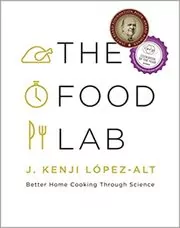
For home cooks who want explanations tested against familiar dishes. López-Alt connects experiments directly with useful techniques and recipes, though the large volume and substantial emphasis on American cooking make it less universal than a general food-science reference.
What it's about
This big, practical cookbook explains why classic techniques work, then turns that science into better home cooking. From steaks and roast chicken to potatoes and sauces, López-Alt tests kitchen myths so readers can get more reliable results.
Also recommended by
1 person Seth Godin recommended this book
Seth Godin
"Genius." - Seth Godin
Seth Godin's recommendation of this book

For cooks who want a memorable framework for making better decisions without relying entirely on recipes. Nosrat connects four elements with tasting and technique, though the intuitive approach provides less scientific detail than McGee or a textbook.
What it's about
Samin Nosrat organizes cooking around four elements: salt, fat, acid, and heat. Explanations, recipes, and Wendy MacNaughton's illustrations show how these principles affect flavor and texture, helping cooks understand their choices and adapt beyond fixed instructions.
Also recommended by
1 person Ben Silbermann recommended this book
Ben Silbermann
"I enjoy cooking, and this book taught me a lot of the basics of flavor and cooking technique." - Ben Silbermann
Ben Silbermann's recommendation of this book
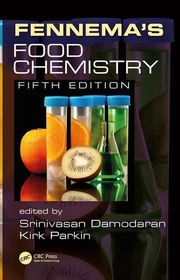
Fennema's Food Chemistry
For students and professionals who need a detailed chemical account of food components and systems. The fifth edition supplies textbook depth beyond the culinary references, though its scientific terminology and scale require a solid chemistry background.
What it's about
This edited textbook examines the chemistry of major and minor food components, including water, carbohydrates, lipids, proteins, enzymes, flavors and additives. The fifth edition connects those components with food systems and the changes that occur during processing and storage.

For readers curious about how smell and the brain shape flavor. Shepherd shifts attention from cooking reactions to perception, memory and preference, though the neuroscience gives it a more technical focus and fewer immediate kitchen applications than the cookbooks.
What it's about
Gordon Shepherd explains how the brain constructs flavor from smell and other senses. He examines the links between flavor, emotion, memory, preferences, and cravings, connecting neuroscience with cooking, nutrition, and the broader experience of eating.

For serious cooks who want an extensive technical reference to contemporary techniques. The photographs and explanations connect scientific processes with ambitious dishes, though the large multivolume set, cost and specialized equipment make it a substantial commitment.
What it's about
This multivolume work connects culinary technique with the science of cooking, using recipes, explanations, and photography. It examines the history and fundamentals of cuisine alongside modern equipment and approaches intended to support experimentation in the kitchen.
Also recommended by
1 person Bill Gates recommended this book
Bill Gates
List of books Bill Gates read in 2011.
Bill Gates's recommendation of this book

For readers who enjoy questioning cooking traditions through small scientific investigations. This gives experiments and sensory questions more space than a conventional cookbook, though the essay-like treatment is less useful when you mainly need a complete dinner recipe.
What it's about
Herve This tests familiar cooking rules through chemistry, physics, and biology. His exploration links practical techniques to the perception of flavor and the molecular behavior of foods, inviting cooks to reconsider tradition and experiment with new dishes.
Also recommended by
1 person Keanu Reeves recommended this book
Keanu Reeves
"I didn't really cook before but this book may be changing my life." - Keanu Reeves
Keanu Reeves's recommendation of this book

For cocktail enthusiasts who want precise control over temperature, dilution and texture. Arnold makes drinks a detailed experimental subject, though the specialist equipment and advanced techniques go well beyond what most casual home bartenders need.
What it's about
Dave Arnold applies scientific principles to cocktail making, examining temperature, dilution, acidity, sweetness, and carbonation. Recipes and experiments range from improvements to everyday techniques to specialized methods, showing how precise control of ingredients and processes changes a drink.

The Science of Good Cooking
Master 50 Simple Concepts to Enjoy a Lifetime of Success in the Kitchen
For cooks who prefer a course organized around a manageable set of principles. The concepts and tested recipes make the science easy to apply, though the prescribed framework offers less theoretical depth than McGee or a food-chemistry textbook.
What it's about
America's Test Kitchen explains cooking through 50 core principles drawn from its recipe testing. The book connects kitchen science with practical techniques and recipes, helping readers understand why particular methods work and how to apply them across different dishes.

For readers who want scientific explanations of familiar kitchen puzzles in shorter pieces. This connects everyday observations with chemistry and physics, though the varied questions form a less systematic course than a textbook or a concept-led cookbook.
What it's about
Herve This explains the chemistry and physics behind everyday cooking, connecting scientific ideas to practical kitchen questions. Vegetables changing color, souffles falling, and mushrooms cooking in butter become examples for understanding food and experimenting with preparation.
Sources
- 1
6 Food Science Books That Will Change the Way You Look at Food
thespoon.tech
- 2
The Best 9 Cookbooks For Food Technology And Food Science
tastingtable.com
- 3
10 Food Science Books To Change the Way You Eat
bookriot.com
- 4
Food Science Books
goodreads.com
- 5
Suggestion on a good food science textbook?
reddit.com
- 6
Question to chefs - What books would you personally recommend to learn the science of cooking?
reddit.com
- 7
Food chemistry
khymos.org
- 8
Food Science Books (and eBooks) - Food Science and Nutrition Research Guide
guides.library.fresnostate.edu


Edited by
Software engineer whose passion for tracking book recommendations from podcasts inspired the creation of MRB.
Lead investor at 3one4 Capital whose startup expertise and love for books helped shape MRB and its growth.
Comments
Spotted a missing book, a wrong order or a mistake? Tell us and we'll fix this page.
We're a reading guide, not the author or publisher, so we can't send books or pass on messages.