
13 Best Public Relations Books
The best public relations books, ranked by expert-source recommendations, with notes for readers choosing strategy, communication and historical context.
Our take
Public relations involves understanding stakeholders, planning communication and protecting the relationships an organization depends on. Publicity and content are part of that work, but they do not cover the whole profession. These books approach PR through textbooks, practitioner experience, messaging frameworks and accounts of how influence has been used.
Cutlip and Center's Effective Public Relations provides a broad management foundation, while Strategic Planning for Public Relations develops a process for turning research into a campaign. Spin Sucks: Communication and Reputation Management in the Digital Age emphasizes honest, coordinated communication. Building a StoryBrand: Clarify Your Message So Customers Will Listen focuses more narrowly on commercial messaging, and Contagious: Why Things Catch On considers sharing. The Father of Spin: Edward L. Bernays and the Birth of Public Relations and Propaganda offer different historical perspectives. Several digital guides link older editions, so their platforms and examples need updating.
Begin with The Practice of Public Relations for orientation, then choose Strategic Planning for Public Relations to develop a campaign.
13 books · 10 sources · Last updated
As an Amazon Associate, we earn from qualifying purchases (at no extra cost to you).
How to choose from this list
Skip to the full rankingIf you want a professional foundation: The Practice of Public Relations → Cutlip and Center's Effective Public Relations
If you want to plan and evaluate a campaign: Strategic Planning for Public Relations → Cases in Public Relations Management: The Rise of Social Media and Activism
If you want practical reputation guidance: A Modern Guide to Public Relations: Unveiling the Mystery of PR → Spin Sucks: Communication and Reputation Management in the Digital Age
If you want clearer commercial messaging: Building a StoryBrand: Clarify Your Message So Customers Will Listen → The Strategic Storyteller: Content Marketing in the Age of the Educated Consumer
If you want to understand attention and sharing: Contagious: Why Things Catch On → Trust Me, I'm Lying: Confessions of a Media Manipulator
If you want historical context and critique: The Father of Spin: Edward L. Bernays and the Birth of Public Relations → Propaganda
The 13 books, ranked
Ranked by how many expert sources name each book. Ties go to the book more people recommend.

For readers who want an insider critique of attention-driven media. Its personal examples expose incentives more vividly than a textbook, but the cynical perspective and older blog ecosystem should be distinguished from a complete account of responsible public relations.
What it's about
A brutal exposé of the online media system. Drawing on his past as a media manipulator, Holiday reveals how blogs and news sites manufacture controversy for clicks, showing how easily the truth can be distorted in the digital age.
Also recommended by
3 people Chase Jarvis recommended this book
Chase Jarvis
"There's another belief that if you have talent then you just are successful, which is a total sack of horseshit. It's total bullshit." - Chase Jarvis
Chase Jarvis's recommendation of this book  Raoul Pal recommended this book
Raoul Pal
Raoul Pal recommended this book on Twitter.
Raoul Pal's recommendation of this book  Danny Miranda recommended this book
Danny Miranda
"Practical tips for getting big news outlets to talk about you." - Danny Miranda
Danny Miranda's recommendation of this book

The New Rules of Marketing and PR
For communicators who want to reach audiences directly through content. Its practical channel ideas extend beyond traditional media pitching, but it blends marketing with PR and the linked older edition does not match every newer feature in the expanded title.
What it's about
David Meerman Scott explains how organizations communicate directly with buyers through digital content and public relations. The guide combines examples and practical planning advice covering social media, podcasts, live video, artificial intelligence, and timely responses to news.

For practitioners who want reputation built through coordinated, honest communication. Its practical framing connects content and relationships more directly than a historical study, but the digital examples need updating and the book is not a full academic introduction.
What it's about
Gini Dietrich argues for honest communication as the basis of reputation management. Practical guidance explores storytelling, online criticism, content, and relationships with audiences, connecting transparent messages with the coordinated use of paid, owned, earned, and shared media.
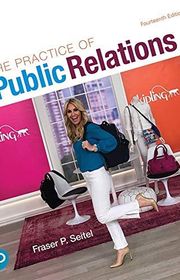
The Practice of Public Relations
For readers who want a broad professional introduction supported by cases. Its accessible textbook approach connects principles with practical decisions across PR functions, but the US emphasis and publication-period examples need comparison with the reader’s own working context.
What it's about
Fraser Seitel introduces public relations through professional principles, examples and case studies. The textbook surveys communication with different stakeholders, ethical issues, media work and organizational challenges, helping students connect the field’s broad responsibilities with practical decisions.

Propaganda
For readers who want a historical primary text on organized persuasion. Its direct account of shaping public opinion complements the Bernays biography, but the elitist assumptions and early mass-media setting require critical reading rather than unexamined imitation.
What it's about
Edward Bernays explains his approach to shaping public opinion through organized persuasion. Originally published in 1928, the book examines how propaganda can influence politics, business, education, art, and other institutions within a democratic society.
Also recommended by
2 people Jérôme Jarre recommended this book
Jérôme Jarre
"This book opened my eyes to the marketing industry in a time when I was blindly playing my role in it." - Jérôme Jarre
Jérôme Jarre's recommendation of this book  Dave Elitch recommended this book
Dave Elitch
"Came to the conclusion that human beings are either savage animals that are going to rip each other apart, or they can be controlled and made docile via consumerism." - Dave Elitch
Dave Elitch's recommendation of this book

For readers interested in why people share ideas and stories. Its research-based framework supports thinking about message appeal, but it cannot guarantee virality and is broader than the organizational and relationship work involved in public relations.
What it's about
Jonah Berger investigates why certain products, ideas, and stories spread through word of mouth. Research and examples explain how social motives, emotions, everyday reminders, and other factors influence what people share and what others choose to pass along.
Also recommended by
1 person Changpeng Zhao recommended this book
Changpeng Zhao
"A must-read for all product designers and marketers, and a lot of people in our team have taken the lessons in this book to heart." - Changpeng Zhao
Changpeng Zhao's recommendation of this book
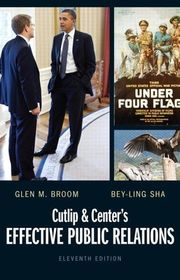
Cutlip and Center's Effective Public Relations
For students and practitioners who want a systematic foundation in the profession. Its connection between research, management and evaluation provides more structure than the promotional guides, but the substantial textbook and older linked edition require supplementary current examples.
What it's about
Glen Broom and Bey-Ling Sha explain public relations as a research-based management function. The eleventh edition develops professional principles, planning, implementation and evaluation, connecting communication decisions with organizational relationships, ethics and the broader context of practice.

For teams struggling to explain an offer clearly. Its customer-centered framework gives more immediate messaging structure than a broad PR textbook, but the simplified commercial model covers less of stakeholder relationships, public accountability and reputation management.
What it's about
Donald Miller introduces a seven-part storytelling framework for clarifying a business's message. Positioning the customer as the hero and the brand as a guide, he explains how problems, plans, and calls to action shape effective marketing.
Also recommended by
1 person Dave Ramsey recommended this book
Dave Ramsey
Recommended on Dave Ramsey's website.
Dave Ramsey's recommendation of this book
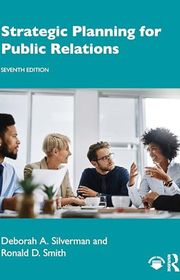
Strategic Planning for Public Relations
For practitioners and students who need a campaign-planning process. Its progression from research to objectives, action and evaluation is more systematic than a collection of publicity tips, but applying the framework requires organizational evidence and time for analysis.
What it's about
Deborah Silverman and Ronald Smith develop a structured approach to planning public relations programs. The book connects research, objectives, strategy, tactics and evaluation, helping readers build communication plans that respond to organizational situations rather than beginning with isolated promotional activities.

For readers who want the profession’s history through one influential figure. Its interviews and private papers make Bernays’s campaigns concrete, but the biographical focus offers historical perspective rather than a practical course in contemporary communication.
What it's about
Larry Tye examines Edward Bernays's life and influence on the development of public relations. Interviews and private papers reveal how his campaigns shaped public opinion, consumer choices, and political communication, raising questions about persuasion and manipulation.

For students and practitioners who learn by examining decisions. Its cases connect strategy with ethical questions and competing viewpoints, but the discussion format requires analysis rather than supplying a quick checklist for handling every situation.
What it's about
Patricia Swann uses public relations cases to prompt discussion of strategic communication, management decisions, and ethical dilemmas. Examples involving social media and activism invite readers to assess practitioners' choices, apply communication theory, and consider alternative responses to organizational challenges.

For newcomers who want practical PR explained through a practitioner’s experience. Its discussion of media relationships and digital content is more immediate than a large textbook, but the personal approach offers less systematic treatment of theory and evaluation.
What it's about
Amy Rosenberg introduces public relations through lessons from her career, explaining how to work with traditional media, bloggers, and podcasters. Practical guidance connects earned coverage and relationship building with content marketing, social engagement, and search visibility for organizations.

The Strategic Storyteller
Content Marketing in the Age of the Educated Consumer
For communicators who want to develop brand stories around audience interests. Its connection between creativity and organizational purpose complements tactical pitching guides, but the broad content-marketing focus provides less detail on PR research, evaluation and crisis planning.
What it's about
Alexander Jutkowitz explores storytelling as a tool for content marketing and organizational communication. Historical and business examples connect audience needs with creativity, offering guidance on finding a brand's stories and developing content that gives people reasons to pay attention.
Sources
- 1
The 15 best PR books (according to the experts)
prezly.com
- 2
Best PR Books of All Time - The Best Public Relations Books
prlab.co
- 3
Public Relations Books
goodreads.com
- 4
Reading list for PR pros/Communicators?
reddit.com
- 5
What Are Your Favorite Books About Public Relations?
reddit.com
- 6
14 Must-Read Books for Aspiring PR and Advertising Professionals
onlinegrad.syracuse.edu
- 7
Reading list for PR pros/Communicators?
reddit.com
- 8
PR Books Worth Reading: A Practical Reading Path
newswirejet.com
- 9
Recommended Study Texts
accreditation.prsa.org
- 10
Books & Articles
prmuseum.org


Edited by
Software engineer whose passion for tracking book recommendations from podcasts inspired the creation of MRB.
Lead investor at 3one4 Capital whose startup expertise and love for books helped shape MRB and its growth.
Comments
Spotted a missing book, a wrong order or a mistake? Tell us and we'll fix this page.
We're a reading guide, not the author or publisher, so we can't send books or pass on messages.