
9 Best Exercise Books
The best exercise books, ranked by how many expert sources recommend each one, with notes to help beginners and experienced readers choose a useful starting point.
Our take
Exercise books can help you learn movements, organize a routine, or understand why staying active feels difficult. Those are different tasks, and a book that explains muscle anatomy will not necessarily help you enjoy a daily walk. This selection ranges from barbell instruction and bodyweight training to motivation, interval exercise, and the science behind physical performance.
Starting Strength gives detailed attention to basic barbell lifts, while You Are Your Own Gym concentrates on training without a conventional gym. Strength Training Anatomy works best as a visual reference alongside a plan. Bigger Leaner Stronger and Thinner Leaner Stronger combine resistance training with nutrition and body-composition goals. If consistency is the main difficulty, No Sweat asks different questions about enjoyment and motivation; The One-Minute Workout examines time-efficient intervals. Choose a book that addresses your current obstacle, then use the more detailed references when you need to understand the reasoning behind your routine.
9 books · 9 sources · Last updated
As an Amazon Associate, we earn from qualifying purchases (at no extra cost to you).
How to choose from this list
Skip to the full rankingIf consistency is your main obstacle: No Sweat
If you want to learn barbell lifts: Starting Strength → Strength Training Anatomy
If you want to train at home: You Are Your Own Gym
If you are curious about shorter sessions: The One-Minute Workout
If you want the science behind performance: Spark → Endure
The 9 books, ranked
Ranked by how many expert sources name each book. Ties go to the book more people recommend.

For beginners who want detailed instruction in the main barbell lifts. Its explanations of mechanics and setup go deeper than the broad fitness guides, though its specific training approach is narrower than a general exercise program.
What it's about
Mark Rippetoe explains the mechanics and execution of basic barbell lifts, including squats, presses, deadlifts, and power cleans. Anatomical analysis, illustrations, and coaching guidance accompany a beginner training program organized around progressive increases in strength and lifting proficiency.
Also recommended by
2 people Mr. Money Mustache recommended this book
Mr. Money Mustache
"A meat’n’potatoes summary of what everyone should do to make the biggest improvements in fitness and strength in minimal time." - MMM
Mr. Money Mustache's recommendation of this book  Sahil Lavingia recommended this book
Sahil Lavingia
Sahil Lavingia recommended this book on Notion.
Sahil Lavingia's recommendation of this book

For men who want resistance training and nutrition organized into one body-composition plan. Its integrated structure offers more direction than an exercise reference, though the physique focus may not suit readers primarily interested in endurance or movement.
What it's about
Michael Matthews presents a diet and exercise approach for men seeking muscle, strength, and fat loss. The book discusses resistance training, meal planning, recovery, supplements, and common fitness beliefs, alongside guidance for organizing a training routine.

Strength Training Anatomy
For visual learners who want to understand which muscles different strength exercises involve. Its anatomical illustrations make it a useful reference alongside a program, though pictures and descriptions cannot provide individualized feedback on lifting technique.
What it's about
Frederic Delavier illustrates the muscles and surrounding structures involved in strength exercises. Explanations and drawings show how movement and setup affect muscle recruitment, with coverage of bones, ligaments, tendons, connective tissue, and stretching.

For readers who want structured resistance exercise without relying on a gym. Its bodyweight routines suit home and travel better than barbell-focused guides, though some movements need suitable surroundings and progression can require more creativity.
What it's about
Mark Lauren and Joshua Clark adapt bodyweight training methods for workouts at home, outdoors, or while traveling. Exercise instruction, training plans, motivation, and nutrition guidance show how the body and ordinary surroundings can provide resistance without a gym.

For curious exercisers and endurance athletes who want to understand the limits of performance. Its reporting connects physiology with perception and effort, though it offers scientific exploration and athlete stories rather than a ready-made training schedule.
What it's about
Alex Hutchinson investigates the physical and psychological limits of endurance. Combining scientific research with accounts of athletes and adventurers, he explores fatigue and the brain's role in determining how far people believe their bodies can go.
Also recommended by
2 people Noah Kagan recommended this book
Noah Kagan
"He breaks down the myths and facts of endurance athletes. Focuses on the science and lesser-known facts." - Noah Kagan
Noah Kagan's recommendation of this book  Daniel Gross recommended this book
Daniel Gross
"If you like any form of endurance cardio, this book will be like crack candy for you." - Daniel Gross
Daniel Gross's recommendation of this book

The One-Minute Workout
Science Shows a Way to Get Fit That's Smarter, Faster, Shorter
For readers interested in the science of fitting exercise into limited time. Its interval-based approach offers an alternative to longer sessions, though brief hard efforts still require preparation and the title does not describe total workout time.
What it's about
Martin Gibala and Christopher Shulgan introduce research on time-efficient exercise through interval training. The book explains the science behind brief, intense efforts and includes basic interval workouts and shorter routines adapted to different needs and preferences.

For women who want a structured introduction to lifting and nutrition. Its combined approach gives more guidance on organizing a routine than an anatomy atlas, though the emphasis on body composition may not match every reader’s goals.
What it's about
Michael Matthews explains his approach to strength training and nutrition for women. The book addresses meal planning, resistance exercise, recovery, supplements, and common fitness misconceptions, providing a framework for pursuing muscle development and changes in body composition.
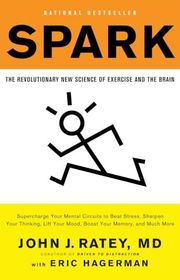
Spark
For readers who want to understand exercise beyond strength or appearance. Its focus on the brain adds a different motivation for activity, though it is an explanatory science book with older research rather than a workout manual.
What it's about
Ratey and Hagerman explore research and case histories concerning exercise, the brain, learning, and mood. The book connects accounts of physical activity with questions about stress and mental functioning rather than providing a conventional workout manual.

For readers who know exercise matters but struggle to keep doing it. Its focus on meaningful, enjoyable activity addresses motivation more directly than the workout manuals, though it provides less technical instruction in specific movements.
What it's about
Michelle Segar explores why exercise plans often become difficult to sustain. Drawing on research into motivation, she offers a four-part approach that emphasizes meaningful, enjoyable physical activity and reconsidering the beliefs that make exercise feel like another obligation.
Sources
- 1
Best Fitness Books
jamesclear.com
- 2
13 Best Fitness Books [Handpicked for Fitness Enthusiasts]
upjourney.com
- 3
Exercise Books
goodreads.com
- 4
Books or gym litterature?
reddit.com
- 5
The best strength training books
projecthelix.app
- 6
100 Best Exercise Books of All Time
shortform.com
- 7
21 Best Fitness Books of 2025 That You Won’t Regret Reading
runtothefinish.com
- 8
15 Best Fitness Books To Read This Year (2026)
origym.co.uk
- 9
The Best-Selling Fitness Books
robertjwinn.co




Edited by
Software engineer whose passion for tracking book recommendations from podcasts inspired the creation of MRB.
Lead investor at 3one4 Capital whose startup expertise and love for books helped shape MRB and its growth.
Comments
Spotted a missing book, a wrong order or a mistake? Tell us and we'll fix this page.
We're a reading guide, not the author or publisher, so we can't send books or pass on messages.