
13 Best Health Books
The best health books, ranked by expert source recommendation counts, with notes on the body, nutrition, sleep, exercise, aging, and different reader needs.
Our take
Health books range from explanations of the human body to arguments about sleep, food, exercise, and aging. Some offer practical routines; others make research understandable or examine what good care means. These purposes are different, and an engaging account of a scientific idea does not establish that a particular intervention works for an individual reader.
The Body offers a broad, accessible tour of anatomy and medical history. Why We Sleep concentrates on sleep, while Spark explores exercise and the brain. For food, Food Rules provides brief prompts and How Not to Die presents a much more detailed plant-based argument. Outlive and Lifespan approach aging from different perspectives, while Being Mortal asks how care can preserve dignity and personal priorities when health changes. The lifestyle books focus more on attitudes and daily surroundings.
Start with the question you want to understand, then separate each author’s explanation, personal interpretation, and proposed actions before deciding what to discuss with a qualified health professional.
13 books · 7 sources · Last updated
As an Amazon Associate, we earn from qualifying purchases (at no extra cost to you).
How to choose from this list
Skip to the full rankingIf you want to understand the body: The Body
If you're curious about sleep: Why We Sleep
If you want exercise and brain research: Spark
If you want to compare nutrition approaches: Food Rules → How Not to Die
If you're examining longevity arguments: Outlive → Lifespan
If you're thinking about care and quality of life: Being Mortal
The 13 books, ranked
Ranked by how many expert sources name each book. Ties go to the book more people recommend.

For readers who want an accessible discussion of sleep and its place in daily life. Its range makes the topic engaging, though the author’s strong claims and interpretations deserve checking against current evidence rather than treating every example as settled.
What it's about
Matthew Walker examines sleep and dreaming, presenting research on their relationship with learning, emotions, and physical health. He discusses changing sleep patterns, the effects of substances such as caffeine, and the consequences of insufficient sleep.
Also recommended by
7 people Bill Gates recommended this book
Bill Gates
"Explains how neglecting sleep undercuts your creativity, problem solving, decision-making, learning, memory, heart health, brain health, mental health, emotional well-being, immune system, and even your life span." - Bill Gates
Bill Gates's recommendation of this book  Bryan Johnson recommended this book
Bryan Johnson
"Not only did I become convinced that getting high-quality sleep is the best protector and enhancer of health and cognition, but it is also the most underappreciated." - Bryan Johnson
Bryan Johnson's recommendation of this book  Keith Rabois recommended this book
Keith Rabois
Keith Rabois mentioned this book on Twitter.
Keith Rabois's recommendation of this book  Alexis Ohanian recommended this book
Alexis Ohanian
"One of the best and most important books I've read [in 2019]." - Alexis Ohanian
Alexis Ohanian's recommendation of this book  Vinod Khosla recommended this book
Vinod Khosla
"Best book on the subject [of sleep]." - Vinod Khosla
Vinod Khosla's recommendation of this book  Michael Mauboussin recommended this book
Michael Mauboussin
"[One of] my favorite science books in 2018." - Michael Mauboussin
Michael Mauboussin's recommendation of this book +1
More recommendations
- Jason Fried
"Highly recommended." - Jason Fried
- Jason Fried

The Subtle Art of Not Giving a F*ck
A Counterintuitive Approach to Living a Good Life
For readers who want a blunt discussion of priorities, limits, and the pressure to feel positive. Its conversational style makes philosophical reflection accessible, though it offers personal arguments and anecdotes rather than a clinical approach to mental health.
What it's about
Mark Manson challenges relentless positivity and the pursuit of universal approval. Through personal stories and philosophical arguments, he advocates accepting limitations, learning from failure, and choosing carefully which problems and commitments deserve attention in life.
Also recommended by
2 people Tim Urban recommended this book
Tim Urban
"[The author's] an awesome writer." - Tim Urban
Tim Urban's recommendation of this book  Abraham Mutai recommended this book
Abraham Mutai
"Man, What a fucking amazing book." - Abraham Mutai
Abraham Mutai's recommendation of this book

For readers considering how medicine can support dignity and personal priorities during aging or serious illness. Its stories make difficult care decisions understandable, though the emotional material and US institutional setting require thoughtful reading and local context.
What it's about
Atul Gawande investigates the medical treatment of aging and dying through patients' experiences and personal reflection. He asks how care can better respect people's priorities when safety, longevity, independence, and quality of life come into conflict.
Also recommended by
1 person Ryan Shea recommended this book
Ryan Shea
Ryan Shea recommended this book on his website.
Ryan Shea's recommendation of this book

For readers who want a brief set of prompts for thinking about everyday food choices. Its concise format is easy to revisit, though memorable rules simplify nutrition and cannot accommodate every medical condition, cultural practice, or budget.
What it's about
Michael Pollan distills his thinking about food into 64 brief guidelines for everyday eating. The rules address choosing foods, moderating consumption, and recovering habits that make meals simpler and more enjoyable.

For readers curious about experimental aging research and one scientist’s view of its possibilities. Its ambitious argument connects several research areas, though findings in cells or animals do not establish that the proposed interventions extend human life.
What it's about
David Sinclair, writing with Matthew D. LaPlante, presents a theory of aging and explores research into extending healthy life. He discusses emerging technologies and lifestyle practices while arguing that aging should be understood as a potentially treatable condition.
Also recommended by
6 people- Vinod Khosla recommended this book
Vinod Khosla
"Reveals incredible scientific breakthroughs about aging and ways we can slow down, or even reverse, the process." - Vinod Khosla
Vinod Khosla's recommendation of this book  Peter Diamandis recommended this book
Peter Diamandis
"Gives a host of compelling evidence to show there is no reason people born today cannot live to at least 120 in healthy condition, if not 150 and beyond." - Peter Diamandis
Peter Diamandis's recommendation of this book  Jason Fried recommended this book
Jason Fried
"Highly recommend [this book]." - Jason Fried
Jason Fried's recommendation of this book  David Friedberg recommended this book
David Friedberg
"Highlights a lot of [the author's] research and findings." - David Friedberg
David Friedberg's recommendation of this book  Blake Scholl recommended this book
Blake Scholl
"Read [this book] or check out his podcast with the same name." - Blake Scholl
Blake Scholl's recommendation of this book - Ryan Shea recommended this book
Ryan Shea
Ryan Shea recommended this book on his website.
Ryan Shea's recommendation of this book

Born to Run
A Hidden Tribe, Superathletes, and the Greatest Race the World Has Never Seen
For readers drawn to endurance running through people, place, and adventure rather than a training schedule. Its narrative makes the sport inviting, though the author’s interpretations of running mechanics and footwear are not a personalized or comprehensive training prescription.
What it's about
Christopher McDougall travels to Mexico's Copper Canyons to investigate the Tarahumara's long-distance running traditions. His account brings together runners, training experiments and research on endurance as an unusual race between local athletes and visiting Americans takes shape.
Also recommended by
2 people Turia Pitt recommended this book
Turia Pitt
"If [people are] interested in running, I give them [this book]." - Turia Pitt
Turia Pitt's recommendation of this book  Sahil Lavingia recommended this book
Sahil Lavingia
Sahil Lavingia recommended this book on Notion.
Sahil Lavingia's recommendation of this book

For curious general readers who want to understand anatomy and medical history without a textbook. Its humor and short explanations make a large subject approachable, though the entertaining overview provides less depth than a clinical reference.
What it's about
A tour of the human anatomy, from the skin to the brain. Bryson explains how our bodies function, how they fail, and the often bizarre history of medicine and disease, all with his signature wit.
Also recommended by
2 people Peter King recommended this book
Peter King
Peter King recommended this book on Twitter.
Peter King's recommendation of this book  Morgan Housel recommended this book
Morgan Housel
"Probably the best book I read in the last year." - Morgan Housel
Morgan Housel's recommendation of this book

How Not to Die
Discover the Foods Scientifically Proven to Prevent and Reverse Disease
For readers who want to examine an argument for whole plant foods. Its organization by diseases and dietary choices makes the author’s position easy to navigate, though its strong advocacy requires distinguishing supportive evidence from broad prevention or reversal claims.
What it's about
Michael Greger examines nutrition's role in common causes of premature death and argues for eating more whole plant foods. Alongside discussions of disease prevention, he introduces a daily checklist of foods and habits intended to support health.
Also recommended by
1 person Amy Tan recommended this book
Amy Tan
"Love [this author's] books. He backs everything with science." - Amy Tan
Amy Tan's recommendation of this book

For readers discussing a low-FODMAP approach with a clinician or dietitian who want practical meal examples. Its menus make the restrictions concrete, though the approach requires individual assessment and reintroduction rather than treating the book as a permanent elimination plan.
What it's about
Dietitian Danielle Capalino introduces a low-FODMAP eating plan focused on digestive discomfort, explaining the food sugars involved and how to adapt meals. A seven-day sample menu, recipes, and everyday guidance help readers understand the approach and organize its practical demands.
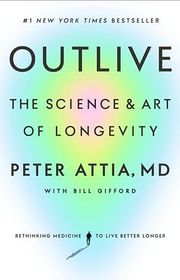
Outlive
For readers who want a broad physician-led argument about healthspan, prevention, and long term risk. Its connected framework gives the topics a common purpose, though some proposed testing and interventions go beyond evidence established for routine care.
What it's about
Peter Attia, writing with Bill Gifford, examines longevity through prevention, exercise, nutrition, sleep, and emotional health. He argues for addressing risks earlier and maintaining physical and cognitive function, using research and clinical experience to develop his framework.
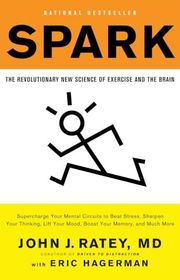
Spark
For readers interested in the relationship between physical activity, learning, and emotional life. Its case studies make brain research approachable, though examples and proposed mechanisms should not be confused with guaranteed outcomes or a replacement for individualized care.
What it's about
Ratey and Hagerman explore research and case histories concerning exercise, the brain, learning, and mood. The book connects accounts of physical activity with questions about stress and mental functioning rather than providing a conventional workout manual.

The Telomere Effect
A Revolutionary Approach to Living Younger, Healthier, Longer
For readers interested in how cellular aging research relates to stress and everyday life. Its telomere focus offers a distinctive scientific perspective, though associations between behavior and biomarkers do not make a simple formula for living longer.
What it's about
Elizabeth Blackburn and Elissa Epel explain their research on telomeres and cellular aging. They examine connections with stress, relationships, sleep, exercise, and diet, then propose everyday habits intended to support health over the course of life.
Also recommended by
2 people Jack Kornfield recommended this book
Jack Kornfield
"It turns out that your cells listen to your heart and to your intention, that consciousness affects your body." - Jack Kornfield
Jack Kornfield's recommendation of this book  Wim Hof recommended this book
Wim Hof
Wim Hof mentioned this book in the "The Wim Hof Method" book.
Wim Hof's recommendation of this book

For readers who want ideas about comfort, companionship, and enjoyable daily surroundings. Its concrete domestic examples make the cultural concept accessible, though it is a lifestyle book rather than evidence that particular objects or rituals treat health conditions.
What it's about
Meik Wiking introduces hygge, the Danish emphasis on comfort, togetherness, and enjoyment of ordinary moments. Advice on lighting, gatherings, clothes, and home life offers practical ways to create a welcoming atmosphere, drawing on his work studying happiness.
Sources
- 1
The 40 Best Health and Wellness Books to Read
upjourney.com
- 2
100 Best Health Books of All Time (Updated for 2026)
shortform.com
- 3
Health Books
goodreads.com
- 4
What’s the most impactful health-related book you’ve read? : r/physiotherapy
reddit.com
- 5
7 of the Best Health and Wellness Books ...
books.allwomenstalk.com
- 6
Suggest me a book that changed your view about health : r/suggestmeabook
reddit.com
- 7
13 Best Healthy Eating Books | Healthline
healthline.com



Edited by
Software engineer whose passion for tracking book recommendations from podcasts inspired the creation of MRB.
Lead investor at 3one4 Capital whose startup expertise and love for books helped shape MRB and its growth.
Comments
Spotted a missing book, a wrong order or a mistake? Tell us and we'll fix this page.
We're a reading guide, not the author or publisher, so we can't send books or pass on messages.