
16 Best Evolutionary Psychology Books
The best evolutionary psychology books, ranked by how many expert sources recommend each one, with notes for beginners, students, and readers comparing theories.
Our take
Evolutionary psychology asks how natural and sexual selection may help explain features of the human mind and behavior. These books explore mating, cooperation, language, morality, and the relationship between biology and culture. They differ in both purpose and evidential approach: a textbook, a historical collection, and an ambitious popular argument should be read with different expectations.
David Buss's Evolutionary Psychology provides a structured overview, while The Moral Animal offers a more narrative introduction. The Selfish Gene explains background evolutionary reasoning rather than surveying human psychology. Readers interested in cooperation can turn to The Evolution of Cooperation, and The Secret of Our Success gives cultural learning a larger role in the explanation of human life. Behave places evolutionary history alongside immediate biology, development, and social circumstances.
Start with a general introduction, then compare explanations of one topic and pay attention to how the evidence distinguishes them from plausible stories.
16 books · 9 sources · Last updated
As an Amazon Associate, we earn from qualifying purchases (at no extra cost to you).
How to choose from this list
Skip to the full rankingIf you want a structured introduction: Evolutionary Psychology
If you prefer an accessible narrative: The Moral Animal
If you need background evolutionary reasoning: The Selfish Gene
If you're studying cooperation: The Evolution of Cooperation → The Origins of Virtue
If you want culture included in the explanation: The Secret of Our Success → Behave
If you're interested in language and cognition: The Language Instinct → How the Mind Works
The 16 books, ranked
Ranked by how many expert sources name each book. Ties go to the book more people recommend.

For readers interested in arguments about human nature and their political implications. Its broad cultural discussion reaches beyond a standard textbook, though the polemical framing can overshadow the methodological questions a newcomer may want answered.
What it's about
Steven Pinker challenges the idea that the human mind has no innate characteristics. Drawing on scientific research, he examines how assumptions about human nature shape debates over politics, violence, parenting, morality, and the arts.
Also recommended by
3 people Nassim Taleb recommended this book
Nassim Taleb
"A great exposition of modern scientific thinking and understanding of the nature of man." - Nassim Taleb
Nassim Taleb's recommendation of this book  Tom Bilyeu recommended this book
Tom Bilyeu
Tom Bilyeu recommended this book on Twitter.
Tom Bilyeu's recommendation of this book  Mark Manson recommended this book
Mark Manson
Mark Manson recommended this book on his website.
Mark Manson's recommendation of this book

For newcomers who prefer narrative and biography to a course textbook. Its use of Darwin's life makes evolutionary questions about behavior easier to enter, though its earlier synthesis should be followed with more recent research and competing explanations.
What it's about
Robert Wright examines human behavior through evolutionary psychology, connecting relationships, social competition, and moral judgments with natural selection. Alongside scientific arguments, he uses Charles Darwin’s life to illustrate how evolutionary explanations can illuminate everyday decisions and interactions.
Also recommended by
2 people Ryan Holiday recommended this book
Ryan Holiday
"The definitive beginner text on evolutionary psychology and one of the easiest to get into." - Ryan Holiday
Ryan Holiday's recommendation of this book - Tom Bilyeu recommended this book
Tom Bilyeu
Tom Bilyeu recommended this book on his website.
Tom Bilyeu's recommendation of this book

For readers particularly interested in mating preferences and relationship conflict. Its sustained attention to that research is deeper than a general human-nature book, though population-level patterns cannot predict every person's choices or prescribe how relationships should work.
What it's about
David Buss examines human mating through evolutionary psychology and cross-cultural research. His account considers partner preferences, attraction, casual relationships, commitment, jealousy and conflict, arguing that present-day desires reflect problems faced in the evolutionary past.
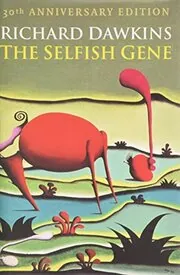
The Selfish Gene
For readers who need the evolutionary logic behind later discussions of behavior. Its gene-centered explanation gives a clearer biological foundation than a human-behavior survey, though the language of selfishness is metaphorical and easily mistaken for a moral claim.
What it's about
This landmark book shifts focus from organisms to genes, arguing that natural selection largely favours gene variants that promote their own replication. Along the way Dawkins introduces ideas like "selfish" and "altruistic" behaviour in evolutionary terms and coins the now-famous concept of the meme.
Also recommended by
12 people Charlie Munger recommended this book
Charlie Munger
"I had to read [this book] twice before I fully understood it." - Charlie Munger
Charlie Munger's recommendation of this book  Matt Ridley recommended this book
Matt Ridley
"Turned evolutionary biology on its head and was written like a great detective story." - Matt Ridley
Matt Ridley's recommendation of this book  Brian Armstrong recommended this book
Brian Armstrong
"Famous book about how our bodies are vehicles to replicate our genes (even though we occasionally defy them)." - Brian Armstrong
Brian Armstrong's recommendation of this book  Ev Williams recommended this book
Ev Williams
On the "books read" section of Ev Williams' GoodReads profile.
Ev Williams's recommendation of this book  Nick Szabo recommended this book
Nick Szabo
"Explains more about life (including human behavior and myself) than anything else I’ve read. " - Nick Szabo
Nick Szabo's recommendation of this book  Phil Libin recommended this book
Phil Libin
"Had a profound influence on me pretty early on." - Phil Libin
Phil Libin's recommendation of this book +6
More recommendations
- Mr. Money Mustache
"An explanation of evolution since the beginning of life that explains things from the perspective of individual genes." - MMM
- Bob Metcalfe
"It just seemed to explain everything." - Bob Metcalfe
- David Deutsch
"Influenced my books." - David Deutsch
- Tai Lopez
"Mind blowing book. [...] But warning you, it’s too true for most people to handle..." - Tai Lopez
- Elon Musk
"Most people don't realize that the origin of the word 'meme' is [this book]." - Elon Musk
- Mark Manson
Mark Manson recommended this book on his website.
- Mr. Money Mustache

For readers curious about why sex and evolutionary competition matter to accounts of human nature. Its broad biological storytelling provides useful context for mating-focused books, though the move from general evolution to human behavior needs careful scrutiny.
What it's about
Matt Ridley explores why sexual reproduction evolved and how competition among organisms influences human behavior. He connects evolutionary arms races with questions about attraction, mating, intelligence, and the relationship between biology and culture.
Also recommended by
4 people Naval Ravikant recommended this book
Naval Ravikant
"Everything by [this author] is worth reading." - Naval Ravikant
Naval Ravikant's recommendation of this book  Aubrey Marcus recommended this book
Aubrey Marcus
"If you want to understand HUMAN sexual biology, this information is incomplete at best." - Aubrey Marcus
Aubrey Marcus's recommendation of this book - Nick Szabo recommended this book
Nick Szabo
"I think three or four of my top 20 books of all time are all [this author's]." - Nick Szabo
Nick Szabo's recommendation of this book  Neil Strauss recommended this book
Neil Strauss
"Diverse, engaging, and wide-ranging." - Neil Strauss
Neil Strauss's recommendation of this book

How the Mind Works
For readers who want cognitive science linked with evolutionary explanations. Its breadth across perception, reasoning, and emotion gives a fuller mental portrait than a mating-centered account, though the large synthesis can blur differences in evidential strength.
What it's about
Steven Pinker examines perception, reasoning, emotions, social behavior, and enjoyment of the arts through cognitive science and evolutionary biology. He argues that understanding the problems our ancestors faced helps explain the mind's abilities and peculiarities.

For readers who want one cognitive capacity explored in depth. Its detailed treatment of language offers a more focused test case than broad human-nature arguments, though it defends a particular theoretical position and includes technical linguistic passages.
What it's about
Steven Pinker argues that language is an evolved human capacity rather than simply a cultural invention. Exploring grammar, childhood learning, and the brain, he uses everyday speech and linguistic research to explain how language works.
Also recommended by
1 person- Charlie Munger recommended this book
Charlie Munger
"Says that human language ability is not just learned, it is deeply buried - to a considerable extent - in the genome." - Charlie Munger
Charlie Munger's recommendation of this book

For students who want a structured introduction to the field's theories and research. Its textbook organization provides a stronger study framework than popular essays, though the extensive coverage takes time and should be read alongside methodological criticism.
What it's about
David Buss introduces the theories and research methods of evolutionary psychology. His textbook examines human behavior through evolutionary explanations, addressing survival, mating, parenting, cooperation and conflict, with case studies and questions connecting concepts to empirical research.

For readers ready to examine the field's foundational theoretical program. Its multi-author chapters provide more academic depth than a popular introduction, though the volume is demanding and represents a historical position rather than the latest state of research.
What it's about
Jerome Barkow, Leda Cosmides and John Tooby collect essays developing an evolutionary approach to psychology and culture. Contributors investigate topics including cooperation, language, perception, landscape preferences and gossip, exploring relationships between evolved mental mechanisms and behavior.

For readers who want behavior placed in a wider biological and social context. Its movement across timescales counters simple single-cause explanations, though the neuroscience and sheer length make it more demanding than a focused evolutionary psychology introduction.
What it's about
Robert M. Sapolsky explores the forces behind human behavior, moving backward from an action's immediate causes toward development and evolutionary history. He brings together research across disciplines to examine cooperation, conflict, prejudice, and the origins of good and harmful conduct.
Also recommended by
6 people Sam Harris recommended this book
Sam Harris
"I highly recommend. It really is the most accessible discussion of brain science you will find." - Sam Harris
Sam Harris's recommendation of this book  Marc Andreessen recommended this book
Marc Andreessen
"Robert Sapolsky's magnum opus on human behavior." - Marc Andreessen
Marc Andreessen's recommendation of this book  Vinod Khosla recommended this book
Vinod Khosla
"Among the best insights into our brain and behavior." - Vinod Khosla
Vinod Khosla's recommendation of this book  Bryan Johnson recommended this book
Bryan Johnson
Bryan Johnson recommended this book on Twitter.
Bryan Johnson's recommendation of this book  Keith Rabois recommended this book
Keith Rabois
"A bit of a long commitment but worth it. Provocative." - Keith Rabois
Keith Rabois's recommendation of this book  Michael Mauboussin recommended this book
Michael Mauboussin
"The best book I have ever read on human behavior." - Michael Mauboussin
Michael Mauboussin's recommendation of this book

For readers interested in sexual selection as an explanation of creativity and intelligence. Its ambitious central argument connects abilities that other books treat separately, though much of the appeal rests on a hypothesis rather than a settled account.
What it's about
Geoffrey Miller argues that sexual selection helped shape distinctive human abilities, including creativity, language, morality and art. Drawing on diverse disciplines, he proposes that these traits developed partly through competition to attract and choose mates.

For readers interested in moral judgment, political disagreement, and group loyalty. Its framework makes evolutionary questions relevant to everyday arguments, though the discussion extends beyond evolutionary psychology and its categories should not be treated as fixed descriptions of individuals.
What it's about
Jonathan Haidt investigates the intuitive foundations of moral judgment and the sources of political and religious disagreement. Drawing on moral psychology, he explores how differing values can bind communities together while creating persistent divisions between them.
Also recommended by
4 people A.J. Jacobs recommended this book
A.J. Jacobs
"All about trying to figure out the gap between the red and blue states – Republican and Democrat – and it’s really interesting." - A.J. Jacobs
A.J. Jacobs's recommendation of this book  Ann Miura-Ko recommended this book
Ann Miura-Ko
"I love this book because it clarified for me a lot of things that I’ve been feeling for so long around." - Ann Miura-Ko
Ann Miura-Ko's recommendation of this book  Derren Brown recommended this book
Derren Brown
"Tremendous & was part of forming Sacrifice (on Netflix)." - Derren Brown
Derren Brown's recommendation of this book  Russell Moore recommended this book
Russell Moore
"The most important book in years." - Russell Moore
Russell Moore's recommendation of this book

The Evolution of Cooperation
For readers who want a formal explanation of cooperation without assuming everyone is altruistic. Its repeated-game models offer a sharper mechanism than broad social storytelling, though simplified interactions leave many features of real human relationships outside the model.
What it's about
Robert Axelrod investigates how cooperation can emerge among individuals pursuing their own interests. Computer tournaments of the repeated Prisoner's Dilemma provide the basis for exploring reciprocal strategies and the conditions that allow cooperation to endure.
Also recommended by
2 people- Naval Ravikant recommended this book
Naval Ravikant
One of Naval Ravikant's answers to "any particular Game Theory books you recommend?"
Naval Ravikant's recommendation of this book  Chris Hayes recommended this book
Chris Hayes
"One of my all-time favorite books." - Chris Hayes
Chris Hayes's recommendation of this book

For readers interested in how cooperation can emerge amid competition. Its wide-ranging examples connect evolutionary thinking with social exchange, though the move from explaining cooperative behavior to larger social conclusions is more argumentative than a textbook survey.
What it's about
Matt Ridley investigates the evolutionary roots of cooperation and generosity. He examines why people help one another, arguing that instincts for social exchange are central to human behavior alongside competition and self-interest.
Also recommended by
2 people- Naval Ravikant recommended this book
Naval Ravikant
Naval Ravikant's answer to "one book recommendation on Game theory?"
Naval Ravikant's recommendation of this book - Nick Szabo recommended this book
Nick Szabo
"I think three or four of my top 20 books of all time are all [this author's]." - Nick Szabo
Nick Szabo's recommendation of this book
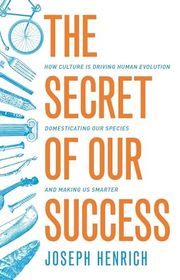
The Secret of Our Success: How Culture Is Driving Human Evolution, Domesticating Our Species, and Making Us Smarter
For readers who want cultural learning given a central role in human evolution. Its collective-knowledge perspective broadens the more gene-focused books here, though the wide synthesis asks readers to follow arguments across anthropology, psychology, and biology.
What it's about
Joseph Henrich argues that accumulated cultural knowledge helps explain human success beyond individual intelligence. He examines social learning, cooperation, institutions, and the interaction between culture and genes, showing how shared practices can reshape the environments in which people evolve.

Why Beautiful People Have More Daughters
From Dating, Shopping, and Praying to Going to War and Becoming a Billionaire
For readers comparing provocative popular explanations with more systematic treatments. Its question-led format samples many topics quickly, though the catchy framing and compressed arguments make it a weaker foundation for learning research methods or evaluating uncertainty.
What it's about
Alan Miller and Satoshi Kanazawa apply evolutionary psychology to questions about attraction, sex differences, religion, ambition and everyday decisions. Their provocative account argues that inherited psychological tendencies help explain patterns of behavior in contemporary societies.
Sources
- 1
6 Important Evolutionary Psychology Books
psychologytoday.com
- 2
The 10 Best Evolutionary Psychology Books (& 3 To Avoid)
thepowermoves.com
- 3
100 Best Evolutionary Psychology Books of All Time
shortform.com
- 4
Reading Lists
liberalarts.utexas.edu
- 5
Evolutionary Psychology Books
goodreads.com
- 6
Do you have the name of an excellent evolutionary psychology book(s), please?
reddit.com
- 7
Book recommendations
reddit.com
- 8
Suggested reading
cep.ucsb.edu
- 9
The best books on Evolutionary Psychology
fivebooks.com





Edited by
Software engineer whose passion for tracking book recommendations from podcasts inspired the creation of MRB.
Lead investor at 3one4 Capital whose startup expertise and love for books helped shape MRB and its growth.
Comments
Spotted a missing book, a wrong order or a mistake? Tell us and we'll fix this page.
We're a reading guide, not the author or publisher, so we can't send books or pass on messages.