
8 Best Essay Writing Books
The best essay writing books, ranked by how many expert sources recommend each one, with notes on who they suit, from students to writers of personal essays.
Our take
Essay writing books can help with very different tasks. A research essay needs a question, evidence, and an argument that responds to other people. An admissions essay must make a personal experience meaningful within a short space. A literary personal essay has more freedom to explore a voice or follow an unexpected association. Choosing the right guide starts with identifying which kind of essay you need to write.
A Professor's Guide to Writing Essays offers an academic starting point, while They Say / I Say makes the moves of argument explicit. The Craft of Research helps develop the question and evidence behind a longer project. For sentence-level revision, On Writing Well and 100 Ways to Improve Your Writing offer practical advice. College Essay Essentials serves applicants, and The Art of the Personal Essay provides examples for creative nonfiction writers. Start with the book closest to your assignment, then use a style guide to improve the draft you actually have.
8 books · 7 sources · Last updated
As an Amazon Associate, we earn from qualifying purchases (at no extra cost to you).
How to choose from this list
Skip to the full rankingIf you need an academic starting point: A Professor's Guide to Writing Essays → They Say / I Say
If your essay needs research: The Craft of Research → They Say / I Say
If you want to improve a draft: On Writing Well → 100 Ways to Improve Your Writing
If you're writing an admissions essay: College Essay Essentials
If you want to write personal essays: The Art of the Personal Essay
The 8 books, ranked
Ranked by how many expert sources name each book. Ties go to the book more people recommend.

The Elements of Style
For writers who want a short reference while editing sentences. Strunk's principles make economy and usage easy to revisit, though the prescriptive rules and older examples should be weighed against context rather than followed mechanically.
What it's about
William Strunk Jr.’s concise writing guide presents principles for clearer prose alongside rules of usage and composition. It addresses common errors, word choice, and unnecessary language, offering a compact reference for writers seeking greater precision and economy.
Also recommended by
3 people Tobi Lütke recommended this book
Tobi Lütke
"[My] most frequently gifted book is [this book] because I like good writing." - Tobi Lütke
Tobi Lütke's recommendation of this book  Kara Swisher recommended this book
Kara Swisher
"I reread it every year. It’s a great book." - Kara Swisher
Kara Swisher's recommendation of this book  Bill Nye recommended this book
Bill Nye
"This is my guide. I accept that I’ll never write anything as good as the introductory essay by [the author]. It’s brilliant." - Bill Nye
Bill Nye's recommendation of this book

For students who want a direct explanation of the decisions behind an academic essay. Neumann emphasizes manageable principles rather than elaborate formulas, though a general guide still needs adapting to the expectations of a particular subject and assignment.
What it's about
Jacob Neumann presents an approach to essay writing for high school, college, and graduate students. Drawing on his teaching and academic work, he emphasizes essential writing decisions and practice, arguing that the same core principles apply across different kinds of essays.

College Essay Essentials
A Step-by-Step Guide to Writing a Successful College Admissions Essay
For applicants who need to turn personal experience into a college admissions essay. Sawyer's brainstorming and revision exercises give the process structure, though the application focus makes this less useful for research papers or literary essays.
What it's about
Ethan Sawyer guides students from brainstorming a personal story to revising a college admission essay. Exercises, annotated student examples, four essay approaches, and a draft checklist help applicants choose material and shape it into an expression of their own experience.
The Craft of Research
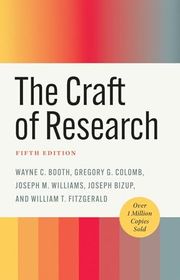
For students writing a research-based essay who need help before drafting begins. The authors connect questions, evidence, claims, and readers' objections, though the full research process is more extensive than a guide for a short timed assignment.
What it's about
The fifth edition guides readers from choosing a topic and forming a research question to evaluating evidence, building arguments, and presenting results. It explains how to anticipate readers' needs and revise a research project into a coherent account.

For writers who want their nonfiction to sound clearer and more natural. Zinsser connects revision with attention to voice and readers, though the broad craft advice provides less help with building an academic argument or organizing evidence.
What it's about
William Zinsser offers guidance on writing nonfiction with clarity and effective structure. He addresses common problems in style and wording, then applies his principles to interviews, travel, science, sports, criticism, and other forms of nonfiction.
Also recommended by
4 people Tim Ferriss recommended this book
Tim Ferriss
"I have read this book more than a dozen times, more often for thinking than for writing." - Tim Ferriss
Tim Ferriss's recommendation of this book  Matt Mullenweg recommended this book
Matt Mullenweg
"I love reading about writers and the process of writing." - Matt Mullenweg
Matt Mullenweg's recommendation of this book  Derek Sivers recommended this book
Derek Sivers
"Great blunt advice about writing better non-fiction. So inspiring." - Derek Sivers
Derek Sivers's recommendation of this book  Jodie Cook recommended this book
Jodie Cook
"A fascinating exploration of writing for different genres." - Jodie Cook
Jodie Cook's recommendation of this book

100 Ways to Improve Your Writing
Proven Professional Techniques for Writing with Style and Power
For students who prefer small, practical changes they can test on a draft immediately. Provost's brief lessons are easy to dip into, though isolated tips offer less guidance on developing a whole argument from an initial question.
What it's about
Gary Provost offers one hundred practical ways to make writing clearer and more effective. Brief explanations and examples address word choice, sentence variety, grammar, organization, and revision, giving students, business writers, and professionals techniques they can apply to a draft.

For writers who learn by studying what accomplished personal essays actually do. Lopate's varied selection reveals possibilities of voice and structure, though an anthology requires you to draw the craft lessons rather than follow a sequence of exercises.
What it's about
Phillip Lopate gathers personal essays spanning classical antiquity to modern times, with writers from several literary traditions. The anthology explores the essay's conversational voice, intimate self-examination and attention to ordinary experiences through a wide range of examples.
They Say / I Say
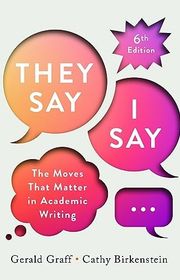
For students who can explain their own view but struggle to place it within an existing debate. Graff and Birkenstein make argumentative moves visible through templates, though those templates need adapting to avoid formulaic prose.
What it's about
Gerald Graff and Cathy Birkenstein explain how academic writers summarize others' arguments, respond with their own claims, and connect evidence with a larger conversation. Templates and examples help students practice these moves while developing a clearer argumentative voice.
Sources
- 1
Books on Academic Writing
hls.harvard.edu
- 2
Recommended Texts and Resources
web.stanford.edu
- 3
A book that can help with writing(essay).
reddit.com
- 4
4 Books for Essay Writing You Need to Know About
campusbooks.com
- 5
10 Best Books on Essay Writing
rafalreyzer.com
- 6
10 Books for Essay Writing You Need To Know About
summerboardingcourses.com
- 7
Any academic writing book recommendations ?
reddit.com




Edited by
Software engineer whose passion for tracking book recommendations from podcasts inspired the creation of MRB.
Lead investor at 3one4 Capital whose startup expertise and love for books helped shape MRB and its growth.
Comments
Spotted a missing book, a wrong order or a mistake? Tell us and we'll fix this page.
We're a reading guide, not the author or publisher, so we can't send books or pass on messages.