
6 Best Academic Writing Books
The best academic writing books, ranked by expert source recommendations, with notes to help students and researchers choose argument guides, exercises, and style.
Our take
Academic writing asks you to make a claim, show how evidence supports it, and explain why another reader should care. Different obstacles call for different books: you might need help shaping a research project, writing in academic English, making dense prose clearer, or finding a sustainable routine. These choices cover that range for students, graduate researchers, and established academics.
The Craft of Research focuses on the relationship between questions, arguments, and readers. They Say / I Say helps place your contribution in conversation with other people's ideas. Stephen Bailey's Academic Writing offers exercises for international students, while Academic Writing for Graduate Students works with the purposes and conventions of scholarly genres. Stylish Academic Writing turns attention toward readability and voice. If your main difficulty is making time and finishing drafts, How to Write a Lot addresses the work routine itself.
Start with the obstacle in your current draft, then apply a chapter before moving to the next book.
6 books · 9 sources · Last updated
As an Amazon Associate, we earn from qualifying purchases (at no extra cost to you).
How to choose from this list
Skip to the full rankingIf you need to build a research argument: The Craft of Research → They Say / I Say
If you're developing academic English: Academic Writing → Academic Writing for Graduate Students
If your draft is hard to read: Stylish Academic Writing
If you struggle to write regularly: How to Write a Lot
The 6 books, ranked
Ranked by how many expert sources name each book. Ties go to the book more people recommend.

The Craft of Research
For students and researchers who need a stronger connection between a research question, evidence, and an argument. Its attention to readers gives the project a clear purpose, but it demands more planning than a sentence-level writing guide.
What it's about
Wayne Booth and his collaborators guide readers through research, from developing questions and evaluating sources to building arguments and revising prose. The book explains how evidence, reader expectations, and responses to objections work together in a convincing research project.

Stylish Academic Writing
For academics whose prose is accurate but difficult to read. Its examples invite more deliberate choices about voice and structure, but adopting a livelier style still requires judgment about the conventions and readers of your discipline.
What it's about
Helen Sword examines academic prose across disciplines and offers techniques for making scholarship clearer and more engaging. Examples address voice, sentences, titles, openings, jargon, and structure, encouraging writers to question conventions that produce impersonal or unnecessarily abstract writing.
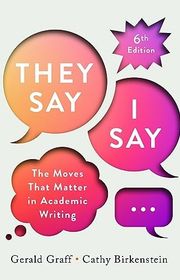
They Say / I Say
For students who need to connect their own claims with what others have written. Its templates make argumentative moves visible and usable, but treating them as fixed formulas can flatten your voice or oversimplify a debate.
What it's about
Gerald Graff and Cathy Birkenstein explain how academic writers summarize others' arguments, respond with their own claims, and connect evidence with a larger conversation. Templates and examples help students practice these moves while developing a clearer argumentative voice.

For graduate students developing the rhetorical and language skills of scholarly writing. Its tasks connect choices of wording with audience and purpose, but it works best through active exercises and discussion rather than casual browsing.
What it's about
John Swales and Christine Feak teach graduate students to write with attention to audience, purpose, and academic genres. Tasks and discussions cover summaries, critiques, and research articles, connecting language choices with the rhetorical work of participating in scholarly communities.
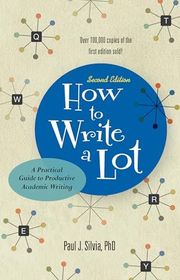
How to Write a Lot: A Practical Guide to Productive Academic Writing
For academics who know what they need to write but struggle to produce drafts consistently. Its practical focus on scheduling and tracking work complements the craft guides, but it cannot solve an unclear argument or excessive workload by itself.
What it's about
Paul J. Silvia offers advice on building a regular academic writing practice. The guide discusses setting goals, making a schedule, tracking progress, working with other writers, and approaching projects such as journal articles and books.

For international students who want explicit explanations and practice with university essays and reports. The exercise-based approach supports independent study, but advanced researchers may need more specialized guidance on disciplinary genres and publication.
What it's about
Stephen Bailey helps international students plan and write essays and reports for English-language university courses. Explanations, examples, and exercises develop the writing process and essential skills, supporting classroom learning and independent practice across a range of academic disciplines.
Sources
- 1
Recommended Books and Digital Media
uwaterloo.ca
- 2
Books on Academic Writing
students.wlu.ca
- 3
The best academic writing books: My list
languageediting.com
- 4
Reading about writing: 5 book recommendations for early-career researchers
echer.org
- 5
Any academic writing book recommendations ?
reddit.com
- 6
Good books/ guides/ handbooks for academic writing?
reddit.com
- 7
Books About Academic Writing (34 books)
goodreads.com
- 8
General Resources for Graduate Writing
gwc.gsrc.ucla.edu
- 9
Books for Academic Writing
warwick.ac.uk


Edited by
Software engineer whose passion for tracking book recommendations from podcasts inspired the creation of MRB.
Lead investor at 3one4 Capital whose startup expertise and love for books helped shape MRB and its growth.
Comments
Did we miss something? Have feedback?
Help us improve this page by sharing your thoughts