
16 Best Business Writing Books
The best business writing books, ranked by how many expert sources recommend each one, with notes to help you choose a guide for the writing you do.
Our take
Business writing includes the everyday email as well as reports, proposals, presentations, and promotional copy. The common challenge is helping a reader understand what matters and what to do next. Some books teach a complete process, from planning to revision. Others serve as desk references, explain sentence structure, or help you find language for a particular situation.
For a focused introduction, try HBR Guide to Better Business Writing or Writing That Works. Business Writing Today and Business and Professional Writing suit readers who want a more structured course with practice. The Business Writer's Handbook is useful when you need to look something up, while Words that Sell concentrates on promotional language. For clearer prose beyond workplace formats, On Writing Well and The Sense of Style offer different kinds of explanation. Start with the writing problem you face most often, then apply one lesson to a real document before moving on.
16 books · 8 sources · Last updated
As an Amazon Associate, we earn from qualifying purchases (at no extra cost to you).
How to choose from this list
Skip to the full rankingIf you're new to workplace writing: HBR Guide to Better Business Writing → Writing That Works
If you want a structured course: Business and Professional Writing → Business Writing Today
If you need a reference while working: The Business Writer's Handbook → How to Say It
If you want clearer sentences: On Writing Well → It Was the Best of Sentences, It Was the Worst of Sentences
If you write promotional copy: Words that Sell
If perfectionism stops you starting: Bird by Bird
The 16 books, ranked
Ranked by how many expert sources name each book. Ties go to the book more people recommend.

The Business Writer's Handbook
For professionals who want a reference beside them while planning or revising documents. Alphabetical entries and samples make targeted consultation straightforward, though the format is less inviting for someone seeking a short course to read in order.
What it's about
Gerald Alred, Charles Brusaw, and Walter Oliu provide an alphabetically organized reference to business writing. Sample documents and entries explain planning, research, revision, grammar, usage, and style, with guidance on adapting communication to audiences and workplace contexts.

For teams whose documents have disappeared beneath jargon and impersonal language. Its examples make corporate communication habits easy to recognize, though the provocative tone and critique offer less of a complete drafting process than a textbook.
What it's about
Brian Fugere, Chelsea Hardaway, and Jon Warshawsky examine why corporate communication becomes obscure, impersonal, relentlessly promotional, or irrelevant. Their guide uses examples to encourage clearer language, audience awareness, storytelling, humor, and a more recognizable personal voice at work.

For busy professionals who want plain advice across common workplace documents. Examples keep the emphasis on helping readers understand and act, though some communication settings and examples feel older than those in more recent digital-writing guides.
What it's about
Kenneth Roman and Joel Raphaelson explain how to make business writing clear, concise, and persuasive. Examples and practical advice cover emails, memos, reports, proposals, presentations, resumes, and speeches, showing how to organize ideas and prompt readers to act.

Business Writing For Dummies
For employees who need an approachable overview of everyday workplace writing. Its range of formats helps connect audience, tone, and purpose, though a broad reference offers less sustained practice than a course-style textbook.
What it's about
Natalie Canavor presents a process for planning, drafting, and improving workplace writing across different media. The guide explains how to adapt content, tone, and style to audiences, with examples ranging from emails and reports to proposals and online posts.

Words that Sell
More than 6000 Entries to Help You Promote Your Products, Services, and Ideas
For marketers stuck on a headline or benefit statement who want alternatives to familiar wording. The categorized entries make it quick to browse, though a phrase bank cannot supply the audience insight or evidence behind persuasive copy.
What it's about
Richard Bayan provides a categorized collection of words and phrases for promoting products, services, and ideas. Cross-references and copywriting guidance help writers develop headlines, describe benefits, and find alternatives to familiar promotional language.

For writers who want to make clear prose a habit rather than memorize a set of rules. Its discussion of simplicity and voice applies across nonfiction, though workplace formats and approval processes are not its main concern.
What it's about
William Zinsser offers guidance on writing nonfiction with clarity and effective structure. He addresses common problems in style and wording, then applies his principles to interviews, travel, science, sports, criticism, and other forms of nonfiction.
Also recommended by
4 people Tim Ferriss recommended this book
Tim Ferriss
"I have read this book more than a dozen times, more often for thinking than for writing." - Tim Ferriss
Tim Ferriss's recommendation of this book  Matt Mullenweg recommended this book
Matt Mullenweg
"I love reading about writers and the process of writing." - Matt Mullenweg
Matt Mullenweg's recommendation of this book  Derek Sivers recommended this book
Derek Sivers
"Great blunt advice about writing better non-fiction. So inspiring." - Derek Sivers
Derek Sivers's recommendation of this book  Jodie Cook recommended this book
Jodie Cook
"A fascinating exploration of writing for different genres." - Jodie Cook
Jodie Cook's recommendation of this book

The Elements of Style
For writers who want a compact reminder to cut clutter and choose words deliberately. Its brevity makes it easy to consult while editing, though some rules reflect an older prescriptive approach rather than every contemporary usage.
What it's about
William Strunk Jr.’s concise writing guide presents principles for clearer prose alongside rules of usage and composition. It addresses common errors, word choice, and unnecessary language, offering a compact reference for writers seeking greater precision and economy.
Also recommended by
3 people Tobi Lütke recommended this book
Tobi Lütke
"[My] most frequently gifted book is [this book] because I like good writing." - Tobi Lütke
Tobi Lütke's recommendation of this book  Kara Swisher recommended this book
Kara Swisher
"I reread it every year. It’s a great book." - Kara Swisher
Kara Swisher's recommendation of this book  Bill Nye recommended this book
Bill Nye
"This is my guide. I accept that I’ll never write anything as good as the introductory essay by [the author]. It’s brilliant." - Bill Nye
Bill Nye's recommendation of this book

For writers who want to understand why a sentence is hard to follow. Its cognitive perspective provides more explanation than a list of usage rules, though the extended discussion demands more attention than a quick business-writing reference.
What it's about
Steven Pinker uses cognitive science and examples of contemporary prose to explain how writing can become clearer and more effective. His guide examines style and usage while questioning rules that obscure how language actually works.
Also recommended by
1 person Brianne Kimmel recommended this book
Brianne Kimmel
"If you’re struggling to find the right words or new to writing publicly, this book is a must-read." - Brianne Kimmel
Brianne Kimmel's recommendation of this book
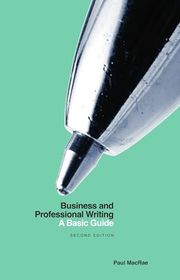
Business and Professional Writing: A Basic Guide
For students or professionals who want a structured introduction with exercises and document models. Its coverage connects correspondence, reports, and presentations, though working through a textbook takes longer than consulting a compact style guide for one immediate problem.
What it's about
Paul MacRae introduces professional communication through plain-language principles, workplace examples, and exercises. Chapters cover correspondence, reports, promotional materials, and presentations, with guidance on planning and revising documents for particular audiences and purposes in business settings.

For students or professionals who learn by working through examples and exercises. It connects writing choices with business goals more systematically than a phrase reference, though its textbook approach requires more time than a quick desk guide.
What it's about
Natalie Canavor teaches strategic business writing through examples and practice exercises. The guide covers planning messages, drafting, revision, and persuasion across emails, letters, proposals, reports, and digital media, linking writing choices with workplace goals.

HBR Guide to Better Business Writing
For professionals who need a focused introduction to clearer, more persuasive workplace prose. It connects planning and revision with reader attention, though its compact format leaves less room for extensive exercises or specialist document types.
What it's about
Bryan Garner explains how to express business ideas clearly and persuasively in emails, proposals, and other documents. The guide covers overcoming writer's block, maintaining attention, cutting excess wording, choosing tone, and improving grammar, punctuation, and usage.

For writers who avoid starting because the first draft feels inadequate. Its small-step approach and candid stories address the emotional side of writing, though it teaches neither business-document formats nor workplace communication strategy.
What it's about
A modern classic on writing and life, filled with practical advice on how to tackle large tasks by breaking them down into small, manageable pieces. Lamott shares stories from her own creative struggles, offering encouragement to anyone who battles perfectionism or writer's block.
Also recommended by
10 people- Tim Ferriss recommended this book
Tim Ferriss
"Fantastic book." - Tim Ferriss
Tim Ferriss's recommendation of this book  Daniel Pink recommended this book
Daniel Pink
"One of the greatest things ever." - Daniel Pink
Daniel Pink's recommendation of this book  Susan Cain recommended this book
Susan Cain
"I love [this book]. Such a good book." - Susan Cain
Susan Cain's recommendation of this book  Ryan Holiday recommended this book
Ryan Holiday
"Ostensibly about the art of writing, but really it too is about life and how to tackle the problems, temptations and opportunities life throws at us." - Ryan Holiday
Ryan Holiday's recommendation of this book - Matt Mullenweg recommended this book
Matt Mullenweg
"I love reading about writers and the process of writing." - Matt Mullenweg
Matt Mullenweg's recommendation of this book  Ramit Sethi recommended this book
Ramit Sethi
Ramit Sethi mentioned this book on "The Tim Ferriss Show" podcast.
Ramit Sethi's recommendation of this book +4
More recommendations
- Brian Koppelman
"Great." - Brian Koppelman
- Mark Bittman
"A really great writing book and it’s a good read." - Mark Bittman
- Mike Birbiglia
"I really like [this book]." - Mike Birbiglia
- Matt Haig
"My go-to gift or recommendation for anyone interested in writing, though it is as much a treatise on life as it is a creative-writing primer." - Matt Haig
- Brian Koppelman

For readers who like learning through contrasting examples rather than abstract rules. Charts and practical cases make revision decisions easier to see, though the broad tour of workplace formats is less focused than a specialist proposal or marketing guide.
What it's about
Wilma Davidson explains business writing through examples, charts, cartoons, and anecdotes. The guide examines what makes memos, letters, reports, selling copy, and electronic messages effective, inviting readers to practice and experiment with their own workplace communication.
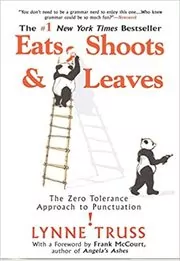
For readers who remember punctuation better through humor and examples than through a reference table. It makes small marks feel consequential, though its British perspective and deliberately strict tone do not settle every style choice.
What it's about
Truss makes a funny, surprisingly passionate case for punctuation, from apostrophes to semicolons. Mixing language history, examples, and stickler fury, it explains why tiny marks can change meaning more than most people think.

For people who need to begin a difficult letter or find an appropriate tone quickly. Its situations and sample language offer a practical starting point, though copying templates too closely can make personal or sensitive messages sound formulaic.
What it's about
Rosalie Maggio provides words, phrases, sample passages, and guidance for personal and business correspondence. The reference covers situations such as apologies, sympathy, job applications, fundraising, and invitations, helping writers choose language suited to their purpose.

It Was the Best of Sentences, It Was the Worst of Sentences
A Writer's Guide to Crafting Killer Sentences
For writers whose ideas are sound but whose sentences become tangled. Its close attention to syntax explains revision at a smaller scale than general business guides, though it does not cover organizing a complete report or proposal.
What it's about
June Casagrande examines how grammar and syntax shape effective sentences, using humorous examples to explain common weaknesses in prose. Her guide focuses on the sentence as the unit of composition, helping writers understand how structural choices affect clarity and style.
Sources
- 1
Books on Business & Technical Writing
writing.utoronto.ca
- 2
Business Writing - Books
writingclasses.com
- 3
12 Best Business Writing Books
instructionalsolutions.com
- 4
Business Writing Books
goodreads.com
- 5
5 books to improve business writing skills
bmmagazine.co.uk
- 6
What’s In Your Business Writing Library?
wordrake.com
- 7
Writing & Stylistics Guides: Writing in Business
guides.nyu.edu
- 8
Business Writing Textbooks
reddit.com




Edited by
Software engineer whose passion for tracking book recommendations from podcasts inspired the creation of MRB.
Lead investor at 3one4 Capital whose startup expertise and love for books helped shape MRB and its growth.
Comments
Spotted a missing book, a wrong order or a mistake? Tell us and we'll fix this page.
We're a reading guide, not the author or publisher, so we can't send books or pass on messages.