
5 Best Epidemiology Books
The best epidemiology books, ranked by how many expert sources recommend each one, with notes on who each suits, from new students to experienced researchers.
Our take
Epidemiology studies how health and disease are distributed across populations and how researchers investigate possible causes. Its books range from introductions to disease measures and study design to detailed treatments of bias, statistical analysis, and interpretation. These choices suit public health students, clinicians reading research, and investigators developing their methods.
For a first course, Gordis Epidemiology connects core concepts with clinical and public health examples. Jekel’s Epidemiology, Biostatistics, Preventive Medicine, and Public Health gives those ideas a broader setting alongside statistics and prevention. Epidemiology: Beyond the Basics suits readers ready to examine methodological choices in greater depth, while Modern Epidemiology serves as an advanced reference. For a narrative route into the subject, The Ghost Map follows an investigation of cholera in nineteenth-century London rather than teaching a course. Start with Gordis for structured foundations, or with the history if you want to see an epidemiological question take shape before studying the methods.
5 books · 6 sources · Last updated
As an Amazon Associate, we earn from qualifying purchases (at no extra cost to you).
How to choose from this list
Skip to the full rankingIf you're taking your first epidemiology course: Gordis Epidemiology
If you want statistics and public health alongside methods: Jekel's Epidemiology, Biostatistics, Preventive Medicine, and Public Health
If you're ready to assess research more closely: Epidemiology → Modern Epidemiology
If you want an outbreak investigation told as history: The Ghost Map
The 5 books, ranked
Ranked by how many expert sources name each book. Ties go to the book more people recommend.

Modern Epidemiology
For graduate students and researchers working through difficult questions of design, bias, and analysis. Its conceptual depth makes it valuable for reference, but the dense treatment and assumed background make it a demanding first textbook.
What it's about
Kenneth Rothman and his collaborators present a detailed reference on epidemiological concepts and research methods. Coverage connects measures of disease occurrence and effect with study design, validity, precision, and statistical analysis, emphasizing the reasoning needed to interpret population studies.

Gordis Epidemiology
For students starting epidemiology or clinicians who want a clear conceptual foundation. Its figures and applied examples make core ideas approachable, though advanced researchers will need a more detailed methods reference after this introduction.
What it's about
David Celentano and Moyses Szklo introduce epidemiology through the measurement, investigation, and interpretation of disease patterns. Examples connect study designs and evidence assessment with clinical medicine and public health, explaining how population research informs questions about causes, prevention, and outcomes.

For students who know introductory epidemiology and want to judge research methods more carefully. Szklo and Nieto connect design choices with validity and interpretation, but readers without basic study-design and statistical knowledge may find the pace demanding.
What it's about
Moyses Szklo and Javier Nieto develop epidemiological methods beyond an introductory level, connecting study design and measures of association with the assessment of research findings. Practical examples help readers consider validity, interpretation, and the methodological choices underlying observational studies.
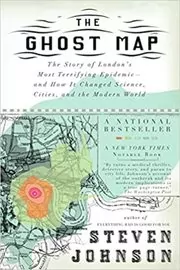
The Ghost Map
For general readers who want to understand epidemiological reasoning through a historical investigation. Its account makes the relationship between evidence and urban life tangible, but it follows one outbreak rather than teaching modern research methods.
What it's about
Set during the 1854 London cholera outbreak, this book follows physician John Snow and curate Henry Whitehead as they track a deadly epidemic. Johnson turns a public health crisis into a gripping story about cities, science, and how ideas change.

Jekel's Epidemiology, Biostatistics, Preventive Medicine, and Public Health
For medical and public health students who want epidemiology connected with statistics and prevention in one volume. Its integrated scope is useful for coursework, but each discipline receives less depth than in a dedicated specialist text.
What it's about
This textbook brings epidemiology, biostatistics, preventive medicine, and public health into a single introduction. Chapters connect study design and analysis with risk assessment, disease prevention, community health, and healthcare systems, showing how these disciplines inform clinical and population-level decisions.
Sources




Edited by
Software engineer whose passion for tracking book recommendations from podcasts inspired the creation of MRB.
Lead investor at 3one4 Capital whose startup expertise and love for books helped shape MRB and its growth.
Comments
Spotted a missing book, a wrong order or a mistake? Tell us and we'll fix this page.
We're a reading guide, not the author or publisher, so we can't send books or pass on messages.