
5 Best Public Health Books
The best public health books, ranked by how many expert sources recommend each one, with notes on who they suit and where to start learning.
Our take
Public health asks how communities prevent illness and create conditions in which people can stay well. That includes outbreaks and vaccination campaigns, but also housing, inequality, communication, and trust. These books suit readers who want to understand the field through real events and people's experiences. They offer narrative and policy perspectives rather than a single comprehensive textbook.
The Ghost Map provides a historical introduction to investigating disease, while House on Fire follows the work of eradicating smallpox. The Hot Zone offers a more dramatic outbreak narrative. For a wider view of the conditions shaping health, The Health Gap turns toward inequality and social policy. The Spirit Catches You and You Fall Down explores what happens when families and medical institutions struggle to understand one another. Start with the question that interests you most, then pair a focused case with the broader perspective of The Health Gap.
5 books · 8 sources · Last updated
As an Amazon Associate, we earn from qualifying purchases (at no extra cost to you).
How to choose from this list
Skip to the full rankingIf you're new to epidemiology: The Ghost Map → House on Fire
If you want outbreak narratives: The Hot Zone → House on Fire
If you want to understand health inequality: The Health Gap
If you want to explore culture and communication: The Spirit Catches You and You Fall Down → The Health Gap
The 5 books, ranked
Ranked by how many expert sources name each book. Ties go to the book more people recommend.

The Health Gap
For readers interested in why health differs across social groups. Marmot offers a broader account of inequality than outbreak histories, though the research and policy argument require more attention than a fast-moving narrative.
What it's about
Michael Marmot examines how social conditions shape differences in health within and between countries. Research and examples connect education, work, income, and unequal power with health outcomes, supporting his argument for addressing the social foundations of health inequity.

For readers who want to understand how an eradication campaign worked from an insider's perspective. Foege connects strategy with cooperation and field decisions, though the personal account centers on smallpox rather than surveying public health broadly.
What it's about
William Foege recounts his role in the international campaign to eradicate smallpox. Combining autobiography with public health history, he describes work in Africa and India, the development of targeted vaccination strategies, and the cooperation needed to eliminate the disease.
Also recommended by
1 person Bill Gates recommended this book
Bill Gates
"The amazing story of the eradication of smallpox." - Bill Gates
Bill Gates's recommendation of this book
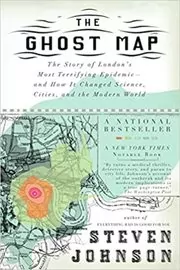
The Ghost Map
For beginners curious about the detective work behind epidemiology. Johnson connects a specific cholera investigation with the workings of a city, though its narrow historical case cannot replace a general account of modern public health.
What it's about
Set during the 1854 London cholera outbreak, this book follows physician John Snow and curate Henry Whitehead as they track a deadly epidemic. Johnson turns a public health crisis into a gripping story about cities, science, and how ideas change.

The Spirit Catches You and You Fall Down
A Hmong Child, Her American Doctors, and the Collision of Two Cultures
For readers interested in communication, migration, and trust in health care. Fadiman's close account makes institutional and cultural misunderstandings tangible, though one family's experience cannot represent every Hmong patient or every health system.
What it's about
Anne Fadiman investigates the care of Lia Lee, a Hmong child with epilepsy in California. Her account explores how her family's beliefs and American medical practice collide, placing their experience within Hmong history and refugee life.

For readers drawn to fast-paced outbreak narratives. Preston makes laboratory work and emergency response feel immediate, though the dramatic treatment is a historical account rather than a current guide to Ebola risk or public health practice.
What it's about
Richard Preston recounts encounters with Ebola and Marburg viruses, tracing outbreaks from Africa to a research facility in Virginia. The nonfiction narrative follows scientists and responders working to identify lethal infections and contain a frightening biological emergency.
Also recommended by
2 people Safi Bahcall recommended this book
Safi Bahcall
Safi Bahcall mentioned this book on "The Tim Ferriss Show" podcast.
Safi Bahcall's recommendation of this book  Jonathan Eisen recommended this book
Jonathan Eisen
Jonathan Eisen mentioned this book on his "Some of my favorite books about Infectious Disease" list.
Jonathan Eisen's recommendation of this book
Sources
- 1
Public health: Subject Guide
rcn.org.uk
- 2
100 Best Public Health Books of All Time
shortform.com
- 3
Public Health Books
goodreads.com
- 4
10 Public Health Books To Add to Your 2021 Reading List (Book List)
thephmillennial.com
- 5
The Best Public Health Books
publichealthjobs.co.uk
- 6
The best books on Public Health
fivebooks.com
- 7
Book Recs focused on Public Health
reddit.com
- 8
Looking for public health book recommendations
reddit.com







Edited by
Software engineer whose passion for tracking book recommendations from podcasts inspired the creation of MRB.
Lead investor at 3one4 Capital whose startup expertise and love for books helped shape MRB and its growth.
Comments
Spotted a missing book, a wrong order or a mistake? Tell us and we'll fix this page.
We're a reading guide, not the author or publisher, so we can't send books or pass on messages.