
17 Best Creativity Books
The best creativity books, ranked by how many expert sources recommend each one, with notes on who each suits, from starting a practice to leading teams.
Our take
Creativity books address different obstacles: starting despite self-doubt, building a working routine, finding ideas, and helping other people make good work together. Some offer short prompts and encouragement. Others examine psychology, artistic practice, or the organizations surrounding a creative project.
Steal Like an Artist is an approachable place to question the demand for complete originality. The Creative Habit takes a more disciplined route through preparation and exercises, while The War of Art challenges avoidance in a forceful voice. Big Magic offers a gentler, more personal invitation to keep making things. For a different question, Creativity, Inc. focuses on teams and leadership. Cameron's original The Artist's Way provides a longer course; the Morning Pages journal listed here is a separate companion for its daily writing practice. You can also use ordinary paper for that practice.
Start with Steal Like an Artist for a quick entry, then choose a routine-focused book if sustaining the work is the harder part.
17 books · 12 sources · Last updated
As an Amazon Associate, we earn from qualifying purchases (at no extra cost to you).
How to choose from this list
Skip to the full rankingIf you're hesitant to begin: Steal Like an Artist → Big Magic
If you want a dependable creative routine: The Creative Habit → Keep Going
If you're struggling with avoidance: The War of Art
If you want to share work more comfortably: Show Your Work!
If you lead a creative team: Creative Confidence → Creativity, Inc.
If you're curious about where ideas come from: Where Good Ideas Come From → Flow
The 17 books, ranked
Ranked by how many expert sources name each book. Ties go to the book more people recommend.

For readers intimidated by originality, Kleon offers a short, visual invitation to learn from influences and start making. The compact format lowers the barrier to action, though its prompts provide less depth than an extended course or research-based study.
What it's about
Austin Kleon offers ten lessons for developing a creative practice, beginning with learning from influences. His illustrated guide encourages making things, pursuing side projects, sharing work, and shaping a distinctive voice through everyday habits.
Also recommended by
1 person Chase Jarvis recommended this book
Chase Jarvis
"Super small, fast read." - Chase Jarvis
Chase Jarvis's recommendation of this book

For readers who keep postponing work they care about, Pressfield offers a compact and forceful challenge to avoidance. The direct voice can prompt action, though its combative framing and spiritual passages won't fit every reader's circumstances.
What it's about
Pressfield names the inner enemy of creative work, Resistance, then breaks down how fear, procrastination, and self-sabotage keep people from doing what matters. It is short, blunt, and aimed at writers, artists, entrepreneurs, and anyone stuck at the starting line.
Also recommended by
16 people Joe Rogan recommended this book
Joe Rogan
"A great book about harnessing creativity." - Joe Rogan
Joe Rogan's recommendation of this book  Lex Fridman recommended this book
Lex Fridman
"Beautiful book." - Lex Fridman
Lex Fridman's recommendation of this book  Aubrey Marcus recommended this book
Aubrey Marcus
"One of the most influential books in my life." - Aubrey Marcus
Aubrey Marcus's recommendation of this book  Ryan Holiday recommended this book
Ryan Holiday
One of Ryan Holiday's 2 answers to "what book are you most likely to give out as a gift?"
Ryan Holiday's recommendation of this book  Seth Godin recommended this book
Seth Godin
Seth Godin mentioned this book on "The Tim Ferriss Show" podcast.
Seth Godin's recommendation of this book  Brian Koppelman recommended this book
Brian Koppelman
"Talks about resistance." - Brian Koppelman
Brian Koppelman's recommendation of this book +10
More recommendations
- Marie Forleo
"The essential no-bullshit guide for anyone who battles self-doubt or struggles to bring any important project to life." - Marie Forleo
- Daniel Pink
"I have [a little sign] on my desk here that says, 'Beat the resistance.' So, I’ve given [this book] out a lot too." - Daniel Pink
- Derek Sivers
"Are you a writer who doesn’t write, a painter who doesn’t paint, an entrepreneur who never starts a venture? Then you know what “Resistance” is. This book is about that. Read it." - Derek Sivers
- Soman Chainani
"Half drill sergeant, half Zen voodoo master, [the author] shot me out of my stupor and taught me the meaning of creative discipline." - Soman Chainani
- Russell Moore
"About showing up and not waiting for inspiration to hit." - Russell Moore
- Jen Sincero
"Read this thing if you want to blast past your fears and insecurities and resistance to being your biggest, badassiest self." - Jen Sincero
- Jodie Cook
"This book is a sharp reality check for every artist. It will help you become unblocked, right now and possibly forever." - Jodie Cook
- Danny Miranda
"Odds of re-reading: close to 100%." - Danny Miranda
- James Clear
"[One of] the 10 best nonfiction books of all-time." - James Clear
- Michael Hyatt
Michael Hyatt recommended this book on his website.
- Marie Forleo

For readers who want creative practice grounded in preparation and routine, Tharp combines working experience with exercises. The disciplined perspective complements more inspirational books, though the choreography examples and demanding work ethic require adapting to your own medium.
What it's about
Twyla Tharp draws on her experience as a choreographer to explain creativity as a practice built through preparation and effort. Anecdotes and thirty-two exercises explore routines, observation, skill, and overcoming obstacles across artistic and everyday work.
Also recommended by
1 person Jen Sincero recommended this book
Jen Sincero
"As the title suggests, it’s all about creating good habits, which, if you do nothing else, will completely change your life for the better." - Jen Sincero
Jen Sincero's recommendation of this book

For readers whose creative ambitions feel burdened by fear or expectations, Gilbert offers an encouraging, personal perspective. The permission-giving tone can make starting feel easier, though the spiritual language and anecdotes aren't a systematic account of creativity research.
What it's about
Part memoir and part guide, Big Magic invites readers to treat creativity as a daily practice, not a grand performance, offering practical stories and gentle challenges for anyone who wants to make things without letting perfectionism or fear take over.

Creativity, Inc.
Overcoming the Unseen Forces That Stand in the Way of True Inspiration
For people leading creative teams, Catmull connects imaginative work with feedback, trust, and organizational habits. Its first-person Pixar perspective gives the ideas substance, though leaders in smaller or less well-resourced organizations will need to adapt them.
What it's about
Ed Catmull draws on the development of Pixar to explain how leaders can support creative teams. He examines risk, communication, collaboration, and organizational habits that help protect imaginative work while sustaining a successful business.
Also recommended by
8 people Ezra Klein recommended this book
Ezra Klein
"An amazing, amazing book." - Ezra Klein
Ezra Klein's recommendation of this book  Mark Zuckerberg recommended this book
Mark Zuckerberg
"I love reading first-hand accounts about how people build great companies like Pixar and nurture innovation and creativity." - Mark Zuckerberg
Mark Zuckerberg's recommendation of this book  Jason Calacanis recommended this book
Jason Calacanis
"Pixar has made some of the greatest stories of our time, but [the author]’s personal story, is perhaps the greatest story that has come out of Pixar." - Jason Calacanis
Jason Calacanis's recommendation of this book  Demis Hassabis recommended this book
Demis Hassabis
"About Pixar." - Demis Hassabis
Demis Hassabis's recommendation of this book  Alexis Ohanian recommended this book
Alexis Ohanian
"Must read." - Alexis Ohanian
Alexis Ohanian's recommendation of this book  Michael Mauboussin recommended this book
Michael Mauboussin
"Best business book I've read in a long time." - Michael Mauboussin
Michael Mauboussin's recommendation of this book +2
More recommendations
- Patrick O'Shaughnessy
"One of the most entertaining and useful business books I’ve ever read." - Patrick O'Shaughnessy
- Trung Phan
"About the Animation industry." - Trung Phan
- Patrick O'Shaughnessy

For readers interested in the psychology of absorption rather than a collection of creative prompts, Csikszentmihalyi offers a broader conceptual foundation. Its account of attention encourages reflection, though the research-led discussion is slower than a practical workbook.
What it's about
Psychologist Mihaly Csikszentmihalyi explores flow, the state of deep absorption in an activity that challenges one's abilities. Drawing on research into optimal experience, he examines how attention, clear goals, and meaningful engagement can contribute to satisfaction in daily life.
Also recommended by
3 people Kishore Biyani recommended this book
Kishore Biyani
"Taught me one of the best values in life — achieving a state of flow." - Kishore Biyani
Kishore Biyani's recommendation of this book  Raoul Pal recommended this book
Raoul Pal
"A great book." - Raoul Pal
Raoul Pal's recommendation of this book  Pavel Durov recommended this book
Pavel Durov
Pavel Durov recommended this book in an interview.
Pavel Durov's recommendation of this book

For people who think creativity belongs only to artists, the Kelleys connect experimentation with everyday problem-solving. The workplace examples provide a practical bridge into design thinking, though the broadly encouraging tone offers less depth on individual artistic technique.
What it's about
Tom and David Kelley argue that creativity can be developed through practice. Drawing on IDEO and Stanford's design school, they offer examples and strategies for overcoming hesitation, generating ideas, and applying creative approaches to work and everyday problems.

For readers who want a brief framework they can remember while developing ideas. Young connects preparation and incubation in a clear sequence, though the advertising background and short treatment leave much of the practical experimentation to the reader.
What it's about
James Webb Young presents a brief, five-stage approach to creative thinking informed by his advertising career. He describes gathering and processing material, allowing ideas to incubate, recognizing insight, and developing a concept for practical use.
Also recommended by
1 person Patrick O'Shaughnessy recommended this book
Patrick O'Shaughnessy
"If you prefer fast reads and only want to read one of these books, this is the one for you." - Patrick O'Shaughnessy
Patrick O'Shaughnessy's recommendation of this book

For readers who want deliberate ways to challenge familiar assumptions. De Bono gives shifts of perspective a practical vocabulary and exercises, though using the methods takes practice and their systematic framing can feel mechanical at first.
What it's about
Edward de Bono introduces lateral thinking as a deliberate approach to developing new ideas and restructuring familiar assumptions. Examples and exercises explore alternatives, provocation, and changes of perspective as tools for creative problem solving.
Also recommended by
1 person- Patrick O'Shaughnessy recommended this book
Patrick O'Shaughnessy
"Refreshing and extremely helpful." - Patrick O'Shaughnessy
Patrick O'Shaughnessy's recommendation of this book
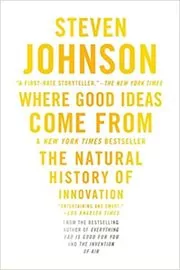
For readers interested in the environments that support invention, Johnson offers a wider lens than personal productivity guides. The historical patterns encourage thinking about connections and collaboration, though the broad argument provides fewer immediate exercises for individual artistic work.
What it's about
Johnson looks for the conditions that help breakthrough ideas develop, arguing that innovation usually grows from networks, slow hunches, and chance connections. Drawing on science, history, and business, he challenges the myth of the lone genius.
Also recommended by
4 people Bill Gates recommended this book
Bill Gates
"Quite good at giving examples of how you create environments that can encourage good ideas." - Bill Gates
Bill Gates's recommendation of this book  Jason Silva recommended this book
Jason Silva
One of the books in a "list of favorite books" Jason Silva tweeted about.
Jason Silva's recommendation of this book  Tony Hsieh recommended this book
Tony Hsieh
One of 4 books Tony Hsieh recommended in Inc.com
Tony Hsieh's recommendation of this book  Sam Hinkie recommended this book
Sam Hinkie
Sam Hinkie mentioned this book in a letter to the equity partners of Philadelphia 76ers.
Sam Hinkie's recommendation of this book

For makers who hesitate to show unfinished work or explain their process, Kleon offers a concise approach to sharing. Its practical encouragement complements Steal Like an Artist, though visibility advice needs adapting to your privacy, profession, and audience.
What it's about
Austin Kleon explains how sharing the process behind creative work can help build an audience. His ten-part guide covers storytelling, teaching, regular sharing, and handling the difficulties of putting work into public view.
Also recommended by
3 people Derek Sivers recommended this book
Derek Sivers
Derek Sivers recommended this book in the "Tools of Titans" book.
Derek Sivers's recommendation of this book - Chase Jarvis recommended this book
Chase Jarvis
Chase Jarvis mentioned this book on "The Tim Ferriss Show" podcast.
Chase Jarvis's recommendation of this book  Ali Abdaal recommended this book
Ali Abdaal
"Completely changed the way I thought about sharing stuff online." - Ali Abdaal
Ali Abdaal's recommendation of this book

For people whose main problem is finishing ideas rather than finding them. Belsky connects organization and collaboration with creative execution, though the project-management emphasis gives less help with the earlier, exploratory stage of thinking.
What it's about
Scott Belsky examines how creative individuals and teams turn ideas into finished work. Drawing on their habits, he presents methods for organization, collaboration, and leadership, emphasizing that execution requires practices that can be developed rather than inspiration alone.
Also recommended by
1 person Simon Sinek recommended this book
Simon Sinek
Simon Sinek recommended this book on Twitter.
Simon Sinek's recommendation of this book

For readers who want a brief visual challenge to cautious professional habits, Arden draws on advertising to make ambition approachable. The punchy format rewards browsing, though its provocative maxims need interpretation rather than literal application to every career.
What it's about
Paul Arden draws on advertising experience to offer concise reflections on ambition, creativity, and professional success. Using visual spreads and humorous observations, he discusses solving problems, responding to criticism, communicating ideas, and learning from mistakes.
Also recommended by
1 person Casey Neistat recommended this book
Casey Neistat
"The reason why I gift [this book] is because you can read it in 40 minutes." - Casey Neistat
Casey Neistat's recommendation of this book

For readers who have started making things but struggle to sustain the habit, Kleon emphasizes manageable daily attention. The short illustrated format makes it easy to revisit, though its supportive reminders provide less structure than an extended program.
What it's about
Austin Kleon offers ten approaches to sustaining creative work through changing circumstances. He encourages daily practice, attention to ordinary experiences, room to reconsider ideas, and habits that help people remain engaged with making things.
Also recommended by
1 person- Ryan Holiday recommended this book
Ryan Holiday
"[One of] the best books I read [in 2019]." - Ryan Holiday
Ryan Holiday's recommendation of this book
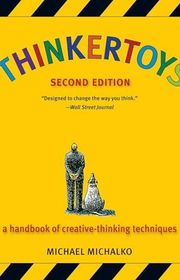
Thinkertoys: A Handbook of Creative-Thinking Techniques
For readers who want concrete exercises to use on a particular problem. Michalko's range offers several routes beyond a habitual answer, though the handbook format asks you to select and practice techniques rather than follow one continuous course.
What it's about
Michael Michalko gathers creative-thinking exercises for individuals and groups. Examples and structured techniques encourage readers to reframe problems, question assumptions, make unfamiliar connections, and generate alternative possibilities, providing a collection of tools to apply across practical situations.

The Laws of Simplicity
For designers and problem-solvers who want to question unnecessary complexity. Maeda's compact principles offer memorable prompts for making choices, though the reflective examples require interpretation and do not form a complete process for generating new ideas.
What it's about
John Maeda presents ten principles for balancing simplicity and complexity in design, technology, business, and daily life. He explores reduction, organization, and meaningful additions while acknowledging that some problems resist simplification.

For readers already using Cameron's Morning Pages practice who want a dedicated place to continue it, this journal supplies a focused companion. The format supports daily writing, though it doesn't replace the original Artist's Way course or require special stationery.
What it's about
Julia Cameron provides a companion journal for the Morning Pages practice introduced in The Artist's Way. An introduction and instructions guide readers in using daily private writing to explore their thoughts, fears, aspirations, and experiences.
Also recommended by
3 people Tim Ferriss recommended this book
Tim Ferriss
"Nearly every morning, I sit down with a hot cocktail of turmeric, ginger, pu-erh tea, and green tea. Next, I crack open [this book]." - Tim Ferriss
Tim Ferriss's recommendation of this book - Brian Koppelman recommended this book
Brian Koppelman
"The closest thing to magic I’ve come across. That if you really do it every day in a real disciplined practice, something happens to your subconscious that allows you to get your most creative place." - Brian Koppelman
Brian Koppelman's recommendation of this book  Russell Brand recommended this book
Russell Brand
"I love it. A practical, spiritual, nurturing book." - Russell Brand
Russell Brand's recommendation of this book
Sources
- 1
12 Best Books On Creativity You Should Read - Creative Book
proactivecreative.com
- 2
14 Best Creativity Books To Read
teambuilding.com
- 3
15 Books About Creativity to Get You Out of a Creative Rut
marieforleo.com
- 4
Creativity Books
goodreads.com
- 5
100 Best Creativity Books of All Time (Updated for 2026)
shortform.com
- 6
Book recs for finding your creative spark again when you feel like you have zero ideas/motivation and don’t even know why you make art anymore?
reddit.com
- 7
Creative Thinking Books
goodreads.com
- 8
Books that help me think creatively : r/BooksThatFeelLikeThis
reddit.com
- 9
Best Creativity Books - James Clear
jamesclear.com
- 10
The 10 best Books on Creativity (The essential list you must read)
shelleywalsh.com
- 11
Books on creativity? Inspiration for own creative journey? : r/Recommend_A_Book
reddit.com
- 12
10 Must-Read Books on Creative Thinking - HatRabbits
hatrabbits.com



Edited by
Software engineer whose passion for tracking book recommendations from podcasts inspired the creation of MRB.
Lead investor at 3one4 Capital whose startup expertise and love for books helped shape MRB and its growth.
Comments
Spotted a missing book, a wrong order or a mistake? Tell us and we'll fix this page.
We're a reading guide, not the author or publisher, so we can't send books or pass on messages.