
12 Best Infectious Diseases Books
The best infectious disease books, ranked by how many expert sources recommend each, with notes on science, history, public health, and where to begin.
Our take
Infectious disease connects biology with the conditions in which people live, work, travel, and receive care. A book might explain how pathogens behave, follow investigators trying to understand an outbreak, or examine why an infection has very different effects across communities. Those approaches suit different questions, from scientific curiosity to an interest in history and public institutions.
A Planet of Viruses offers a short biological introduction, while Spillover develops the ecological story through field reporting. The Great Influenza follows the 1918 pandemic with particular attention to American medicine; Pale Rider takes a wider global and social view. The Ghost Map narrows the scale to one urban outbreak, and Typhoid Mary examines conflicts around public health and individual liberty. Polio adds the scientific and social work surrounding vaccines. Start with the concise science if the terminology is new, then choose an outbreak history or social account that matches the questions you want to explore.
12 books · 4 sources · Last updated
As an Amazon Associate, we earn from qualifying purchases (at no extra cost to you).
How to choose from this list
Skip to the full rankingIf you want an accessible science introduction: A Planet of Viruses → Spillover
If you want to understand the 1918 pandemic: The Great Influenza → Pale Rider
If you want a focused outbreak investigation: The Ghost Map
If you want vaccine history: Polio
If you want disease and inequality: Everything Is Tuberculosis → Typhoid Mary
If you want a broad historical perspective: Plagues and Peoples
The 12 books, ranked
Ranked by how many expert sources name each book. Ties go to the book more people recommend.

For readers who want a detailed account of the 1918 pandemic and the development of American medicine. Its attention to researchers and institutions gives scientific uncertainty context, though the American emphasis is narrower than Pale Rider's global approach.
What it's about
John Barry recounts the 1918 influenza pandemic against the backdrop of World War I and the transformation of American medicine. He follows researchers, physicians, and public officials confronting a catastrophe shaped by scientific uncertainty, wartime pressures, and communication failures.
Also recommended by
3 people Balaji Srinivasan recommended this book
Balaji Srinivasan
Balaji Srinivasan recommended this book on Twitter.
Balaji Srinivasan's recommendation of this book  Hugh Hewitt recommended this book
Hugh Hewitt
"It is eerie how so much of it is so relevant and how the epilogue was so prescient." - Hugh Hewitt
Hugh Hewitt's recommendation of this book  Brad Feld recommended this book
Brad Feld
"A remarkable book." - Brad Feld
Brad Feld's recommendation of this book

For readers curious about how ecology and human activity shape emerging infections. Quammen's field reporting links researchers with the environments they investigate, though the length and publication-era science make it a larger commitment than a short virology introduction.
What it's about
David Quammen investigates infections that pass from animals to humans, tracing outbreaks and interviewing researchers around the world. His reporting connects ecology, human behavior, and disease transmission to explain why emerging pathogens can become pandemic threats.
Also recommended by
1 person Jonathan Eisen recommended this book
Jonathan Eisen
Jonathan Eisen mentioned this book on his "Some of my favorite books about Infectious Disease" list.
Jonathan Eisen's recommendation of this book
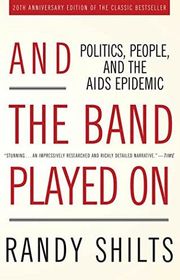
And the Band Played On
For readers studying the early AIDS epidemic and institutional failures surrounding it. Its detailed reporting captures the urgency and prejudice of the period, though later research has challenged parts of its account, especially the framing of an alleged first patient.
What it's about
Randy Shilts recounts the early years of the AIDS epidemic through patients, activists, researchers, and public officials. The narrative examines scientific uncertainty, political decisions, media attention, and prejudice as communities struggled to understand and respond to a new crisis.

A Planet of Viruses
For general readers who want a short introduction to viruses beyond frightening outbreak stories. Its ecological and evolutionary scope broadens the picture, though the concise essays provide less depth on any single infection than a specialist book.
What it's about
Carl Zimmer introduces viruses through accounts of their effects on humans, other organisms, and the biosphere. The book explores their evolutionary history, roles in disease, and surprising contributions to life, extending beyond their reputation as infectious threats.
Also recommended by
1 person- Jonathan Eisen recommended this book
Jonathan Eisen
Jonathan Eisen mentioned this book on his "Some of my favorite books about Viruses" list.
Jonathan Eisen's recommendation of this book

For readers who want to understand the 1918 pandemic across societies and beyond its immediate death toll. Its global social perspective complements researcher-centered histories, though it offers less sustained detail on individual American laboratories and physicians.
What it's about
Laura Spinney traces the influenza pandemic of 1918 across communities around the world. Her history explores how the outbreak spread, how people responded, and its lasting effects on politics, race relations, families, medicine, and cultural life.
Also recommended by
1 person- Balaji Srinivasan recommended this book
Balaji Srinivasan
Balaji Srinivasan recommended this book on Twitter.
Balaji Srinivasan's recommendation of this book

Everything Is Tuberculosis
For readers interested in why an infection persists despite scientific progress. Its connection between a personal story and social barriers makes inequality tangible, though the narrative and advocacy focus offers less technical detail than a specialist medical account.
What it's about
Everything Is Tuberculosis follows a young man named Henry through drug resistant TB treatment while tracing how this curable disease became the world's deadliest infection. Green braids biography, science, and history into an accessible look at global health, injustice, and what real treatment would require.
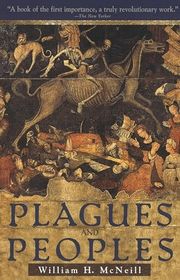
Plagues and Peoples
For readers who want disease placed within a broad history of human societies. Its attention to interactions between populations and pathogens connects events across regions, though the large-scale synthesis reflects older evidence and sometimes necessarily speculative historical explanations.
What it's about
William H. McNeill examines the role of epidemic disease in human history, connecting infections with population movement, conquest, and social change. His broad survey follows interactions between societies and pathogens across different regions and historical periods.
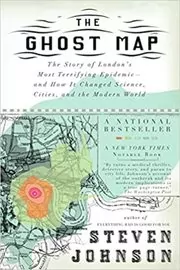
The Ghost Map
For readers who prefer a focused historical investigation to a broad disease survey. Its neighborhood scale makes evidence gathering and urban conditions concrete, though one outbreak cannot represent the full development of epidemiology or public health.
What it's about
Set during the 1854 London cholera outbreak, this book follows physician John Snow and curate Henry Whitehead as they track a deadly epidemic. Johnson turns a public health crisis into a gripping story about cities, science, and how ideas change.

For readers interested in how disease fits into a large argument about human history. Its connections between environment, farming, and power encourage broad thinking, though the sweeping interpretive framework is less useful for understanding particular pathogens or outbreaks.
What it's about
Jared Diamond examines why different societies developed unequal levels of power and wealth. He emphasizes geography, available plants and animals, food production, disease, and technology as explanations for historical differences, challenging accounts based on racial superiority.
Also recommended by
12 people Joe Rogan recommended this book
Joe Rogan
"An amazing book." - Joe Rogan
Joe Rogan's recommendation of this book  Bill Gates recommended this book
Bill Gates
"Fascinating.... Lays a foundation for understanding human history." - Bill Gates
Bill Gates's recommendation of this book  Charlie Munger recommended this book
Charlie Munger
Charlie Munger recommended this book in the "Poor Charlie's Almanack" book.
Charlie Munger's recommendation of this book  Simon Sinek recommended this book
Simon Sinek
"Offers us a new and remarkably simple way of looking at our world." - Simon Sinek
Simon Sinek's recommendation of this book  Daniel Ek recommended this book
Daniel Ek
"A brilliant Pulitzer Prize-winning book about how the modern world was formed, analyzing how societies developed differently on different continents." - Daniel Ek
Daniel Ek's recommendation of this book  Jesse Williams recommended this book
Jesse Williams
"Helped rid me of the nagging incompleteness in my understood connection between the successes and failings of ancient and modern civilizations." - Jesse Williams
Jesse Williams's recommendation of this book +6
More recommendations
- Stewart Brand
"The main [book by this author]." - Stewart Brand
- Patrick Arnold
"Gave a big eye opening on why certain people of the world are more advanced than others and behave a certain way, as opposed to just genetics and this person is smarter because of this or that." - Patrick Arnold
- Jamie Dimon
On Jamie Dimon's list of favorite books.
- Margaret Atwood
"Also does pandemics." - Margaret Atwood
- Mark Manson
Mark Manson recommended this book on his website.
- James Clear
"[One of] the 10 best nonfiction books of all-time." - James Clear
- Stewart Brand

For readers interested in vaccine development as a scientific and public undertaking. Its attention to rivalry, fundraising, and popular fear connects laboratories with society, though the American focus gives less coverage to polio's wider global history.
What it's about
David Oshinsky traces the American struggle against polio, from public fear and fundraising to vaccine development. The narrative centers on Jonas Salk and Albert Sabin while exploring the scientific rivalries and social atmosphere of postwar America.
Also recommended by
1 person- Bill Gates recommended this book
Bill Gates
"Influenced the decision that Melinda and I made to make polio eradication the top priority of the foundation, as well as my own personal priority." - Bill Gates
Bill Gates's recommendation of this book

For readers who want an investigator's personal view of outbreak work and laboratory pressures. Its firsthand stories bring the profession closer than a general history, though a memoir from an earlier period reflects one career and its contemporary understanding.
What it's about
C. J. Peters recounts three decades of investigating and combating dangerous viruses in this memoir written with Mark Olshaker. Experiences in outbreaks and high-containment laboratories illuminate the practical challenges of studying infectious agents, protecting workers, and recognizing emerging threats.

For readers interested in the tension between disease control and individual rights. Its social-historical approach gives prejudice, work, and personal experience sustained attention, though it concentrates on one case rather than surveying infectious disease science.
What it's about
Judith Walzer Leavitt examines the life of Mary Mallon, the Irish immigrant cook known as Typhoid Mary. Combining biography with social history, she explores disease control, prejudice, and conflicting perspectives on the tension between individual liberty and public health.
Sources



Edited by
Software engineer whose passion for tracking book recommendations from podcasts inspired the creation of MRB.
Lead investor at 3one4 Capital whose startup expertise and love for books helped shape MRB and its growth.
Comments
Spotted a missing book, a wrong order or a mistake? Tell us and we'll fix this page.
We're a reading guide, not the author or publisher, so we can't send books or pass on messages.