
14 Best English Grammar Books
The best English grammar books, ranked by expert-source recommendations, with notes for learners and writers choosing workbooks, usage guides and references.
Our take
English grammar books serve different readers. Someone learning everyday structures needs explanations and exercises, while a fluent writer may want help with usage or sentence clarity. A linguistics student needs another kind of book: one that describes how sentences work rather than simply listing preferred forms. Choosing between these approaches matters more than choosing the largest volume.
Essential Grammar in Use introduces elementary structures, and English Grammar in Use: A Self-Study Reference and Practice Book for Intermediate Learners of English supports the next stage. Practical English Usage answers specific questions. For fluent writers, The Sense of Style: The Thinking Person's Guide to Writing in the 21st Century discusses clarity, while Several Short Sentences About Writing develops attention to sentence-making. A Student's Introduction to English Grammar and The Cambridge Grammar of the English Language take a descriptive, analytical approach.
Begin with the Murphy book suited to your level if you are learning English, or choose Practical English Usage when you mainly need to look things up.
14 books · 8 sources · Last updated
As an Amazon Associate, we earn from qualifying purchases (at no extra cost to you).
How to choose from this list
Skip to the full rankingIf you are learning elementary English: Essential Grammar in Use → English Grammar in Use: A Self-Study Reference and Practice Book for Intermediate Learners of English
If you want advanced learner practice: Advanced Grammar in Use → Practical English Usage
If you want rules with practice checks: The Blue Book of Grammar and Punctuation: An Easy-to-Use Guide with Clear Rules, Real-World Examples, and Reproducible Quizzes
If you want clearer writing: Several Short Sentences About Writing → The Sense of Style: The Thinking Person's Guide to Writing in the 21st Century
If you want accessible usage discussion: Woe Is I: The Grammarphobe's Guide to Better English in Plain English → An A-Z of English Grammar & Usage
If you want descriptive sentence analysis: A Student's Introduction to English Grammar → The Cambridge Grammar of the English Language
The 14 books, ranked
Ranked by how many expert sources name each book. Ties go to the book more people recommend.

English Grammar in Use
A Self-Study Reference and Practice Book for Intermediate Learners of English
For intermediate English learners who want explanations and practice in manageable units. Its reference-and-exercise layout suits independent review better than the large grammars, but it assumes basic proficiency and is not designed primarily to improve an experienced writer’s style.
What it's about
Raymond Murphy provides grammar explanations and practice exercises for intermediate learners of English. This self-study reference pairs clear examples with activities and answers, allowing readers to review particular topics independently or work through the material as part of classroom study.
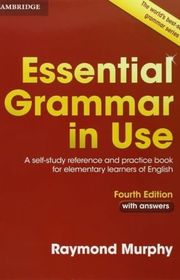
Essential Grammar in Use
For elementary English learners who need clear examples and regular practice. Its short units make a more suitable starting point than the intermediate Murphy book, but it teaches foundational usage rather than advanced sentence analysis or writing style.
What it's about
Raymond Murphy introduces elementary English grammar through explanations, examples and exercises. The fourth edition with answers supports self-study and classroom review, helping learners practice common structures before moving to intermediate grammar and more complex language use.
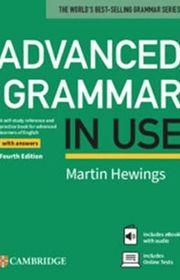
Advanced Grammar in Use
For advanced English learners refining distinctions that basic courses leave unresolved. Its explanation-and-practice units support targeted review more directly than a general style guide, but it assumes strong English and is not an introduction to grammatical linguistics.
What it's about
Martin Hewings develops advanced English grammar through focused explanations and exercises. This edition includes answers, an eBook and an online test, supporting learners who want to investigate more complex structures and check their understanding through independent practice.
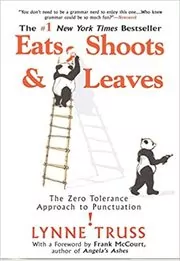
For readers who want an entertaining introduction to why punctuation matters. Its comic examples make small marks memorable, but the strongly prescriptive voice and British emphasis should be distinguished from a comprehensive account of English grammar.
What it's about
Truss makes a funny, surprisingly passionate case for punctuation, from apostrophes to semicolons. Mixing language history, examples, and stickler fury, it explains why tiny marks can change meaning more than most people think.

Practical English Usage
For teachers and learners who need to resolve particular grammar or vocabulary questions. Its detailed explanations are more useful for troubleshooting than a general writing guide, but the reference format provides less of a continuous practice sequence.
What it's about
Michael Swan answers common questions about English grammar and vocabulary for learners and teachers. This edition pairs a grammar organized by topic with an alphabetical guide to troublesome words, highlighting frequent errors and distinctions in usage.
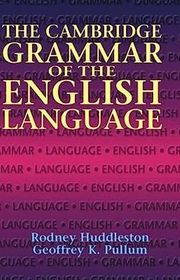
The Cambridge Grammar of the English Language
For linguists, advanced students and teachers who need a detailed descriptive reference. Its systematic analysis offers far more depth than everyday usage guides, but the size, terminology and technical arguments make it unsuitable as a beginner’s self-study workbook.
What it's about
Edited by Rodney Huddleston and Geoffrey Pullum, this reference gives a detailed descriptive account of Standard English grammar. It examines sentence structure and grammatical categories through extensive analysis and examples, providing a specialist resource for understanding how the language works.

For confident English users who want clearer prose and a thoughtful account of style. Its cognitive perspective challenges simplistic rules, but the analysis and extended examples assume more reading fluency than a learner’s practice book.
What it's about
Steven Pinker uses cognitive science and examples of contemporary prose to explain how writing can become clearer and more effective. His guide examines style and usage while questioning rules that obscure how language actually works.
Also recommended by
1 person Brianne Kimmel recommended this book
Brianne Kimmel
"If you’re struggling to find the right words or new to writing publicly, this book is a must-read." - Brianne Kimmel
Brianne Kimmel's recommendation of this book
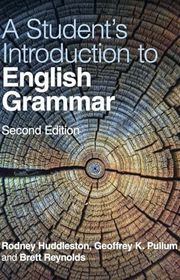
A Student's Introduction to English Grammar
For students who want to analyze how English sentences are structured. Its descriptive framework gives a clearer route into linguistic grammar than usage handbooks, but even the introductory treatment assumes careful study and differs from an ESL practice course.
What it's about
Huddleston, Pullum and Reynolds explain contemporary Standard English grammar for undergraduate study. The second edition introduces sentence analysis through a descriptive approach, with exercises that help readers examine grammatical evidence and distinguish linguistic patterns from inherited usage rules.

The Blue Book of Grammar and Punctuation
An Easy-to-Use Guide with Clear Rules, Real-World Examples, and Reproducible Quizzes
For readers who want concise rules followed by quizzes and answers. Its workbook-style checks make review more concrete than a purely explanatory handbook, but the largely American conventions and simplified rules need context in more nuanced usage questions.
What it's about
Lester Kaufman and Jane Straus explain English grammar, punctuation, and usage through concise rules and examples. Reproducible quizzes, tests, and answer keys let readers practice the material and assess their understanding.

For fluent users who want grammar and usage explained without heavy terminology. Its humorous examples make troublesome points approachable, but the selective discussion and American perspective give less coverage than a comprehensive reference or learner course.
What it's about
Patricia O'Conner explains troublesome points of English grammar and usage in accessible language. Humorous examples address questions about pronouns, comparisons, verb forms, and punctuation, while considering how accepted usage changes over time.

Several Short Sentences About Writing
For writers who want to reconsider how they notice and construct sentences. Its focused reflections develop attention more deeply than a rule checklist, but it is a book about writing practice rather than a systematic grammar course.
What it's about
Verlyn Klinkenborg challenges familiar assumptions about writing, from outlines and topic sentences to inspiration and writer’s block. His reflections emphasize attention, clear thinking, and the deliberate construction of sentences as foundations for developing a writer’s practice.
Also recommended by
1 person Samin Nosrat recommended this book
Samin Nosrat
"I saw one day at a store when I was struggling on the 900th draft of my own book and it has been so meaningful and moving to me." - Samin Nosrat
Samin Nosrat's recommendation of this book

Understanding and Using English Grammar
For English learners who want a substantial course with guided practice. Its visual explanations and graded activities support classroom or organized study, but the textbook format is less convenient for quick usage questions than an alphabetical reference.
What it's about
Betty Azar and Stacy Hagen teach English grammar through visual explanations followed by graded activities. The text develops speaking, listening, and writing while distinguishing formal and colloquial language and differences between British and American usage.

For writers who want a compact desk reference for mechanics and style. Its progression from sentence basics to punctuation offers more structure than scattered tips, but the older handbook is less detailed than the specialist grammar references.
What it's about
Jan Venolia's writing handbook moves from parts of speech and sentence construction to punctuation, grammar, and style. Illustrations, quotations, and a glossary support both quick reference and more sustained practice in the mechanics of writing.

An A-Z of English Grammar & Usage
For learners and teachers who prefer looking up a specific term or usage question. Its alphabetical organization makes it easier to consult than a sequential course, but the older reference offers fewer opportunities for sustained practice and feedback.
What it's about
Geoffrey Leech's reference guide organizes English grammar and usage alphabetically for teachers and learners. Entries explain grammatical terms and the functions of common words, alongside practical language topics such as greetings, punctuation, and letter writing.
Sources
- 1
14 Best English Grammar Books
fluentu.com
- 2
The best English grammar books for EFL and ESL
linguapress.com
- 3
Best English Grammar Books in 2026
promova.com
- 4
English Grammar Books
goodreads.com
- 5
Self-Taught English Learning
reddit.com
- 6
14 Books for Grammar Nerds
penguinrandomhouse.com
- 7
Grammar, Punctuation, Style, and Usage
gwc.gsrc.ucla.edu
- 8
Grammar Books That Prove What They Preach
fivebooks.com



Edited by
Software engineer whose passion for tracking book recommendations from podcasts inspired the creation of MRB.
Lead investor at 3one4 Capital whose startup expertise and love for books helped shape MRB and its growth.
Comments
Spotted a missing book, a wrong order or a mistake? Tell us and we'll fix this page.
We're a reading guide, not the author or publisher, so we can't send books or pass on messages.